



Weather Barometer Clock
A weather barometer clock combines timekeeping and atmospheric measurement in a single housing, giving you both the hour and the forecast.
Weather Barometer Clock
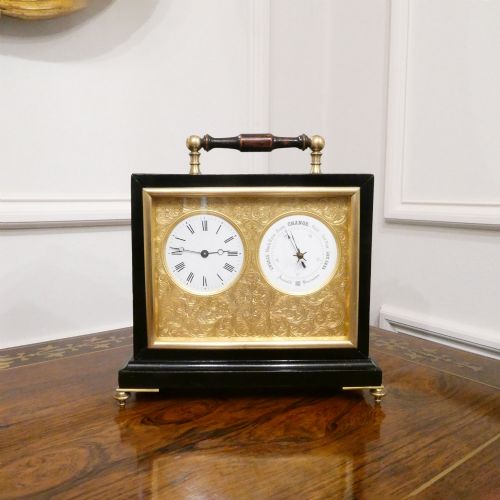
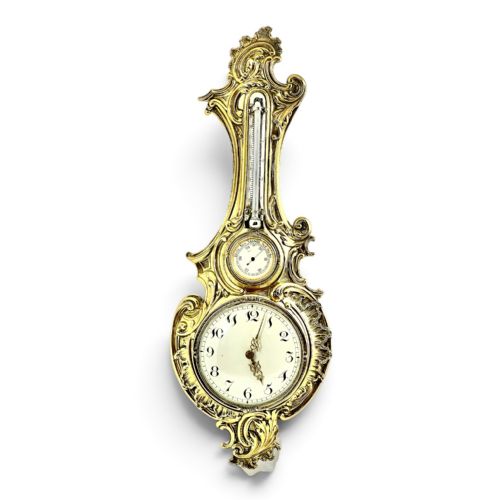
A weather barometer clock brings together horology and meteorology in desk compendiums, wall-mounted banjo frames, and mantel sets. These instruments merge dials for time alongside barometric pressure and temperature readings.
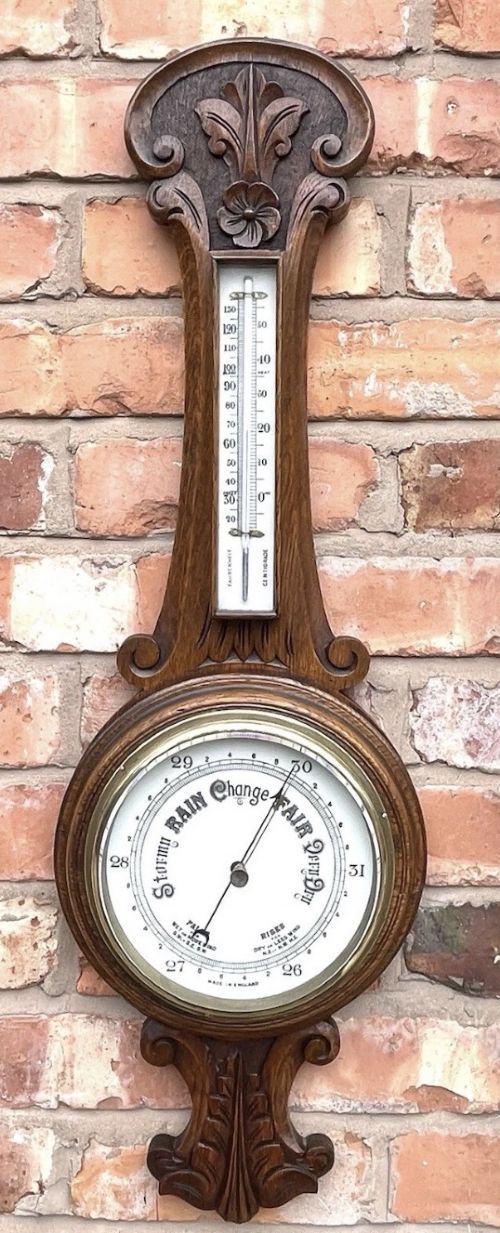
You will most frequently encounter Victorian and Edwardian examples on this page, often framed in carved oak, walnut, or mahogany. These combined instruments range from architectural desk pieces to substantial wall-mounted weather stations.
The selection also spans Art Deco onyx designs, Black Forest carved wood housings, and chrome ships bulkhead pairs. Each variant demonstrates how domestic weather tracking evolved alongside interior decor across the nineteenth and early twentieth centuries.
How they were made
Cabinetmakers shaped dense hardwoods such as oak, walnut, and mahogany into architectural cases, banjo frames, and desk compendiums. Carved wood details, gilt bronze mounts, and silvered bronze elements frequently ornamented the housings.
Instrument makers fitted glass faces over enamel or ceramic dials to protect delicate barometer tubes, thermometer scales, and clock movements. Brass and chrome components provided robust internal mechanics and exterior bezels for maritime and domestic settings alike.
Weather Barometer Clock Retail Price Guide 2026
Typical asking prices for weather barometer clock among the pieces listed under this phrase on Sellingantiques today, from the lower quarter to the upper quarter. They describe what is for sale here now, not the wider market.
Some Victorian barometers were shaped like a caduceus, proving that ancient medical symbols make surprisingly good mounts for tracking the rain.
What varies in quality
The distinction between standard domestic instruments and finer workshop productions rests on the precision of the mechanics and the depth of the case carving. Elaborate Victorian Rococo Revival forms or signed London movements indicate higher standards of craftsmanship.
Materials also dictate the tier of the piece, moving from simple turned wooden frames to heavily carved walnut banjo barometers or gilt and silvered bronze desk sets. The integration of multiple functions, such as combined clock, barometer, and thermometer stations, separates simpler units from comprehensive compendiums.
Ganthony of London·H Marks·Negretti and Zambra
The Weather Barometer Clock Glossary
- Aneroid barometer
- An instrument that measures atmospheric pressure using a flexible metal box without liquid mercury. Changes in air pressure cause the capsule to expand or contract, moving a pointer across the dial.
- Barograph
- A mechanical weather instrument that records barometric pressure continuously onto a rotating paper chart over a week. These devices utilise an aneroid mechanism linked to an inked pen arm.
- Banjo barometer
- A wall-mounted weather instrument housed in a distinctive vertical wooden case shaped like a banjo. This form typically displays a thermometer at the top and a circular barometer dial below.
- Desk compendium
- A multi-functional desktop accessory housing several instruments in one unified case. These portable sets frequently combine a clock, barometer, and thermometer.
- Ships bulkhead
- A heavy-duty marine instrument designed to be mounted directly to the interior wall of a ship. These pieces usually feature robust brass or chrome casings sealed against moisture.
Weather Barometer Clock: Frequently Asked Questions
How do I read a weather barometer clock?
The clock face tells the standard time, while the larger barometer dial indicates atmospheric pressure using terms like 'Rain', 'Change', and 'Fair'. Observing needle movement over hours helps anticipate local weather shifts.
Secondary dials often display ambient temperature via a built-in thermometer. Together, these instruments provide an immediate snapshot of current meteorological conditions inside or outside your room.
Where should I place a wall barometer?
Hang your wall-mounted instrument away from direct sunlight, radiators, and active draughts to ensure accurate temperature and pressure readings. Interior hallways or studies offer stable environmental conditions.
Ensure the fixing is secure, particularly for heavier carved oak or walnut banjo frames. Wall placement should also allow comfortable eye-level viewing of both the clock hands and pressure dial.
How do I tell Victorian from Edwardian pieces?
Victorian instruments frequently feature heavier carved woodwork, darker walnut or mahogany tones, and ornate Revival styles. The dials often carry elaborate typography and decorative brass bezels.
Edwardian pieces generally lean towards lighter oak cases and more restrained architectural silhouettes. Simpler lines and brighter wood finishes distinguish these later domestic weather stations from their nineteenth-century predecessors.
Can antique barometers still be calibrated?
Many aneroid barometers can be adjusted using a small screw mechanism located on the back of the case. Comparing your instrument's reading to a reliable local weather report guides the adjustment.
Internal linkages can occasionally stick if the instrument has remained stationary for decades. Professional horologists can service the delicate mechanical parts without altering the original case or dial.