

Waterfall Shelving Unit
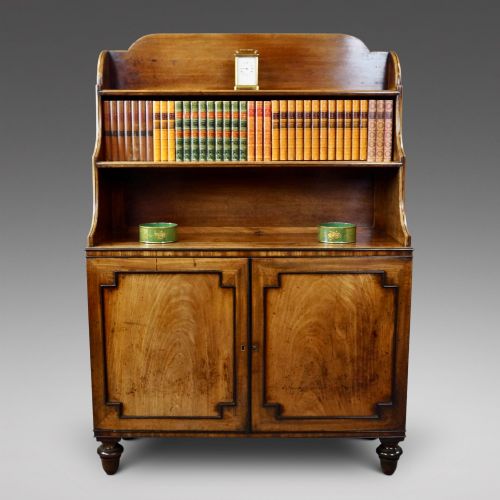
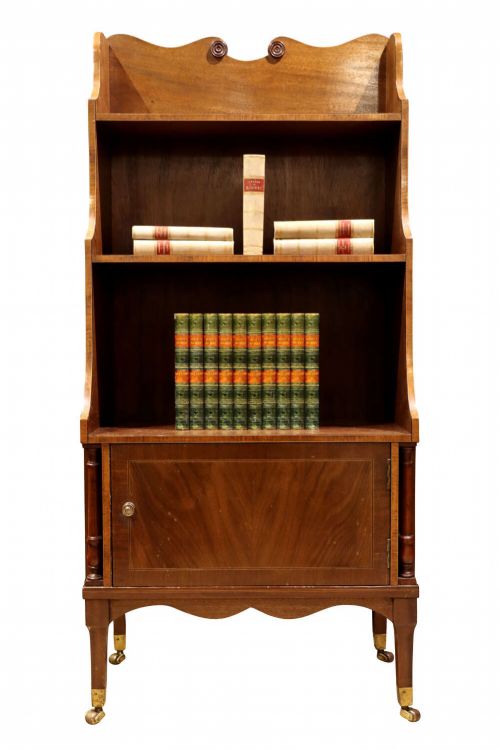
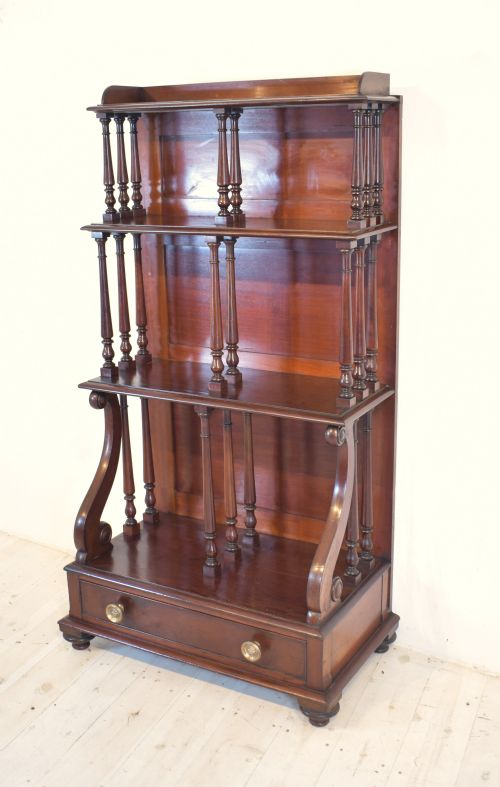
These waterfall shelving unit pieces offer stepped tiers of open storage, combining practical utility with refined display.
What waterfall shelving unit pieces are
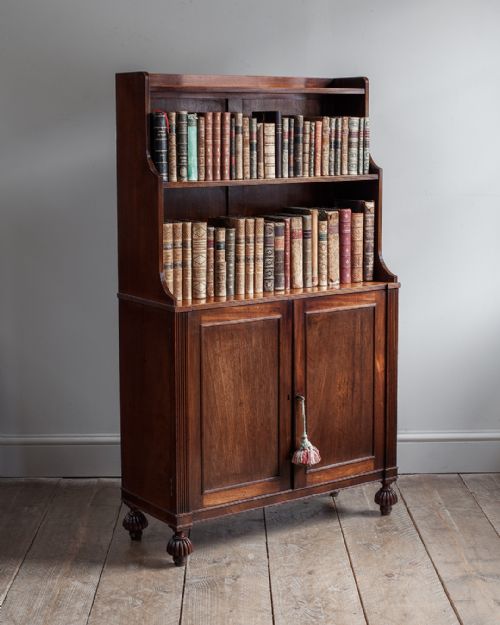
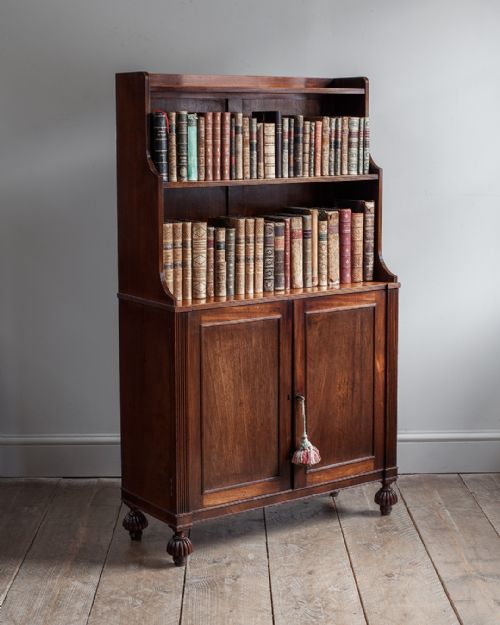
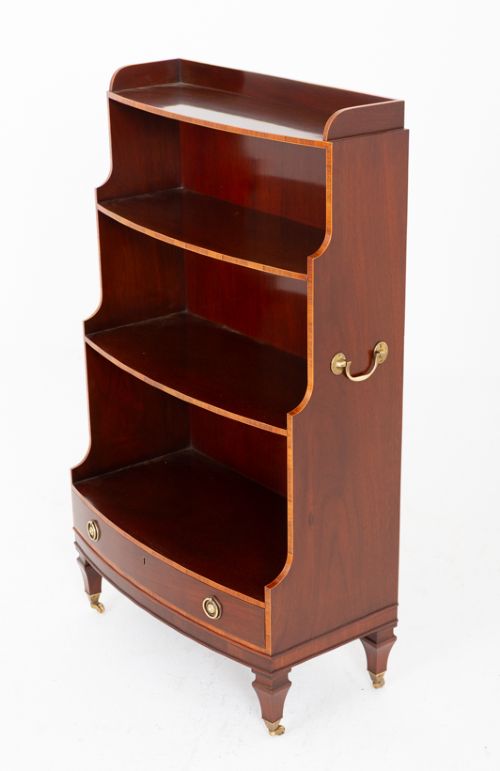
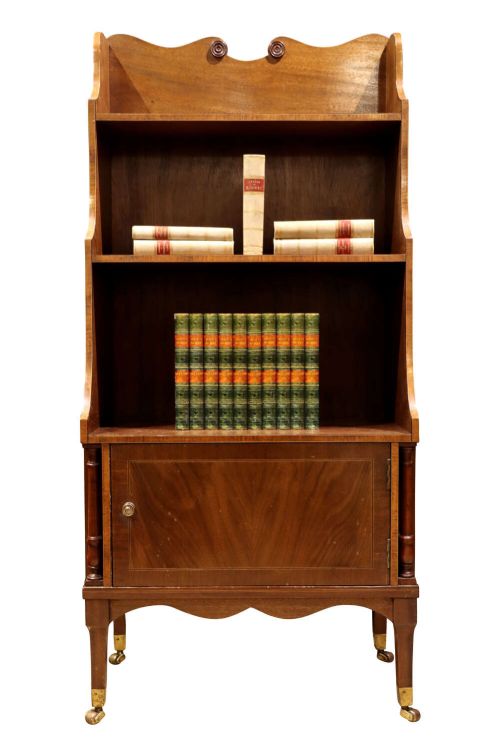
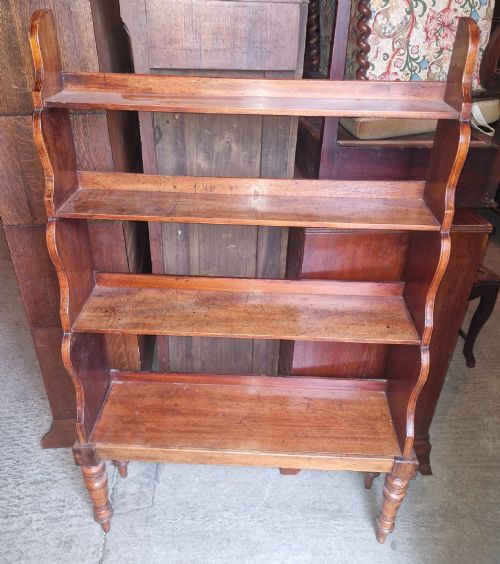
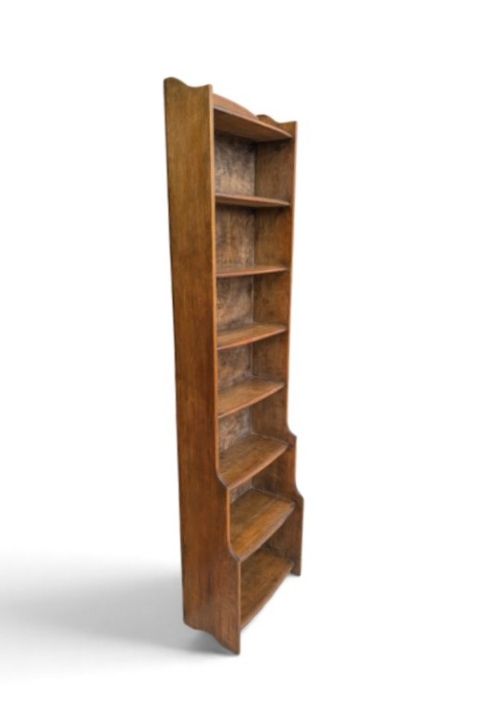
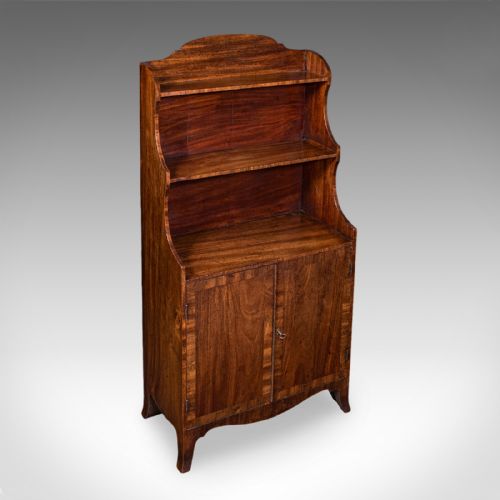
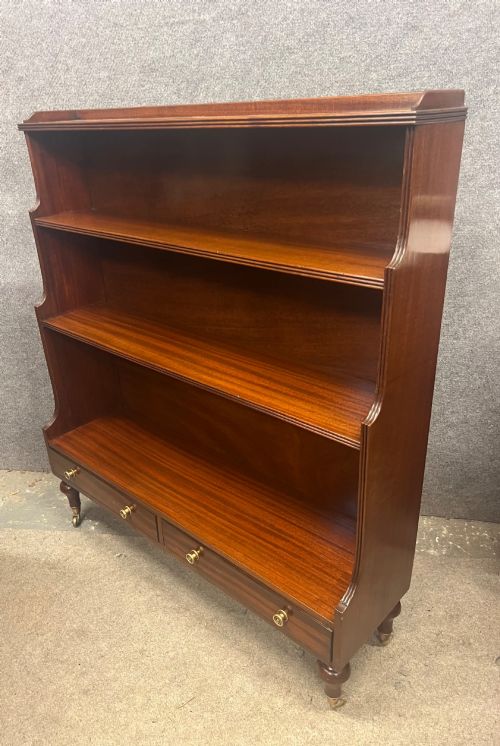
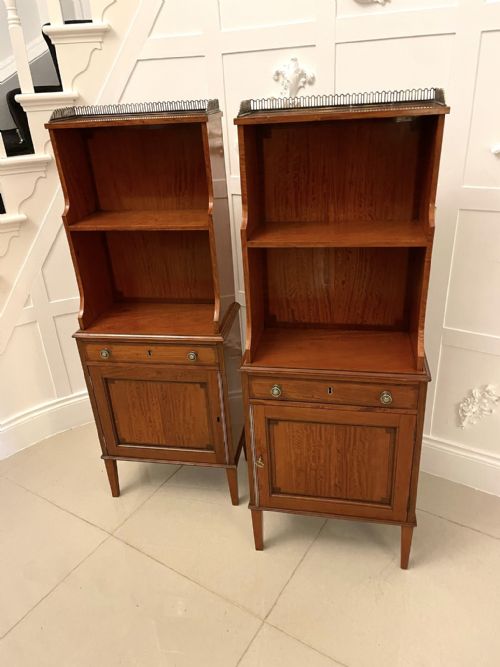
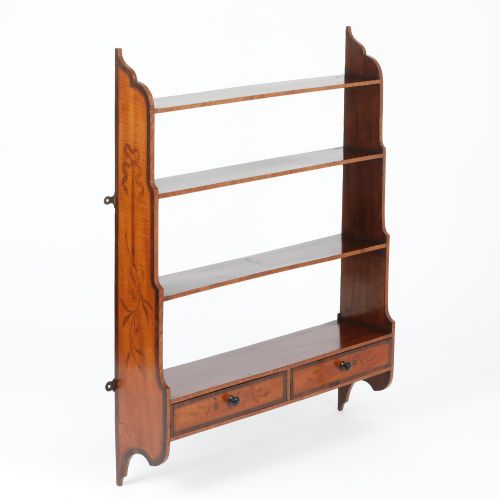
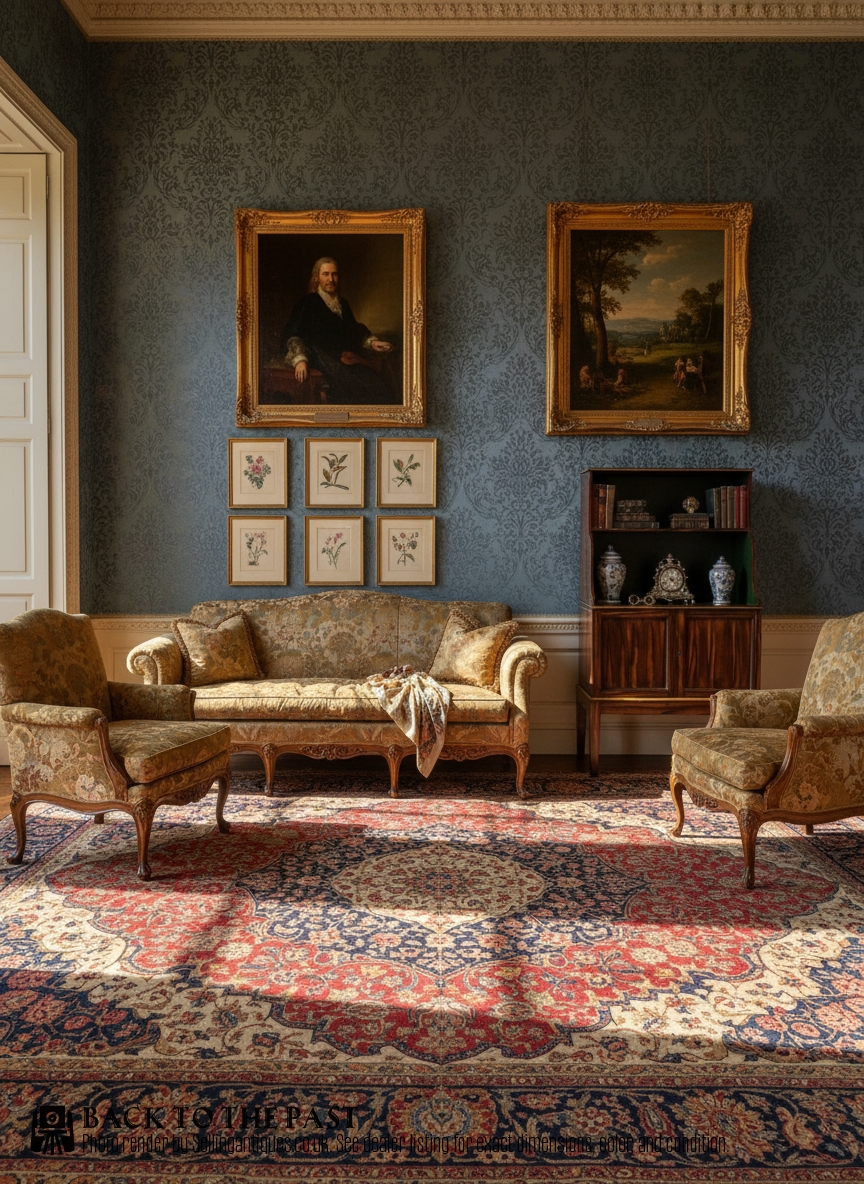
A waterfall shelving unit provides tiered open storage where each lower shelf steps forward from the one above it. This form appears across several periods in the evidence, including the Regency era, the nineteenth century, and nineteen-twenty pieces built in a Regency style.
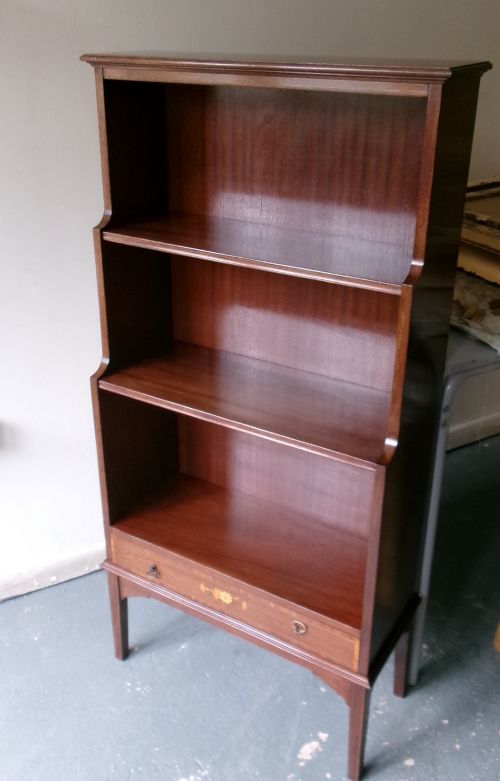
The primary forms found here are open bookcases and freestanding bookcases that function as display furniture. These pieces utilise their graduated depth to display books and objects while occupying minimal floor space.
Examples on this page span genuine Regency items alongside later nineteenth-century flame mahogany pieces and nineteen-twenty revivals. Buyers encounter both compact small bookcases and larger open freestanding versions.
How they were made
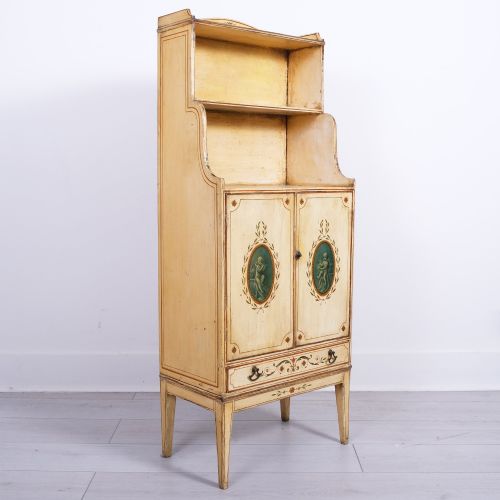
Cabinet makers constructed these pieces using dense timbers such as mahogany, flame mahogany, rosewood, and pine. Painted wood finishes also appear among the material selection recorded in the evidence.
Makers incorporated brass details to accent the timber structures. The construction relies on traditional joinery to support the graduating tiers of shelves securely.
Retail Price Guide 2026
Typical UK retail prices for waterfall shelving unit, calculated from the Sellingantiques database of over a million retail prices indexed since 2003. This retail price guide relies exclusively on Sellingantiques data; no external sources or auction records are used, so the figures do not describe the wider market.
Listings span pieces from the Regency period, the nineteenth century, and nineteen-twenty items built in a Regency style.
What varies in quality
The distinction between standard examples and finer pieces rests in the choice of timber figure. Flame mahogany and rich rosewood display superior grain patterns that elevate the visual weight of the stepped shelves.
Design restraint and proportion dictate the overall elegance of the piece. Subtle brass mounts and carefully executed stepped tiers separate ambitious workshop production from simpler utilitarian shelving.
The Waterfall Shelving Unit Glossary
- Waterfall bookcase
- A set of open shelves stepped back progressively from bottom to top. This design displays books clearly while maintaining a compact footprint.
- Flame mahogany
- A timber veneer displaying a flickering, flame-like grain pattern. Cabinet makers used this wood on prominent surfaces to create visual movement.
- Regency style
- A design aesthetic drawing on classical antiquity associated with the early nineteenth century. Pieces from nineteen-twenty often revive these specific architectural proportions.
- Freestanding bookcase
- A piece finished on all sides to stand away from a wall. This allows placement anywhere within a room.
Frequently Asked Questions
What is a waterfall shelving unit?
A waterfall shelving unit is an open bookcase where each successive shelf steps back from the one below it. This creates a tiered profile reminiscent of cascading water.
Such pieces appeared in various forms during the nineteenth and early twentieth centuries, serving as both practical storage and display furniture.
How were these units used?
These pieces functioned primarily as open bookcases for housing treasured volumes and decorative objects. Their graduated shelves allowed titles and bindings to remain easily visible.
Because many examples are freestanding, they also served to divide spaces or stand against perimeter walls in principal rooms.
What timbers were used?
Workshop records show pieces constructed from mahogany, flame mahogany, rosewood, and pine. Some examples also feature painted wood surfaces.
Brass elements occasionally appear as decorative accents or hardware integrated into the design.
How do I date a piece?
Dating relies on identifying timber choices, construction techniques, and stylistic markers associated with periods like the Regency era or the nineteenth century. Later revivals from nineteen-twenty often emulate these earlier characteristics.
Examining the grain of woods like flame mahogany helps distinguish genuine nineteenth-century cabinet work from subsequent interpretations.