





Watercolour Sheep Art
Watercolour sheep art brings the quiet pastoral rhythms of the British countryside directly into a room.
Watercolour Sheep Art
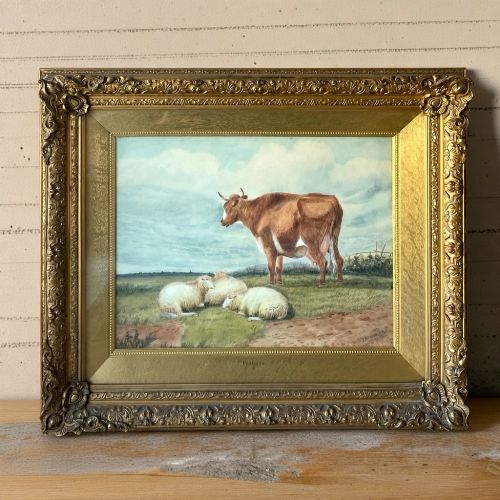
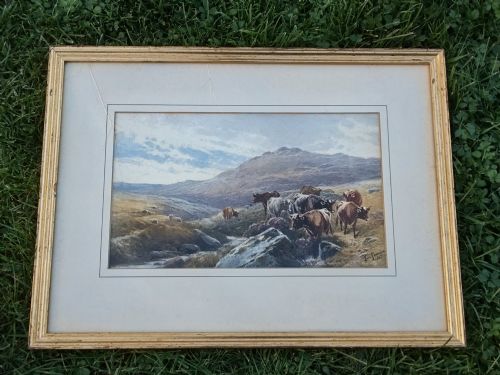
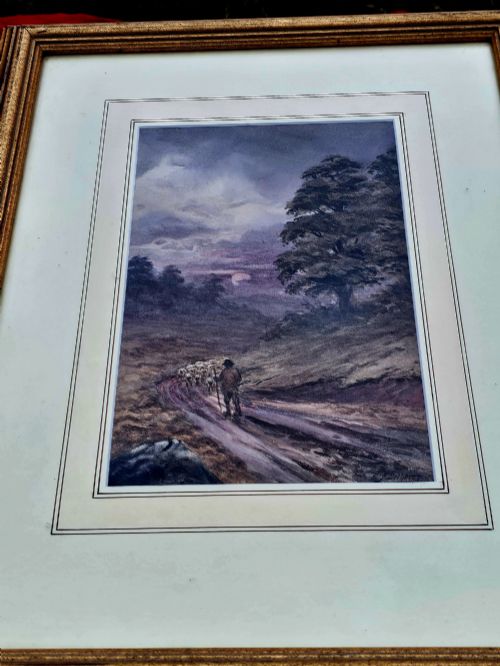
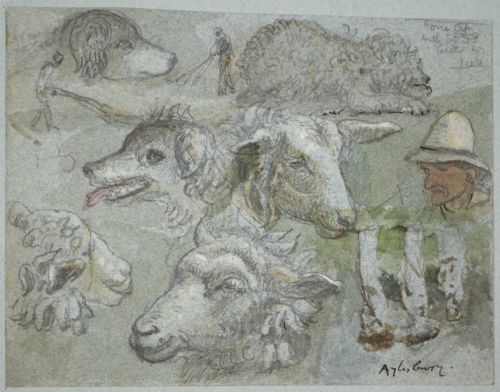
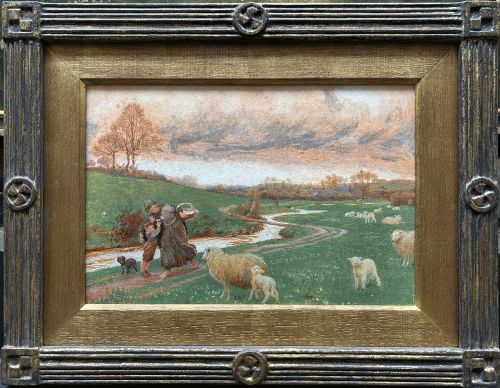
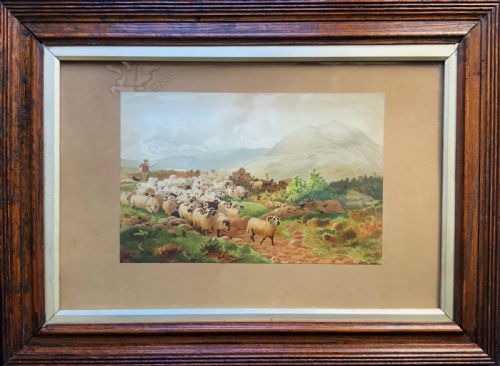
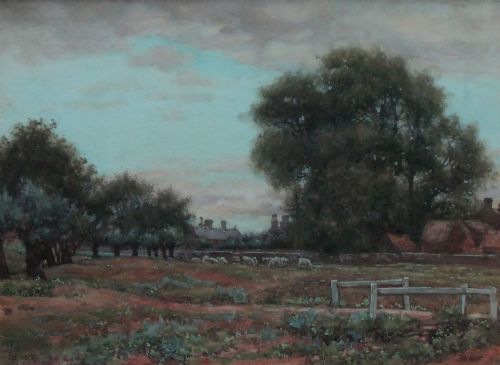
Watercolour sheep art captures pastoral landscapes and farming scenes executed in pigment on paper across the nineteenth and early twentieth centuries. These works record rural life through depictions of shepherds, flocks on moorland, and livestock grazing across downs and valleys. The pieces on this page span the Victorian and Edwardian eras, reflecting traditional, pastoral, and British Impressionist approaches to the countryside.
Buyers encounter framed watercolours framed behind glass in wood mounts, often incorporating gilt or gold leaf details. The subjects range from intimate moorland studies to expansive views of Dorset commons, Welsh estuaries, and Sussex cottages. English School artists dominated this genre, producing detailed records of agricultural life before the modern era.
Materials and technique
Artists painted primarily with watercolour pigment on paper surfaces, utilising the natural translucency of the medium to build light and atmosphere. Washes of colour rendered open skies, rolling hills, and distant mists, while finer brushwork defined the wool and movement of the sheep.
Works received contemporary protection beneath glass and within wood frames, frequently accented by gilt or gold leaf mouldings. These traditional mountings preserved the delicate paper works from atmospheric moisture and handling over the decades.
Watercolour Sheep Art Retail Price Guide 2026
Typical asking prices for watercolour sheep art among the pieces listed under this phrase on Sellingantiques today, from the lower quarter to the upper quarter. They describe what is for sale here now, not the wider market.
The inventory records regional British landscapes from Dorset, Wales, and the Sussex downs, capturing traditional agricultural practices and pastoral scenes.
Factors of quality
Quality rests upon the artist's command of light, atmosphere, and anatomical proportion within the landscape. Stronger examples display confident brushwork and a balanced composition that anchors the flock naturally within the wider terrain.
Condition of the paper and pigment integrity also separate examples. Works retaining their original vibrancy without heavy fading or excessive foxing command greater appreciation for their survival.
Thomas Rowden·James Smetham·EJ Letheren·Frederick Walker·F.J. Snell·Cornelius Pearson·Henry Charles Fox·Bernard Walter Evans·Basil Bradley·A. Winter Shaw·Henry Birtles·George Faulkner Wetherbee·Charles James Adams·Rowland Henry Hill·Edmund George Warren·Jessie Hall·W Ramsey·John D.Walker·JS Cooper·Wycliffe Egginton·T. Sidney Cooper RA
The Watercolour Sheep Art Glossary
- Watercolour
- A painting method where fine pigment is suspended in a water-soluble binder and applied to paper. This technique creates transparent washes that allow the white of the paper to illuminate the scene.
- Gilt
- A thin layer of gold applied to wood frame mouldings to provide a decorative metallic border. This finish was standard for framing fine art during the Victorian period.
- Pastoral
- A style of art that idealises rural life, shepherds, and agricultural landscapes. It forms the thematic core of most sheep watercolours from the nineteenth and early twentieth centuries.
- English School
- A broad designation for artists working in Britain from the eighteenth through the early twentieth centuries. These painters shared regional techniques and subject matter centred on domestic landscapes.
Watercolour Sheep Art: Frequently Asked Questions
What periods do these watercolours come from?
The listings span the nineteenth century through the early decades of the twentieth century, including Victorian and Edwardian eras. Artists worked across periods like 1870, 1900, 1910, and 1920.
These dates align with traditional British landscape painting movements, particularly the Victorian Pastoral and British Impressionist schools.
How were these watercolours originally framed?
Pieces are typically set behind glass in wooden frames, sometimes featuring gilt or gold leaf detailing. This traditional housing protected the fragile paper and water-soluble pigments from environmental damage.
Many retain period framing that complements the pastoral subject matter and the aesthetic of the era.
Where do the landscape settings usually take place?
Scenes depict recognizable British countryside locations, including Welsh estuaries, Dorset commons, Sussex cottages, and Highland farms. Artists often recorded specific rural localities such as Swansea Bay, Sutton Poyntz, and Burpham.
These regional details provide a documentary record of British agricultural land during the nineteenth and early twentieth centuries.
How do I care for antique watercolour art?
Keep the works away from direct sunlight to prevent the watercolour pigments from fading over time. Maintaining stable indoor humidity levels also protects the paper and prevents degradation of the mount and frame.
Displaying the pieces behind their original glass ensures the delicate paint surface remains undisturbed by dust or physical contact.