

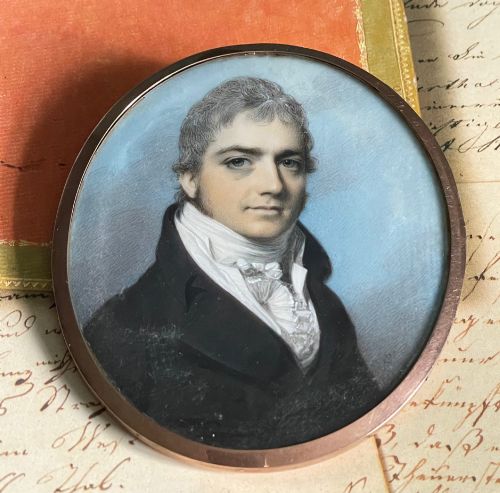
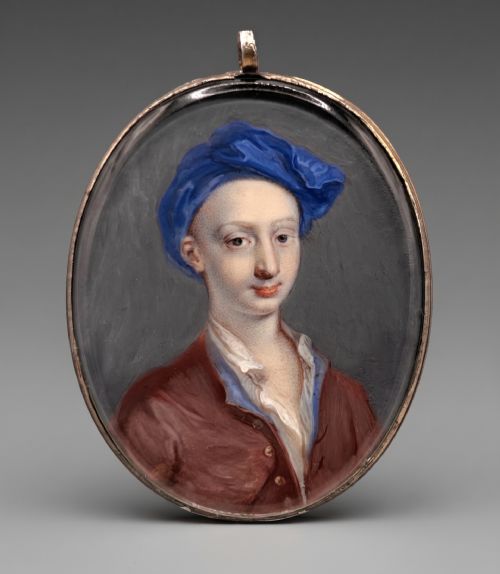
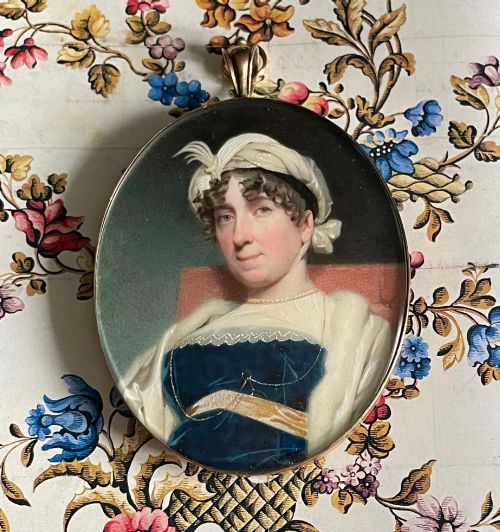
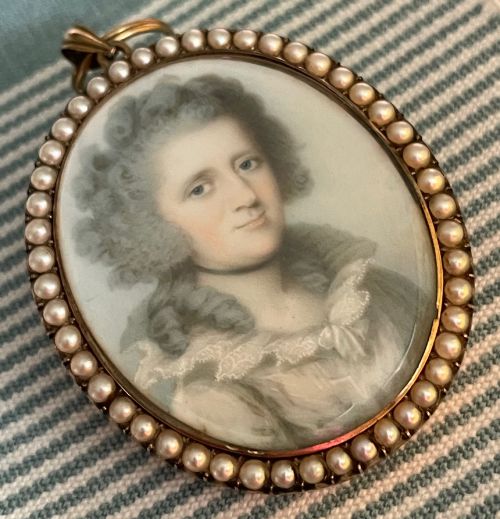
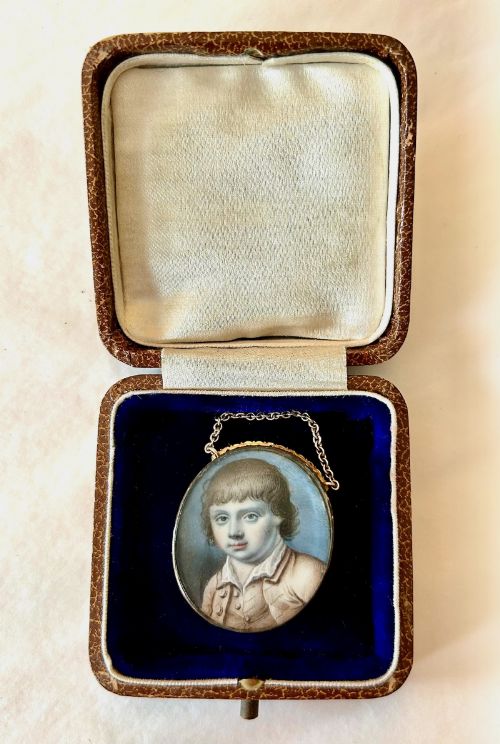
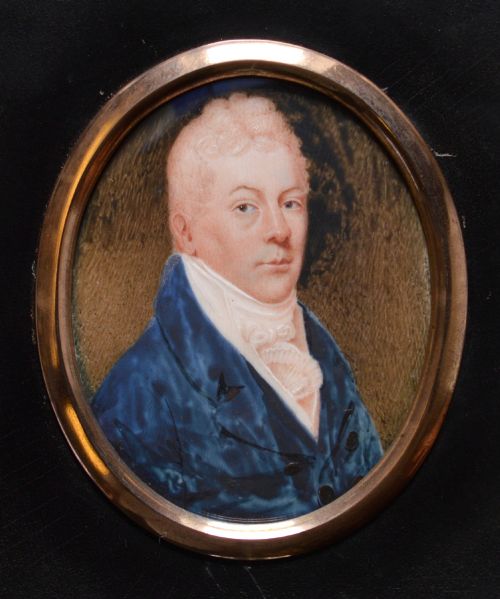

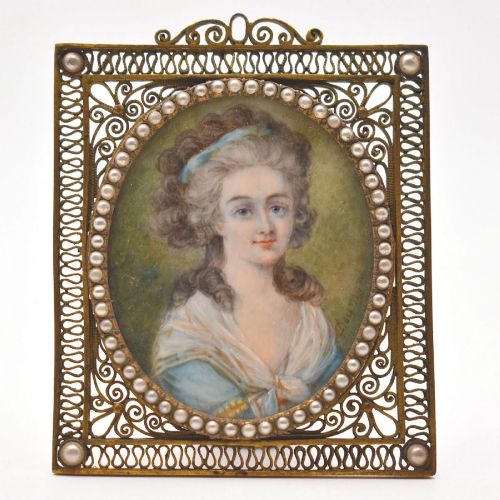


Watercolour on Ivory Miniature
These watercolour on ivory miniature works are delicate portraits housed in gold, gilt metal, and ebonised wood frames.
Watercolour on Ivory Miniature
A watercolour on ivory miniature represents a personal likeness painted on a thin slice of ivory, capturing subjects from the Georgian and Regency periods. These portable works function as intimate keepsakes, often designed to be worn as pendants or displayed on a wall.
Most examples encountered on this page date from the 18th century, the Regency era, and around 1800. Portrait miniatures depict gentlemen, officers, and ladies in detailed period attire, framed in glass and precious metals.
How they were made
Artists painted watercolour directly onto prepared ivory sheets, utilising the pale, translucent quality of the material to illuminate the skin tones of the sitter. This technique required immense precision due to the small scale of the portrait paintings.
Finished works were sealed beneath glass within frames constructed from gold, gilt metal, piano key ivory, or ebonised wood, sometimes incorporating seed pearls or brass fittings to secure the piece.
Watercolour on Ivory Miniature Retail Price Guide 2026
Typical asking prices for watercolour on ivory miniature among the pieces listed under this phrase on Sellingantiques today, from the lower quarter to the upper quarter. They describe what is for sale here now, not the wider market.
Several ladies depicted in these miniatures wear elaborate blue gowns and coral beads, preserving Georgian fashion trends down to the last brushstroke.
What varies in quality
The framing material also distinguishes the pieces, with substantial gold pendants and elaborate seed pearl settings indicating higher original status than plain ebonised wood or simple brass frames.
Charles Hayter·Nicolas Freese·Frederick Buck·George Engleheart·Archibald Skirving·William Grimaldi·Henry Jacob Burch·Edward Pugh·Samuel Cotes·Jeremiah Steele·Eleanor M Ross
The Watercolour on Ivory Miniature Glossary
- Watercolour on ivory
- A painting method utilising water-based pigments applied to a thin slice of elephant ivory, creating a luminous finish. The organic material provides a smooth surface that enhances skin tones.
- Portrait miniature
- A small-scale painting depicting a specific person, popular before the widespread adoption of photography. These objects were frequently worn as jewellery or kept in protective travel cases.
- Pendant
- A piece of hanging jewellery designed to be suspended from a chain or ribbon around the neck. Many miniature portraits utilise this format for close personal wear.
- Piano key frame
- A housing constructed from thin strips of antique ivory derived from keyboard instruments. This style appears on nineteenth-century examples.
- Ebonised wood
- Timber treated to imitate the dark, dense appearance of ebony. It provides a stark, contrasting border for brightly coloured miniature paintings.
Watercolour on Ivory Miniature: Frequently Asked Questions
How were portrait miniatures worn?
These small portraits were frequently worn as pendants close to the heart or carried inside waistcoat pockets as personal tokens of affection.
Wealthy patrons commissioned them to remember family members, spouses, or notable public figures during long absences.
How do I date a miniature?
Dating relies heavily on the clothing styles, hairstyles, and framing techniques visible in the artwork. Regency pieces often feature distinct neoclassical dresses and high-collared coats.
Signatures or attribution to known artists working in the eighteenth and nineteenth centuries also help establish a precise timeframe.
Are these paintings watercolours?
Yes, artists applied delicate watercolour pigments directly onto thin sheets of animal ivory. The technique exploits the natural translucency of the ivory to create realistic luminosity in the subject's skin.
Protective glass coverings shielded the water-soluble paints from moisture and dust over the centuries.
Why use ivory for portraits?
Ivory offers a smooth, pale surface that mimics the appearance of human skin better than paper or parchment. When painted with fine watercolours, the material reflects light back through the paint layers.
This creates a glowing, lifelike quality suited to intimate portraiture.
How should I display miniatures?
Miniatures should be kept away from direct sunlight to prevent the watercolour pigments from fading over time. Stable indoor humidity levels protect both the fragile ivory support and the antique frames.
Wall-mounted display cabinets or secure desk placement allow these small works to be safely appreciated.