

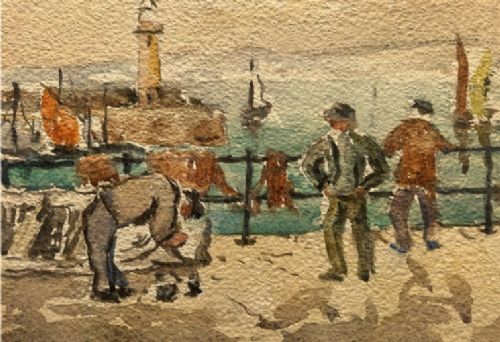
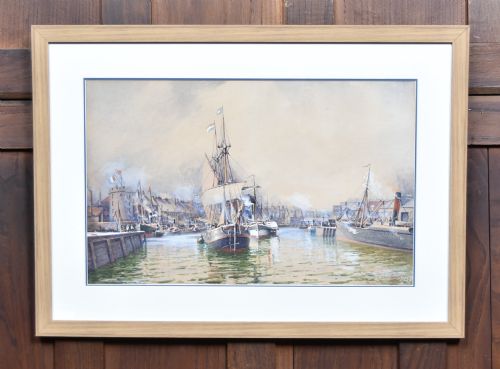
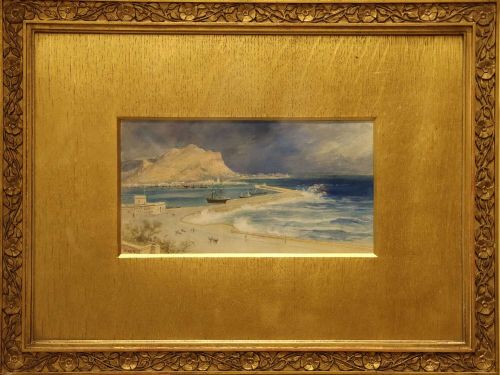
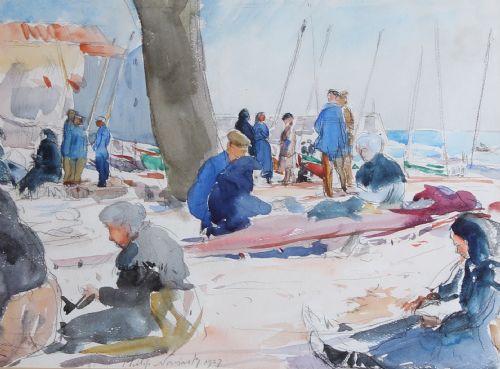


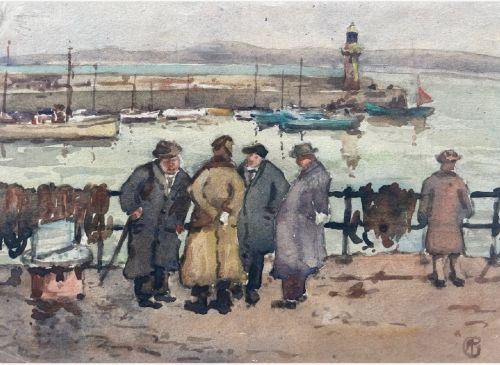


Watercolour Harbour Scene
A watercolour harbour scene captures maritime life along coastal quays and bustling ports through fluid washes of pigment on paper.
Watercolour Harbour Scene
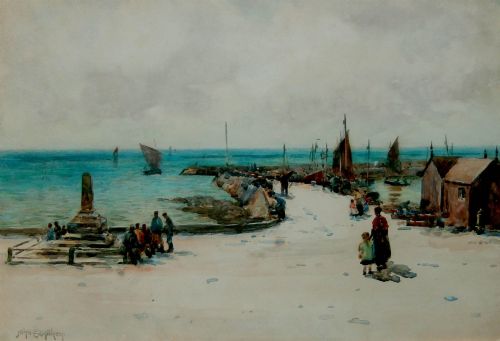
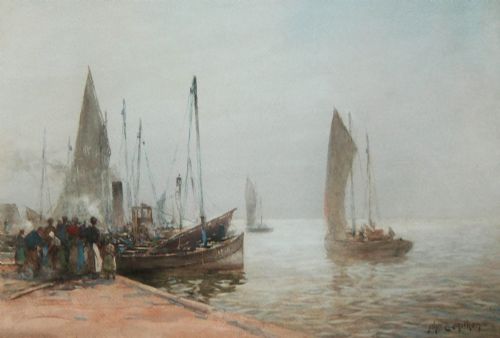
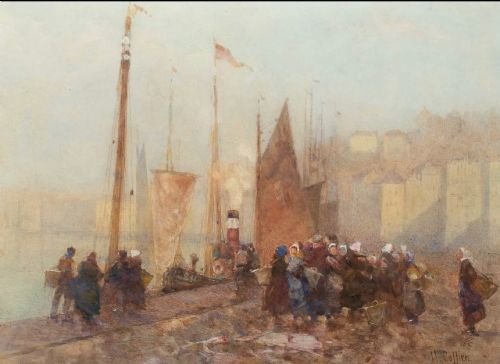
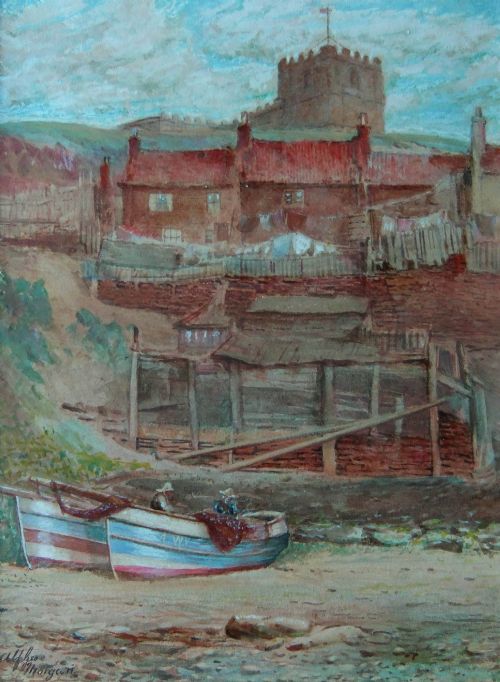
When you search for a watercolour harbour scene, you are looking at maritime paintings depicting coastal activities, fishing vessels, and quayside architecture. These works range from late Victorian representations to early twentieth-century views of British and European ports.
You will most frequently encounter depictions of Cornish fishing ports like St Ives and Newlyn, alongside Yorkshire coastal towns such as Whitby and Staithes. Painters recorded everyday harbour life, capturing luggers, mended nets, and fishermen on the quays.
The selections span distinct periods including Edwardian maritime art, British Impressionism, and twentieth-century regional painting. Each piece presents a direct record of coastal trade and maritime heritage through works on paper.
How They Were Made
Artists painted primarily with watercolour pigment suspended in water, applied directly onto absorbent paper sheets to achieve translucent washes and fine linear details. This water-based medium allowed creators to capture the shifting light of coastal skies and the reflective surfaces of harbour water.
Works were commonly housed behind protective glass within wooden frames, occasionally incorporating gilded elements or hand-enamelled polychrome decoration to complement the maritime subject matter.
Watercolour Harbour Scene Retail Price Guide 2026
Typical asking prices for watercolour harbour scene among the pieces listed under this phrase on Sellingantiques today, from the lower quarter to the upper quarter. They describe what is for sale here now, not the wider market.
Materials documented across the listings include paper, glass, gilded wood, and watercolour pigment.
What Varies in Quality
The distinction in these works rests upon the artist's handling of light, atmospheric depth, and the fluid properties of the pigment. Masterful control over transparent washes defines superior examples, creating convincing expanses of coastal water and open sky.
Compositional confidence and the precise depiction of maritime vessels, rigging, and quayside architecture separate accomplished professional works from simpler topographical records. Signed pieces by established regional artists generally demonstrate a higher degree of technical execution.
George F Pennington·Philip Naviasky·William Woolard·James E Aitken·John E Aitken·William Banks Fortescue·Hector Caffieri·Alfred G Morgan·Paul Delvaux·Richard Harry Carter·William Lee Hankey·Fred Lawson·Arthur Tucker·James Thomas Watts·Kate E Booth·Jan van Couver·Ernest F Hill·Frederick Stuart Richardson·Percy Brooke·Ralph Todd·Rowland Henry Hill·Frank W Scarborough·Harry Wanless·Thomas Clavering Alder·Walter Sweet
The Watercolour Harbour Scene Glossary
- Watercolour pigment
- The finely ground colouring material mixed with a water-soluble binder, used to create transparent washes on paper.
- Lugger
- A traditional two-masted fishing boat with lug sails, frequently seen moored in Cornish and Yorkshire harbour paintings.
- Newlyn School
- An art colony based in Cornwall during the late nineteenth and early twentieth centuries, known for plein-air realism depicting local fisherfolk.
- Gilded wood
- Timber frames finished with a thin layer of gold leaf or metallic gilt, commonly used to frame nineteenth-century and Edwardian paintings.
- Victorian Maritime
- A genre of nineteenth-century art focusing specifically on coastal shipping, harbour views, and marine life during the reign of Queen Victoria.
Watercolour Harbour Scene: Frequently Asked Questions
What subjects appear in these paintings?
The artworks primarily depict coastal activities, fishing vessels, tidal quays, and Yorkshire or Cornish harbour towns.
Scenes frequently incorporate local fisherfolk, moored luggers, dockyards, and historic abbey backdrops overlooking the water.
How should I frame a watercolour?
Watercolours require framing behind glass with acid-free mount board to protect the paper and pigment from atmospheric moisture and UV light.
Traditional wood or gilded frames are historically appropriate for pieces originating from the nineteenth and early twentieth centuries.
When were these coastal scenes painted?
The works predominantly date from the late nineteenth century through to the middle of the twentieth century.
Key periods represented include the Victorian era, the Edwardian period, and early twentieth-century British art movements.
Where were these maritime views created?
Artists painted at notable fishing ports and harbours across Britain, particularly along the coasts of Devon, Cornwall, Yorkshire, and Scotland.
Selected works also record continental European locations including French and Belgian coastal towns.