

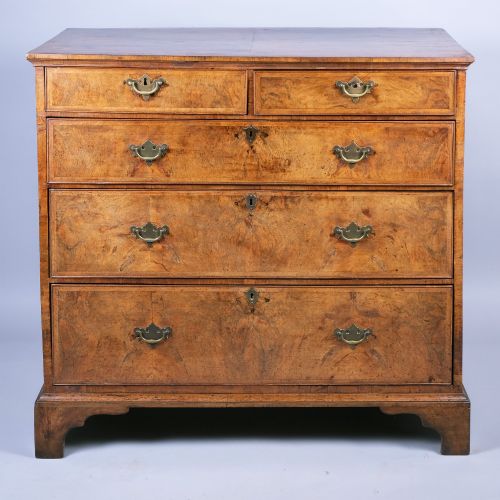
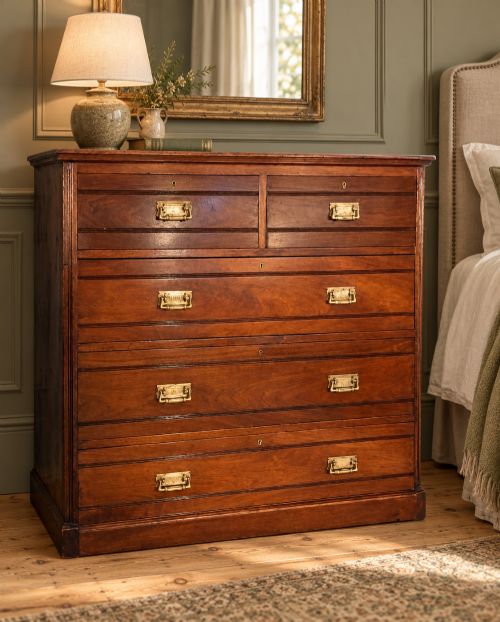
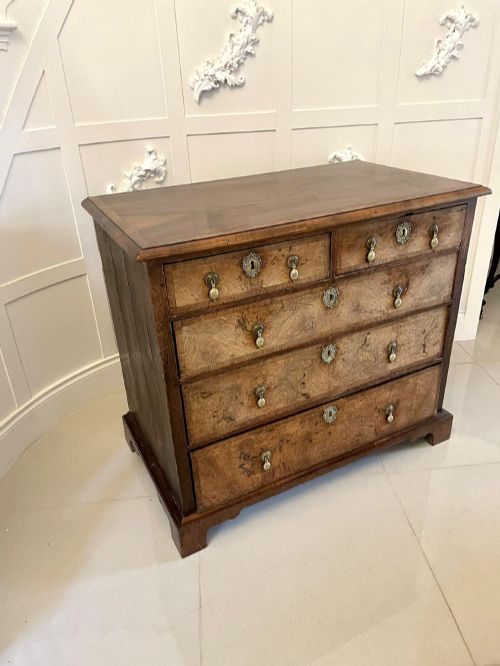
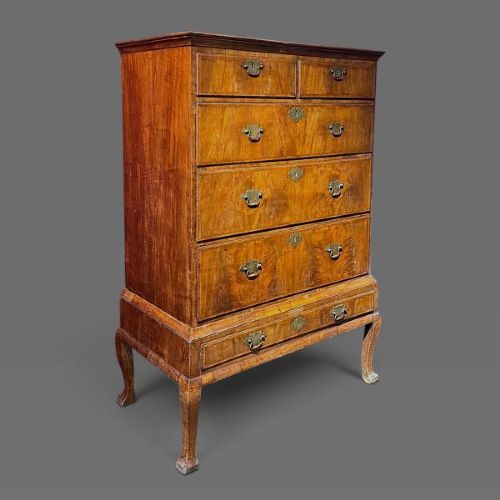
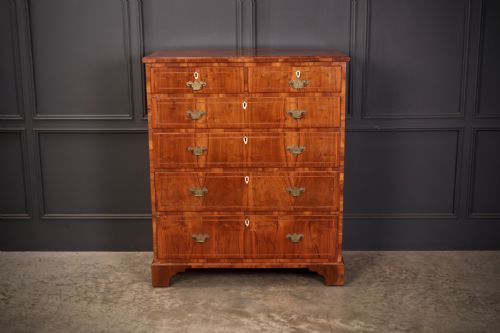


Warm Walnut Tallboy
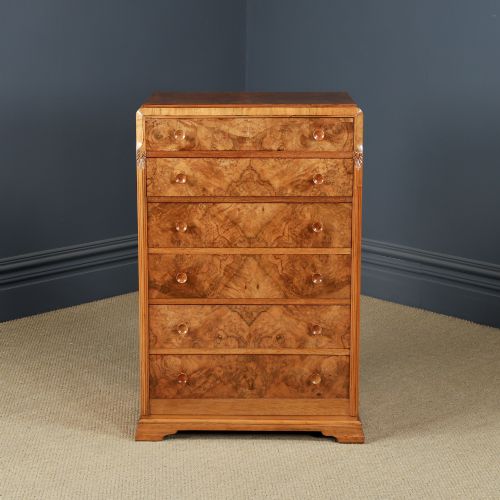
A warm walnut tallboy provides towering storage with rich grain, ranging from early Georgian masterpieces to later Revival pieces.
Warm Walnut Tallboy
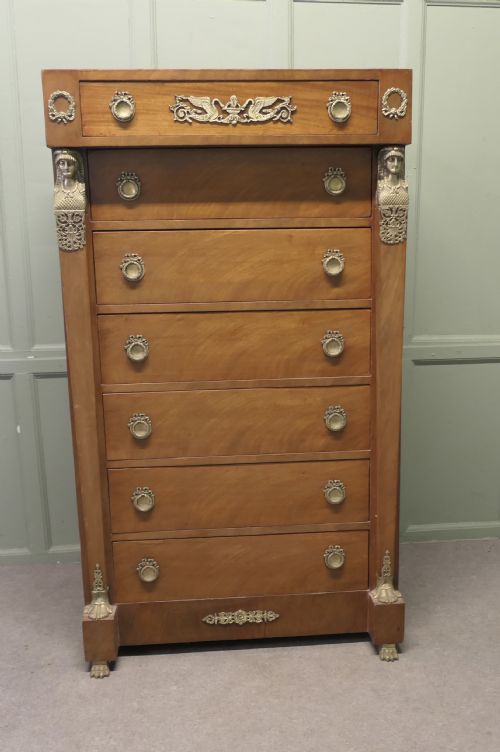
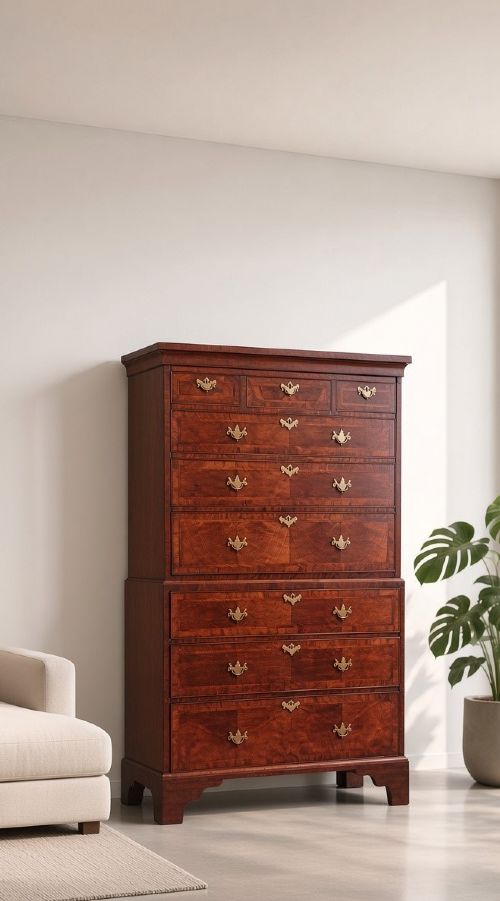
A warm walnut tallboy stacks multiple drawers vertically to maximise storage while maintaining a compact footprint in a room. These impressive pieces stand tall against walls, often separating into two distinct sections for easier transport and placement.
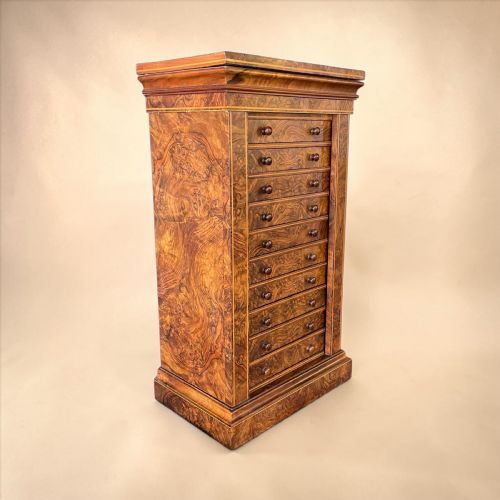
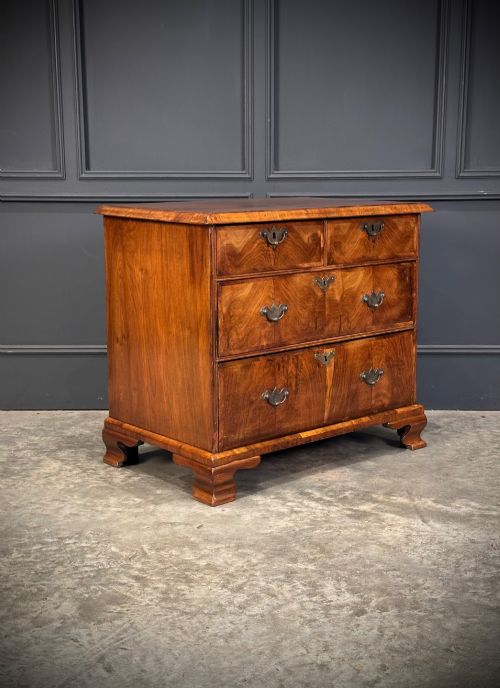
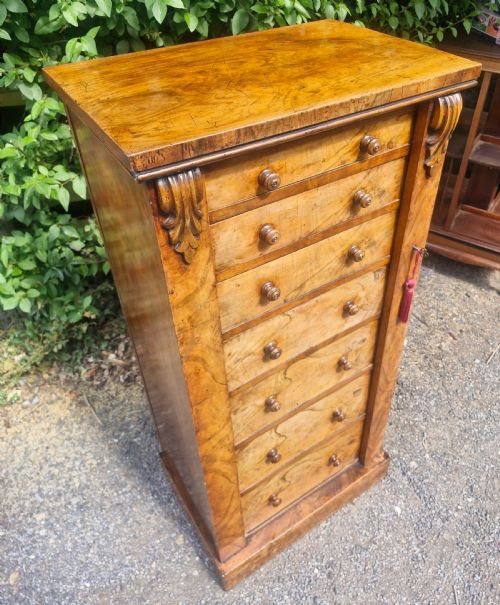
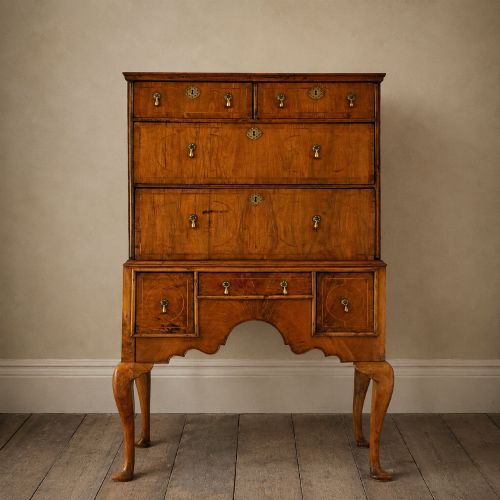
The pieces on this page span the 17th Century through to the 20th Century, encompassing Georgian eras, Victorian periods, and later Revivals. Buyers will encounter various configurations including classic chest on chest designs, cabinets on chests, and specialised Wellington chests.
Originating primarily from British workshops, these tall storage items utilise rich timbers like burr walnut, Virginian walnut, and standard walnut veneer. Their presence brings both immense practical utility and deep historical character to traditional interiors.
What varies in quality
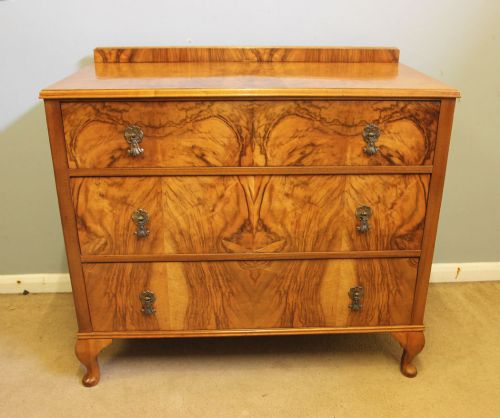
The calibre of a piece rests heavily on the selection and matching of the walnut veneer across the front drawers. Master craftsmen arranged figure grains symmetrically, creating striking patterns that elevate simple drawer banks into true decorative art.
Proportion and untouched patination define the finer examples on the market. Pieces that retain their original stands, handles, and warm wax finishes demonstrate superior preservation compared to those with heavily restored or replaced elements.
Warm Walnut Tallboy Retail Price Guide 2026
Typical asking prices for warm walnut tallboy among the pieces listed under this phrase on Sellingantiques today, from the lower quarter to the upper quarter. They describe what is for sale here now, not the wider market.
Listings feature walnut tallboys spanning from the 17th Century up through the Georgian era and into 1930s Revival pieces.
The Warm Walnut Tallboy Glossary
- Tallboy
- A tall chest of drawers, typically constructed as one chest stacked directly on top of another chest or stand.
- Crossbanding
- A narrow strip of veneer laid around the border of a drawer front so the grain runs perpendicular to the surrounding wood.
- Feather-banding
- A decorative inlay technique using two strips of veneer cut diagonally to form a herringbone pattern along panel edges.
- Wellington chest
- A tall, narrow chest of drawers secured by a hinged vertical locking flap on one side.
- Escutcheon
- A protective brass plate surrounding the keyhole of a drawer or cabinet door.
Warm Walnut Tallboy: Frequently Asked Questions
How do I secure a tallboy to the wall?
Because of their considerable height and narrow base, tallboys benefit greatly from discreet wall fastening to prevent tipping.
Utilise appropriate brackets hidden behind the upper moulding to anchor the piece securely without damaging the visible timber.
What is the difference between a tallboy and a chest on chest?
While the terms are often used interchangeably today, a traditional tallboy sometimes refers to a chest on a standalone table or low base.
A chest on chest specifically denotes two stacked cabinetry sections where a wider lower chest supports a slightly narrower upper chest.
How do I care for antique walnut furniture?
Keep walnut furniture away from direct sunlight and dramatic temperature fluctuations to prevent the delicate veneers from drying out or splitting.
Apply a traditional beeswax polish occasionally and buff gently with a soft cloth to maintain the warm lustre of the timber.
How can I tell a Georgian tallboy from a later revival?
Examine the secondary timbers used for the drawer linings, as pine and oak usage varies significantly between 18th-century originals and 20th-century reproductions.
Construction methods, drawer joint hand-cut precision, and the specific ageing of the wax finish also provide reliable clues to the exact period.