





Warm Mahogany Commode
A warm mahogany commode brings deep timber tones and stately proportion to a room, offering practical storage disguised as quiet elegance.
Warm Mahogany Commode
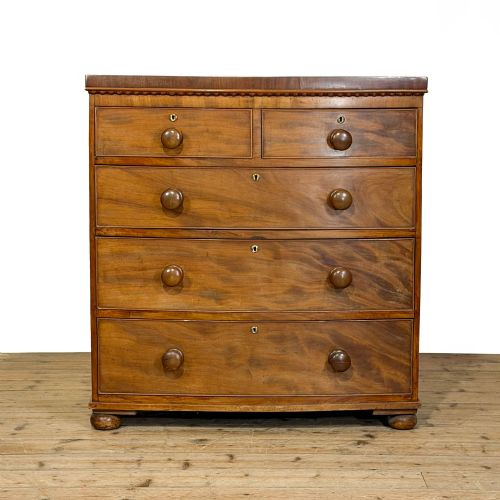
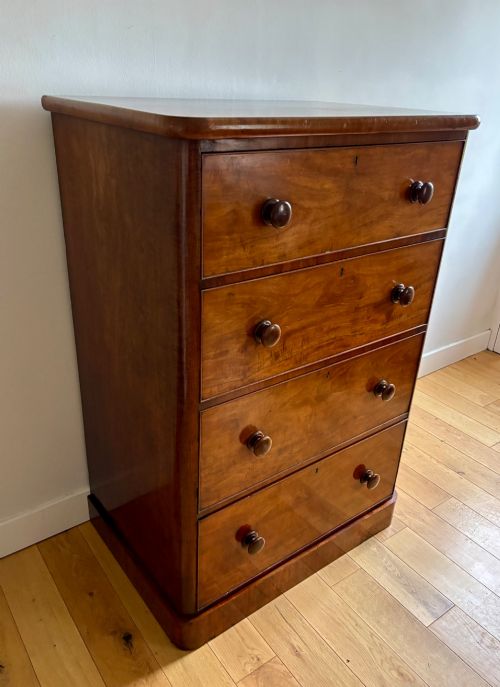
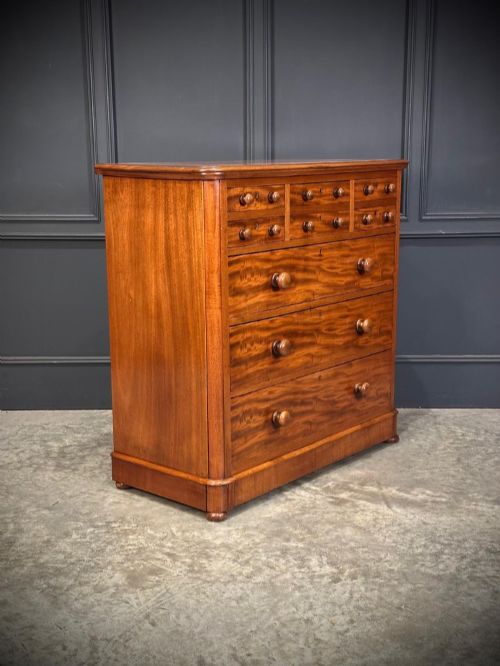
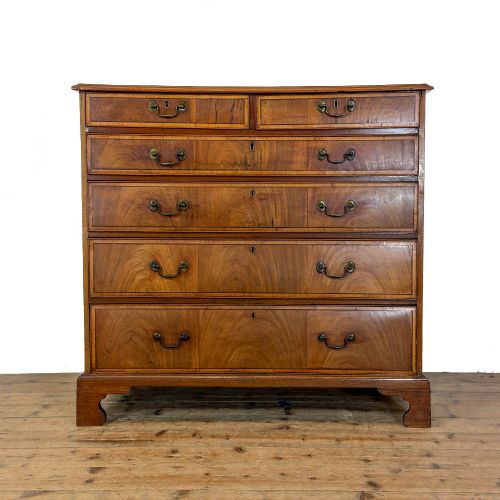
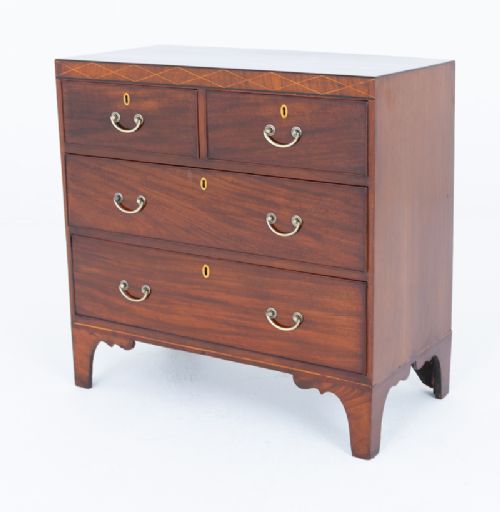
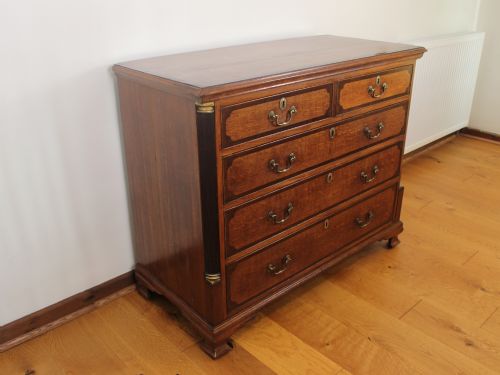
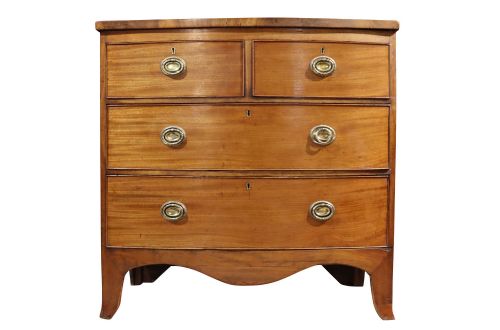
A warm mahogany commode typically takes the form of a chest of drawers, bedside table, or side cabinet, dating from the Georgian, Regency, and Victorian periods. These pieces serve as functional bedroom or living space furniture, distinguished by rich timber grain and classic silhouettes.
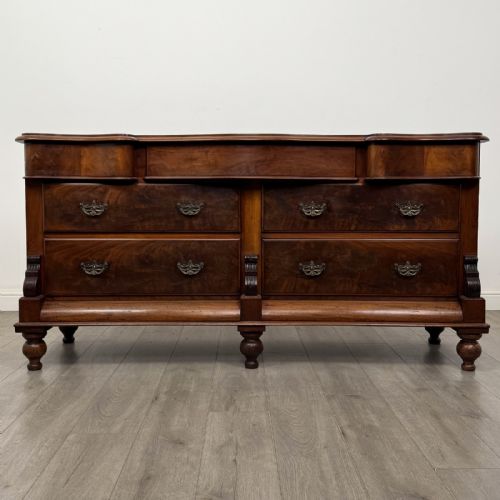
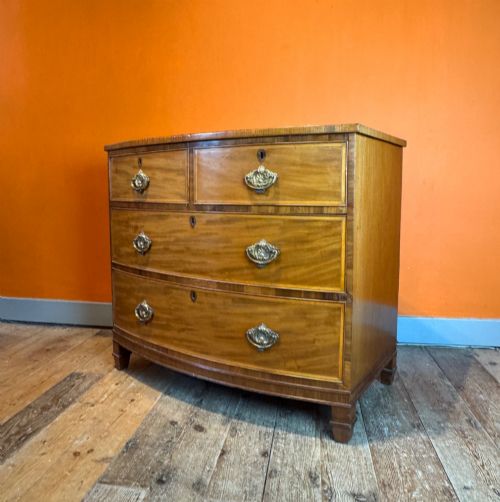
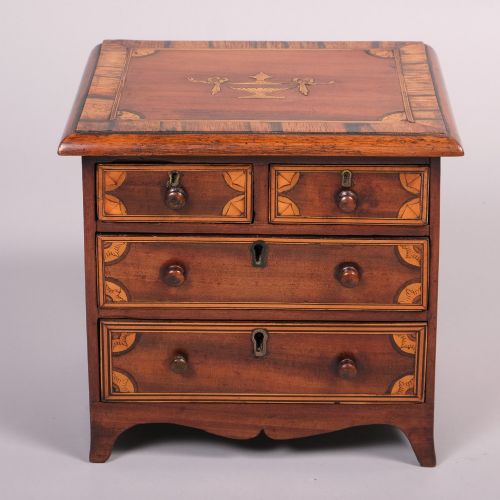
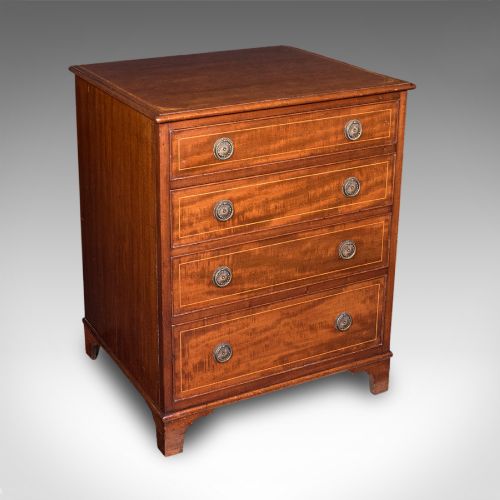
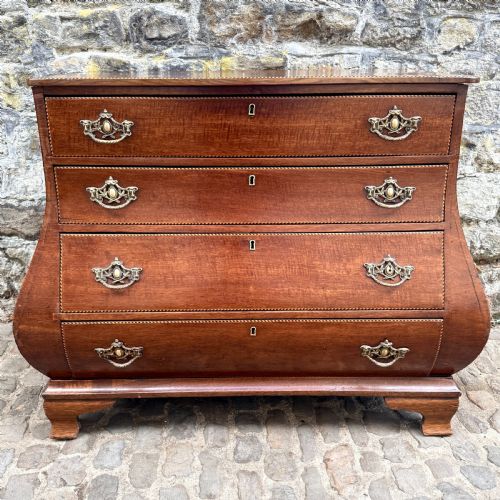
The selections available here range from serpentine fronts and bowfront chests to diminutive proportions and miniature chest of drawers. Buyers encounter substantial full-sized drawer units alongside smaller bedside variations and late eighteenth-century Dutch examples.
Originating predominantly from British workshops across the eighteenth and nineteenth centuries, these items reflect enduring cabinet-making traditions. The common thread uniting them is the warm hue of mahogany timber, frequently enhanced by cross-banded borders or satinwood inlay.
Materials and construction methods
Cabinet-makers relied primarily on solid mahogany and mahogany veneers applied to secondary woods such as oak, building carcases designed to withstand decades of daily use. Drawer linings often incorporated pine or oak, while structural integrity depended on traditional dovetail joints.
Surface decoration frequently involved contrasting timbers, with satinwood, boxwood, and walnut utilised for inlay work and cross-banded borders. Brass hardware, including drop handles and escutcheons, completed the construction, alongside functional additions like sliding brushing slides.
Warm Mahogany Commode Retail Price Guide 2026
Typical asking prices for warm mahogany commode among the pieces listed under this phrase on Sellingantiques today, from the lower quarter to the upper quarter. They describe what is for sale here now, not the wider market.
Listings span Georgian, Regency, and Victorian periods, with materials ranging from solid mahogany and oak to satinwood inlay, bone, and boxwood.
Distinguishing quality in period pieces
The division between standard examples and finer items rests upon the depth of timber figure, the crispness of inlay work, and the subtlety of proportion. Superior pieces display carefully matched mahogany grain across drawer fronts and delicate stringing details.
Construction nuance dictates overall worth, seen in hand-cut dovetailing, original brass furniture, and secondary timbers of substantial weight. Pieces featuring sophisticated forms such as serpentine fronts or breakfront layouts demand greater skill from the joiner.
The Warm Mahogany Commode Glossary
- Bowfront
- A convex curved front cabinet or chest of drawers popular during the Georgian and Regency eras. This shape softens the room's geometry while providing generous internal depth.
- Cross-banding
- A decorative border of veneer laid with the grain running perpendicular to the surrounding timber. It frames the drawer fronts of better-quality furniture.
- Brushing slide
- A pull-out shelf integrated above the top drawer of a chest, historically utilised for folding clothes or grooming. It slides flush into the carcase when not in use.
- Serpentine top
- A shaped surface featuring a convex centre flanked by concave curves, demanding high woodworking skill. This outline appears on select Victorian and Georgian chests.
- Tallboy
- A tall chest of drawers constructed in two stacked sections, combining wardrobe capacity with a compact floor footprint. Georgian examples often display notable height.
Warm Mahogany Commode: Frequently Asked Questions
What is a commode in antique furniture?
In historical terms, a commode refers to a low cabinet or chest of drawers designed for domestic storage. These items functioned primarily in bedrooms and living quarters for holding linens and personal items.
Over time, the designation expanded to cover various decorative drawer units and bedside tables. Their closed storage made them indispensable before built-in wardrobes became common in houses.
How do I date a mahogany chest?
Dating relies on examining construction methods, timber choice, and stylistic cues like bracket feet or turned legs. Georgian pieces often show hand-cut dovetails and oak drawer linings, while Victorian items lean towards heavier mahogany proportions.
Hardware styles and secondary woods also offer chronological clues. Examining the backboards and interior construction reveals the manufacturing period more reliably than exterior appearance alone.
Where should I place a commode?
A mahogany commode suits hallways, living rooms, and bedrooms where its rich timber adds warmth and texture. Bedside versions sit naturally beside sleeping quarters, offering surface space for lighting and small items.
Keep these timber pieces away from direct heat sources and strong sunlight to protect the polish. Their substantial presence allows them to anchor a room as a focal storage point.