


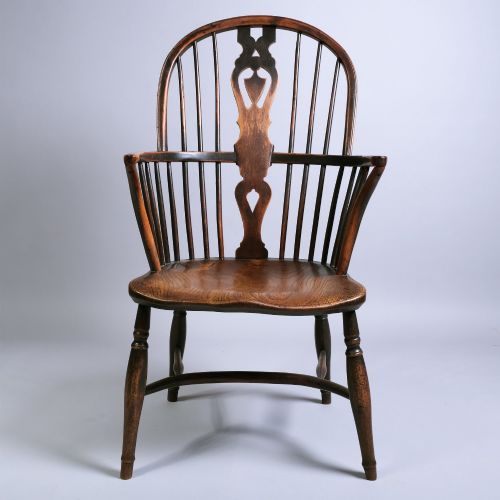
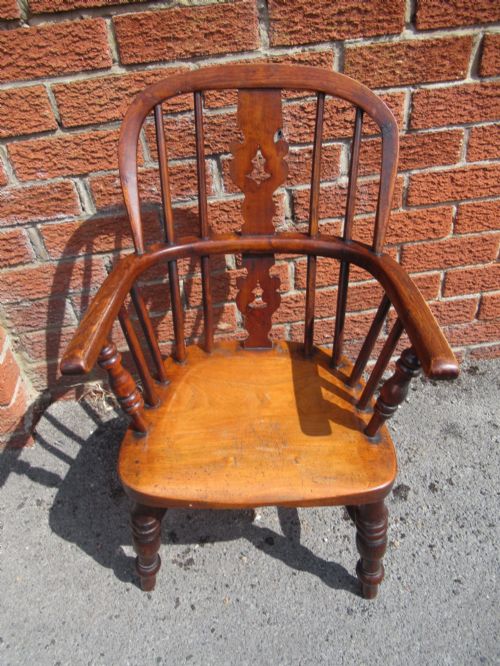
Warm Brown Windsor Armchair
A warm brown windsor armchair brings tactile grain and honest joinery into a room, offering both sturdy comfort and enduring regional character.
Warm Brown Windsor Armchair
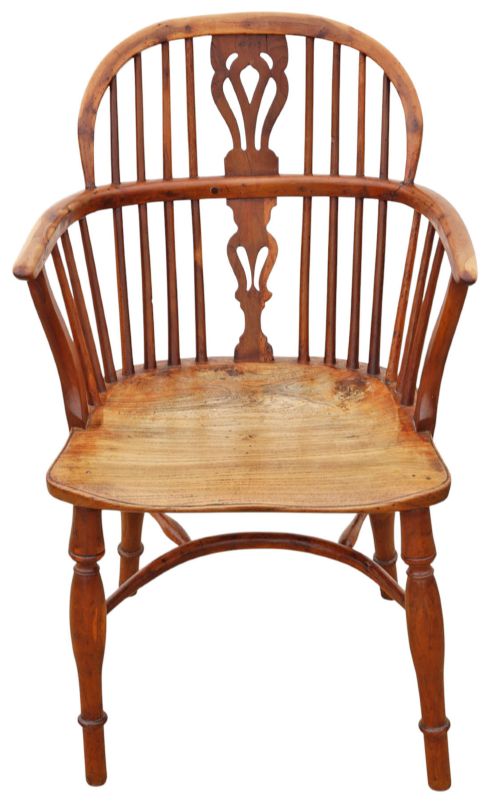
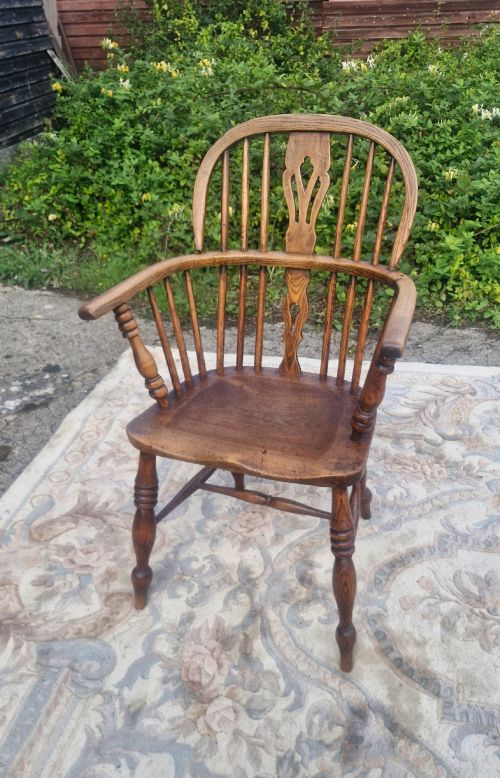
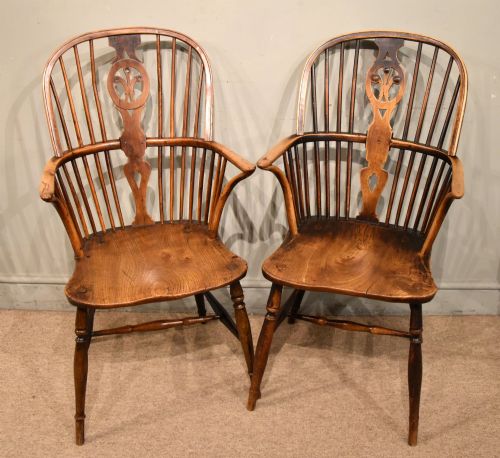
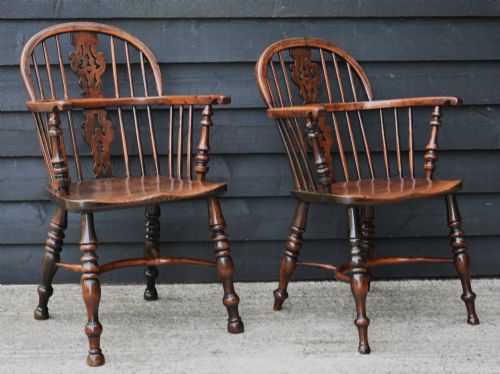
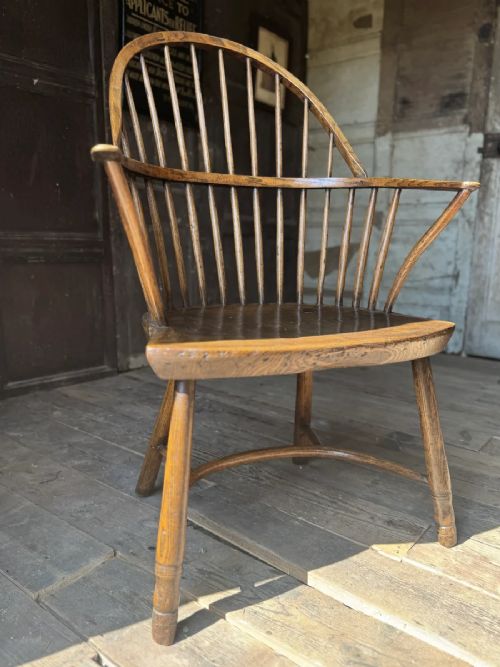
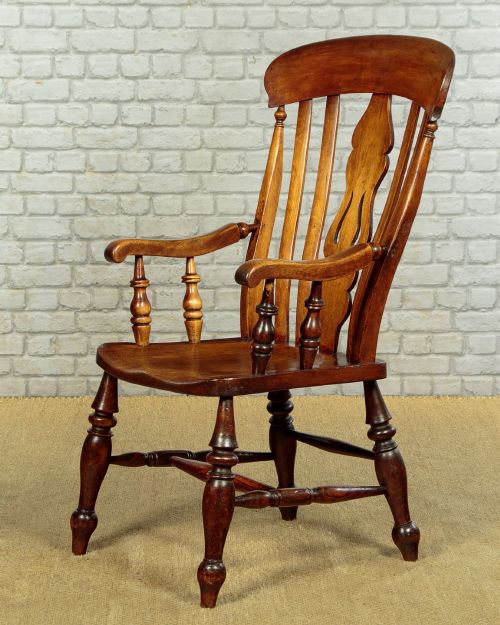
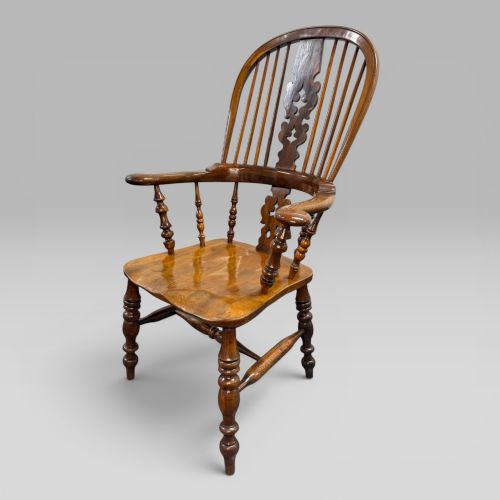
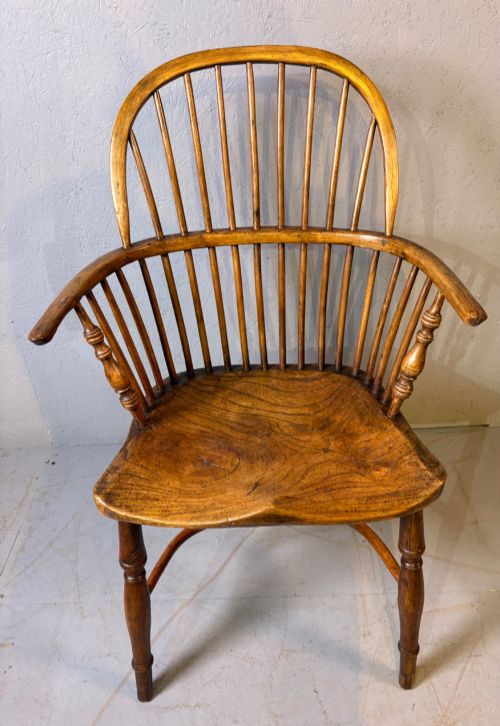
When you search for a warm brown windsor armchair, you encounter vernacular seating developed across English counties during the Georgian, Regency and Victorian periods. These chairs are defined by a solid wooden seat into which the legs and back spindles are wedged and pegged directly.
The regional variety ranges from West Country examples with crinoline stretchers to simple spindle and lyre back farmhouse chairs. Each piece reflects the local turner's hand and the specific requirements of rural domestic life.
Materials and construction methods
Maker construction relies on contrasting timbers selected for specific structural properties, pairing dense elm seats with resilient ash or yew for bent limbs and spindles. Fruitwood and beech also appear frequently in framing and turnery.
Bending green wood using steam allows craftsmen to shape hoops and bows without splitting the grain, while legs are turned on a lathe and wedged through the saddle seat.
Listings feature elm, yew, ash, beech, fruitwood, oak and birch across Georgian, Regency and Victorian periods.
Distinctions in quality and finish
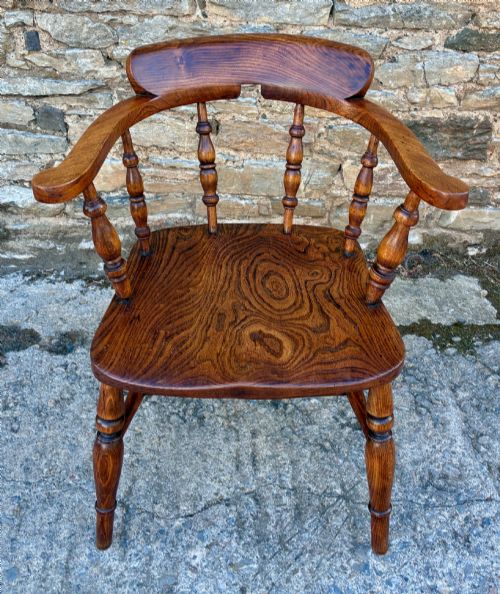
Quality rests upon the selection of timber figure, particularly the rich chatoyancy found in yew and the deep grain patterns of well-figured elm seats. Chairs with balanced proportions and crisp turnery stand apart from utilitarian examples.
Surface finish dictates visual depth, where decades of handling develop a rich, honest patina rather than a flat, modern coating.
The Warm Brown Windsor Armchair Glossary
- Comb back
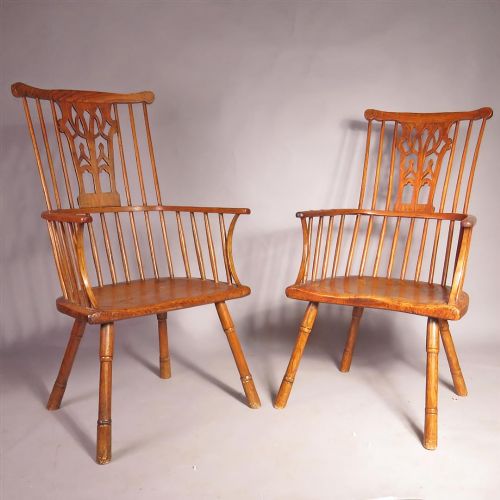
- A Windsor chair variation where the top rail resembles the teeth of a comb, supported by vertical spindles rising from a low backrest.
- Crinoline stretcher
- An arched underframe connecting the legs of a chair, providing lateral stability while adding a decorative loop to the design.
- Saddle seat
- A thick wooden seat base sculpted with hollows for comfort, typically shaped from a single solid slab of elm.
- Spindle
- A slender, turned vertical wooden rod forming part of the chair's back or structural underframe.
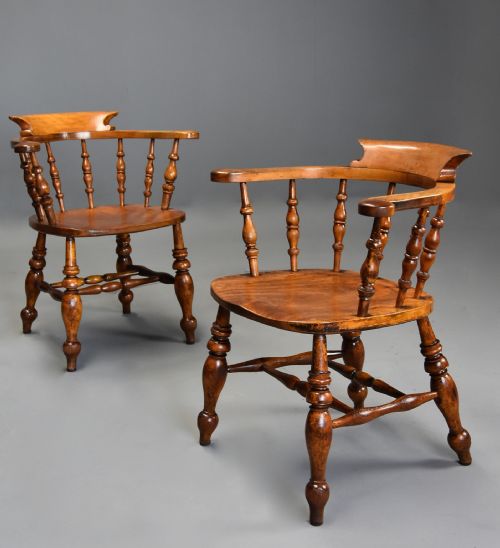
- Smokers bow
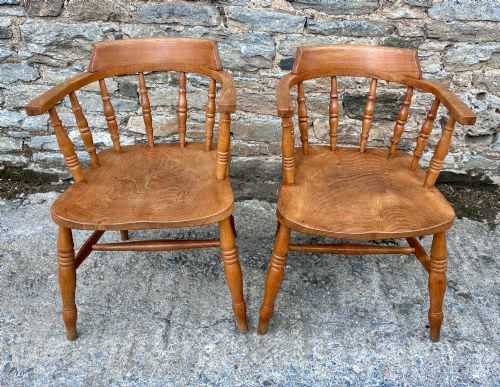
- A low-backed armchair with a continuous curved arm rail, often utilised in farmhouse kitchens and smoking rooms.
Warm Brown Windsor Armchair: Frequently Asked Questions
What woods are these chairs made from?
Makers relied on native British hardwoods, combining tough elm for carved seats with flexible ash or yew for steam-bent components.
Additional timbers like fruitwood, beech and birch appear in regional turnery and framing across various periods.
How do I date a windsor armchair?
Dating relies on observing structural changes, such as the evolution from heavy crinoline stretchers in earlier examples to simpler undercarriages on later pieces.
Seat thickness, tool marks and the specific profile of the turned spindles also provide clear indicators of period origins.
Were these chairs used in dining rooms?
These pieces served primarily as functional seating in kitchens, farmhouses and country house studies rather than formal dining spaces.
Their robust construction made them suitable for daily household tasks and fireside use.
How do I care for the wood finish?
Maintain the surface by applying natural beeswax sparingly and buffing gently with a soft cloth to preserve the historic patina.
Keep the chair away from direct heat sources and sudden humidity changes to prevent timber movement.