
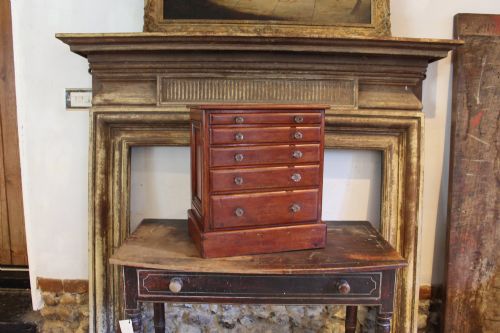
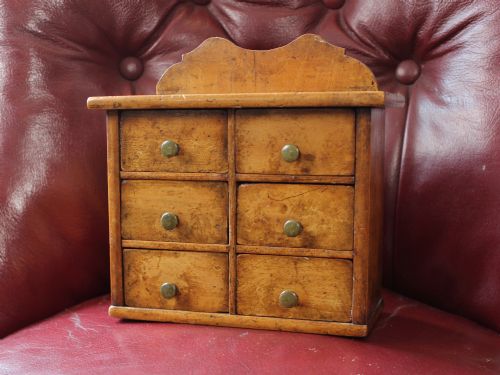


Warm Brown Collector Cabinet
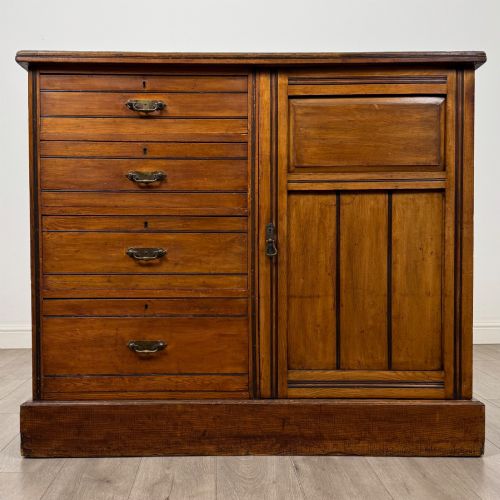
A warm brown collector cabinet gathers small treasures in timber tones from the seventeenth century to the Edwardian era.
Warm Brown Collector Cabinet
When you search for a warm brown collector cabinet, you encounter miniature chests, banks of drawers, and tabletop display pieces designed to house specimens, spices, or jewellery. These pieces date from the seventeenth century through the Victorian period, spanning styles from Spanish Baroque to Arts and Crafts.
The form exists to organise and display tangible studies or precious keepsakes close at hand. Makers built them for utility on counters, tables, or desks using durable hardwoods.
How they were made
Cabinet makers utilised solid woods like mahogany, walnut, fruitwood, and oak alongside burr walnut veneer to build these sturdy carcasses. Drawer construction involved precise joinery to support numerous small compartments without sagging.
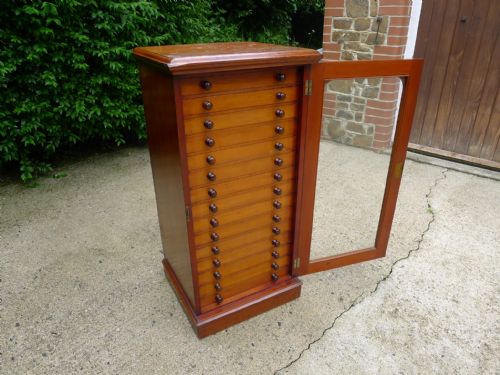
Brass handles, pulls, and locking mechanisms provide functional contrast to the dark timber surfaces. Glass panels appear on display and bijouterie variants to let light reach the interior contents.
One seventeenth-century piece is a Spanish Vargueno cabinet, bringing an unexpected drop-front flourish to the timber lineup.
What varies in quality
The sophistication of the internal drawer configuration dictates the standing of the piece. Cabinets with numerous fitted drawers for specific specimens demand greater joinery skill than simple boxes.
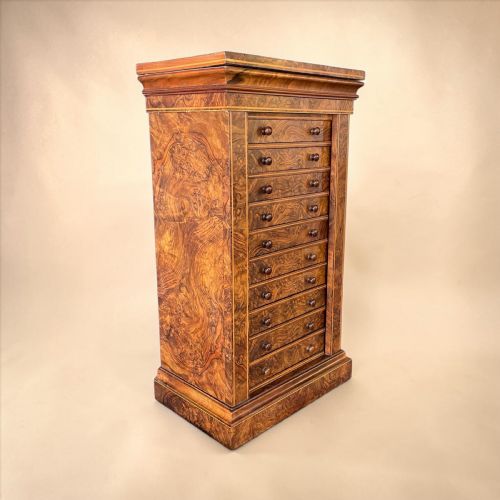
The choice of timber surface defines the visual weight, ranging from figured pitch pine and burr walnut veneer to plain fruitwood and oak. Original brass hardware and intact glass panels elevate the integrity of the whole.
Watkins & Doncaster·J.T.Crockett
The Warm Brown Collector Cabinet Glossary
- Wellington chest
- A tall, narrow chest of drawers secured by a hinged locking stile on one vertical edge. This design originated in the nineteenth century and keeps multiple shallow drawers secure.
- Standish
- A portable desk or stand fitted with inkwells and compartments for writing materials. In cabinet form, it incorporates small drawers for stationery or specimens.
- Bijouterie cabinet
- A glazed display case designed for small valuable items and jewellery. These pieces appeared during the Edwardian era with inlaid decoration.
- Spice drawers
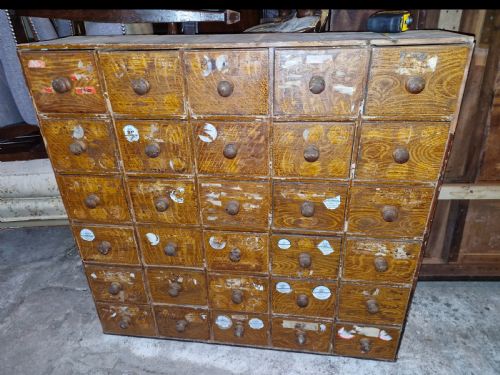
- A small set of multi-tiered drawers traditionally used in kitchens or apothecaries. Fruitwood and mahogany examples date back to the nineteenth century.
Warm Brown Collector Cabinet: Frequently Asked Questions
What fits inside these small cabinets?
These cabinets house small collections such as insects, jewellery, coins, or geological specimens within their multi-drawer layouts.
The shallow depth of the drawers keeps delicate items separated and organised.
Where should I place a tabletop cabinet?
Place your cabinet on a sturdy desk, counter, or table where the drawers can be opened safely.
Keep the timber away from direct heat sources to protect the veneer and solid wood.
How do I identify a Victorian piece?
Look for dense timbers like mahogany and walnut paired with brass hardware and traditional joinery.
Victorian examples often take the form of Wellington chests or labelled insect cabinets from the late nineteenth century.
What is the difference between a shop cabinet and a collector cabinet?
Shop cabinets feature glazed fronts or counter-top glass designed for retail display to customers.
Collector cabinets rely on solid banks of internal drawers meant for private study and storage.