
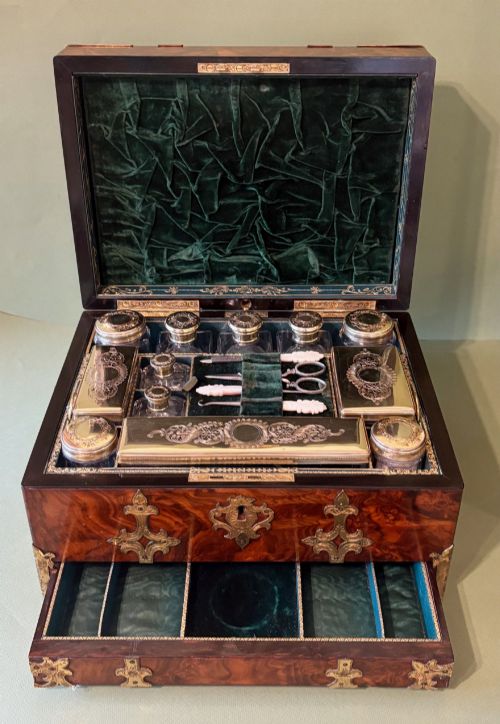
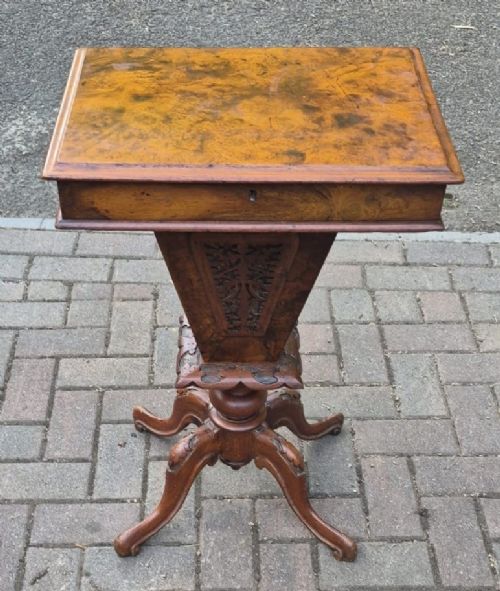
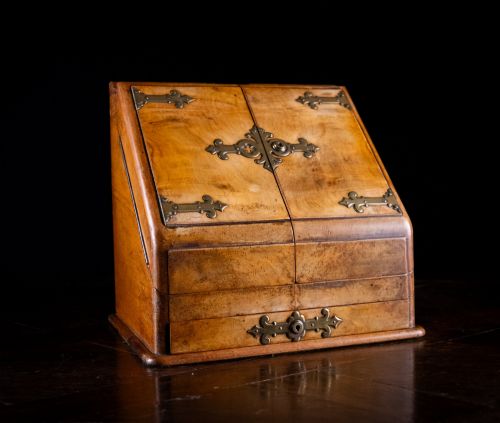

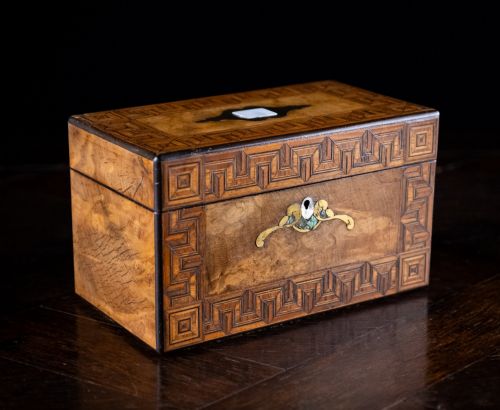
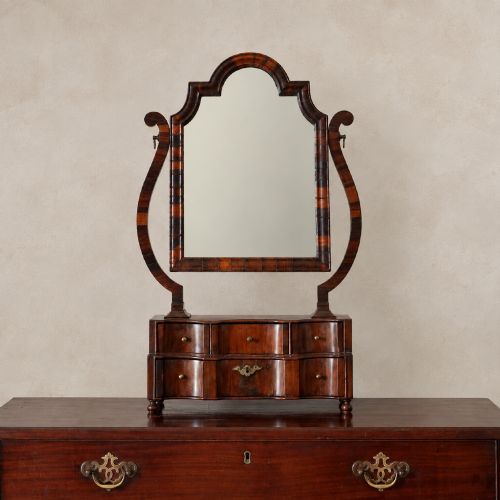
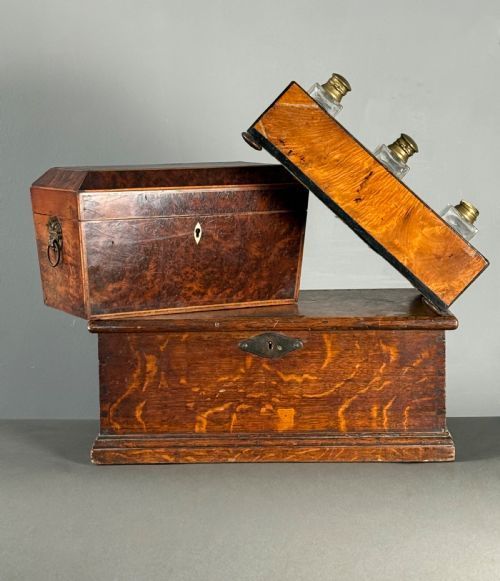
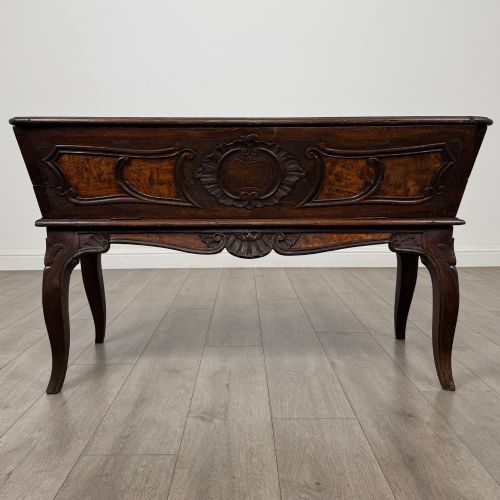
Walnut Wooden Box
A walnut wooden box brings tactile warmth and period utility to any room, offering a disciplined way to store letters, tea or jewellery.
Walnut Wooden Box
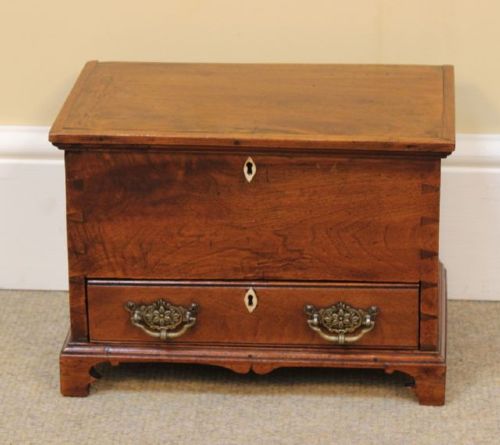
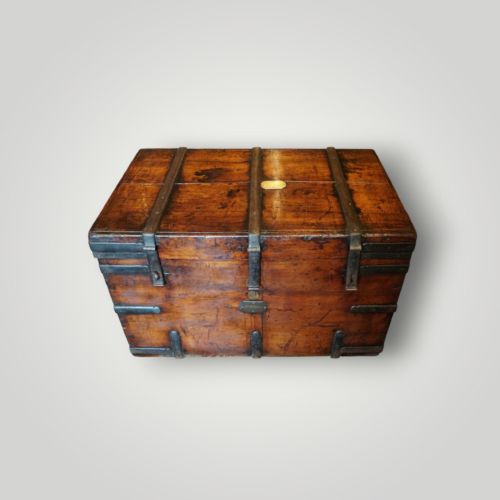
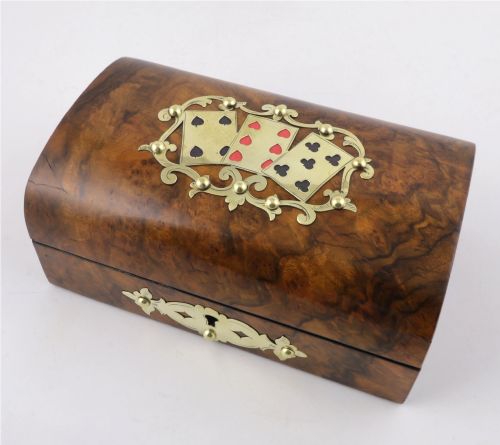
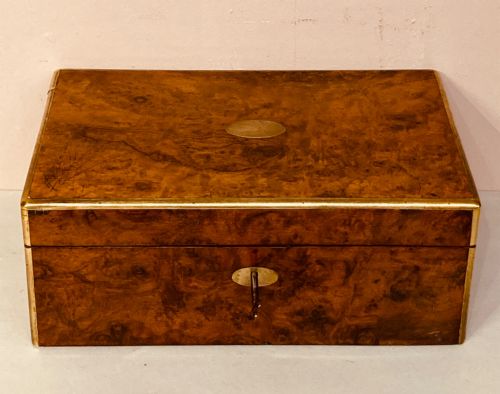
A walnut wooden box encompasses a diverse group of functional receptacles designed to hold tea, writing materials, correspondence or personal trinkets. Buyers searching for a walnut wooden box will frequently encounter Victorian and Georgian examples, alongside earlier pieces originating from the seventeenth century.
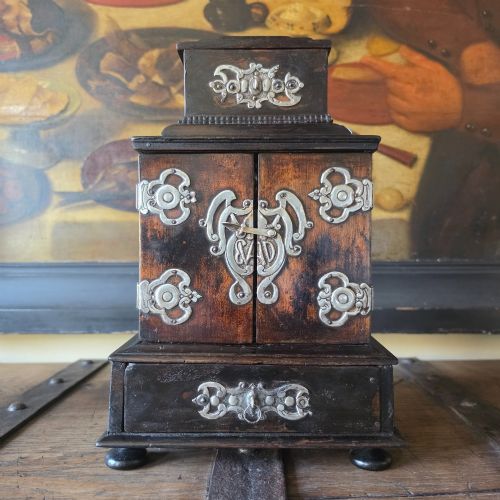
The assortment on this page spans utilitarian objects and decorative containers, featuring tea caddies, writing slopes, jewellery boxes and stationery cabinets. Many items demonstrate regional specialisms, ranging from English Tunbridge inlay and Black Forest carvings to continental caskets and Anglo-Indian work.
Materials and Technique
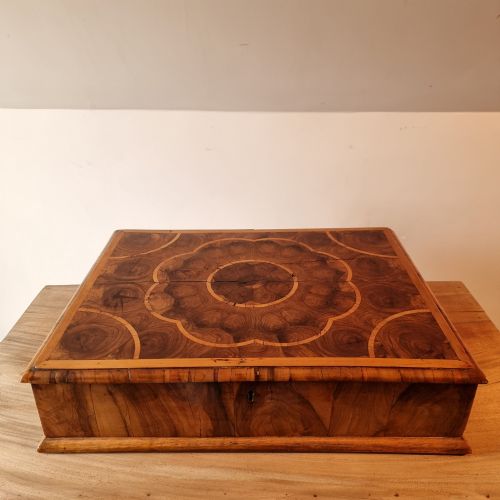
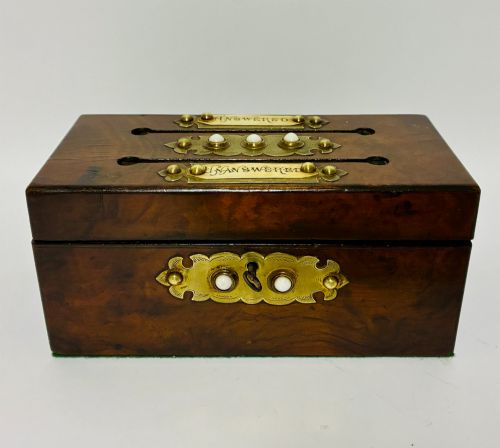
Craftsmen utilised solid walnut and highly figured burr walnut veneers over secondary timbers, often selecting the wood for its rich grain patterns and deep colour. Surfaces were frequently enhanced with intricate parquetry, Tunbridge wood inlay, or contrasting details in brass, bone, and mother-of-pearl.
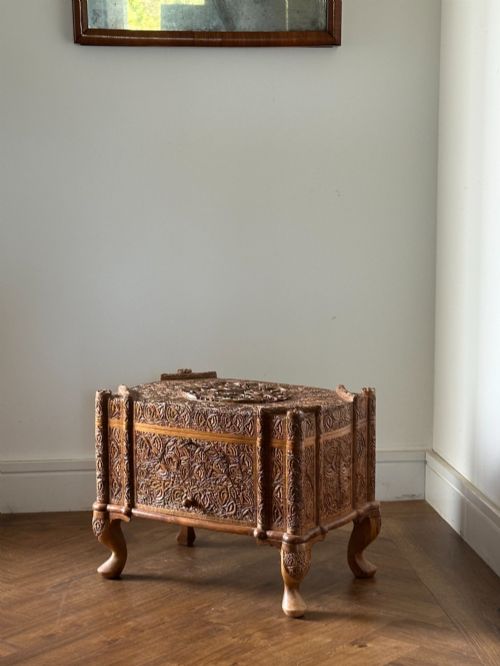
Construction techniques prioritized durability alongside aesthetic refinement, incorporating brass corner bindings, fitted internal compartments, and precise dovetail joints. Carved ornamentation appears on specific regional pieces, utilising the natural figure of the timber or incorporating applied mouldings.
Materials paired with walnut across these listings include brass, bone, mother-of-pearl, glass, and iron.
Evaluating Craftsmanship
Quality in these pieces is dictated by the selection of the timber, particularly the choice of figured burr walnut and the precision of the veneer work. Superior examples display seamless parquetry and meticulous inlay where every piece of wood or metal sits flush with the surface.
Internal fittings also distinguish finer specimens, showing intact silk linings, original brass locks, and cleverly engineered secret drawers within writing slopes and tea caddies. The integrity of the structural joinery and the survival of original patination elevate the standing of any container.
The Walnut Wooden Box Glossary
- Burr walnut
- A prized wood harvested from the wart or growth on a walnut tree, yielding a swirling and highly decorative grain pattern. Cabinet makers valued this veneer for the dramatic visual texture it brought to principal surfaces.
- Tea caddy
- A specialised container designed to store loose tea leaves securely, often featuring internal compartments and a locking lid. These boxes protected an expensive and valued commodity in historical households.
- Writing slope
- A portable desk featuring a hinged, slanted writing surface that folds flat when closed. Inside, compartments hold inkwells, pens, and paper for correspondence.
- Tunbridge inlay
- A meticulous mosaic woodworking technique originating in Kent, forming detailed geometric or pictorial designs from thousands of tiny tinted wood blocks. It appears frequently on nineteenth-century boxes and stationery cabinets.
- Parquetry
- A geometric mosaic of wood pieces used for decorative veneer on floors and furniture tops. On boxes, this technique creates crisp, patterned borders and checkerboard effects.
Walnut Wooden Box: Frequently Asked Questions
What is a walnut wooden box used for?
These containers served specific domestic functions in period households, acting as secure receptacles for correspondence, loose tea, tobacco, jewellery, or writing implements.
Today, they adapt easily to modern interiors as decorative catch-alls on desks, dressing tables, or sideboards while maintaining their historical utility.
How do I identify a Georgian box?
Georgian pieces typically exhibit restrained proportions, straightforward classical lines, and solid timber construction or simpler mahogany and walnut veneers.
Interior layouts tend to be functional without the complex mechanical spring-loaded mechanisms or excessive brass banding seen on later Victorian examples.
Are these boxes made of solid walnut?
Many better-quality boxes utilise walnut or burr walnut veneers applied over secondary woods like pine or oak to provide structural stability without warping.
Solid walnut appears more frequently on specific items like turned tobacco jars, carved trays, or certain structural elements and mouldings.
What distinguishes Black Forest boxes?
Black Forest containers originate from the woodworking communities in Switzerland and Germany, defined by deeply carved naturalistic motifs.
They frequently feature three-dimensional carvings of animals, foliage, or rustic scenes, utilising lime, walnut, or other local timbers.