
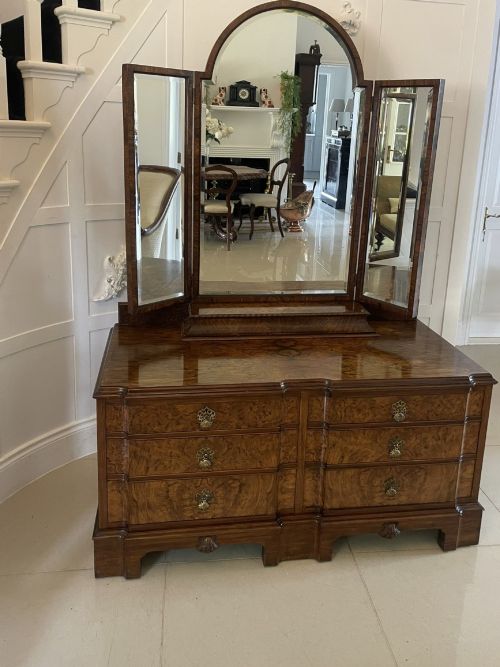
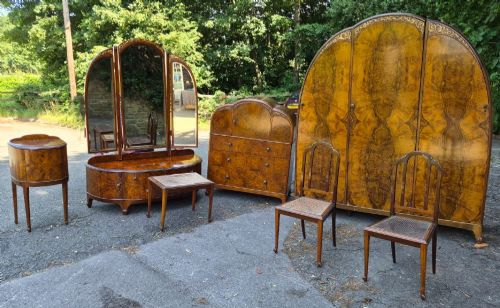


Walnut Vanity Chest Drawers
These walnut vanity chest drawers are sophisticated bedroom pieces designed for grooming and storage, combining rich timber with practical compartments for daily use.
Walnut Vanity Chest Drawers
When you search for walnut vanity chest drawers, you encounter a refined group of bedroom furnishings that blend the functions of a dressing table, a washstand, and a chest of drawers. The examples on this page span several distinct eras, stretching from the Victorian period through the Edwardian years and into the 1920s and 1930s.
The most common forms you meet here are dressing tables and dressing chests fitted with swing mirrors, alongside bow-fronted chests and occasional washstands. These pieces serve primarily as functional bedroom furniture that foregrounds the natural grain and warmth of walnut timber.
Origins vary across British and Continental traditions, with specific items showing stylistic nods to Queen Anne Revival, Art Deco, and Dutch Marquetry. Buyers find everything from compact jewellery boxes to complete seven-piece bedroom suites, each reflecting the domestic habits of its time.
How they were made
The construction of these pieces relies heavily on solid walnut and burr walnut veneers applied over secondary timbers, creating rich patterns across drawer fronts and table tops. Cabinetmakers selected burr sections for their swirling figure, contrasting them with straight-grained borders.
Hardware plays a structural and decorative role, with brass handles, hinges, and escutcheons secured to the timber work. Mirror glass, frequently mounted on adjustable swing frames, and marble inserts on washstands provide durable working surfaces that complement the wooden chassis.
Listings feature walnut, burr walnut, and satin walnut alongside brass hardware, glass, and marble tops across periods from the eighteenth century to the 1930s.
What varies in quality
The distinction between standard examples and the finest works lies in the selection of the burr walnut veneer and the precision of its book-matching across drawer tiers. Superior pieces exhibit seamless continuity in the grain pattern across multiple drawers, while lesser examples show mismatched cuts of timber.
Execution of decorative details such as marquetry inlay, carved mouldings, and Chinoiserie painting dictates the overall grade of the item. Furthermore, the retention of original brass hardware, intact mirror glass, and stable joints marks out superior craftsmanship.
Frank Taylor & Co.
The Walnut Vanity Chest Drawers Glossary
- Burr walnut
- A specialised wood veneer taken from the wart-like growths on walnut trees, prized for its intricate and swirling grain patterns. Cabinetmakers use it on prominent surfaces like drawer fronts to create visual depth.
- Dressing chest
- A hybrid furniture form combining the storage drawers of a chest with the mirror and surface layout of a dressing table. These units typically feature a swing mirror fixed above a set of graduated drawers.
- Bow front
- A convex, outwardly curved front section on a chest of drawers or cabinet. This shaping requires skilled joinery to bend or shape the timber and veneers smoothly.
- Marquetry
- The art of applying decorative veneer pieces of various woods to a structure to form intricate pictorial designs. Dutch examples often feature floral and botanical motifs across the entire surface.
- Washstand
- A dedicated bedroom or bathroom piece designed to hold a basin and washing utilities, frequently finished with a marble top for water resistance. Many double as low chests or dressing units.
Walnut Vanity Chest Drawers: Frequently Asked Questions
What is a walnut vanity chest drawers?
It is a bedroom furnishing that combines surface space for grooming with drawer storage for personal items. These pieces often incorporate mirrors or compartments designed for daily preparation.
They bridge the gap between a traditional chest of drawers and a dressing table, utilising walnut veneers to present an attractive appearance in a domestic setting.
How were these pieces used historically?
Owners used them in bedrooms for morning ablutions, grooming, and the storage of jewellery, linens, and garments. The inclusion of mirrors and small drawers accommodated personal care routines before modern fitted furniture.
Washstands held basins for washing, while dressing chests provided a surface for cosmetics and hair accessories, keeping personal belongings organised out of sight.
How do I distinguish Edwardian pieces from Victorian ones?
Victorian examples often display heavier proportions, darker finishes, and traditional revival styles, whereas Edwardian pieces can be lighter in scale and sometimes incorporate satin walnut or painted Chinoiserie decorations.
Examining the handles, internal drawer construction, and secondary woods helps clarify the period of manufacture, as Edwardian cabinetmakers favored slightly brighter tones and simpler lines.
How do I care for walnut furniture at home?
Keep walnut furniture away from direct sunlight and extreme temperature fluctuations to prevent the veneer from drying out or lifting. Dust regularly with a soft, dry cloth and avoid silicone-based polishes.
Applying a traditional beeswax occasionally helps nourish the timber and maintain the natural lustre of the burr walnut grain without building up a heavy chemical residue.