
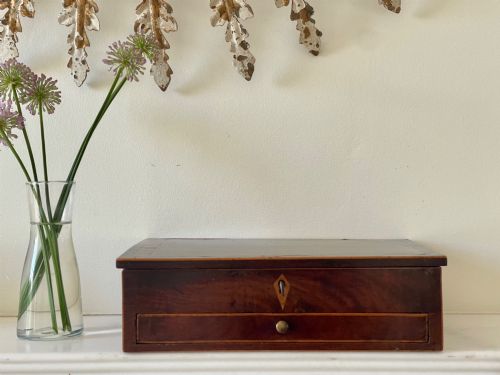
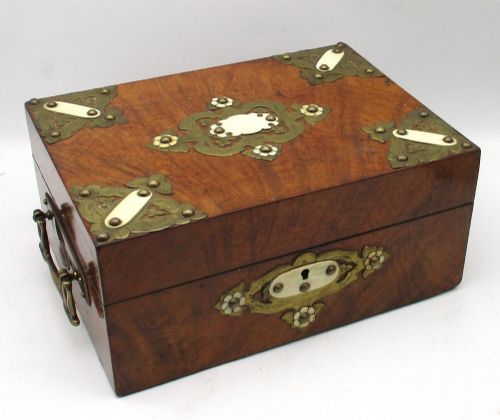
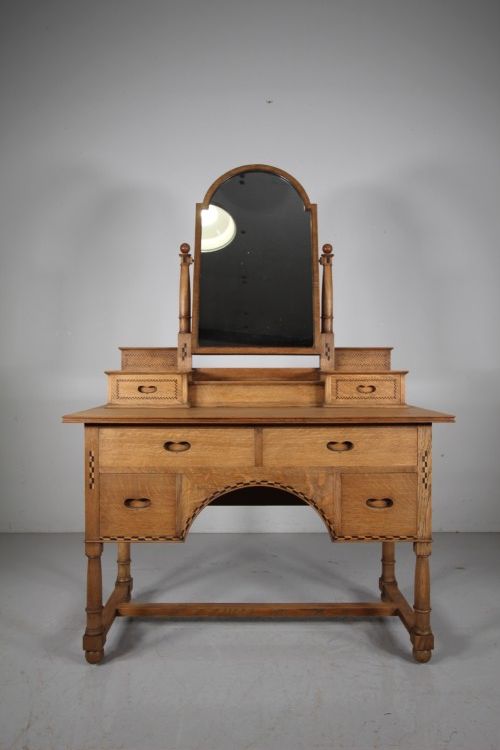


Inlaid Wooden Vanity Desk
An inlaid wooden vanity desk brings refined craftsmanship and intricate detail to a bedroom, offering a dedicated surface for daily grooming.
Inlaid Wooden Vanity Desk
An inlaid wooden vanity desk combines a practical writing or dressing surface with decorative contrasting wood details, often featuring compartments for personal items. These pieces span several historical periods, including the Georgian, Victorian, and Edwardian eras, reflecting the evolving domestic habits of their time.
Buyers browsing this selection encounter various forms, from kneehole dressing tables to lowboys and compact boxes. Mahogany, satinwood, and walnut frequently form the primary structure, accented with fine boxwood or marquetry details.
Stylistic influences range from the clean lines of the Arts and Crafts movement to the ornate flourishes of French Revival and Neoclassical designs. Pieces often originate from British workshops or continental makers, showcasing regional preferences in timber selection and decorative motifs.
How they were made
Cabinetmakers constructed these desks using dense hardwoods like mahogany, walnut, and oak for the primary carcase, ensuring structural stability over centuries of daily use. Timber was carefully selected for grain figure, utilising flame mahogany or burr walnut on prominent exterior surfaces.
Decorative surface patterns relied on precise woodworking techniques such as marquetry and line inlay, incorporating contrasting light woods like boxwood and satinwood into darker backdrops. Brass hardware, mirrored glass, and occasionally marble inserts completed the construction of these functional furnishings.
Listings feature pieces from the Georgian, Victorian, and Edwardian periods, constructed in mahogany, walnut, oak, and satinwood.
What varies in quality
The standard of a piece depends heavily on the precision of the timber inlay and the quality of the primary wood selection, where highly figured veneers indicate superior craftsmanship. Master cabinetmakers ensured seamless integration between contrasting woods, leaving no visible gaps or uneven edges across complex geometric or floral marquetry.
Internal construction details, such as dovetail joints in drawer boxes and the retention of original brass fittings, distinguish workshop production from mass-market output. The integrity of the polished finish and the preservation of secondary timbers also define the enduring worth of each item.
Gillows·Heals
The Inlaid Wooden Vanity Desk Glossary
- Inlay
- A decorative technique where pieces of contrasting material are inserted into a recessed surface to form a flat design. This method defines the primary visual appeal of these tables.
- Marquetry
- An elaborate form of inlay that applies fitted pieces of veneer to form pictorial or decorative patterns across a wooden surface. It often depicts floral arrangements or classical motifs.
- Satinwood
- A durable, yellowish timber prized for its lustrous sheen and smooth texture, frequently used for contrasting stringing or primary drawer facades.
- Lowboy
- A small dressing table or side table featuring a low profile with drawers beneath the surface, common in eighteenth-century British interiors.
- Kneehole
- A desk or dressing table configuration featuring a central recess for the legs, flanked by pedestals containing banks of small drawers.
Inlaid Wooden Vanity Desk: Frequently Asked Questions
What is an inlaid wooden vanity desk?
An inlaid wooden vanity desk is a functional piece of furniture designed for grooming or writing, embellished with contrasting wood details and decorative marquetry.
These tables typically include surface compartments, drawers, and occasionally mirrors or related seating arrangements suited for a bedroom or boudoir.
How were these desks used?
Historical owners utilised these surfaces for morning grooming rituals, applying cosmetics, arranging hair, or managing personal correspondence and documents.
The integration of small drawers and fitted interior compartments kept personal items, jewellery, and writing materials organised and secure.
How do I care for wooden inlay?
Preserving these pieces involves maintaining stable room temperatures and avoiding direct sunlight, which can fade delicate satinwood and walnut veneers.
Regular dusting with a dry cloth and occasional application of appropriate furniture wax keeps the polished wooden surface nourished without damaging the delicate inlay work.
How do I identify the period?
Dating relies on observing construction methods, timber choices, and stylistic cues such as Georgian symmetry or Edwardian simplicity.
Cabinetmaking techniques like hand-cut dovetails, secondary wood usage, and maker stamps or labels help narrow down the decade of manufacture.