

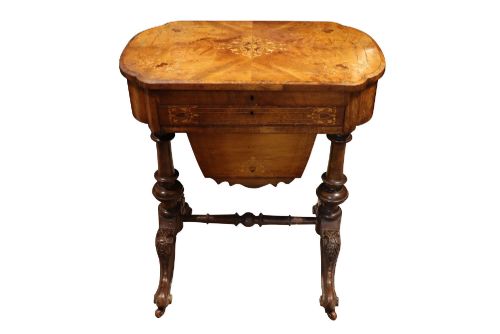


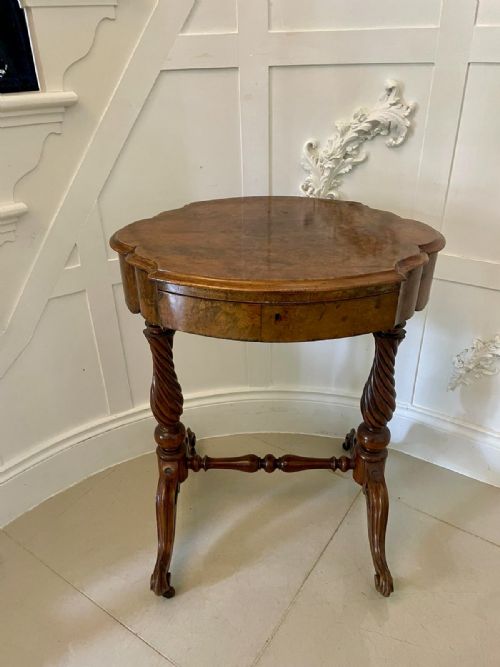


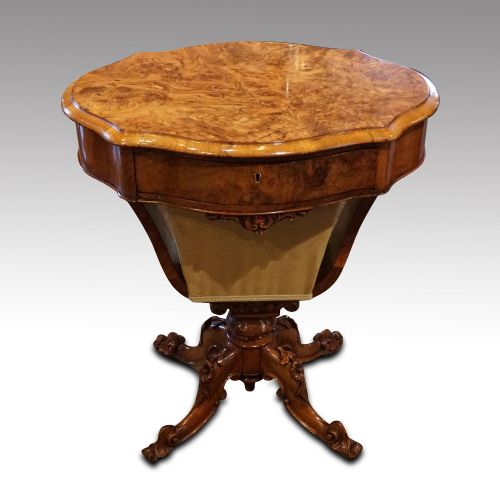

Walnut Trumpet Workbox
A walnut trumpet workbox is a piece of Victorian furniture designed for needlework, offering both practical storage and a distinctive trumpet shape that collectors prize.
Walnut Trumpet Workbox
The most common version you meet on this page is the Victorian burr walnut work table or trumpet workbox, often featuring an octagonal or oval top. Many examples combine sewing storage with integrated games boards, serving multiple functions within a domestic interior.
Originating predominantly in the Victorian era, specifically spanning the decades from 1850 to 1880, these tables reflect the high demand for specialised domestic furniture during the mid to late nineteenth century. They bridge the gap between utilitarian sewing containers and decorative occasional furniture.
How they were made
Cabinet makers utilised walnut and burr walnut as the primary timber, applying marquetry inlay, wood inlay, and boxwood inlay to enhance the decorative surfaces of the lids and pedestals. The distinctive trumpet shape is achieved by constructing outward-curving panels that flare from a central pillar down to a tripod base.
Internal fitted compartments, often lined with fabric, were constructed to organise sewing implements, threads, and tools beneath the hinged lid. Brass fittings such as hinges and locks provide structural integrity and secure the storage well.
The combination of solid wood framing, turned tripod legs, and meticulous wood inlay demonstrates the standard joinery techniques of Victorian workshops producing domestic sewing furniture.
Walnut Trumpet Workbox Retail Price Guide 2026
Typical asking prices for walnut trumpet workbox among the pieces listed under this phrase on Sellingantiques today, from the lower quarter to the upper quarter. They describe what is for sale here now, not the wider market.
Some Victorian makers added chess boards to the lids, ensuring owners could quickly pivot from doth-stitching to checkmate.
What varies in quality
The quality of a walnut trumpet workbox depends significantly on the selection of the burr walnut veneer and the precision of the marquetry or boxwood inlay. Finer examples display a rich, figured grain across the top and panels, whereas simpler versions rely on plain walnut surfaces.
Construction details such as the stability of the tripod base, the complexity of the internal sewing compartments, and the preservation of the original fabric lining separate standard utility pieces from higher-grade work tables. The crispness of the turned column and the fit of the lid also indicate the tier of craftsmanship involved.
The Walnut Trumpet Workbox Glossary
- Burr walnut
- A type of wood veneer taken from the growth excrescence on a walnut tree, prized for its swirling, highly figured grain pattern. Cabinet makers used it on the most prominent exterior surfaces of Victorian furniture.
- Marquetry inlay
- Decorative patterns formed by fitting small pieces of veneer into a prepared recess in the wood base. This technique creates complex pictorial or geometric designs on table tops.
- Boxwood inlay
- The insertion of narrow strips of pale boxwood into contrasting darker woods to create crisp borders and geometric motifs. It provides sharp linear definition on Victorian cabinet work.
- Tripod base
- A three-legged support structure commonly found beneath the central column of these tables. It ensures stability on uneven floorboards.
- Chess top
- A table surface decorated with contrasting squares for playing board games. It turns a standard sewing table into a dual-purpose piece for the parlour.
Walnut Trumpet Workbox: Frequently Asked Questions
What is a walnut trumpet workbox?
A walnut trumpet workbox is a nineteenth-century Victorian sewing table featuring a flared, cone-shaped body that resembles the bell of a musical instrument. It typically includes a hinged lid opening to reveal compartments for thread, needles, and fabric.
These pieces sat beside chairs in Victorian sitting rooms, keeping needlework tidy while serving as decorative occasional tables.
How were these tables used?
Victorian women used these tables to store sewing materials, embroidery, and small craft projects close at hand in the parlour. The fitted interior compartments kept spools and pins organised beneath the lid.
Many examples also doubled as games tables, featuring chess boards integrated directly into the tabletop for evening entertainment.
How do I date a trumpet workbox?
Dating relies on observing construction methods, timber choices, and stylistic markers recorded across the Victorian period from 1850 to 1880. Pieces from the 1850s often display simpler geometric forms, while those from the 1870s and 1880s frequently incorporate more elaborate boxwood and marquetry inlay.
Material choices, such as the use of burr walnut veneer combined with brass hardware, help narrow the manufacture within the nineteenth century.
How do I care for burr walnut furniture?
Maintain burr walnut by keeping it away from direct sunlight and steady sources of heat to prevent the veneer from drying out or cracking. Regular dusting with a soft, dry cloth preserves the polished finish without building up residue.
Avoid placing damp items or heavy moisture directly onto the wood surface, especially near inlaid boxwood or marquetry details.