


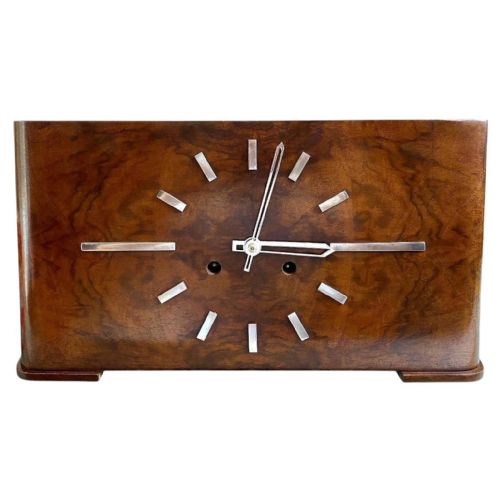


Walnut Table Clock
A walnut table clock brings architectural presence and mechanical precision to a desk or mantelpiece, uniting rich timber grain with reliable timekeeping.
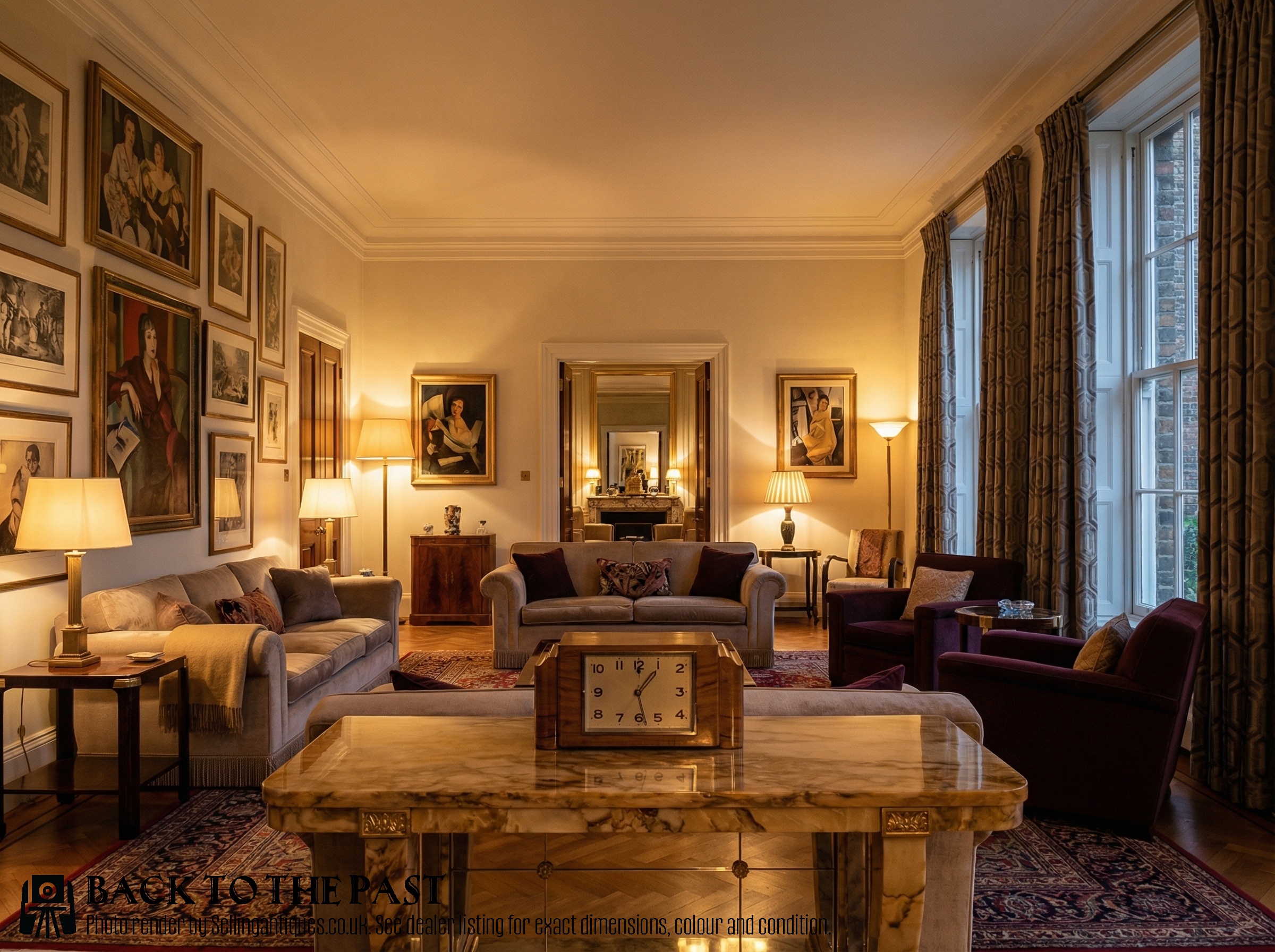
Walnut Table Clock
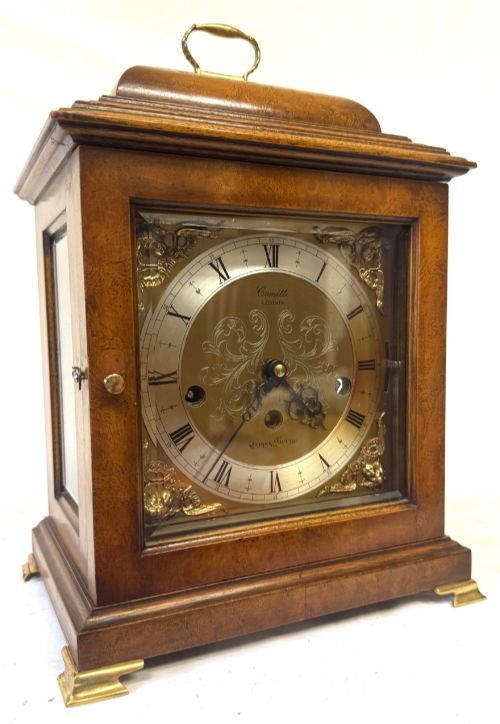
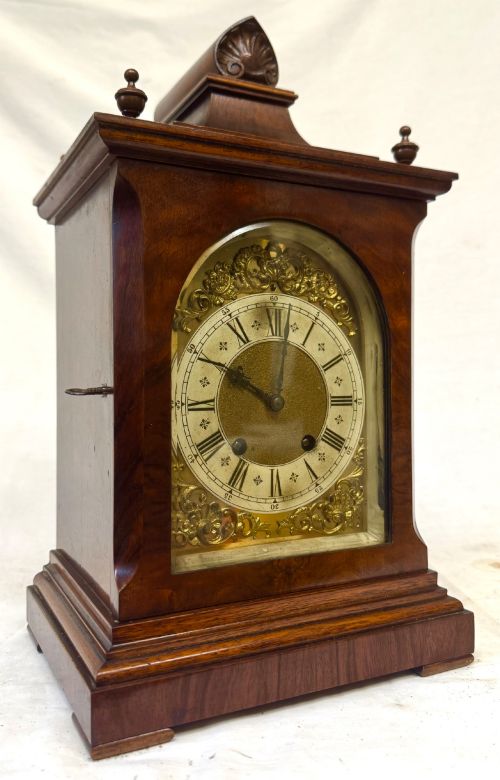
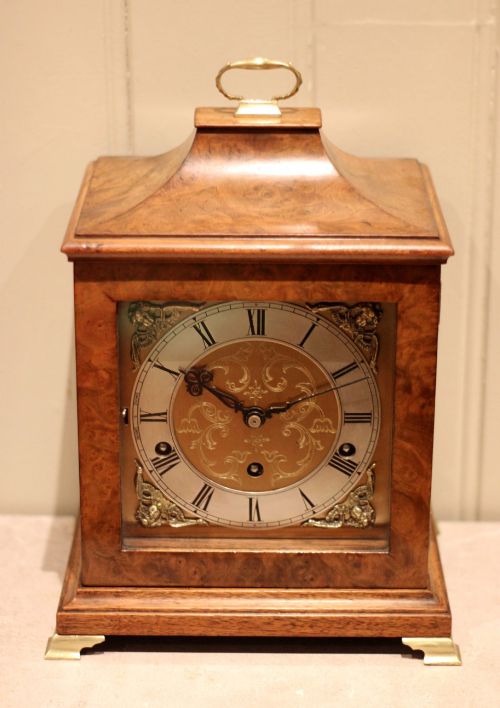
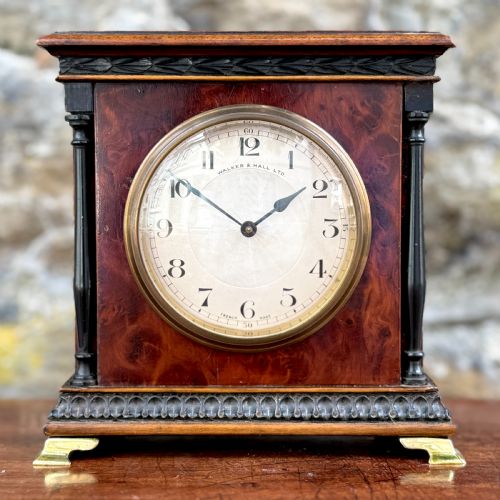
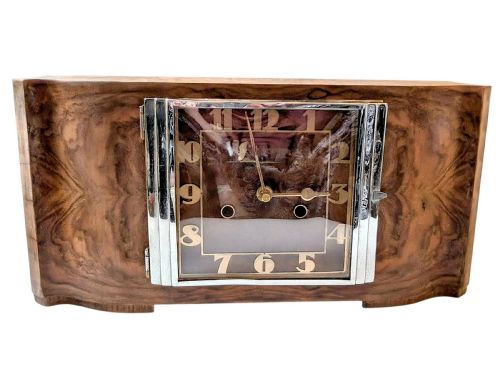
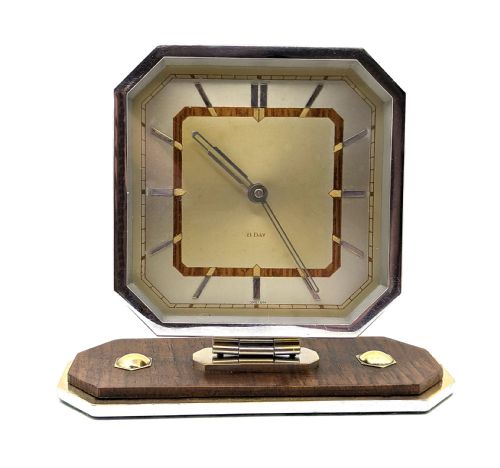
A walnut table clock is a portable timepiece designed for surfaces such as mantels, desks, and brackets, utilising rich wood cases to house intricate movements. Buyers searching for a walnut table clock encounter forms ranging from traditional bracket and musical models to geometric Art Deco designs.
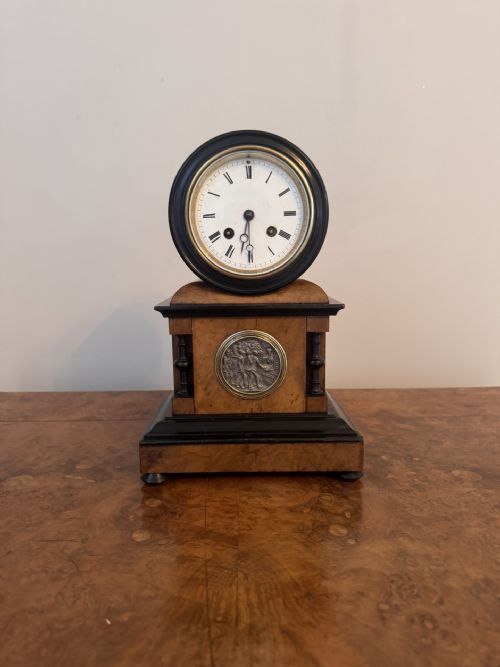
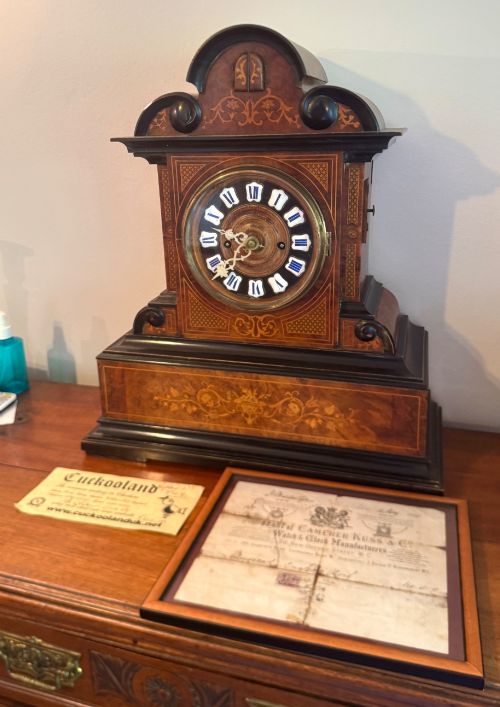
The selection spans several centuries, with nineteenth-century Victorian and carved Black Forest examples sitting alongside early twentieth-century Edwardian and Art Deco pieces. Makers and retailers such as Mappin & Webb, Lenzkirch, and Elliott of London frequently appear across the selection.
Most pieces function as striking or chiming clocks, often featuring Westminster chimes or multi-tune movements housed in figured, burr, or marquetry walnut veneers. Smaller desk versions and miniature bracket clocks provide alternatives for compact spaces.
What Varies in Quality
Quality rests upon the selection and matching of the walnut veneer, where figured and burr surfaces display superior grain depth compared to plain timber. The crispness of carved details in Black Forest or Victorian examples separates standard production from finer work.
Complexity and finish of the movement dictate the upper tier of pieces, visible in multi-tune mechanisms, triple fusee setups, and signed dials from notable makers. The integration of secondary materials like ormolu mounts, bevelled glass, and chrome elements influences the overall refinement.
Listings span periods from the eighteenth century through the nineteenth and twentieth centuries, featuring walnut, burr walnut, brass, glass, and chrome.
Comitti Of London·Lenzkirch·Mappin & Webb·Walker and Hall·Haller·Elliott·Mauthe·Perivale·Bravingtons Ltd·Winterhalder & Hofmeier·John Taylor·George Blackie·Richard Baker·Baldwin of Loughborough
The Walnut Table Clock Glossary
- Bracket clock
- A portable table clock originally designed to sit on a wall bracket to aid sound projection. Many later examples sit directly on mantelpieces or tables.
- Burr walnut
- A highly figured timber veneer taken from walnut tree growths, prized for its swirling grain patterns. It provides decorative contrast on clock cases.
- Fusee
- A conical pulley connected to the mainspring by a chain or cord, designed to equalise the power output as the spring unwinds. This mechanism improves timekeeping accuracy.
- Ormolu
- Gilded bronze applied as decorative mounts and feet on clock cases. It adds metallic contrast to the walnut timber.
- Chapter ring
- The circular ring on a clock face that displays the numerals for the hours. They appear in brass, enamel, or silvered metal.
Walnut Table Clock: Frequently Asked Questions
What is the difference between a bracket clock and a mantel clock?
Bracket clocks originated as portable timepieces placed on wall brackets to improve sound distribution, whereas mantel clocks are built specifically for resting flat on a shelf or surface.
Over time, the terms became interchangeable, though bracket clocks often retain more formal architectural proportions and arched tops.
How do I wind a mechanical table clock safely?
Insert the appropriate winding key into the winding arbor and turn it gently in the correct direction until you feel resistance. Avoid over-winding, as this can strain the internal spring mechanism.
Consult the specific movement type, such as an eight-day or fourteen-day train, to establish the correct winding schedule.
What maintenance do vintage walnut clocks require?
Keep wooden cases away from direct sunlight and sudden temperature changes to protect the walnut veneer and prevent warping or cracking. Dust the exterior gently with a dry cloth without applying modern polishes.
Mechanical movements benefit from professional cleaning and lubrication every few years to ensure reliable operation.
How can I tell an Art Deco walnut clock from a Victorian one?
Victorian examples tend to feature darker finishes, carved ornamentation, brass spandrels, and traditional arched or architectural wooden cases. They often incorporate Gothic or Rococo revival details.
Art Deco pieces display geometric forms, clean lines, contrasting materials like chrome, and stylised wooden veneers dating from the interwar decades.