


Walnut Storage Trunk
A walnut storage trunk offers substantial timber construction and historical depth, holding household goods securely while anchoring a room with rich dark grain.
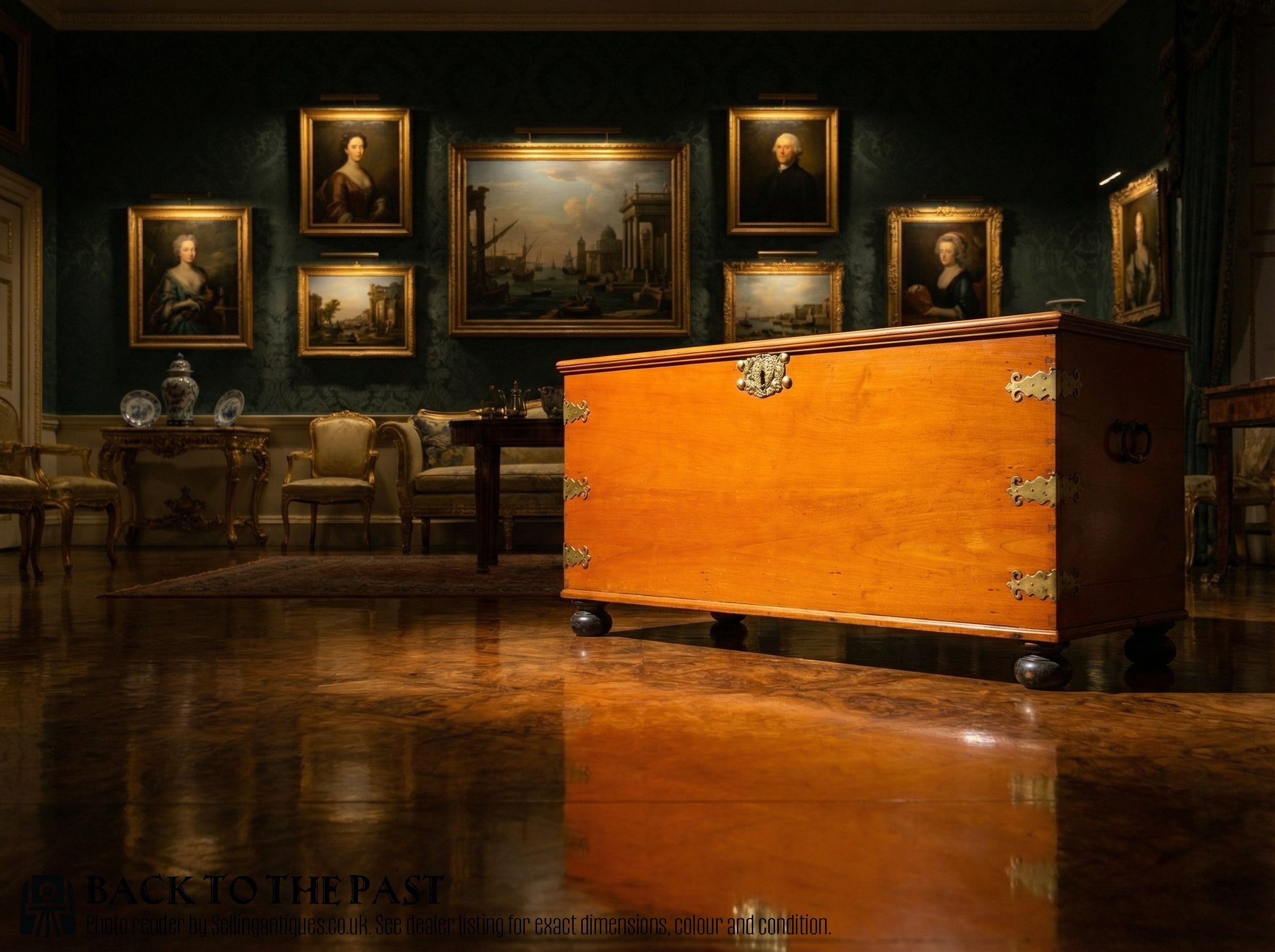
Walnut Storage Trunk
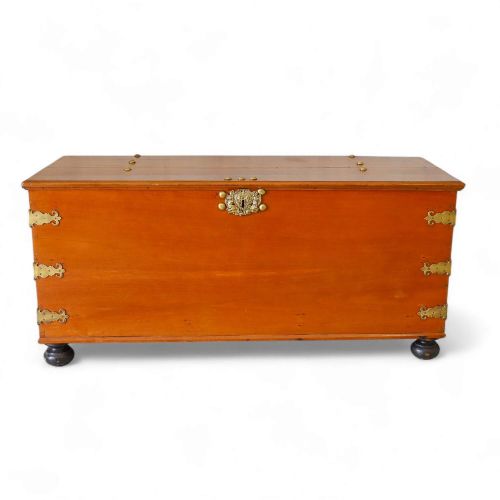
When you search for a walnut storage trunk, you encounter a robust lineage of heavy wooden containers spanning domestic utility and ceremonial storage. The versions most commonly met on this page range from plain colonial chests to ornate Italian cassoni and Spanish coffers.
The objects take many forms, including blanket boxes, travel cabinets, and commodes with lift tops, reflecting diverse regional workshops across centuries. These pieces served practical household functions in earlier periods before transitioning into prized decorative furnishings.
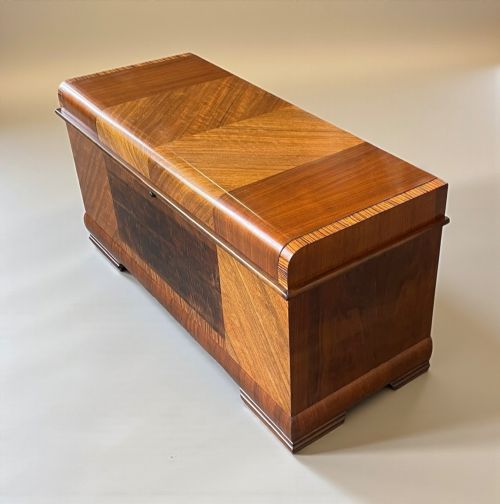
The chronological scope reaches from the sixteenth century through the Georgian and Victorian eras up to Art Deco designs. Each period brings distinct construction traits and decorative schemes to the fundamental form of the storage chest.
Materials and construction methods
Makers built these pieces primarily using solid walnut timbers, frequently augmented by secondary woods like oak and reinforced with iron or brass hardware. Metal mounts, hinges, and bindings provided structural strength and security for heavy contents.
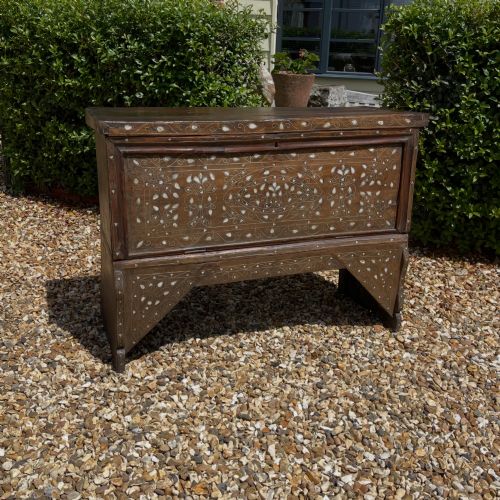
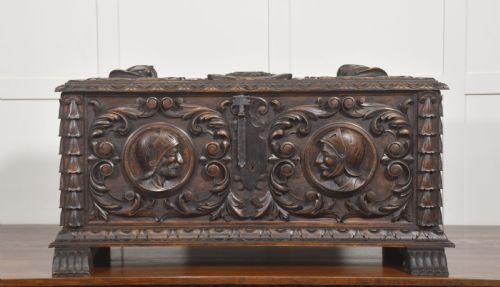
Surface ornamentation involved intricate techniques such as wood veneer application, bone or mother-of-pearl inlay, and figural carved medallions. Continental pieces often featured detailed surface gilding or geometric inlay patterns embedded directly into the primary walnut body.
The inventory spans multiple centuries, reaching from sixteenth-century Spanish royal pieces through the Georgian era to Art Deco blanket chests.
Assessing quality in historical trunks
The distinction between standard domestic items and elite examples rests on the crispness of carved figural work and the complexity of surface inlay. Pieces intended for royal or noble households display superior joinery, balanced proportions, and integrated decorative metals.
Condition and originality of the primary walnut surfaces determine the overall visual impact and integrity of the piece. Trunks retaining their original keys, hardware mounts, and authentic internal fittings hold greater historical interest than altered specimens.
The Walnut Storage Trunk Glossary
- Cassone
- A large Italian chest or coffer traditionally used for storing marriage dowry items and textiles. These pieces often feature elaborate carving, gilding, or painted decoration characteristic of Renaissance workshops.
- Coffer
- A strongbox or chest historically used for keeping valuables, documents, or personal belongings. They typically feature heavy timber construction with reinforced lids and secure locking mechanisms.
- Dough bin
- A specialised wooden container designed for preparing bread dough, occasionally adapted for general domestic storage. These utilitarian objects often display simple board construction and trestle supports.
- Commode
- A low cabinet or chest of drawers, sometimes incorporating a lift top in regional Continental variations. The form combines functional storage capacity with decorative surface display.
- Veneer
- A thin layer of fine walnut timber applied to a secondary wood core to create patterned surfaces. This technique allowed cabinetmakers to utilise striking grain figures economically.
Walnut Storage Trunk: Frequently Asked Questions
What were walnut trunks used for?
These trunks served as secure receptacles for valuable clothing, household linens, and legal documents in domestic settings. Wealthy households also utilised large cassoni to transport and display bridal dowries during marriage ceremonies.
Over subsequent generations, the function shifted towards static interior decoration and convenient fireside storage. Their robust construction allowed them to double as occasional seating or travel luggage in earlier centuries.
How do I date a walnut chest?
Dating relies on examining the structural joinery, regional style indicators, and decorative techniques applied to the timber. Sixteenth and seventeenth-century pieces typically exhibit heavy plank construction and deep relief carving, while Georgian and Victorian examples show refined proportions and different hardware styles.
Documentation associated with specific historical figures or estates also assists in establishing a reliable timeline. Changes in hinge types, lock mechanisms, and internal layouts offer further clues regarding manufacturing periods.
Are these trunks suitable for daily use?
Historic walnut trunks accommodate modern storage needs for blankets, pillows, and non-fragile household items effectively. Their sturdy timber frames and hinged lids provide practical access while maintaining a strong decorative presence in living spaces.
Care must be taken to protect antique wood surfaces from excessive moisture and direct sunlight. Placing felt pads beneath heavy items helps preserve original base timbers during relocation.
What defines a colonial chest?
Colonial chests reflect the furniture styles exported from European manufacturing centres to overseas territories during the eighteenth century. These pieces frequently utilise accessible local or imported walnut timbers combined with traditional European construction methods.
The design priorities focused on durability and functional storage capacity to withstand long-distance transport and demanding climates.