

Walnut Slope Desk
These walnut slope desk pieces offer fitted writing surfaces and timber grains, bringing period craftsmanship into daily use.
Walnut Slope Desk
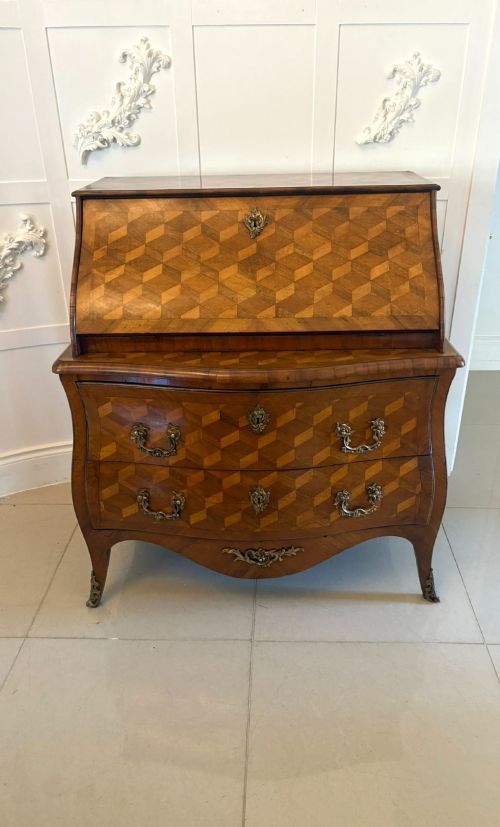
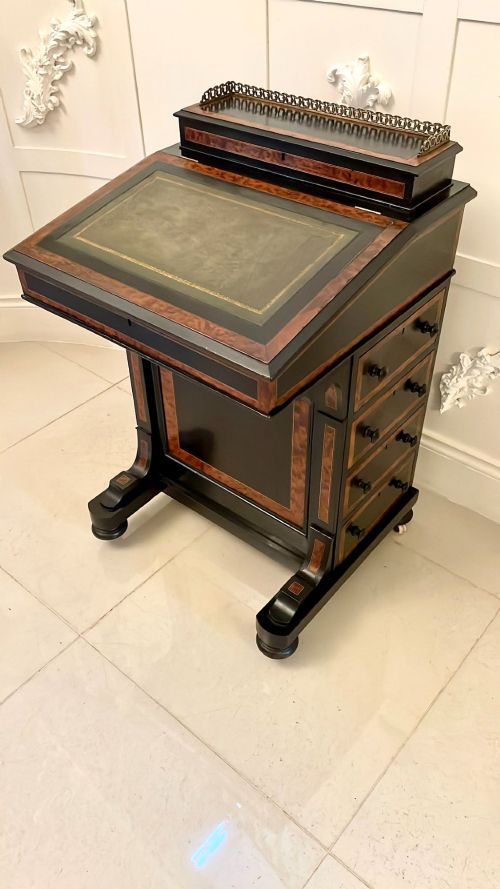
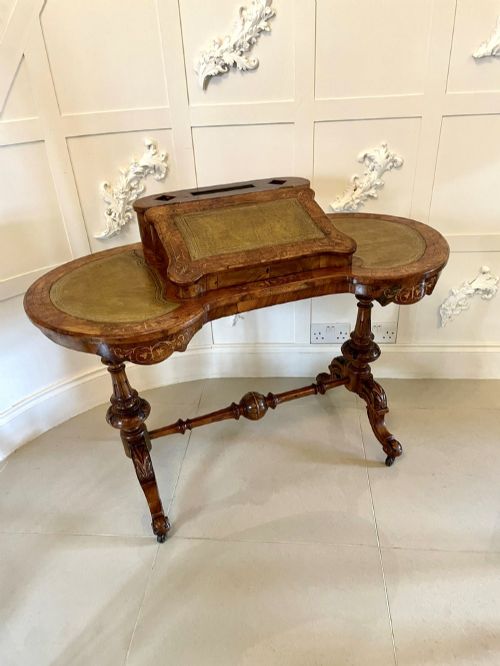
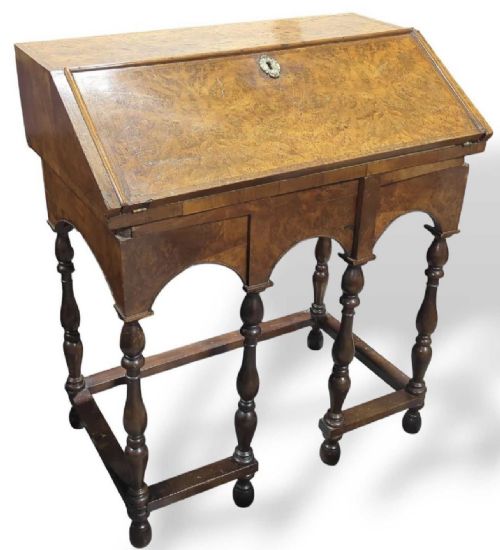
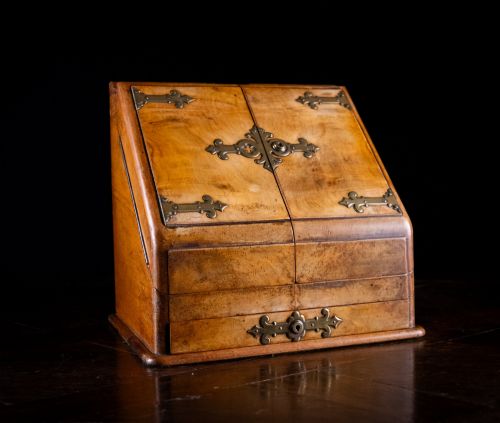
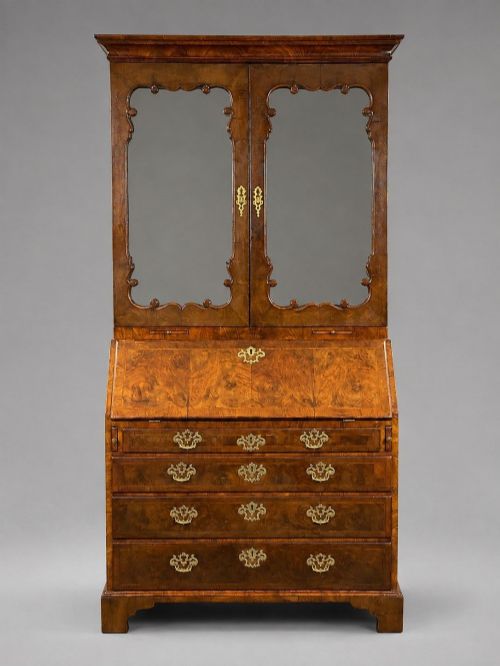
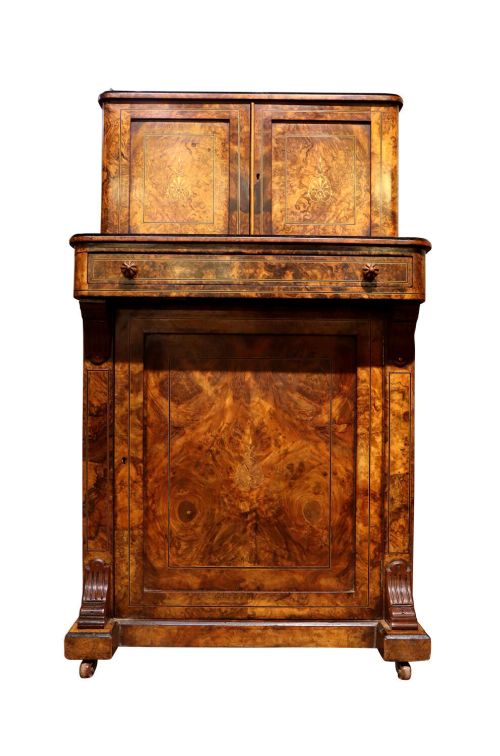
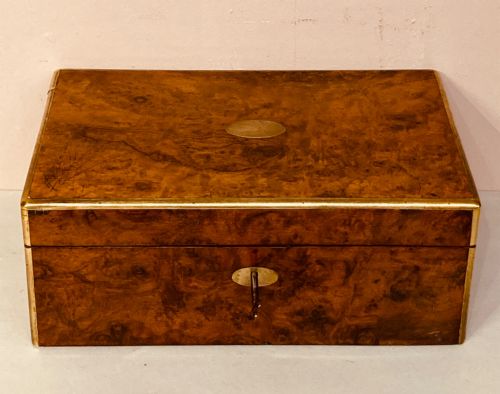
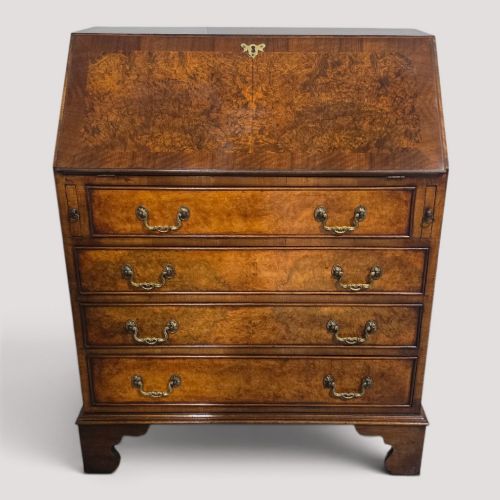
The domestic bureau and the compact Davenport represent the primary forms encountered on this page. These pieces range from early eighteenth-century bureaux on baluster supports to nineteenth-century stationery cabinets and writing tables.
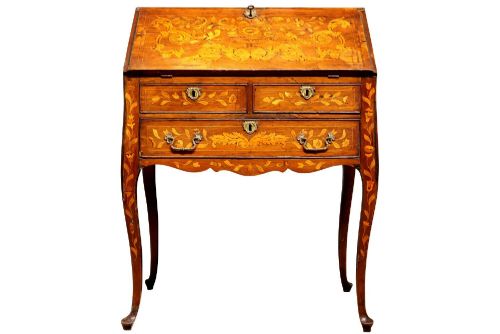
Regional variations span English vernacular workshops to Dutch baroque floral marquetry and French-influenced bombe shapes. Buyers will also find portable writing slopes and bureau bookcases alongside traditional fall-front desks.
Materials and Construction
Cabinet makers applied figured walnut veneers and burr walnut over secondary woods to display rich grain patterns. Crossbanding, ebonising, and brass mountings frequently accent the primary timber surfaces.
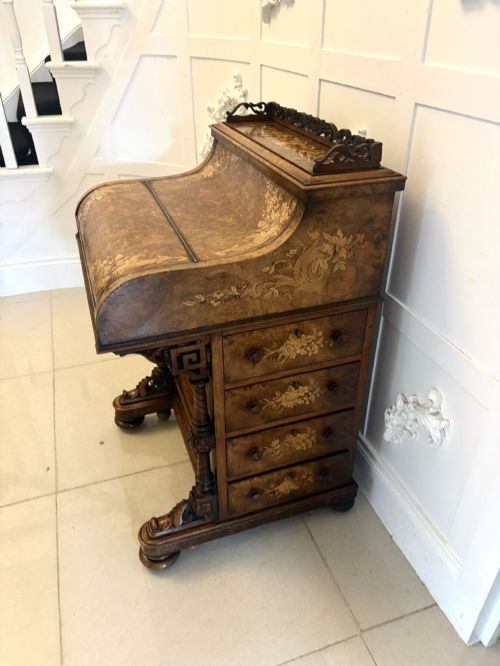
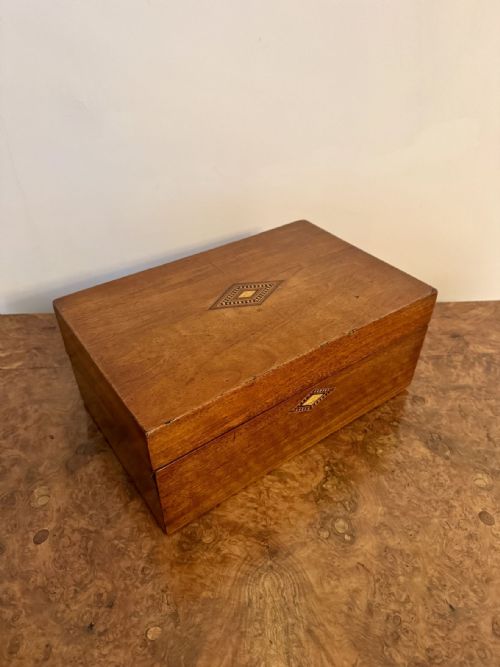
Marquetry inlay and parquetry utilise contrasting light and dark woods, alongside Tunbridge ware details, to create geometric and floral ornamentation. Interior compartments rely on meticulous dovetail joinery and small secret drawers.
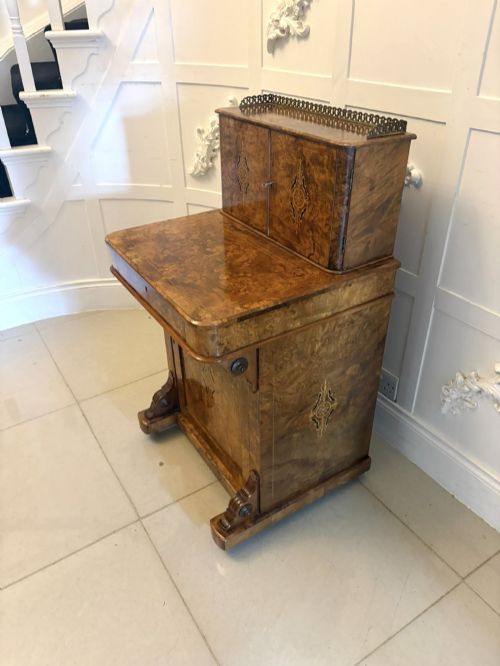
Several Victorian models include pop-up mechanisms and secret compartments designed to guard private correspondence from curious eyes.
Distinctions in Quality
Superior examples display exceptional choice in burr or figured walnut veneers that wrap harmoniously across the fall front and drawer facades. Subtle crossbanding and crisp floral marquetry elevate the visual depth of the timber.
Interior arrangement and original hardware dictate distinction at the upper tier. Fitted pigeonholes, functional secret compartments, and original brass or ironwork retain the integrity of the piece.
Gillow and Co
The Walnut Slope Desk Glossary
- Burr walnut
- A prized veneer taken from the gnarled growths of the walnut tree, showing swirling and intricate grain patterns. It provides a highly decorative surface on Victorian and Georgian writing furniture.
- Davenport
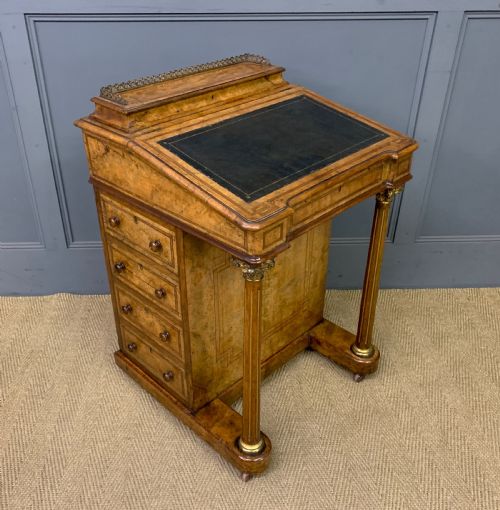
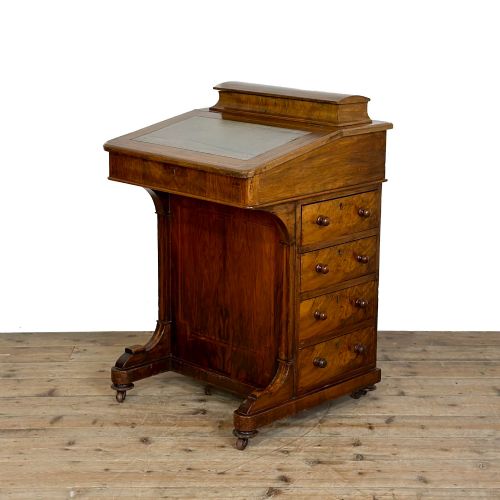
- A compact desk featuring a sloped writing top above a pedestal of drawers. This form gained popularity during the Victorian era for boudoir and parlour use.
- Bureau
- A writing desk with a hinged sloping lid that drops down to reveal fitted interior compartments and drawers. Early forms often rest on tall bracket feet or baluster supports.
- Marquetry
- Decorative woodwork where pieces of various coloured veneers are fitted into a ground material to form floral or pictorial designs. Dutch makers utilised this technique extensively on eighteenth-century furniture.
- Crossbanding
- A narrow strip of veneer laid around the border of a panel with the grain running perpendicular to the centre. This technique frames the primary walnut surface.
Walnut Slope Desk: Frequently Asked Questions
What is a Davenport desk?
A Davenport is a compact Victorian writing desk combining a sloped top with a bank of side drawers.
Interior compartments and stationary galleries often sit atop the main writing surface.
How do I identify an eighteenth-century bureau?
Eighteenth-century bureaux typically feature figured walnut veneers, bracket or baluster supports, and hand-cut dovetail joints.
Original ironwork or brass hardware further distinguishes these early pieces from later Victorian revivals.
What is the difference between a bureau and a writing slope?
A bureau stands as a piece of case furniture with an integral writing slope and lower drawers.
A writing slope is a portable box placed on a table to provide an inclined writing surface.
Where should I place a walnut desk in my home?
Freestanding Davenport desks and partner writing tables suit central placement in a study or living room.
Fall-front bureaux fit neatly against perimeter walls while offering concealed storage for modern correspondence.