



Walnut Rococo Sofa
A walnut rococo sofa combines curving frames with rich timber, offering a sculptural seat that anchors a room with period elegance.
Walnut Rococo Sofa
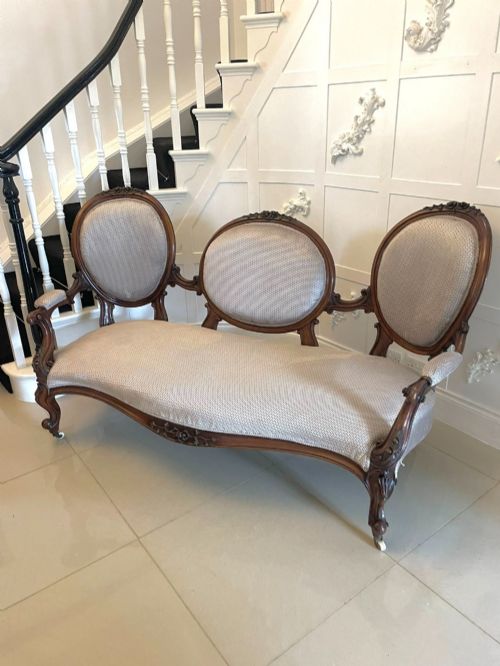
When you search for a walnut rococo sofa, you encounter nineteenth-century revival pieces alongside eighteenth-century origins, often styled as settees or salon suites. These seats display flowing lines and carved wooden frames that reflect Louis XV influences and Victorian interpretations.
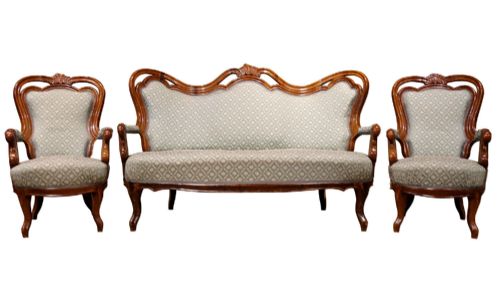
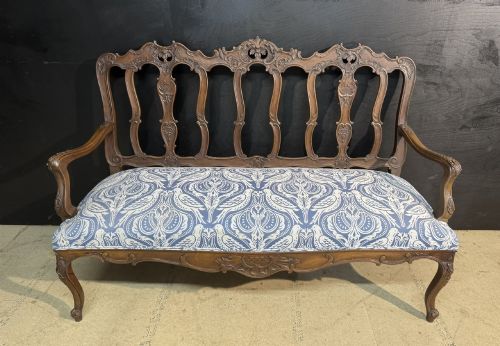
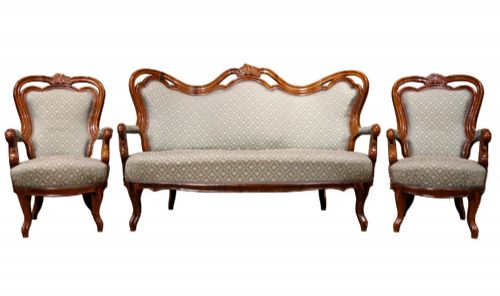
The most frequent examples on this page date from the Victorian era and the nineteenth century, taking the form of framed settees, cameo back sofas, and multi-piece salon suites. They range from compact two-seater couches to larger three-seater arrangements upholstered in textiles, velvet, or fabric.
Materials and construction
Cabinetmakers shaped these frames primarily from solid walnut and burr walnut, utilising the distinctive grain patterns of the timber to decorative effect. Carved details define the crest rails and cabriole legs, occasionally incorporating giltwood accents.
Upholstery completed the frame, with period pieces featuring traditional textile coverings such as velvet and woven fabric. Caning also appears on specific open-arm and settee variations.
Seating forms range from compact two-seater settees and chaise longues to expansive three-piece salon suites.
Distinctions in quality
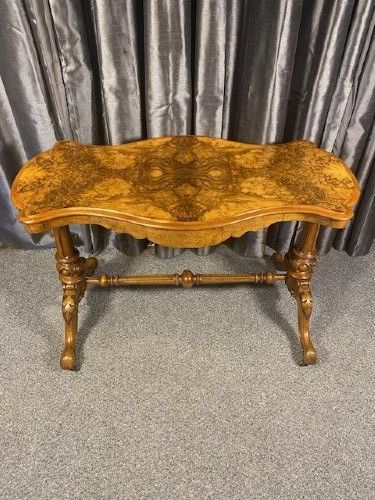
The standard of carving dictates much of the distinction between pieces, separating sharply defined floral motifs and fluent scrollwork from softer, simpler woodwork. The choice of timber grain, particularly the use of figured burr walnut veneers, elevates the visual presence of the frame.
Structural integrity and the fidelity of the revival style to eighteenth-century prototypes also influence the standing of a settee. Cohesion within larger salon suites, where chairs and sofas match precisely in timber and carving, marks higher workshop output.
Holland + Son
The Walnut Rococo Sofa Glossary
- Cameo back
- A framed upholstery panel shaped like a medallion or cameo, frequently centered on Victorian parlor seating. This design highlights the carved wooden border.
- Cabriole leg
- A furniture leg that curves outward in a convex arc and then bends inward in a concave arc, ending in a pad or scroll foot. It forms a defining feature of rococo revival seating.
- Burr walnut
- Timber taken from a walnut tree outgrowth, yielding complex, swirling grain patterns. Cabinetmakers utilised veneers of this wood on prominent surfaces.
- Salon suite
- A matched set of seating and occasionally matching tables designed for a formal reception room. These groups typically include a settee accompanied by armchairs.
- Giltwood
- Wood that has been treated with gold leaf or gold paint to produce a metallic surface finish. It appears on French revival frames to accent the carved decoration.
Walnut Rococo Sofa: Frequently Asked Questions
What is a walnut rococo sofa?
A walnut rococo sofa is an upholstered seat featuring a carved wooden frame made from walnut, defined by the asymmetrical curves and naturalistic motifs of the rococo revival style.
These pieces typically date from the nineteenth century, drawing inspiration from earlier eighteenth-century French designs popularized during the reign of Louis XV.
How do I date a walnut settee?
Dating a settee involves examining the timber preparation, the style of the carved ornament, and the construction methods visible beneath the upholstery. Nineteenth-century Victorian revival pieces often display heavier proportions and distinct machine-assisted joinery compared to eighteenth-century originals.
The specific vocabulary used in makers' records, such as cameo back or salon suite descriptions, also helps narrow the manufacturing period to the mid or late nineteenth century.
Where were these sofas placed?
Historically, these settees occupied formal reception spaces, drawing rooms, and parlors where homeowners entertained guests. They served as central decorative seating within coordinated salon suites alongside matching armchairs and centre tables.
In modern interiors, they function effectively as statement seating in living rooms, bedrooms, or wide hallways.
How do I care for antique upholstery?
Caring for antique upholstery requires gentle cleaning methods appropriate to the specific textile, whether it is velvet, damask, or simpler woven fabric. Regular light vacuuming with a soft brush attachment prevents dust accumulation without stressing fragile fibres.
Keeping the piece away from direct sunlight and maintaining stable room humidity protects both the delicate fabric and the underlying walnut frame from drying out.