



Walnut Rococo Settee
A walnut rococo settee brings sculpted warmth and curved elegance to a room, drawing the eye with fluid timber framing.
Walnut Rococo Settee
A walnut rococo settee is a carved wooden seat designed for formal reception rooms, drawing upon continental curves and nineteenth-century revivals. When searching this phrase, buyers encounter examples ranging from eighteenth-century continental pieces to nineteenth-century Victorian interpretations.
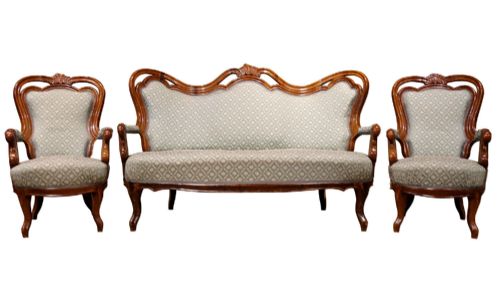
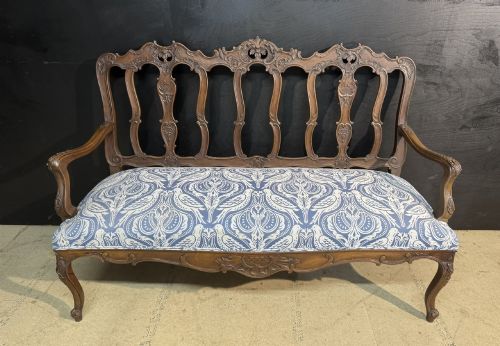
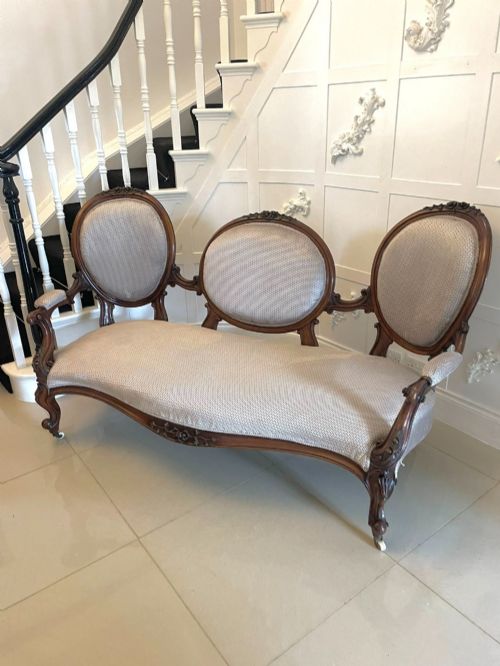
The dominant forms on this page include Victorian framed settees, multi-piece salon suites, and cane or upholstered couches. These objects span periods from the eighteen hundreds back to the eighteenth century, showing diverse regional interpretations of French styles.
Makers and craftsmen utilised dense hardwoods to support elaborate pierced carving along the crest rail and cabriole legs. Such seating provides both a decorative centrepiece and a functional resting place within a traditional interior.
Materials and construction methods
Cabinet makers worked primarily with solid walnut, selected for its rich grain and capacity to hold deep, sculptural relief carving. Frames frequently incorporate mortise and tenon joinery to stabilize the sinuous profiles characteristic of the style.
Upholstery techniques combined traditional stuffing materials with fabrics such as velvet, linen, and damask, secured with brass tacks or piping. Caning appears on specific lighter frames, woven tightly through drilled apertures in the wooden rails.
End-of-bed settees prove that nineteenth-century Victorians considered bedroom lounging just as important as drawing-room etiquette.
Distinguishing quality in walnut seating
Quality rests significantly in the crispness and depth of the hand carving along the crest and apron. Finer pieces display undercut foliage and flowing asymmetry without mechanical stiffness.
The choice of timber grain and the integrity of the frame construction further separate standard production from superior examples. Original joinery holding firm under testing indicates a higher standard of original workshop execution.
The Walnut Rococo Settee Glossary
- Cabriole leg
- A furniture leg that bends outward in a convex curve and tapers inward to a foot, mimicking animal limbs. This form is central to rococo and revival designs.
- Cane
- Woven peeled rattan used for seat panels or backs. It offers lightweight flexibility and visual transparency.
- Salon suite
- A matched set of seating furniture, typically comprising a settee and matching armchairs for a drawing room. These suites share identical carved details and upholstery fabrics.
- Cameo back
- An upholstered oval back panel set within a carved wooden frame resembling a cameo brooch. It is frequently seen on Victorian walnut parlor seating.
- Bergere
- An enclosed upholstered armchair or sofa with wooden framing and cane or upholstered sides. This French seating form prioritises domestic comfort.
Walnut Rococo Settee: Frequently Asked Questions
How do I date a walnut rococo settee?
Dating relies on examining the tool marks, timber shrinkage, and stylistic quirks of the carving. Eighteenth-century pieces show hand-cut joinery and different timber preparation compared to Victorian revivals.
Secondary indicators include the style of upholstery webbing and the specific shade of the walnut timber used in the primary frame.
Can I use an antique settee every day?
These settees were built for domestic reception rooms and handle normal sitting when the frame remains solid. Heavier usage requires checking that internal webbing and joints are stable.
Placing the seat away from direct sunlight protects both the polished timber and the textile coverings from fading.
What is the difference between French and Victorian styles?
French rococo designs emphasise asymmetrical scrolls and lighter proportions, reflecting eighteenth-century origins. Victorian revivals often feature heavier walnut frames and darker finishes tailored to nineteenth-century interiors.
Both styles employ curved outlines, but the Victorian interpretations tend toward greater symmetry and denser upholstery padding.
How should I clean walnut frames?
Dusting with a dry, soft cloth prevents particle buildup on the carved wooden surfaces. Avoid modern silicone sprays that can penetrate old finishes.
Periodic application of appropriate wax maintains the natural sheen of the timber without building up cloudy layers.