

Walnut Pedestal Centre Table
A walnut pedestal centre table anchors a room with figured grain and substantial Victorian or Art Deco presence.
Walnut Pedestal Centre Table
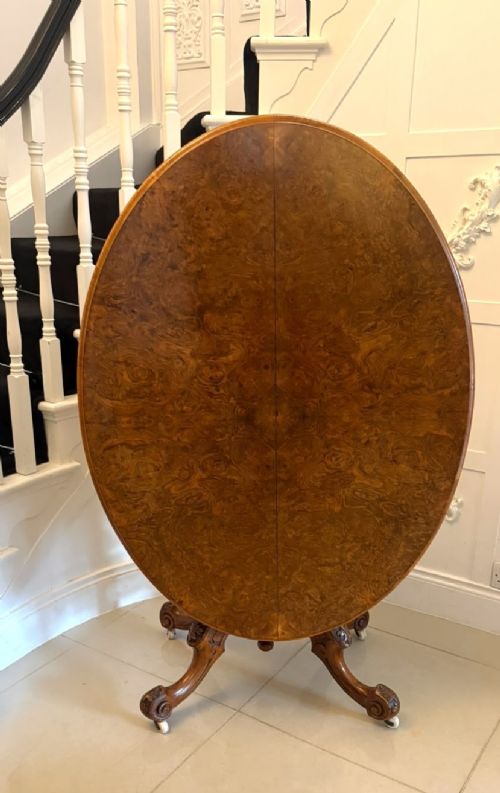
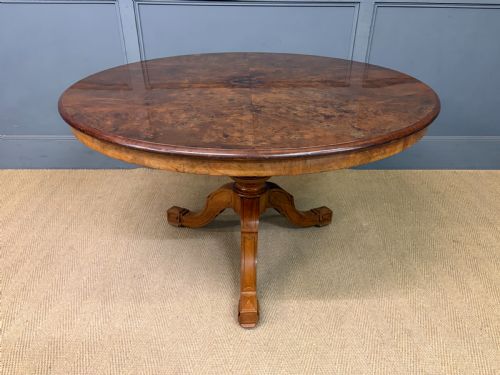
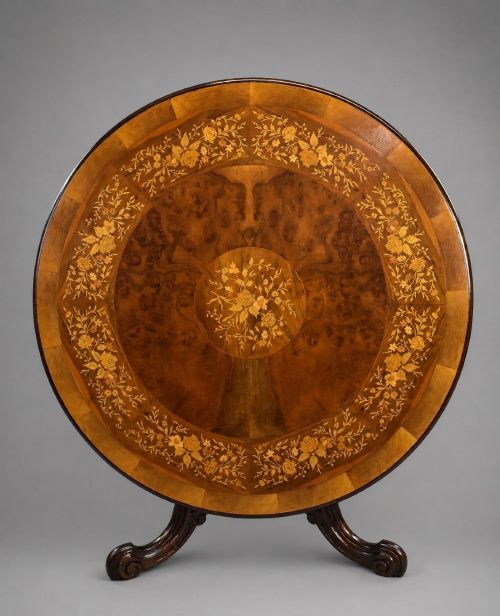
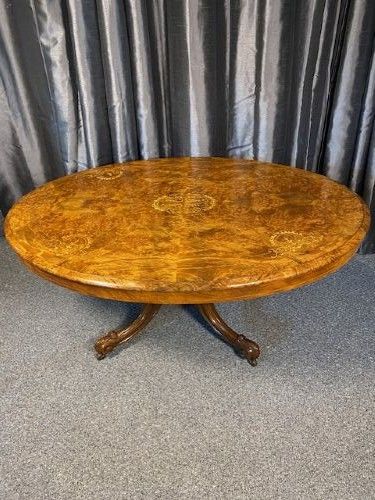
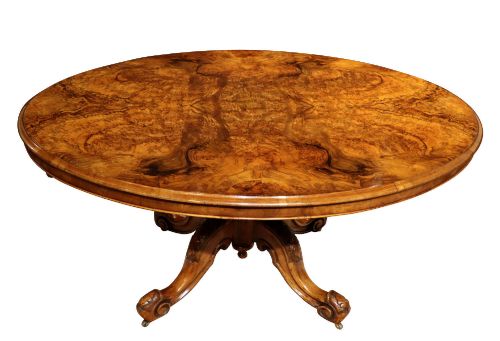
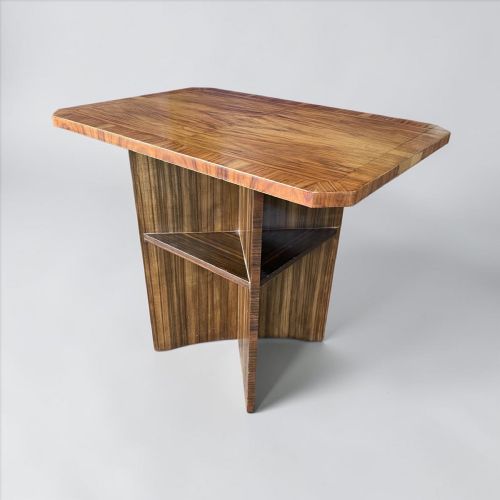
A walnut pedestal centre table stands free in a room, designed to be viewed from all sides rather than pushed against a wall. The walnut pedestal centre table variations encountered here span the Victorian period, alongside French designs and Art Deco interpretations from the nineteen thirties.
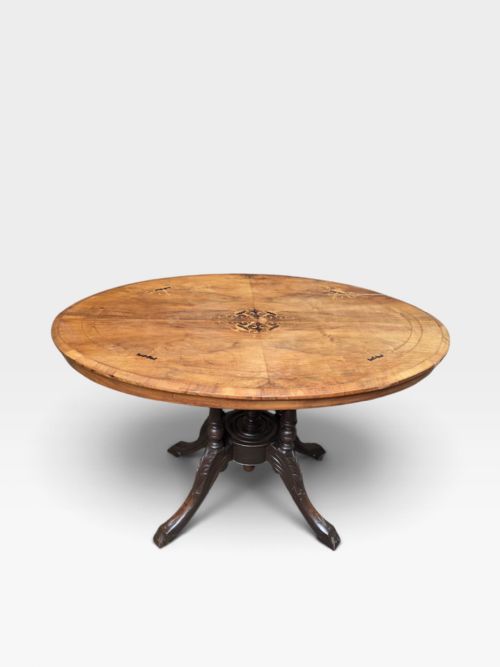
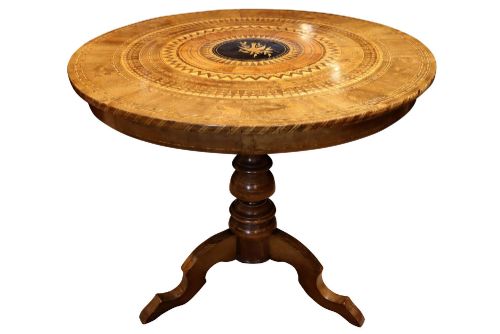
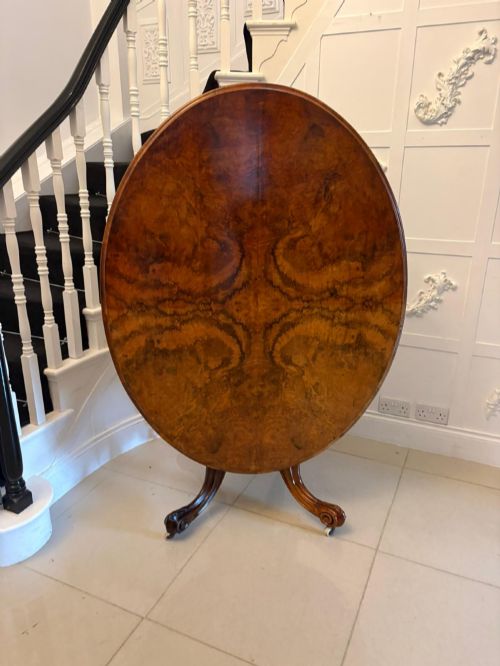
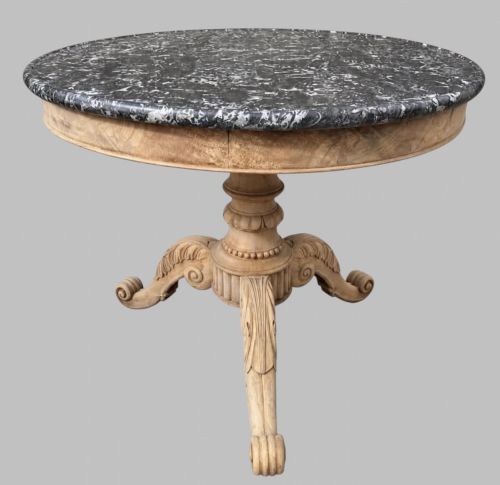
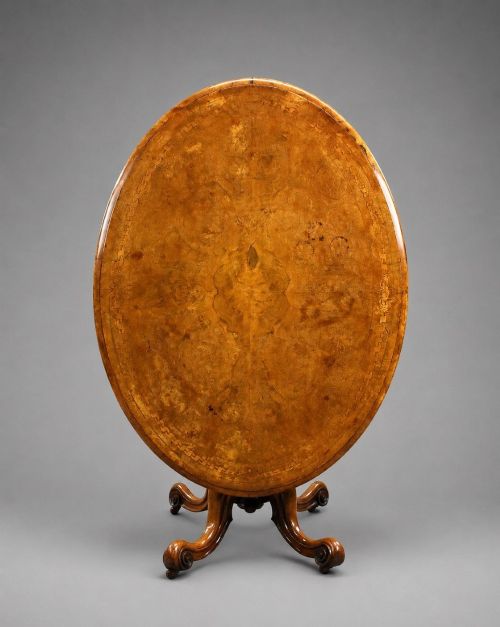
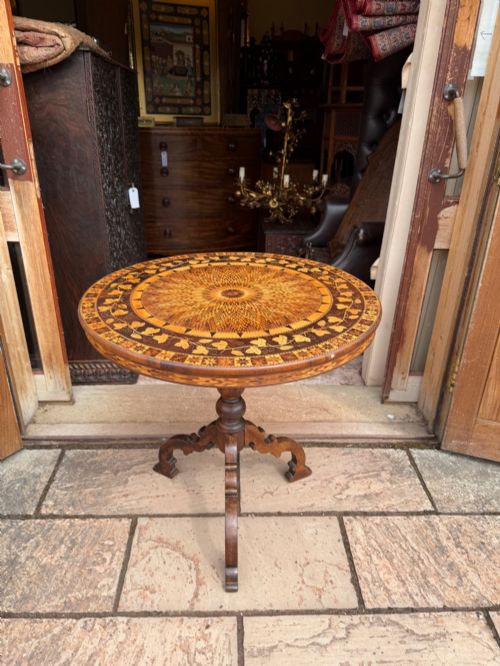
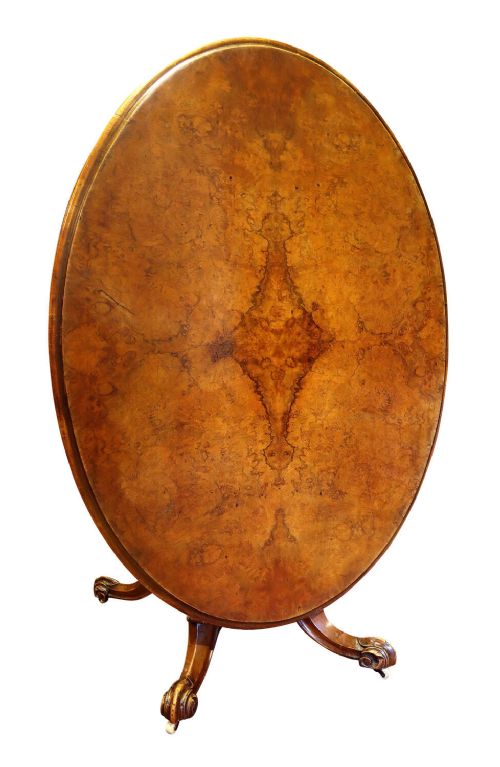
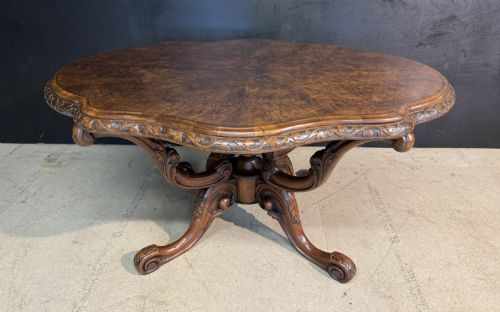
Forms range from large oval loo and breakfast tables with tilt tops to round gueridon tables, occasional tables, and library tables supported by carved quadrapod or tripod bases. Many examples utilise burr walnut veneer to display dramatic figuring on the top surface.
Makers and designers from the nineteenth century onward produced these pieces for principal rooms, combining functional pedestals with decorative tops suitable for lamps, books, or dining.
How they were made
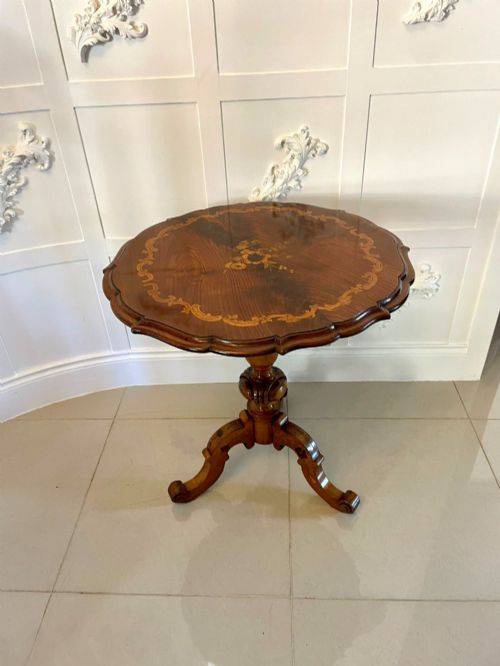
Cabinet makers constructed these tables using solid timber frames overlaid with burr or figured walnut veneers, chosen for decorative grain patterns. Artisans enhanced surfaces with boxwood inlay, marquetry, and wood inlay.
Pedestals feature carved wood elements supported by tripod or quadrapod legs, sometimes housing secret drawers or tilt mechanisms operated by brass catches. Tops occasionally incorporate inset marble or leather writing surfaces.
Secret drawers tucked into nineteenth century pedestals once kept private letters safe from prying eyes.
What varies in quality
The choice and execution of the veneer dictate visual impact, with symmetrical burr walnut figuring marking out superior examples. The crispness of carved details on the pedestal and the precision of boxwood or marquetry inlay separate standard production from finer cabinet work.
Structural stability in the central pillar and tilt mechanism determines day-to-day utility. Tables that retain their original brass fittings and smooth operating parts command greater appreciation.
Holmes Baldock
The Walnut Pedestal Centre Table Glossary
- Burr Walnut
- A form of walnut timber taken from a tree growth or burl, yielding intricate and swirling grain patterns. It forms the primary decorative surface on many Victorian tables.
- Loo Table
- A Victorian round or oval pedestal table originally intended for the card game loo. These frequently feature tilt-top mechanisms for compact storage when not in use.
- Gueridon
- A small French table supported by a single central column or pedestal. They often feature circular marble tops.
- Marquetry
- The art of applying pieces of veneer to a structure to form decorative patterns and pictures. Floral motifs frequently appear on these table tops.
- Quadrapod
- A four-legged pedestal base providing support for large dining and centre tables. These bases often incorporate heavy carving.
Walnut Pedestal Centre Table: Frequently Asked Questions
How do I use a centre table?
A centre table stands independently in the middle of a room rather than against a wall. It functions as a surface for table lamps, books, or decorative objects.
Larger oval examples double as dining or breakfast tables, while smaller gueridon and occasional versions fit beside seating areas.
What is burr walnut?
Burr walnut is harvested from a specialised tree growth that produces swirling, highly figured grain patterns. Cabinet makers prized this wood for creating decorative table tops.
Because of its distinct appearance, furniture utilising burr walnut veneer was typically reserved for principal reception rooms.
Are these tables solid walnut?
Most antique examples use a secondary structural timber for the internal frame and pedestal core, overlaid with thin veneers of walnut or burr walnut. This technique prevented warping while displaying decorative grain on the visible surfaces.
Solid sections appear in the carved pedestal bases and framing components.
How do I distinguish Victorian from Art Deco?
Victorian tables from the nineteenth century typically display figured burr walnut, elaborate pedestal carvings, and inlaid marquetry or boxwood decoration. These pieces emphasise traditional craftsmanship and ornate forms.
Art Deco tables from the nineteen thirties favor clean geometric lines, sleek polished walnut surfaces, and minimal ornamentation.