

Walnut Nightstand Drawers
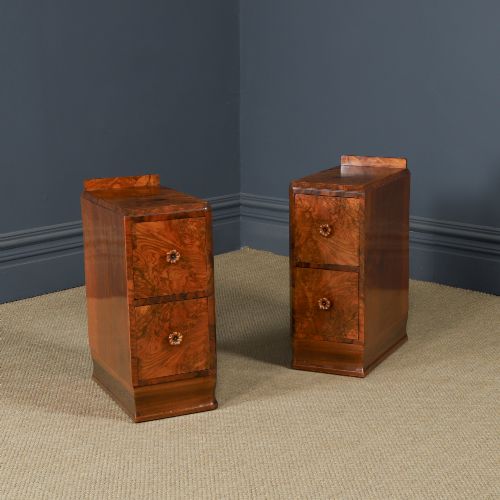
Walnut nightstand drawers bring warmth and practical storage to a bedroom, appearing in forms ranging from French Louis XV style to Art Deco.
Walnut Nightstand Drawers
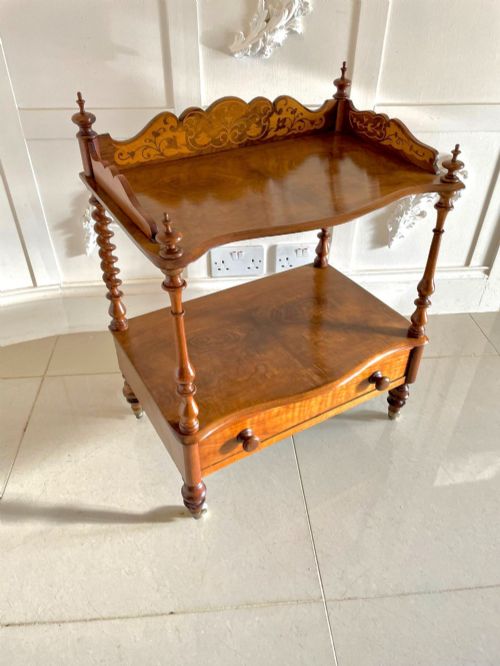
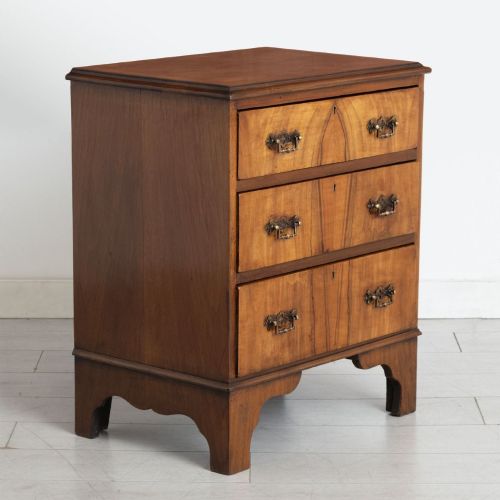
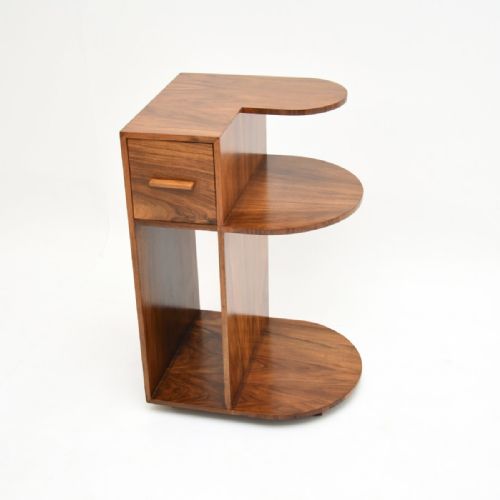
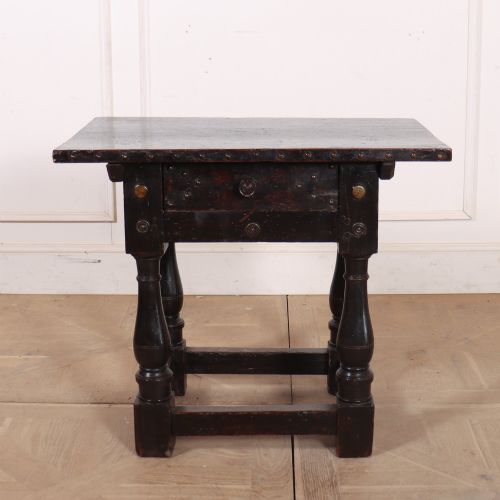
When you search for walnut nightstand drawers, you encounter compact pieces designed for bedside use, housing compartments for nighttime storage. The selection spans utilitarian bedside tables and elaborate cabinets with multiple tiers.
The objects appear across diverse eras, stretching from eighteenth-century Italian designs to nineteenth-century Victorian examples and twentieth-century Art Deco creations. French influences emerge frequently, alongside English and Italian origins.
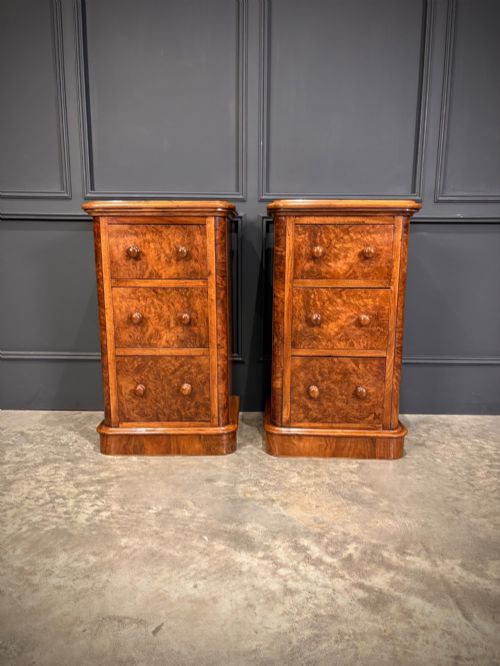
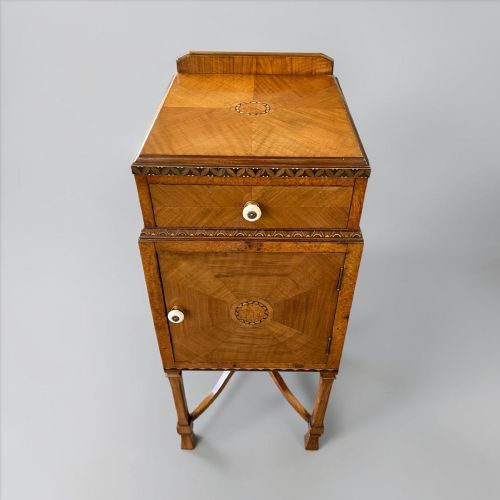
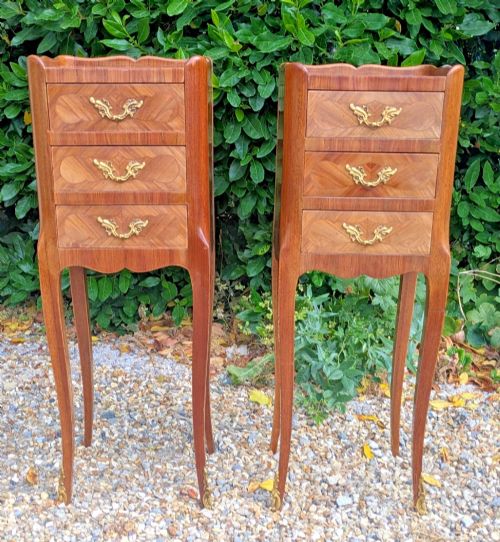
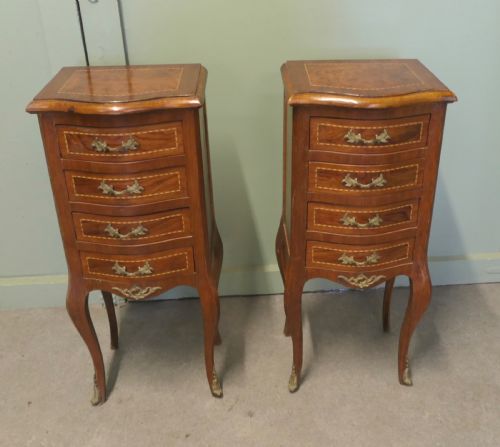
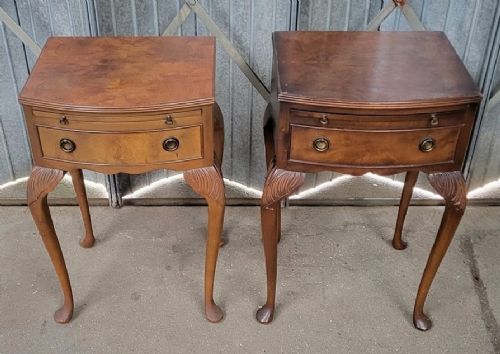
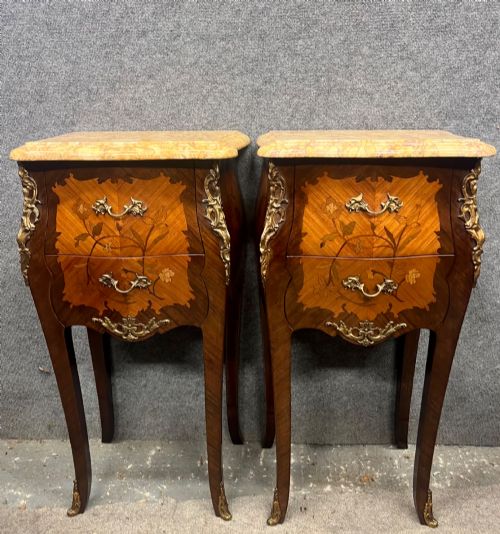
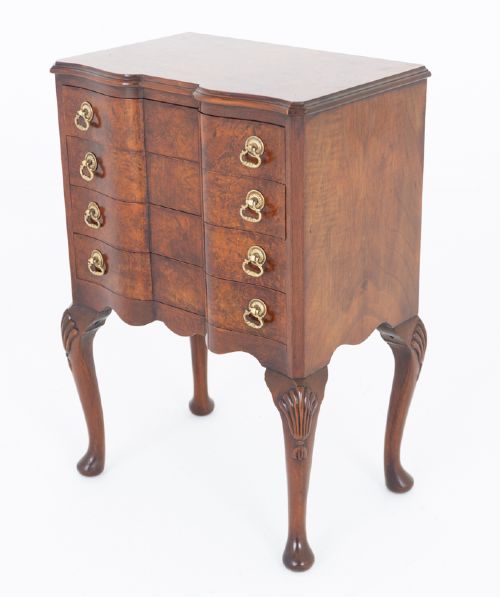
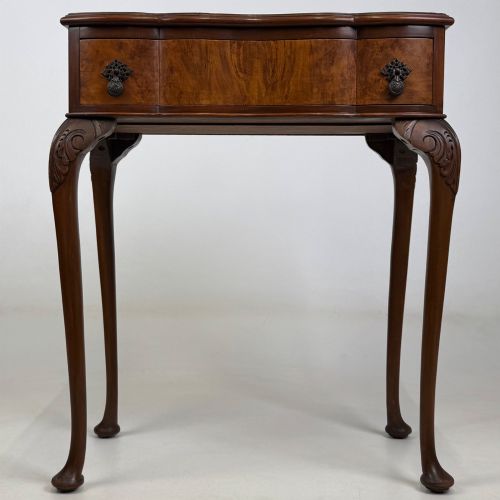
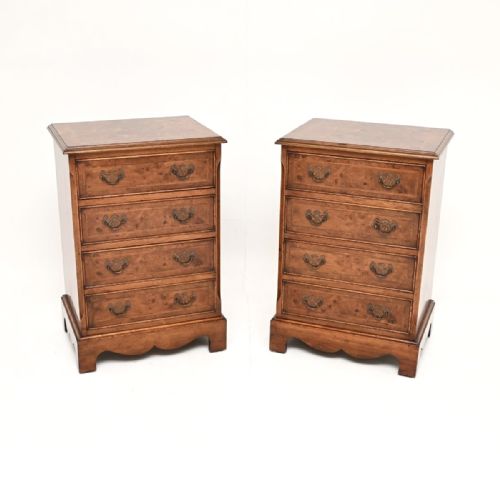
Formations vary from narrow bedside chests of drawers to serpentine fronted cabinets and lamp tables with fitted compartments. Many examples appear in matched pairs, offering symmetry for placement beside a bed.
How they were made
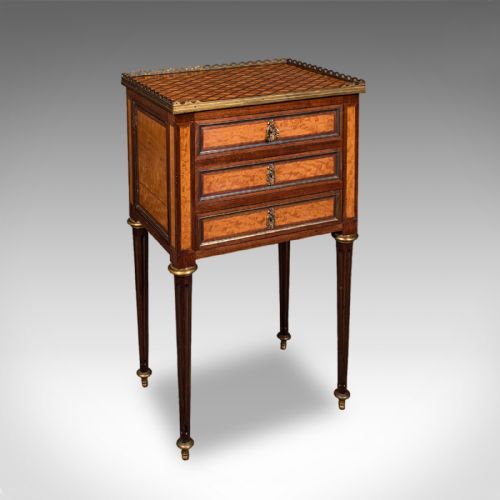
Cabinetmakers utilised solid walnut and decorative veneers like burr walnut and figured walnut over secondary timbers, often applying marquetry or parquetry patterns. Surfaces gained distinct grain patterns through careful timber selection and placement.
Many examples incorporate contrasting materials, pairing timber bodies with white or coloured marble tops, brass mounts, and ormolu details. Lockers and cabinets frequently feature fitted brass drawer handles and side locks.
Materials recorded across the inventory encompass solid walnut, burr walnut, marble, brass, ormolu, and kingwood.
What varies in quality
Quality rests in the depth and selection of the walnut grain, particularly in how burr and figured veneers align across drawer fronts and top surfaces. Finer pieces demonstrate meticulous parquetry and marquetry inlay work that integrates smoothly into the structure.
Construction standards appear in the precision of the drawer dovetails, the choice of secondary woods, and the integration of secondary materials like marble or ormolu mounts. Superior execution shows in the crispness of serpentine shaping and the clean proportioning of the piece.
Gill & Reigate
The Walnut Nightstand Drawers Glossary
- Burr walnut
- A wood marking derived from the knotty growth of a walnut tree, producing swirling patterns that makers favoured for decorative drawer fronts and table tops.
- Ormolu
- Gilt bronze ornamentation applied to furniture corners, feet, and mounts, frequently seen on French revival bedside cabinets.
- Parquetry
- A geometric mosaic of wood veneers arranged in patterns like cubes or chevrons on cabinet surfaces.
- Serpentine
- A gently undulating curved line forming the front edge of a chest of drawers or bedside table.
- Marquetry
- Elaborate veneer patterns depicting floral or pictorial scenes using various tinted woods.
Walnut Nightstand Drawers: Frequently Asked Questions
What periods do these nightstands cover?
The pieces span from the eighteenth century through the Victorian era and into the twentieth century, including Edwardian and Art Deco periods.
Twentieth-century examples often display streamlined Art Deco forms, while earlier pieces lean towards Georgian and French revival styles.
Are pairs common for walnut bedside drawers?
Many listings feature matching pairs, particularly among French bedside cabinets and Victorian chests.
Finding a matched pair provides symmetry for placing identical units on each side of a bed.
What materials accompany the walnut timber?
Makers frequently paired walnut and burr walnut with marble tops, brass hardware, and ormolu mounts.
Some Art Deco variants incorporate contrasting woods like satinwood or Macassar ebony alongside the primary walnut structure.
How do I identify a French style piece?
French pieces often feature serpentine or bombe shaping, cabriole legs, and elaborate parquetry or marquetry inlay.
Many incorporate marble tops and polished ormolu mounts that reflect Louis XV and Louis XVI design influences.