





Walnut Newspaper Holder
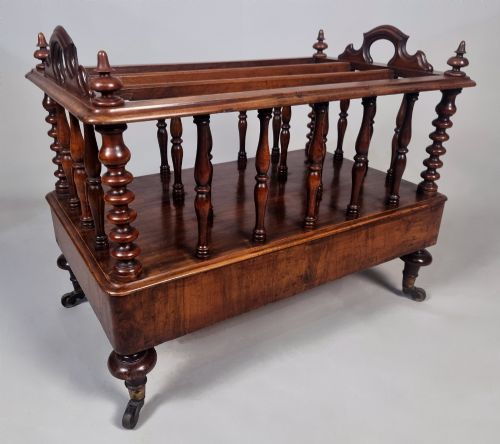
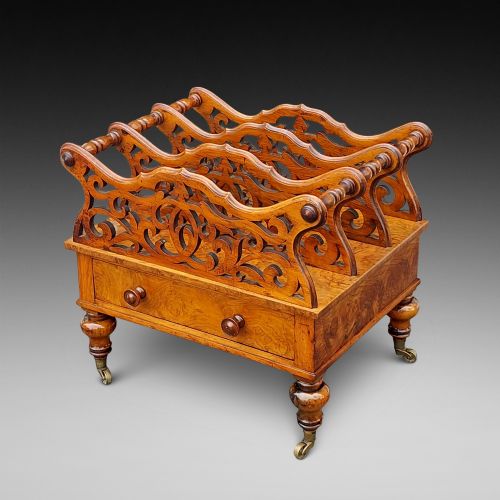
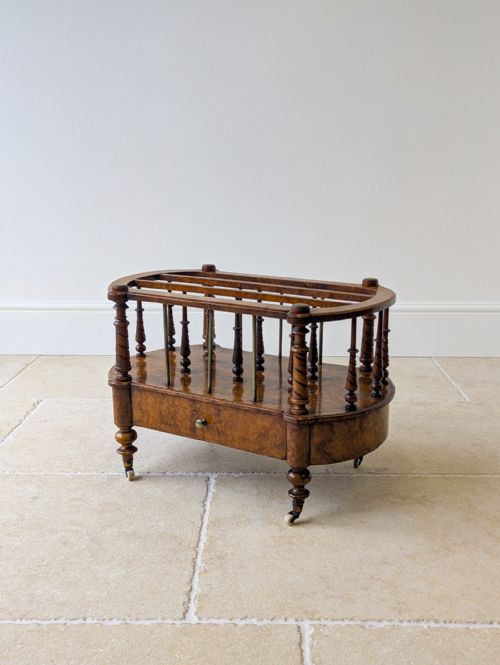
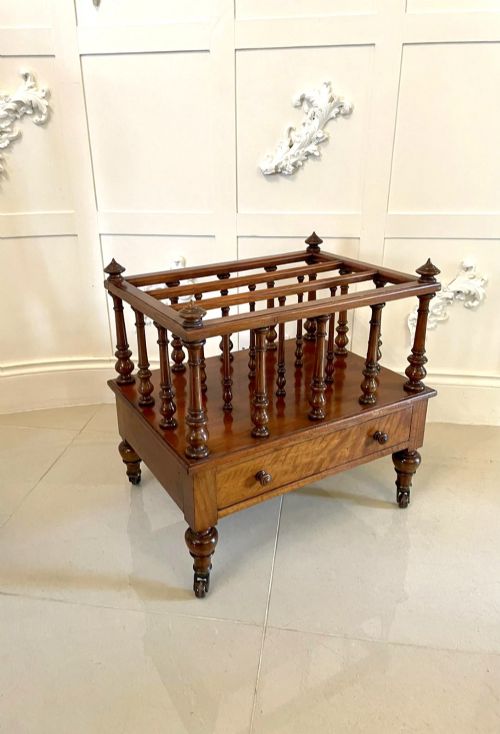
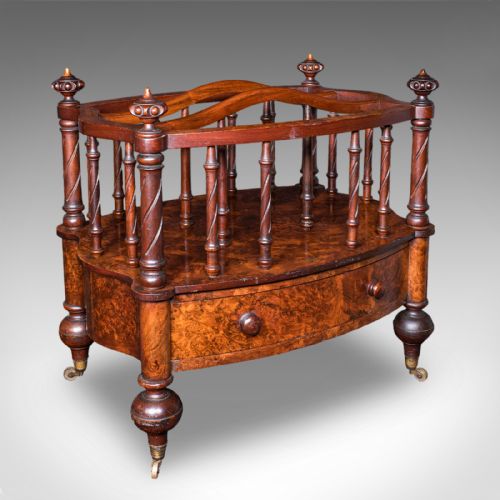
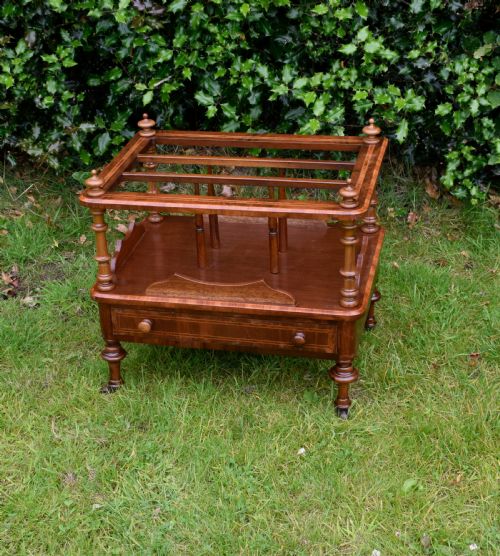
These walnut newspaper holder examples are timber stands designed for periodicals, offering a practical way to keep your room tidy.
Walnut Newspaper Holder
A walnut newspaper holder typically takes the form of a canterbury or magazine rack, designed to hold periodicals and papers off the floor. These pieces appear across Victorian, Regency, and nineteenth-century periods, showing various iterations of compartmentalised stands.
Makers such as Edwards and Roberts and Shoolbred produced notable versions of the walnut newspaper holder during the nineteenth century. These range from inlaid stands of substantial proportions to simpler French magazine stands incorporating brass and copper.
Materials and construction
Makers utilised walnut, burr walnut, and figured walnut to construct these holders, often enhancing the timber with wood inlay. The natural grain of the wood provides the primary decorative surface across the panels and partitions.
Metal elements such as brass and copper appear alongside fabric details in specific examples, particularly in French newspaper racks. These mixed media pieces demonstrate the variety of construction techniques employed by nineteenth-century workshops.
Walnut Newspaper Holder Retail Price Guide 2026
Typical asking prices for walnut newspaper holder among the pieces listed under this phrase on Sellingantiques today, from the lower quarter to the upper quarter. They describe what is for sale here now, not the wider market.
Listings feature walnut, burr walnut, and figured walnut alongside brass, copper, and fabric components across Victorian and Regency periods.
Assessing quality and craftsmanship
The choice of timber heavily influences the character of a walnut newspaper holder, with burr and figured walnut veneers displaying rich, complex grain patterns superior to plain timber boards. Finely executed wood inlay further elevates the visual merit of an individual stand.
Edwards and Roberts·Shoolbred
The Walnut Newspaper Holder Glossary
- Canterbury
- A low stand with partitions, originally designed for holding sheet music and later adapted as a newspaper or magazine holder. These pieces frequently incorporate turned legs and lower shelves.
- Burr walnut
- A highly prized timber veneer obtained from the growths or burrs on walnut trees, noted for its swirling, intricate grain patterns. It was frequently utilised on high-status Victorian cabinet furniture.
- Figured walnut
- Timber exhibiting an attractive, natural grain pattern that reflects light differently from various angles. Cabinetmakers selected these boards for prominent exterior surfaces.
- Wood inlay
- The technique of inserting contrasting strips or pieces of wood into a recessed surface to form decorative patterns. This ornamentation is common on mid-Victorian stands.
Walnut Newspaper Holder: Frequently Asked Questions
What is a walnut newspaper holder?
A walnut newspaper holder is a nineteenth-century stand, often referred to as a canterbury or magazine rack, built with vertical partitions to keep periodicals organised. They were designed to sit beside seating areas in domestic rooms.
These pieces emerged strongly during the Victorian period, utilising rich timbers like burr and figured walnut to match contemporary parlour furniture.
How were these stands used?
In nineteenth-century homes, these stands held daily newspapers, weekly journals, and sheet music within easy reach of the living room seating. The compartmentalised design kept papers neat and off the floor.
Lower shelves and small drawers incorporated into some models provided additional storage for writing materials or smaller accessories.
How do I live with one?
A walnut newspaper holder functions well beside a sofa or armchair, serving its original purpose of holding magazines and newspapers in a modern sitting room. The rich wood tones complement both traditional and contemporary interiors.
Because they are built from timber, placing them away from direct heat sources and strong sunlight preserves the walnut veneer and finish.
How do I tell periods apart?
Regency and early nineteenth-century examples often display cleaner lines and simpler timber selections, reflecting earlier neoclassical tastes. Victorian pieces, particularly from the 1860s and 1870s, frequently employ burr walnut veneers, elaborate wood inlay, and more substantial proportions.
Maker signatures or stamps from firms like Shoolbred or Edwards and Roberts also help date specific pieces to the later decades of the nineteenth century.