


Walnut Marquetry Casket
Walnut marquetry caskets are timber boxes adorned with intricate wood-inlay patterns, offering collectors both decorative appeal and historical utility.
Walnut Marquetry Casket
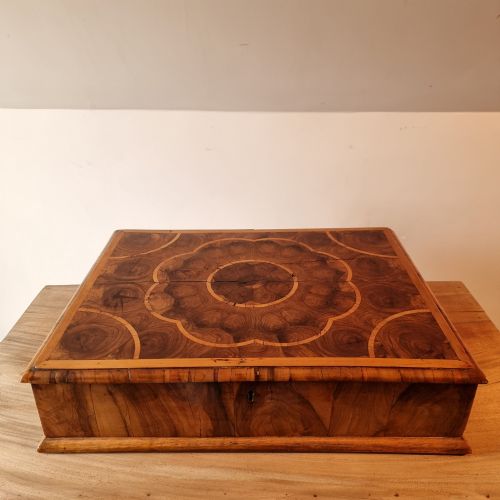
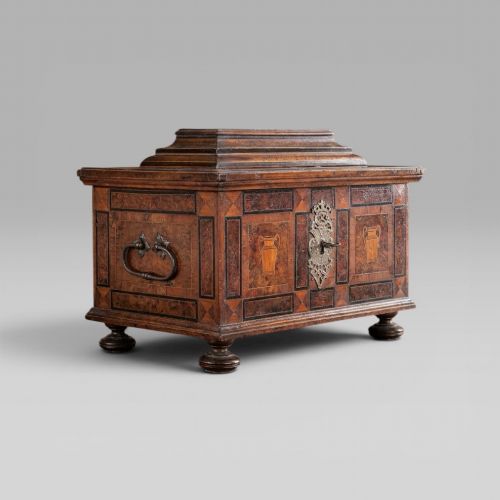
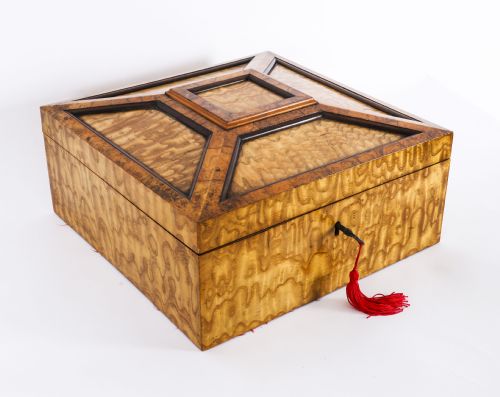
A walnut marquetry casket combines structural timber with meticulously cut veneer patterns to create a decorative tabletop container. Buyers searching for a walnut marquetry casket will encounter forms ranging from 17th century continental chests to Victorian work boxes and stationery cabinets.
The evidence shows examples spanning the 17th century through the Victorian era and into the 20th century, including William and Mary lace boxes and German coffre fort designs. Most pieces on this page are Victorian boxes intended for stationery, trinkets, or needlework.
Object types include tabletop cabinets, music boxes, and glove boxes alongside traditional caskets. Styles vary widely, taking in Baroque, Regency, and Italian Renaissance Revival influences alongside Tunbridge ware productions.
What Varies in Quality
The precision and complexity of the wood inlay distinguish finer examples from simpler production pieces. Crispness in the botanical or geometric marquetry and the harmonious selection of contrasting timbers elevate a box's visual merit.
Structural integrity of the carcase and the preservation of original internal fittings, such as velvet linings or compartmentalised trays, contribute significantly to an item's standing. The presence of period-appropriate locks, hinges, and escutcheons further defines the standard of craftsmanship.
Current listings feature walnut, fruitwood, rosewood, and burr walnut across Victorian, 17th Century, and Regency periods.
The Walnut Marquetry Casket Glossary
- Marquetry
- Decorative veneer work forming pictures or patterns by arranging small pieces of coloured wood, bone, or metal onto a structural carcase.
- Burr walnut
- Timber taken from the abnormal growth of a walnut tree, yielding highly figured, swirling grain patterns prized for decorative veneering.
- Tunbridge ware
- Woodware decorated with mosaic patterns made from tiny segments of different coloured natural woods, characteristic of 19th-century English manufacturing.
- Escutcheon
- A flat plate of brass or iron surrounding a keyhole, serving both a protective and decorative function on the box front.
- Coffre fort
- A strongbox or chest of continental European origin, frequently reinforced with iron strapwork and complex locking mechanisms.
Walnut Marquetry Casket: Frequently Asked Questions
What were walnut marquetry caskets used for originally?
These boxes served to store high-value personal possessions, important documents, or delicate items like lace and jewellery.
Owners kept them on tables in principal rooms where their decorative marquetry could be admired by guests.
How do I date a walnut marquetry casket?
Dating relies on examining the timber preparation, interior lining materials, and the style of the marquetry decoration.
Earlier pieces from the 17th century display different structural joinery and floral motifs compared to 19th-century Victorian examples.
Are these boxes suitable for daily use?
Most antique caskets function well for storing small modern items like trinkets, letters, or keepsakes.
Care should be taken to protect the historic wood surfaces and delicate veneer work from excessive moisture and direct sunlight.
What is the difference between marquetry and parquetry?
Marquetry employs varied wood veneers to create pictorial or curvilinear floral designs across the surface.
Parquetry uses geometric shapes of timber to form repeating symmetrical patterns such as cubes, stripes, or chequers.