
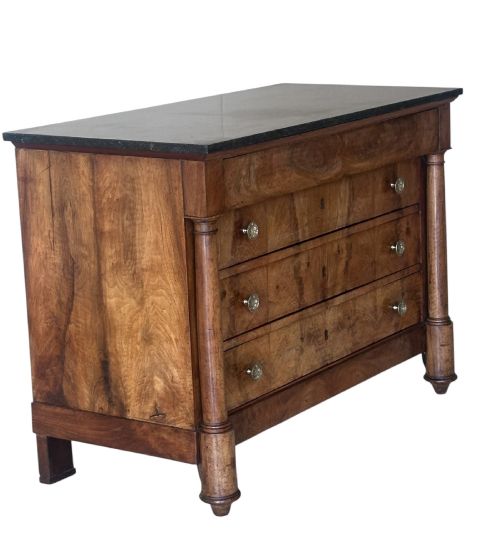
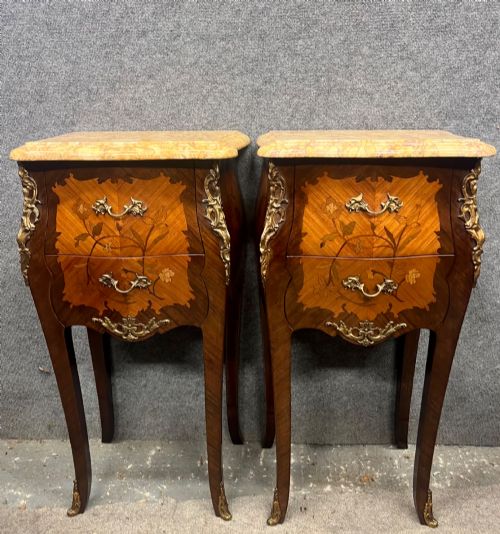
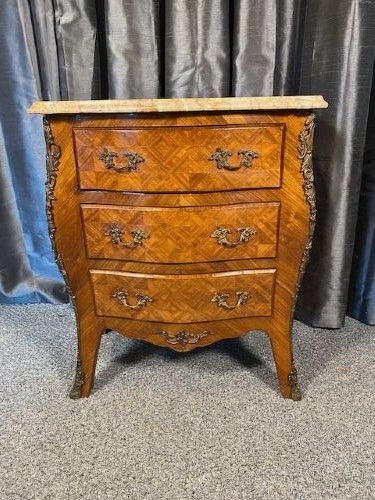
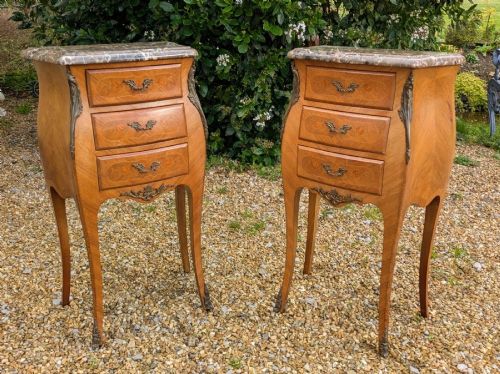
Walnut Marble Top Drawers
Walnut marble top drawers combine warm timber surfaces with cool stone slabs, offering practical storage and classic Continental styling for the home.
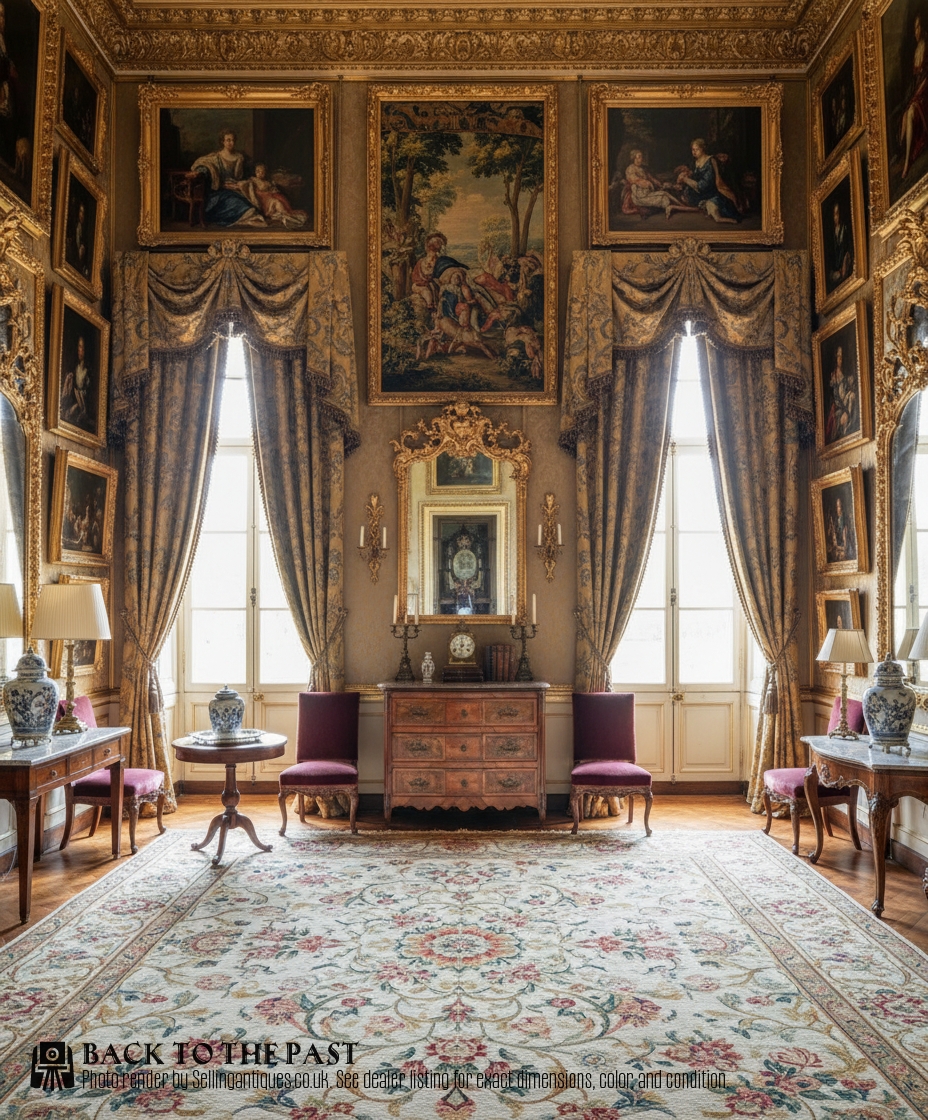
Walnut Marble Top Drawers
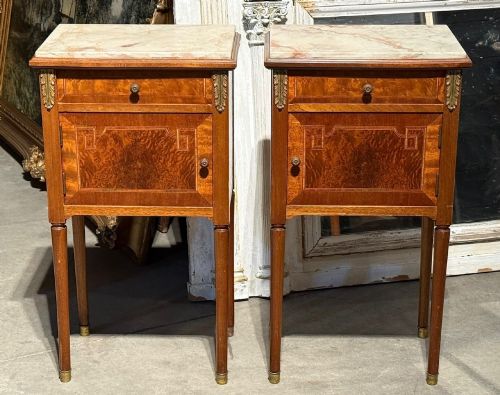
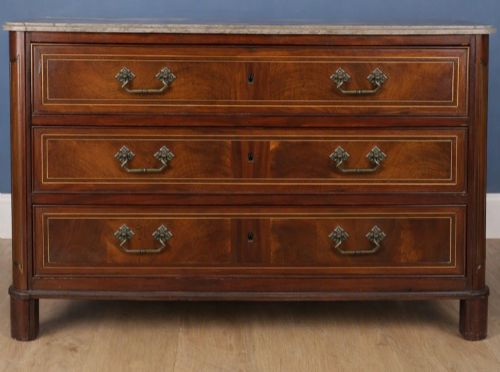
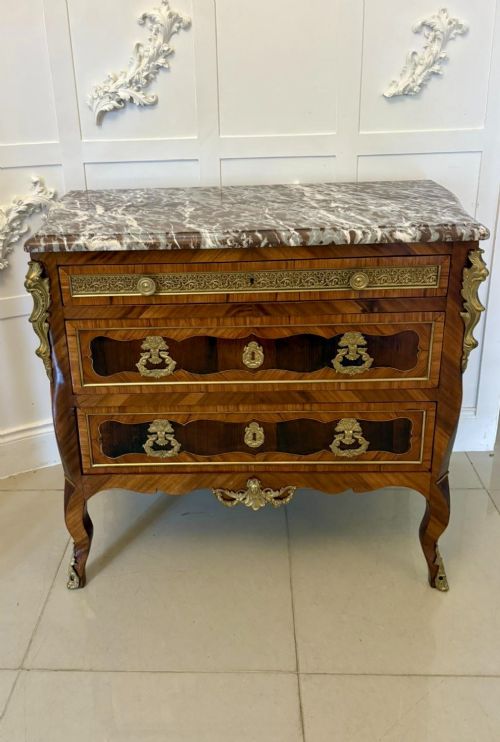
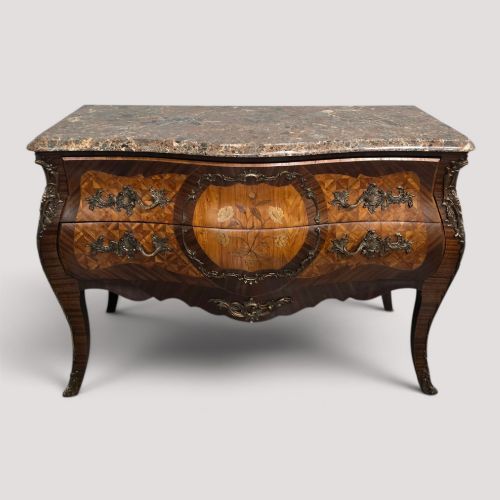
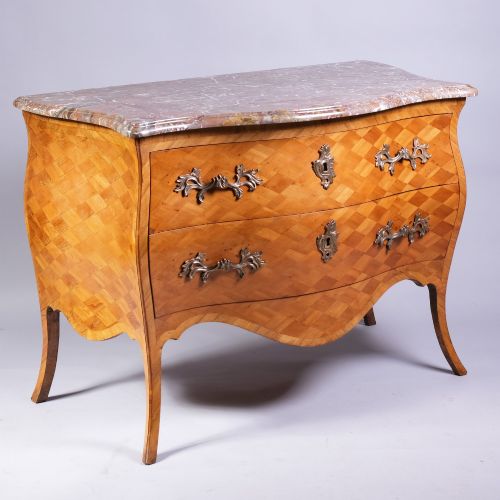
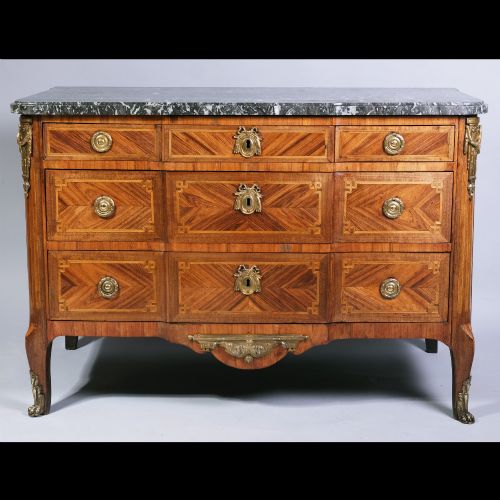
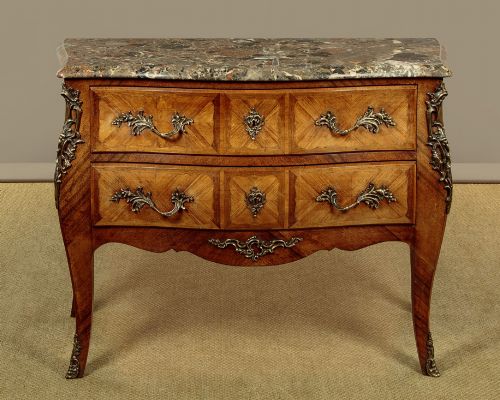
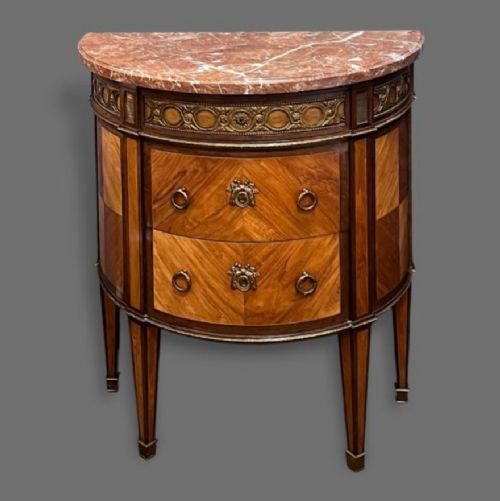
Walnut marble top drawers encompass a range of Continental case furniture, most frequently seen as French commodes, bedside cabinets, and tall chests dating from the eighteenth century onwards.
The pieces on this page span several stylistic revivals and periods, including Louis XV and Louis XVI designs alongside later nineteenth-century interpretations.
Buyers will encounter both grand proportions intended for principal reception rooms and compact bedside tables built for sleeping quarters.
Materials and construction
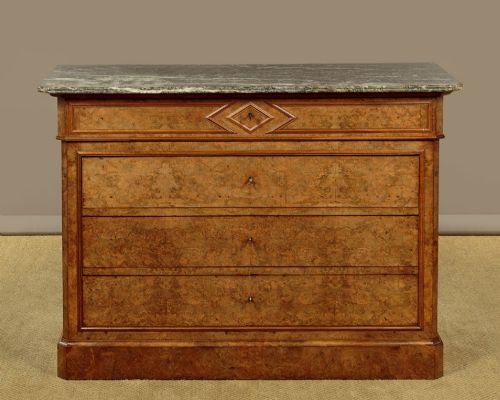
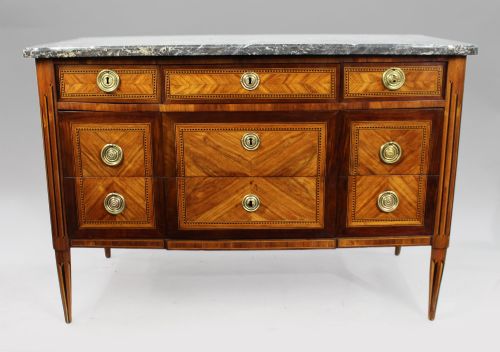
Cabinet makers utilised solid walnut and decorative veneers such as burr walnut and kingwood over sturdy timber carcases, often incorporating intricate parquetry and marquetry inlay.
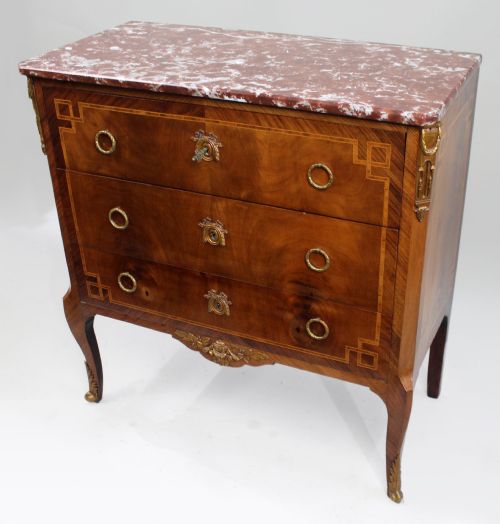
Heavy slabs of marble, ranging from standard grey to rouge and black variants, were fitted directly to the upper surface to provide a durable and water-resistant counter.
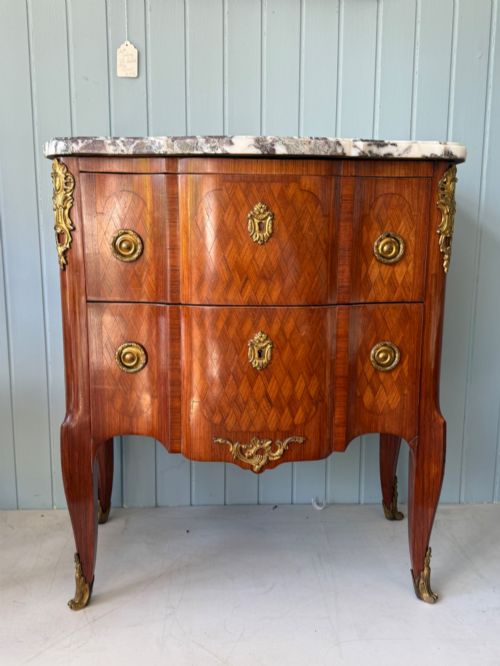
Gilt bronze or ormolu mounts frequently accent the key escutcheons, corners, and drawer pulls on finer examples.
Semainier cabinets gained their name because seven drawers supposedly held a fresh set of weekly garments.
Quality differences
The standard of execution in the timber inlay and the choice of Burr figure across the drawer fronts set exceptional examples apart from simpler production.
The thickness, geological variety, and smoothness of the fitted marble top indicate the original cost and ambition of the commission.
Subtleties in the hand-chiselling of ormolu mounts and the internal secondary wood construction reveal the workshop standard behind the piece.
The Walnut Marble Top Drawers Glossary
- Commode
- A low French chest of drawers standing on relatively tall legs. These pieces typically date from the eighteenth or nineteenth centuries and incorporate decorative marble slabs.
- Ormolu
- Gilt bronze mounts applied to furniture for decorative effect. The technique involves treating brass or bronze with a gold amalgam.
- Parquetry
- Geometric wood inlay patterns arranged to form repeating motifs across the drawer fronts or top surfaces. This technique requires precise carpentry.
- Bombe
- A swelling, convex curved profile to the sides and front of a cabinet. This exuberant shape is characteristic of Louis XV style furniture.
- Semainier
- A tall, narrow chest of drawers traditionally built with seven drawers, one for each day of the week. They provide vertical storage in smaller footprints.
Walnut Marble Top Drawers: Frequently Asked Questions
How do I clean the marble top?
Use a damp cloth with mild, pH-neutral soap to wipe down the stone surface gently. Avoid acidic cleaners, vinegar, or harsh scrubbing agents that etch or dull the polished finish.
Dry the marble thoroughly with a soft cloth after washing to prevent water spots. Applying a specialist stone sealer periodically helps protect the surface from stains.
Are these drawers suitable for a modern bedroom?
These cabinets bring warmth and historical texture into contemporary spaces while offering practical bedside or dressing room storage. Their compact footprints allow them to fit easily beside modern bed frames or within minimalist hallways.
The neutral tones of walnut timber and grey or white marble complement a wide variety of interior colour palettes and contemporary furnishings.
How do I distinguish Louis XV from Louis XVI style?
Louis XV pieces rely on asymmetrical curves, cabriole legs, and flowing serpentine fronts. The overall aesthetic is organic and exuberant, frequently enhanced by bombe profiles.
Louis XVI furniture shifts towards classical symmetry, straight tapered legs, and rectangular or square carcases. The decoration draws on ancient Greek and Roman motifs like fluting and swags.
What is burr walnut?
Burr walnut comes from a tree growth or knot where the grain has grown in a deformed, swirling pattern. When sliced into veneer, it produces highly decorative, circular patterns.
Cabinet makers used these dramatic veneers on primary surfaces like drawer fronts to create striking visual movement. The resulting figures make each piece entirely unique.