
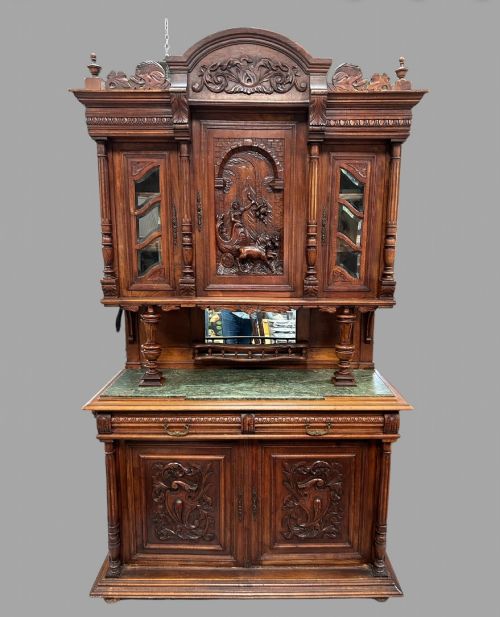
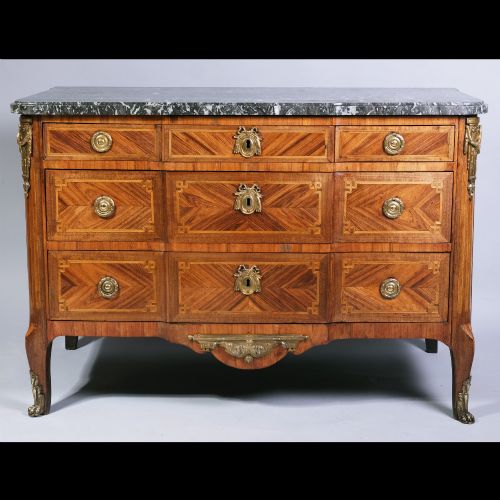
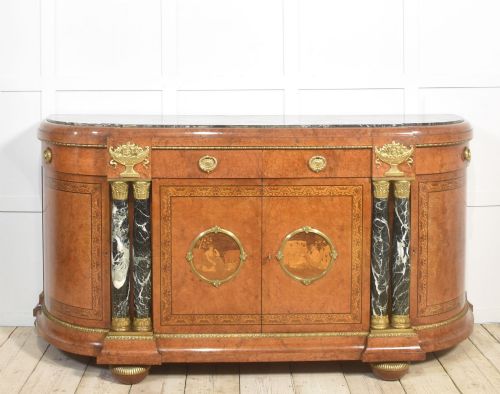

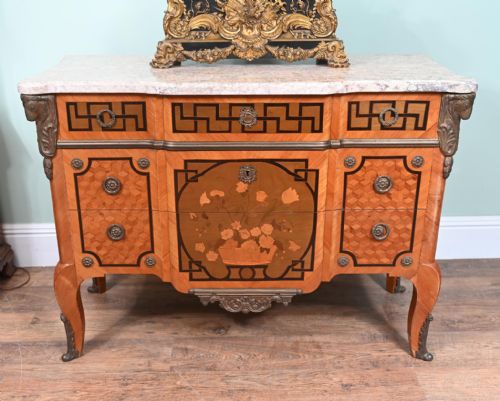
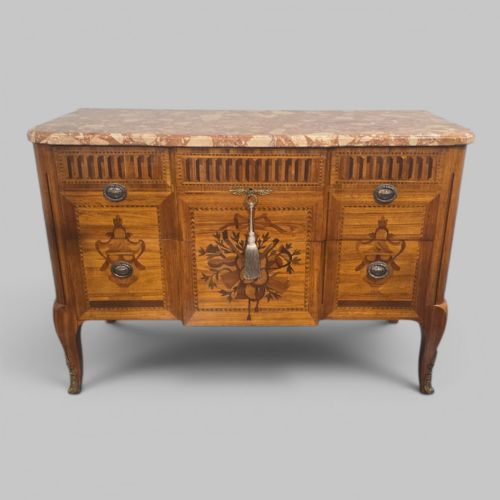


Walnut Marble Sideboard
A walnut marble sideboard combines heavy timber and cool stone, offering a solid surface for storage and display.
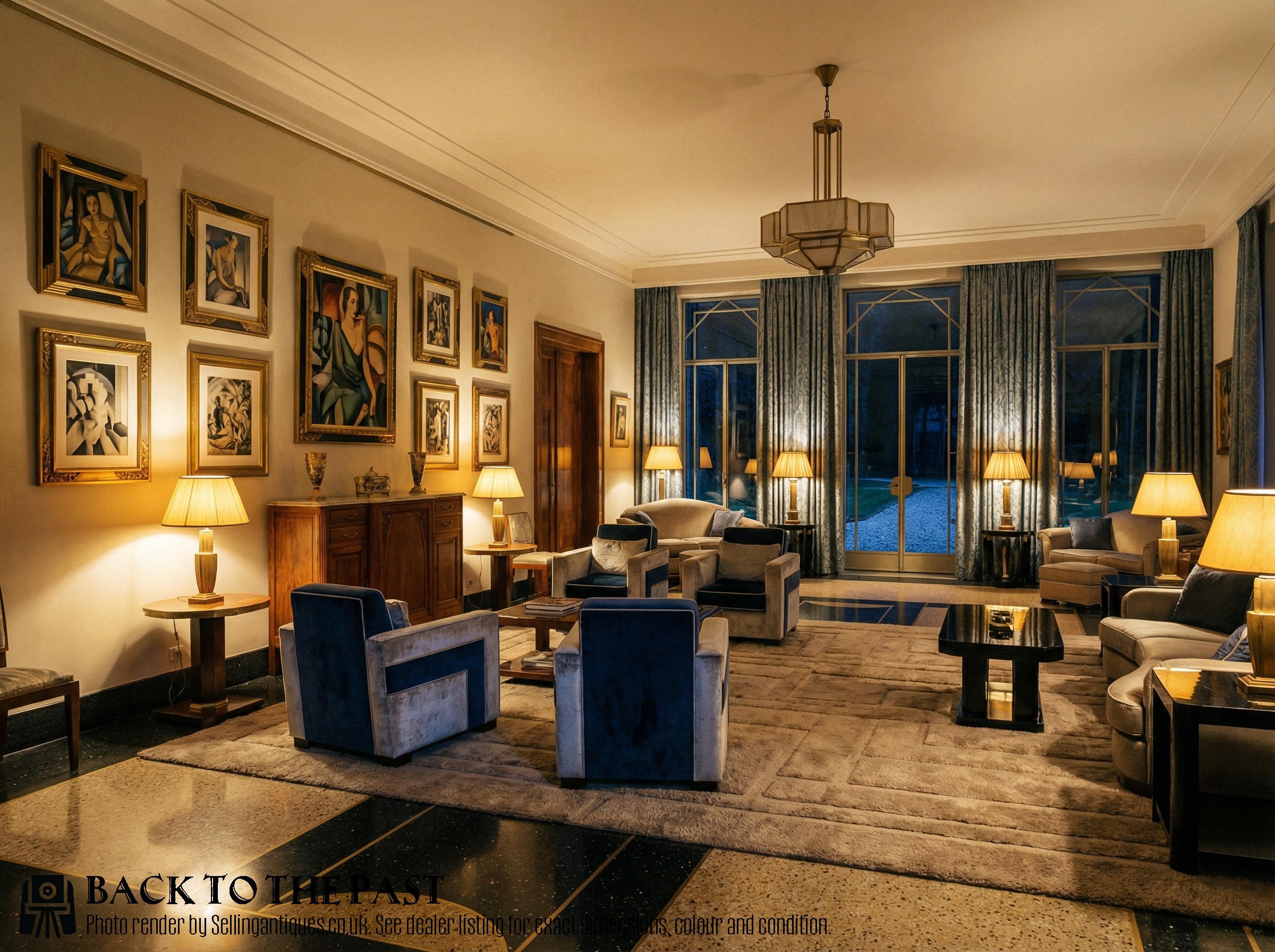
Walnut Marble Sideboard
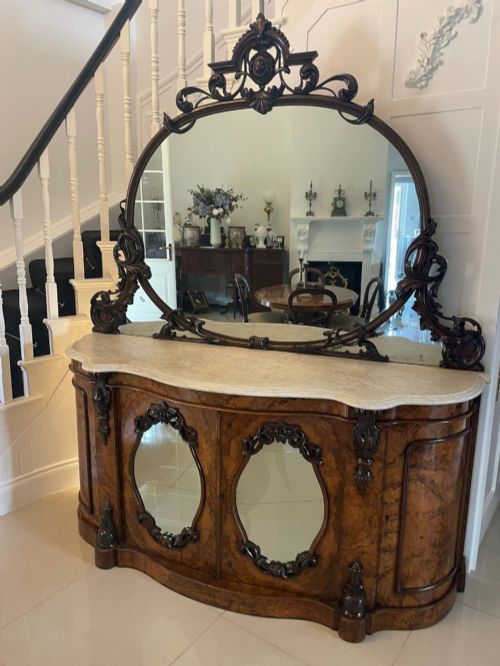
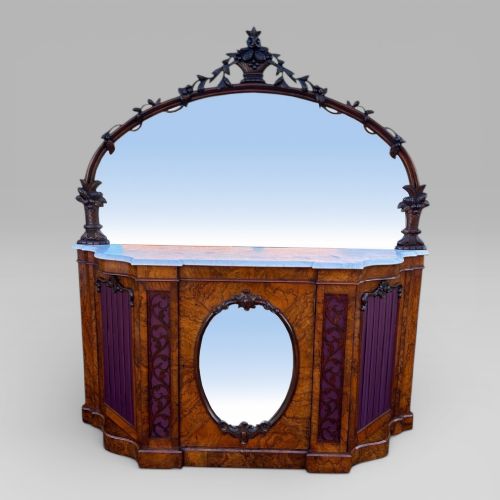
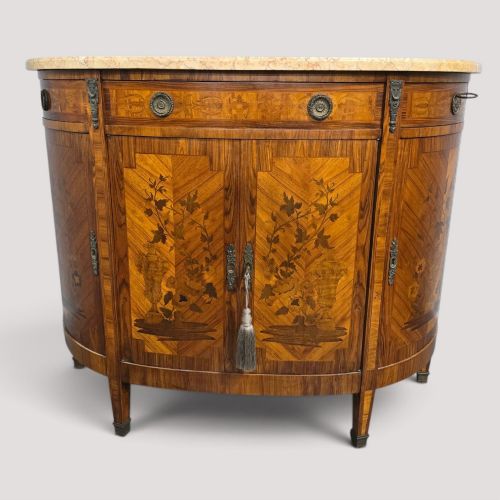
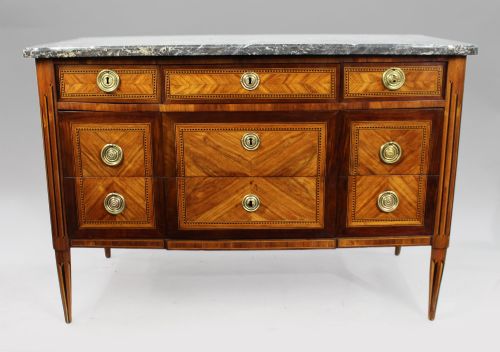
A walnut marble sideboard is a substantial storage piece uniting a wooden base with a stone top, spanning credenzas, commodes, and buffets. You will frequently encounter Victorian British credenzas alongside French commodes and side cabinets dating from the eighteenth century to the early twentieth century.
The form serves multiple rooms, functioning as a dining room server, a drawing-room credenza, or a bedroom washstand. Pieces range from mirror-backed Victorian credenzas to low French commodes with intricate marquetry and shaped marble slabs.
How they were made
Carpenters constructed the carcasses from solid walnut, frequently applying figured burr walnut veneers, kingwood, or marquetry inlay to the exterior surfaces. Brass, ormolu mounts, and gilt bronze provide structural and decorative accents around doors and drawers.
Heavy marble slabs, selected for colour and veining, sit atop the wooden bases to form durable, water-resistant counters. Carved mirror backs, tiled splashbacks, and panelled wooden doors complete the construction of these elaborate cabinets.
Some washstands include original tiled splashbacks, ready for Victorian morning routines.
What varies in quality
The refinement of the timber selection dictates the visual weight of the piece, with matched burr walnut and delicate parquetry standing apart from plain grain. Carved details on mirror backs and door frames show the hand of the cabinetmaker.
The thickness, polish, and edge-profile of the marble top indicate the original cost and ambition of the commission. High-grade mountings in ormolu and well-fitted interior shelving separate standard production from exceptional examples.
Schmit of Paris
The Walnut Marble Sideboard Glossary
- Credenza
- A low cabinet or sideboard, often featuring mirrored backs or glass doors in Victorian examples. It serves primarily for display and storage in formal reception rooms.
- Commode
- A low chest of drawers or cupboard of French origin, typically fitted with a heavy marble top. These pieces often display complex marquetry or parquetry patterns.
- Marquetry
- The art of applying decorative veneer pieces in wood and other materials to form geometric or pictorial designs. It covers the flat surfaces of fine commodes and cabinets.
- Ormolu
- Gilded bronze mounts applied to the corners, feet, and aprons of furniture. It provides bright metallic contrast to the dark walnut timber.
- Serpentine front
- A furniture front curved with a convex centre flanked by concave ends. This shaping requires skilled carpentry and a custom-cut marble top.
Walnut Marble Sideboard: Frequently Asked Questions
Can these sideboards support heavy items?
The sturdy walnut frames and thick stone slabs provide a stable platform for serving dishes, lamps, and heavy decorative objects. The solid construction handles everyday weight easily.
Distribution of heavy items across the centre of the top prevents uneven stress on the wooden base below.
How do I tell French from Victorian pieces?
French commodes often feature curved bombe shapes, marquetry inlay, and prominent ormolu mounts. Victorian credenzas tend to be rectangular, featuring burr walnut veneers and carved mirror backs.
British examples frequently emphasise the natural grain of the timber, whereas continental pieces showcase decorative parquetry and painted details.
Where should I place a marble sideboard?
Position the piece against a flat wall in a dining room, hallway, or living area where the stone top and wooden grain remain visible. Ensure the room has stable humidity to protect the antique veneer.
Keep the cabinet away from direct heat sources and harsh sunlight to prevent the timber and polish from drying out.