

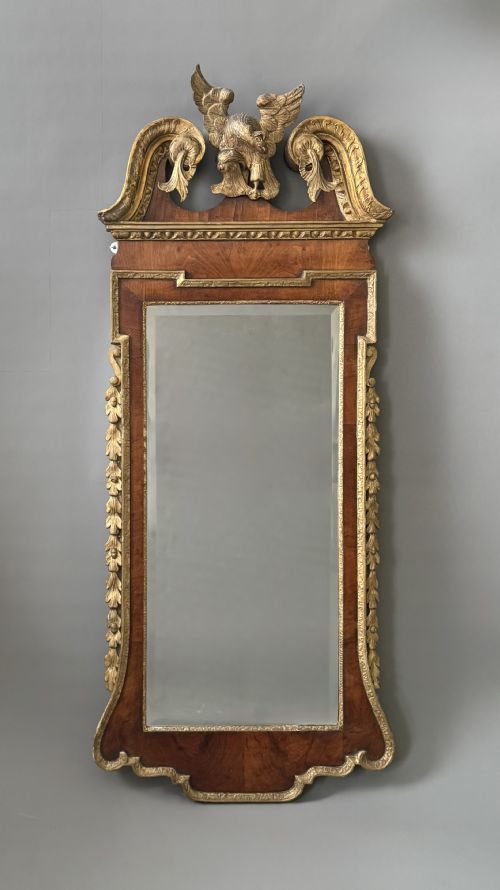
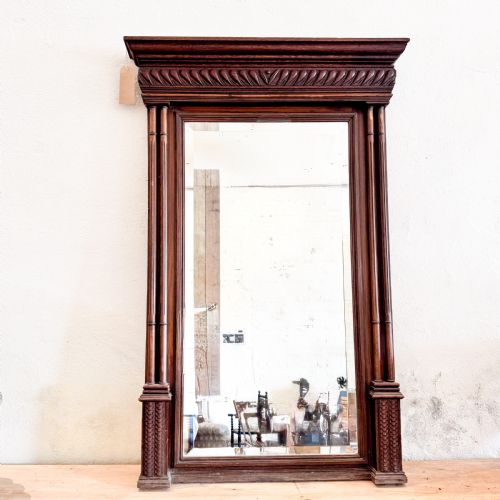


Walnut Mantle Mirror
A walnut mantle mirror brings warmth and depth to a room, framing reflections with rich grain and traditional craftsmanship.
Walnut Mantle Mirror
A walnut mantle mirror is typically placed above a fireplace, taking the form of an overmantel or large wall mirror designed to anchor the room. These pieces appear across several distinct eras, spanning 18th century Georgian designs through to Victorian and early 20th century revivals.
The form ranges from simple architectural frames to large arched and carved overmantels intended to dominate a chimney breast. Alongside substantial mantle pieces, smaller wall mirrors and pier glasses also emerge from the evidence.
Victorian examples dominate the available selection, often incorporating marquetry, inlaid details, or parcel gilt accents. Earlier Georgian pieces tend toward simpler fret-cut outlines and figured veneers.
How they were made
Makers utilised solid walnut and decorative veneers, often selecting burr walnut to create striking, figured patterns across the wide frames of overmantels. Wood inlay, marquetry, and parquetry appear frequently, adding geometric or floral decoration to the surface.
Giltwood and parcel gilt highlights provide contrast against the dark timber, frequently accentuating carved mouldings or inner bezels. Ebonised details and ormolu mounts also appear on specific nineteenth and early twentieth century pieces.
Construction methods evolved from eighteenth century fret-cut joinery to the robust framing required for large Victorian and Edwardian overmantels that spanned several feet in width.
Walnut Mantle Mirror Retail Price Guide 2026
Typical asking prices for walnut mantle mirror among the pieces listed under this phrase on Sellingantiques today, from the lower quarter to the upper quarter. They describe what is for sale here now, not the wider market.
Listings feature walnut mantle mirrors spanning from the eighteenth century through the Georgian, Victorian, and Edwardian eras.
What varies in quality
The selection of the walnut veneer dictates much of the visual impact, with richly figured burr timber sitting at the upper end of the scale. The crispness of hand-carved details and the precision of inlaid marquetry distinguish standard production from finer workshop output.
Proportion and scale play a crucial role, particularly in large overmantels where the relationship between the mirror glass and the surrounding wooden frame determines the piece's architectural harmony.
The Walnut Mantle Mirror Glossary
- Overmantel mirror
- A large mirror designed specifically to hang on the wall directly above a mantelpiece. These frames often match the horizontal proportions of the fireplace below them.
- Burr walnut
- A prized timber cut from the gnarled growths on walnut trees, yielding turbulent and highly decorative grain patterns. Cabinet makers used veneers of this wood on prominent surfaces.
- Parquetry
- A geometric mosaic of wood pieces used for decorative veneering on furniture and mirror frames. It relies on precise cutting of contrasting timbers.
- Tunbridge ware
- A type of decorative woodwork involving small mosaic tiles of naturally coloured woods to form intricate pictorial or geometric designs. It appears on specific Victorian frames.
- Parcel gilt
- Partially gilded with gold leaf, usually to highlight specific carved details or mouldings against a dark wood background.
Walnut Mantle Mirror: Frequently Asked Questions
How do I hang a heavy overmantel mirror?
Large overmantel mirrors carry significant weight due to their dense hardwood frames and thick glass. They require secure fixing directly into structural wall studs or masonry using heavy-duty brackets.
Professional installation is often recommended to ensure the weight distributes safely above a fireplace.
What is the difference between an overmantel and a wall mirror?
An overmantel mirror is specifically proportioned to sit above a fireplace, usually wider than it is tall, though some feature dramatic arches. Standard wall mirrors are designed for general room placement without relation to a hearth.
Many antique pieces categorized as overmantels function equally well on plain wall spaces if ceiling height permits.
How do I date a walnut mirror?
Dating relies on combining the frame style, construction techniques, and decorative motifs present in the wood. Georgian pieces often feature fret-cut silhouettes, while Victorian examples lean toward heavy mouldings, marquetry, and gilt accents.
Checking the reverse of the frame and the characteristics of the mirror glass itself provides further clues to the period of manufacture.
How should I care for antique walnut and gilt?
Keep walnut furniture out of direct sunlight and away from rapid temperature changes to prevent the veneer from drying or cracking. Dust gently with a dry, soft cloth and avoid modern chemical polishes that can damage old finishes.
Gilt areas require particular care, as gold leaf is delicate and easily worn by aggressive cleaning.