


Walnut Leg Slipper Chair
A walnut leg slipper chair is a low-slung seat designed for comfort, offering elegance and practicality for the bedroom or drawing room.
Walnut Leg Slipper Chair
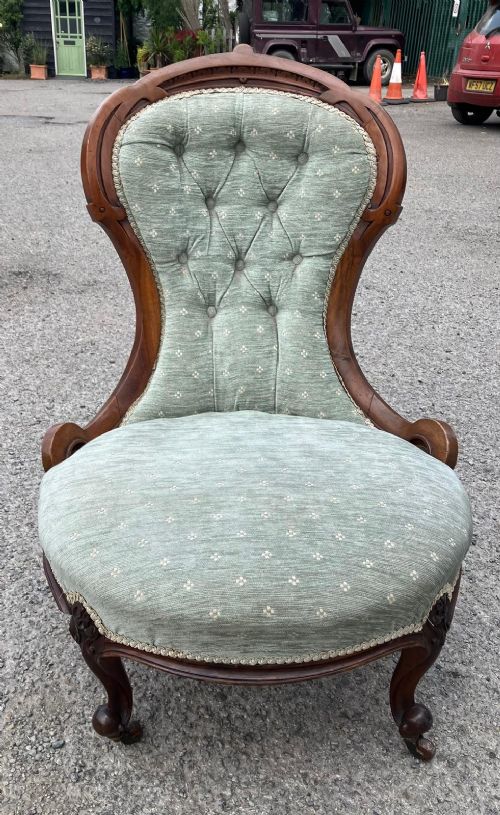
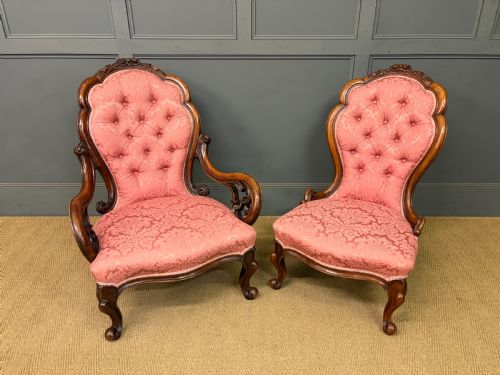
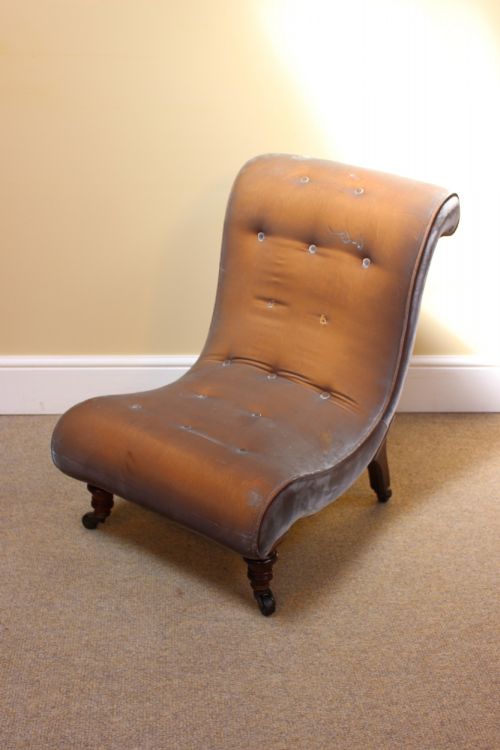
A walnut leg slipper chair belongs to a group of low-seated forms often catalogued as nursing chairs, bedroom chairs, and salon chairs. These low profiles allowed Victorian and Edwardian ladies to dress comfortably without obstruction.
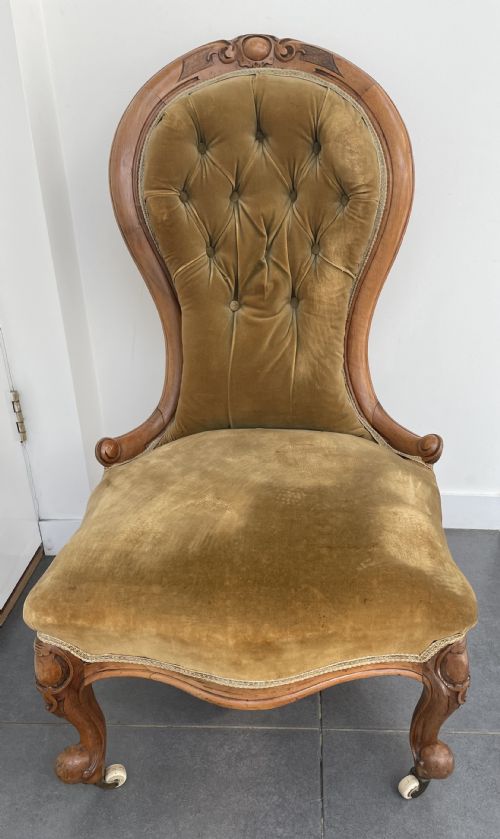
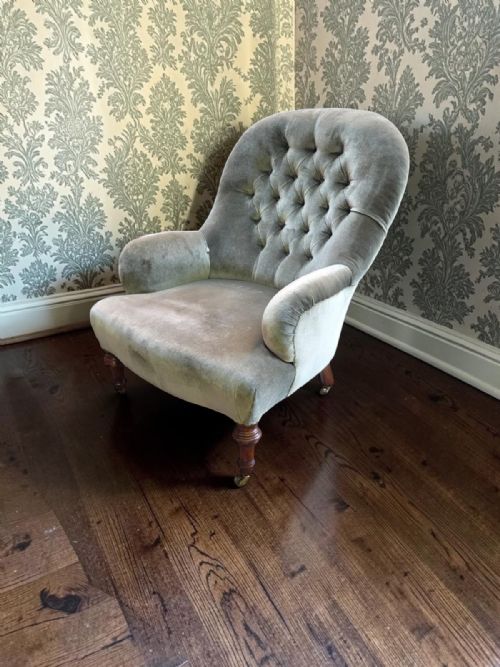
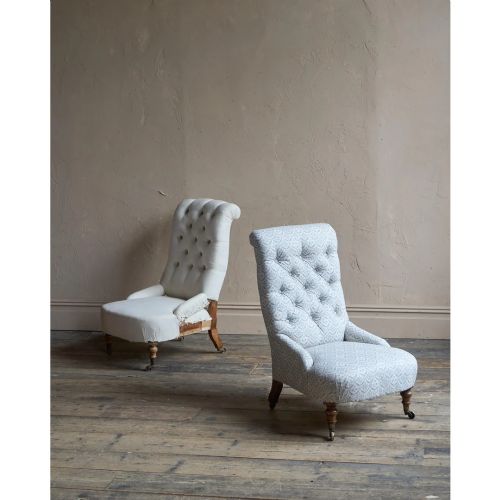
The pieces seen here span the Victorian and Edwardian eras, with examples dating from the middle of the nineteenth century through to the early twentieth century. They appear in styles ranging from plain show-wood frames to carved Victorian and Queen Anne revival forms.
Makers such as Howard and Sons and Hindley and Sons appear alongside anonymous English pieces. Buyers frequently encounter low scroll-back, button-back, and spoon-back designs upholstered in velvet, tapestry, fabric, and calico.
How they were made
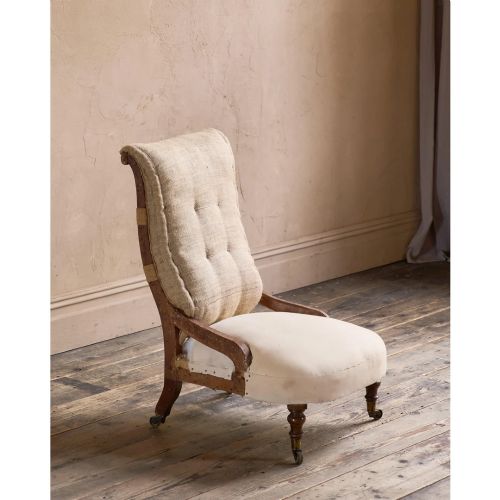
The timber framework relies on walnut, shaped into carved show-wood frames or turned legs fitted with brass castors. Ceramic castors also appear on nineteenth-century examples to protect floor coverings.
Upholstery techniques involve traditional stuffing secured over webbing and springs, finished with velvet, textile, calico, or rexine. Button-backing and scroll-backs require skilled hand-tucking to maintain structural tension across the curves.
Low frames ensured Victorian ladies avoided drafty ankles while dressing near the hearth.
What varies in quality
The crispness of the carved walnut framework separates standard production from superior workshop output. Maker attribution, particularly to firms like Howard and Sons, elevates the standing of a piece through documented joinery and interior webbing marks.
Proportion and frame integrity dictate the overall merit of a low chair. Finer examples retain their original castors, tight show-wood joints, and harmonious sprung curves without sagging.
Howard and Sons·Hindley and Sons
The Walnut Leg Slipper Chair Glossary
- Show-wood
- Exposed timber framing that remains visible around the upholstered portions of a chair. It is typically polished walnut in these examples.
- Button back
- An upholstery style where depressions are formed in the padding by pulling thread through to the frame in a grid pattern. This secures the filling and creates a tufted appearance.
- Spoon back
- A chair back shaped like the bowl of a spoon, curving inward to fit the human spine. This silhouette is characteristic of mid-nineteenth-century seating.
- Castor
- A small wheel fitted to the base of a furniture leg to ease movement. Brass and ceramic versions appear frequently on these frames.
Walnut Leg Slipper Chair: Frequently Asked Questions
What is a walnut leg slipper chair?
A low-seated chair designed originally for bedrooms and dressing rooms, allowing individuals to put on shoes or garments with ease. These pieces feature exposed walnut woodwork and short legs.
They encompass forms commonly described as nursing chairs, salon chairs, and bedroom chairs. The low centre of gravity defines their purpose and appearance.
How do I date a Victorian slipper chair?
Dating relies on stylistic shifts in the walnut frame, from early Victorian scroll-backs and spoon-backs to later Edwardian proportions. Castor materials and upholstery methods also offer chronological clues.
Makers' stamps or workshop markings on the webbing provide precise attribution when present. Comparing carved details to dated pieces helps narrow the decade of manufacture.
Where should I place these in a home?
These chairs suit bedrooms, dressing rooms, and corners of drawing rooms where a low seating profile is useful. Their compact dimensions make them practical for smaller spaces.
They work well paired beside a fireplace or used as occasional seating. The decorative walnut frame ensures they look complete when viewed from the back.
What styles are available here?
The selection includes Victorian, Edwardian, and Queen Anne styles, alongside Howard-inspired designs. Button-backed, tapestried, and carved show-wood variations feature prominently.
Frames incorporate turned walnut legs, ceramic castors, and scroll arms. Upholstery ranges from traditional velvet and calico to modern rexine.