
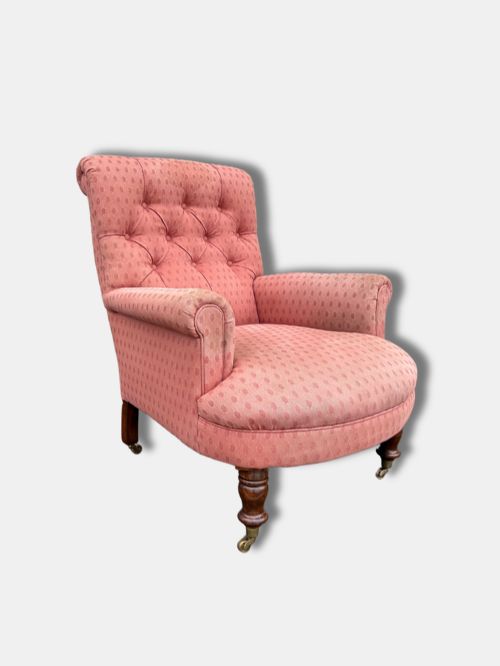
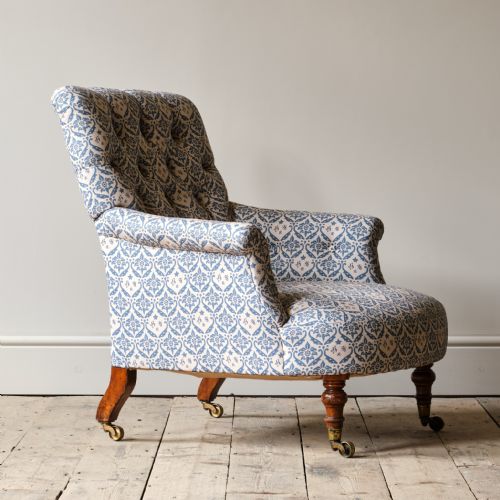
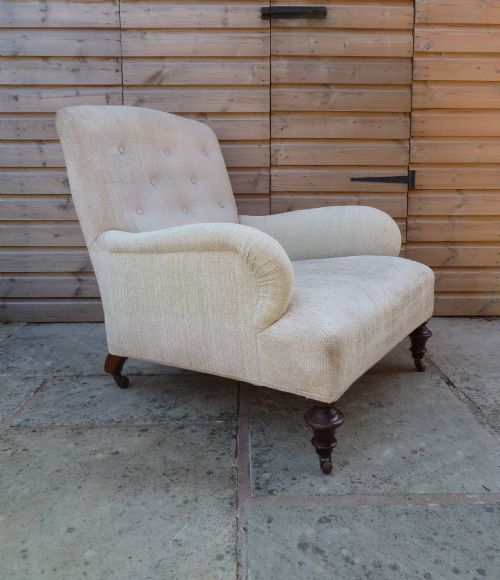
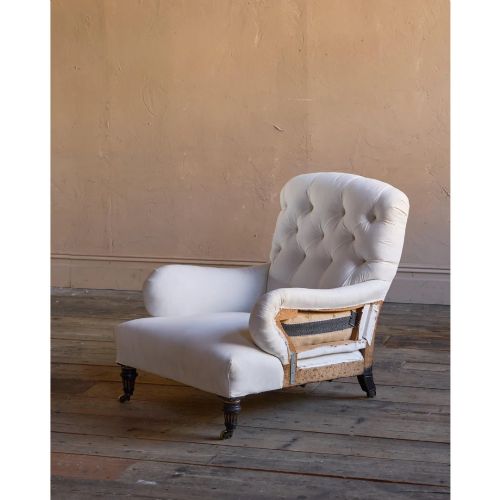


Howard Style Button Back Chair
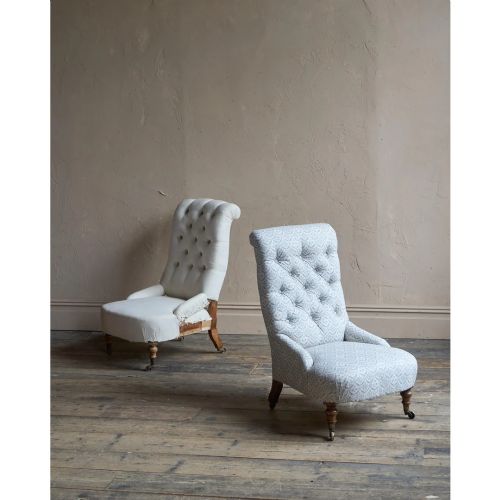
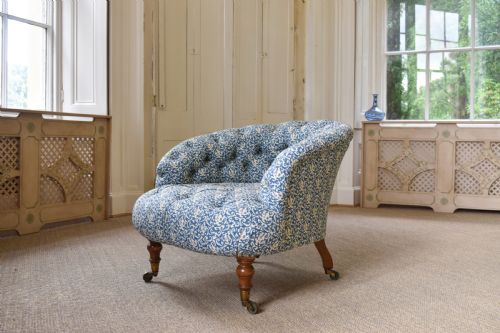
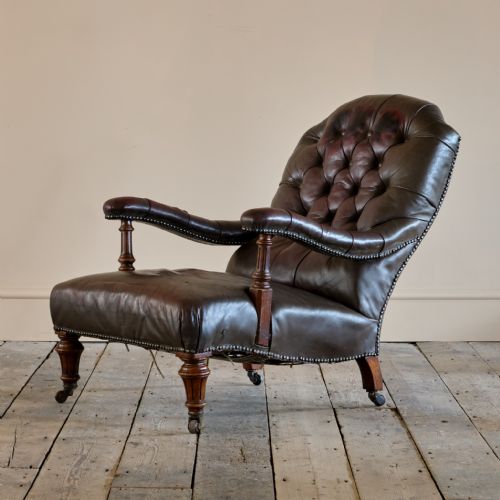
A howard style button back chair combines deep-seated comfort with Victorian English country house character, offering an inviting focal point for a traditional sitting room.
Howard Style Button Back Chair
A howard style button back chair is typically encountered as a 19th century Victorian armchair featuring deep upholstery and characteristic buttoning. These pieces emerge predominantly from the Victorian period, spanning the 1850s to the 1890s.
The selection includes various related forms such as slipper chairs, bedroom chairs, tub chairs, daybeds, and open armchairs. Pieces often exhibit influences from the Aesthetic Movement or English country house design alongside the core Howard style.
Buyers seeking a howard style button back chair will find examples shaped by Victorian upholstery traditions, frequently paired with turned wooden legs and substantial padded frames designed for relaxation.
Materials and construction
Makers built the frames of these chairs using sturdy hardwoods like walnut and mahogany, providing a stable foundation for the heavy upholstery. Brass castors frequently support the legs, allowing movement across heavy carpets.
Upholstery materials range from traditional cotton ticking and calico to luxurious velvet and decorative printed fabrics. Buttoning secures the plush filling through the backrest, creating the signature tufted surface texture.
Listings for a howard style button back chair span the Victorian era, incorporating materials like walnut, mahogany, velvet, and cotton ticking.
Assessing quality and craftsmanship
Quality in a howard style button back chair rests upon the integrity of the wooden frame and the precision of the traditional upholstery work. Superior examples demonstrate rigorous hand-tethered springing and dense, resilient internal stuffing that maintains its shape.
The choice of covering material and the subtlety of the woodwork further distinguish the range. Finer pieces display carefully fitted fabric, balanced proportions, and well-turned legs in walnut or mahogany that reflect the maker's skill.
Howard and Sons·William Morris
The Howard Style Button Back Chair Glossary
- Button back
- A style of upholstery where buttons are pulled tight through the padding to form a regular pattern of tufts. This technique secures the internal filling and creates a distinctive textured surface.
- Ticking
- A tightly woven cotton fabric traditionally used as a durable foundation cover for upholstery. It appears frequently on heritage pieces in classic striped patterns.
- Castor
- A small wheel attached to the base of furniture legs to ease movement. Brass versions are typical on Victorian seating.
- Slipper chair
- A low-set upholstered chair traditionally used in bedrooms for dressing. These items lack arms and sit close to the floor.
- Tub chair
- An armchair featuring a rounded backrest that curves continuously into the arms. This form wraps around the sitter for enclosed comfort.
Howard Style Button Back Chair: Frequently Asked Questions
What defines a howard style button back chair?
These chairs combine deep, comfortable proportions with button-tufted upholstery typical of 19th-century English seating. They reflect the relaxed elegance of Victorian country house interiors.
Craftsmen built them using robust timber frames and quality textiles, resulting in seating designed for sustained comfort and traditional aesthetic appeal.
How do I care for velvet upholstery?
Velvet surfaces require gentle brushing with the grain to maintain the pile and prevent flattening. Avoid harsh cleaning agents and protect the fabric from direct sunlight to preserve the colour.
Professional cleaning is recommended for deeper maintenance to safeguard the historical textiles used on period seating.
Are these chairs suitable for daily use?
Period armchairs were constructed with durable hardwood frames and sturdy internal springs designed for regular seating. Their robust build allows them to function effectively in modern living spaces.
Checking the stability of the frame and the condition of the webbing ensures the chair will support everyday use comfortably.
What distinguishes Victorian seating from later styles?
Victorian pieces utilise traditional hand-stitched upholstery methods, dense stuffing materials, and solid timber frames such as walnut or mahogany. These construction techniques differ from mass-produced modern alternatives.
Details like turned wooden legs, brass castors, and period fabrics help identify the nineteenth-century origin of the furniture.