



Walnut Leather Stool
A walnut leather stool brings together warm timber frames and durable hides for seating that moves easily from the piano to the dressing table.
Walnut Leather Stool
A walnut leather stool combines a solid hardwood frame with upholstered hide, serving multiple domestic functions across different rooms. When you search for a walnut leather stool, you encounter pieces designed for practical daily use, from small footrests to substantial piano benches.
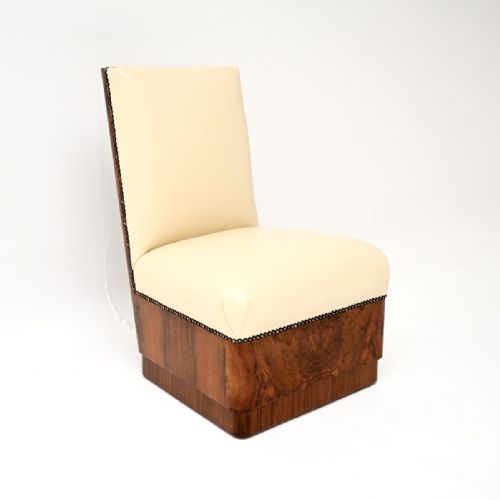
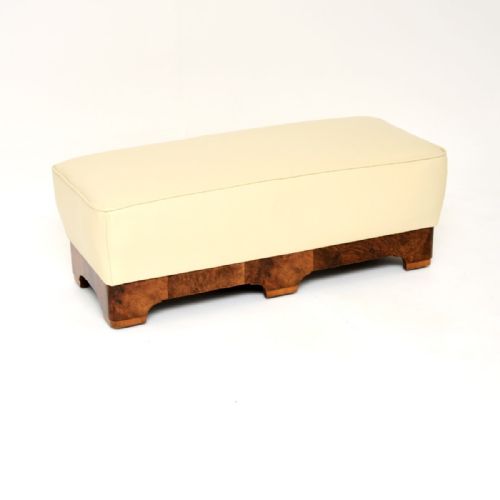
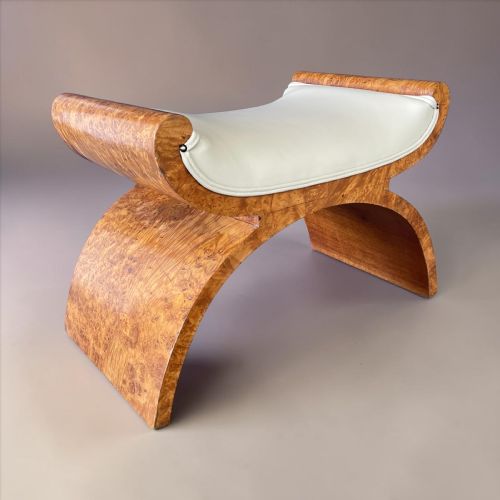
The selection spans several distinct periods, with Victorian examples and 1930s Art Deco pieces appearing most frequently. Formats vary widely, including revolving music seats, long footstools, X-frame designs, and low hall seats.
Maker attribution ranges from notable firms to unmarked vernacular items, yet all share the combination of walnut timber and leather upholstery. Buyers find everything from buttoned library window seats to streamlined dressing table stools.
How They Were Made
Frames rely on walnut, frequently featuring burr veneers or solid carved cabriole legs, paired with brass castors or iron mechanisms for adjustment. Woodworkers shaped the timber using traditional joinery, creating rigid structures capable of bearing weight over decades of daily use.
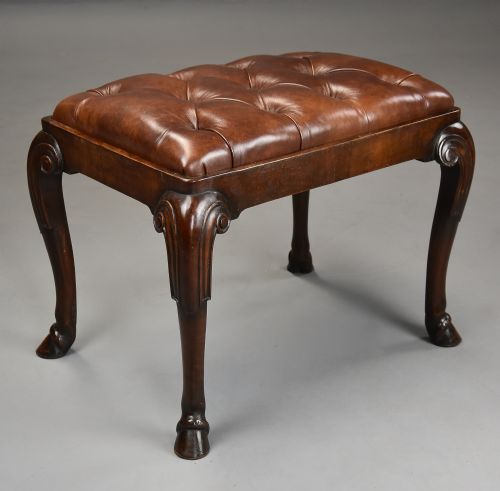
Upholstery techniques involve stretched leather secured with studs or deep buttoning over padding, sometimes incorporating hand-dyed finishes in red, tan, or oxblood. Mechanical elements in revolving and adjustable variants utilise metal screws or swivels to alter the height for the seated user.
Walnut Leather Stool Retail Price Guide 2026
Typical asking prices for walnut leather stool among the pieces listed under this phrase on Sellingantiques today, from the lower quarter to the upper quarter. They describe what is for sale here now, not the wider market.
Listings feature walnut, burr walnut, brass, iron, and leather across pieces dated from the 1850s through to the 1930s.
What Varies in Quality
The distinction between ordinary and exceptional pieces rests in the execution of the timber carving and the richness of the grain. Selected burr walnut veneers and crisp, deep-relief carving on cabriole legs elevate a frame far above standard production.
Upholstery work also dictates standing, where hand-dyed hides, careful buttoning, and robust internal stuffing demonstrate superior craftsmanship compared to plain stretched leather over basic padding.
Harry and Lou Epstein·Gillows·Cope and Collinson·Hille·Trollope and Sons
The Walnut Leather Stool Glossary
- Cabriole leg
- A furniture leg that curves out and then in, mimicking an animal limb. This shape appears frequently on Victorian and Queen Anne style examples.
- Buttoned leather
- Upholstery pulled into depressions by tied threads or twine, creating a diamond pattern. It provides both structural tightness and padded comfort.
- X-frame
- A structural base formed by two intersecting diagonal members resembling the letter X. This configuration offers distinct stability under a seat.
- Burr walnut
- Timber taken from a tree growth showing complex, swirling grain patterns. It provides a highly decorative surface on table tops and stool frames.
- Revolving seat
- A top mechanism that turns on a central vertical pivot. This allows the user to adjust height or direction while seated at a piano.
Walnut Leather Stool: Frequently Asked Questions
How do I use a piano stool today?
These pieces function well as compact seating in hallways or dressing rooms where floor space is limited. Their adjustable height mechanisms also make them practical near desks.
They pair easily with contemporary furniture by adding historical texture to a room. Many people use longer versions as low coffee tables in sitting rooms.
What is the difference between an ottoman and a footstool?
Footstools generally sit lower to the ground and serve specifically for resting feet while seated in an armchair. Ottomans often feature larger proportions and padded tops suitable for sitting or holding trays.
Both categories utilise walnut frames and leather surfaces interchangeably in historical production.
How do I identify a Victorian piece?
Victorian items frequently exhibit darker walnut timber, turned or cabriole legs, and deep buttoned leather upholstery. Adjustable screw mechanisms for piano seating also point towards this era.
Construction methods often include solid framing with hand-stitched interior webbing.
What defines Art Deco styling on these seats?
Art Deco examples from the 1930s favour smooth burr walnut veneers, geometric silhouettes, and unadorned leather surfaces. They lack the ornate carving seen on earlier Victorian or revival pieces.
The overall aesthetic prioritises streamlined forms and clean architectural lines.