


Walnut Leather Ottoman
These walnut leather ottoman pieces are solid period seats and footrests, offering deep character and comfort for a traditional interior.
Walnut Leather Ottoman
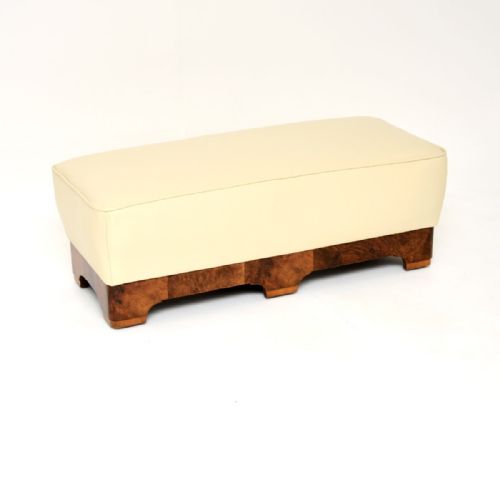
A walnut leather ottoman takes the form of a stool, long foot stool, library window stool, or box ottoman, combining a sturdy timber frame with a upholstered leather top. These pieces appear frequently across Victorian, Art Deco, and nineteenth-century periods, showing diverse revival influences like Queen Anne and Carolean styles.
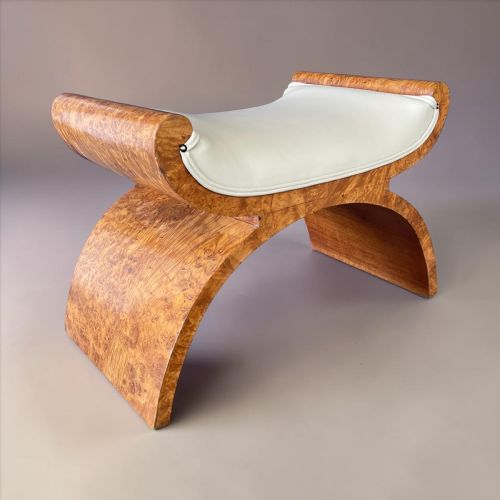
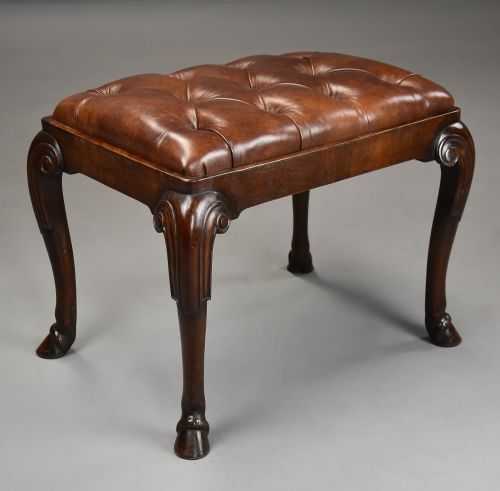
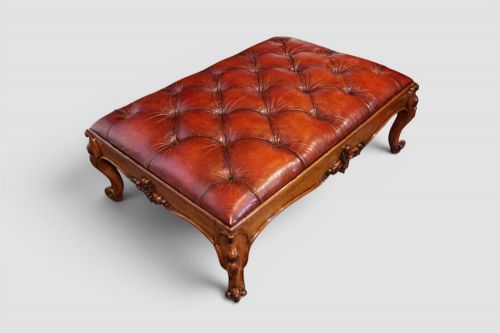
The most common versions on this page are Victorian buttoned red leather stools and Art Deco burr walnut models, often featuring cabriole or X-frame supports. Buyers encounter low hall seats and specialised Canterbury stools alongside standard footstools and coffee table conversions.
Originating primarily from nineteenth-century workshops through to nineteen-thirty modernism, these items serve as versatile low seating or foot rests. Their forms range from waisted box designs to large buttoned library pieces.
How They Were Made
Maker construction relies heavily on solid walnut and burr walnut timbers for the frames, shaped into cabriole legs, X-frames, and low hall seat structures. Brass details occasionally supplement the woodwork, adding subtle structural accents.
Upholstery centres on hand-dyed English leather, frequently finished with traditional buttoning techniques across red or black hides. The combination of figured burr veneers and durable leather creates a robust piece built for daily use.
Materials across the inventory include walnut, burr walnut, brass, and hand-dyed leather.
What Varies in Quality
The standard of a walnut leather ottoman rests on the richness of the timber grain, particularly the depth of burr walnut veneers, and the crispness of carved details on cabriole or Carolean legs. Superior examples display balanced proportions and harmonious integration between the wooden frame and the upholstery.
Leather quality and buttoning execution dictate the finish of the top surface, where hand-dyed hides show subtle tonal variations rather than flat industrial colouring. Finer pieces maintain original framing integrity and display accomplished craftsmanship across distinct revival styles.
Harry and Lou Epstein
The Walnut Leather Ottoman Glossary
- Cabriole leg
- A furniture leg that curves outward and tapers inward to a foot, inspired by animal limbs. This form appears frequently on eighteenth-century revivals.
- Burr walnut
- A prized wood veneer showing intricate swirling grain patterns formed from tree growths. It provides a highly decorative surface on Art Deco frames.
- Carolean style
- A decorative aesthetic dating from the reign of King Charles II, characterised by rich carving and scrolling woodwork. Pieces in this taste show grand proportions.
- Canterbury stool
- A low compartmentalised piece originally designed for sheet music or books, incorporated into a seated stool. This form combines storage with a padded top.
- X-frame
- A structural base formed by two intersecting diagonal supports resembling the letter X. It offers robust stability to nineteenth-century seating.
Walnut Leather Ottoman: Frequently Asked Questions
What is a walnut leather ottoman?
A walnut leather ottoman is a low seat or footrest built with a wooden walnut frame and a leather-upholstered top. These pieces function as stools, footstools, or coffee tables depending on their height and proportions.
They appear in various historic styles, from Victorian buttoned designs to streamlined Art Deco burr walnut pieces.
How do I date a walnut leather ottoman?
Dating relies on identifying stylistic markers, timber types, and construction methods characteristic of periods like the Victorian era or nineteen-thirty Art Deco. Victorian pieces often feature deep buttoning and cabriole legs, whereas later twentieth-century examples show cleaner geometric veneering.
Archival pieces and listed items from the nineteenth century display characteristic turnings and frame joinery unique to their decade.
Where were these pieces used?
These items traditionally served in libraries, hallways, and drawing rooms as auxiliary seating or footrests. Long library window stools accommodated multiple readers, while box ottomans provided concealed storage.
Today they fit easily into living spaces as flexible footstools or low central coffee tables.
How do I care for the leather?
Leather tops benefit from regular dusting with a soft, dry cloth and occasional treatment with appropriate leather balms to prevent drying. Hand-dyed English leather responds well to minimal intervention that preserves its natural patina.
Keeping the walnut frame polished with natural wax maintains the lustre of the timber.