
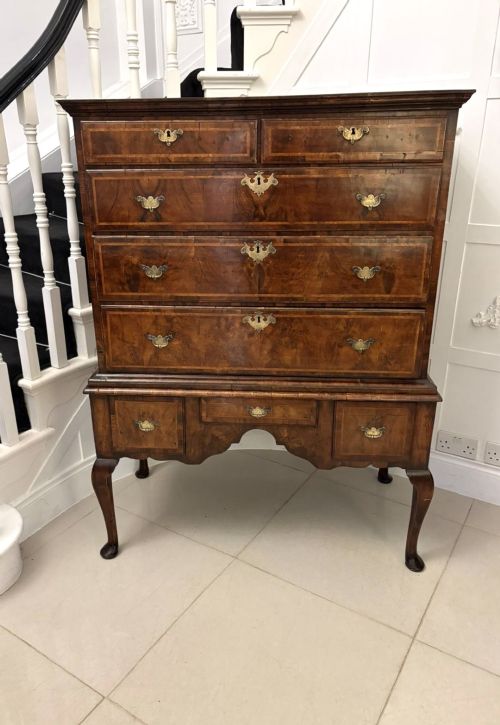
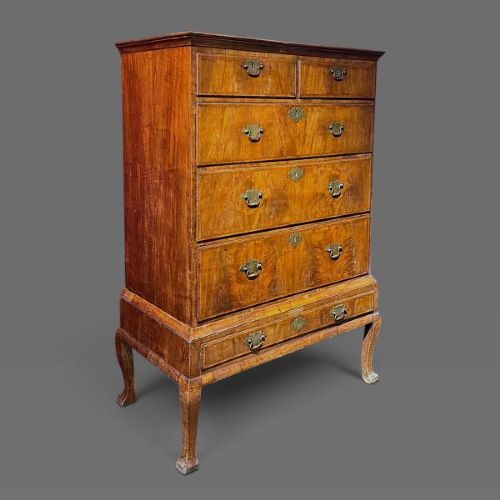
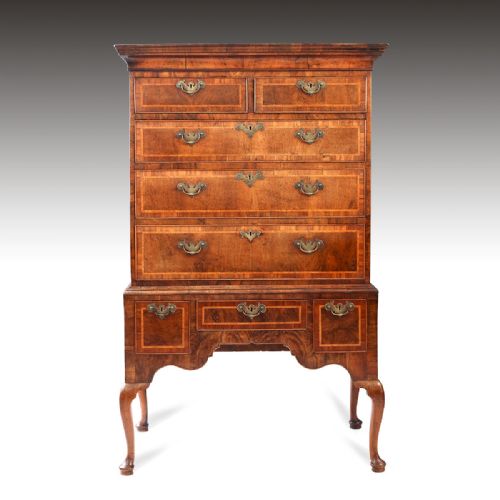
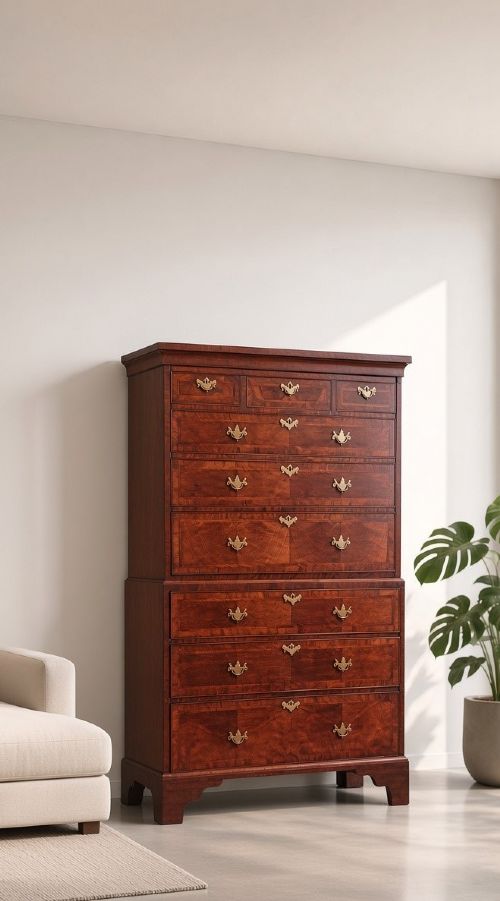
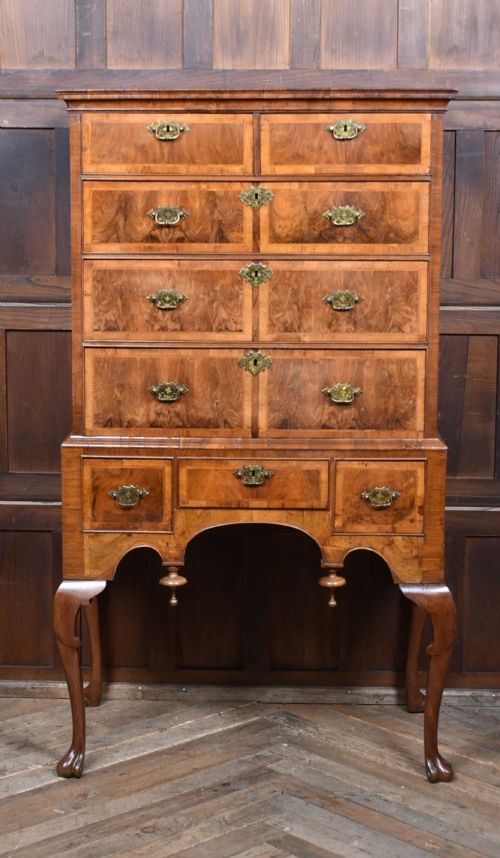
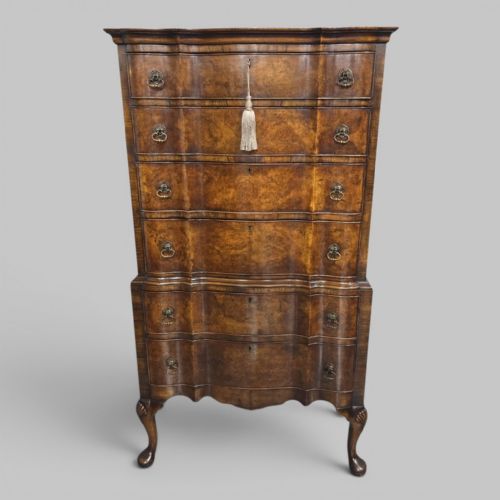


Walnut Highboy Drawers
Walnut highboy drawers combine towering vertical storage with rich figured timber, offering serious presence and practicality for any collector of historic English furniture.

Walnut Highboy Drawers
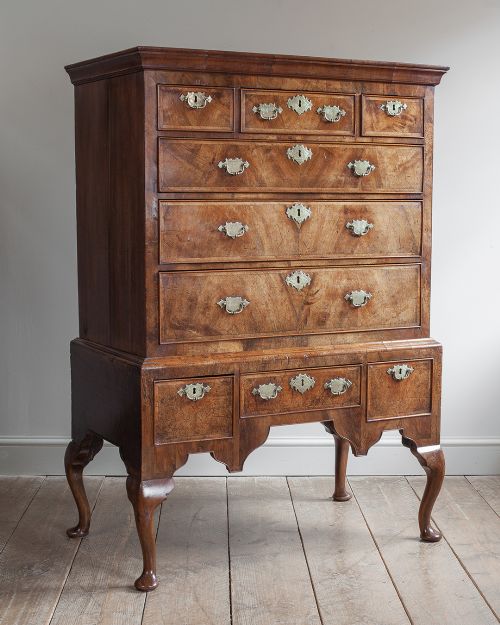
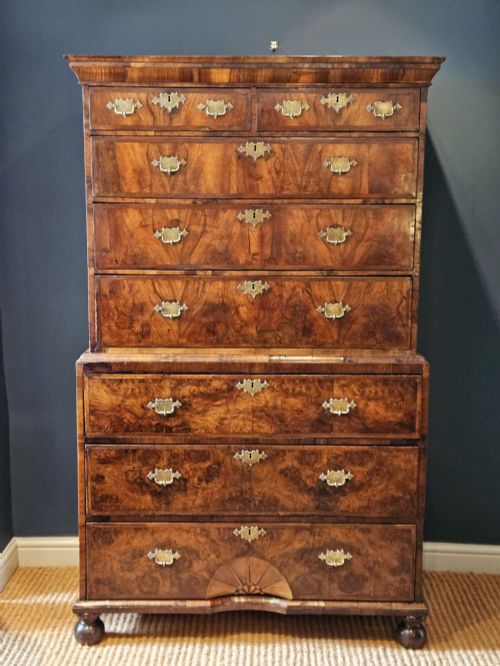
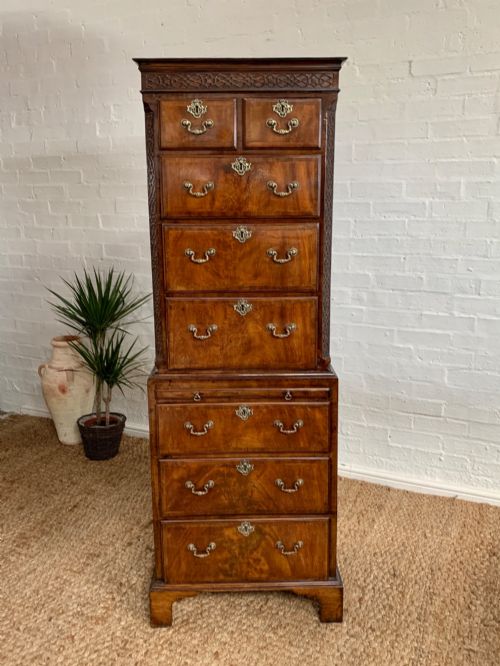
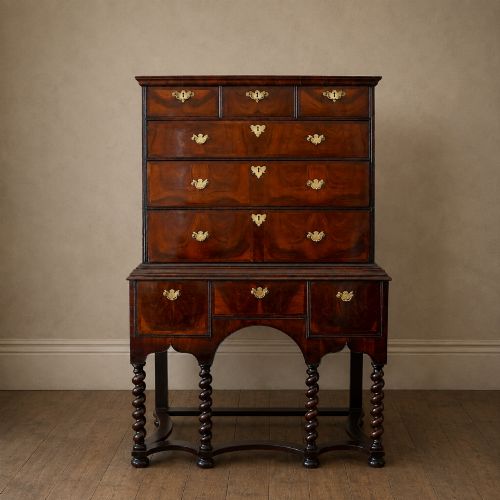
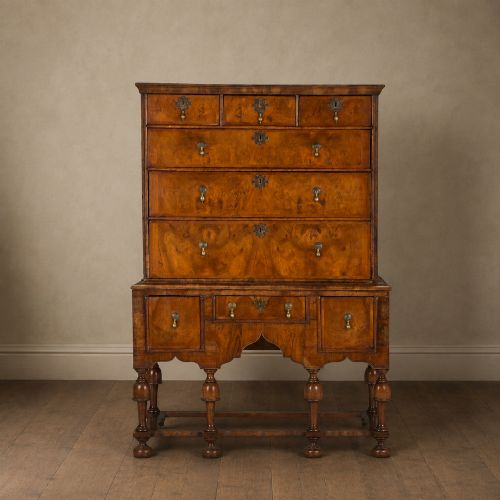
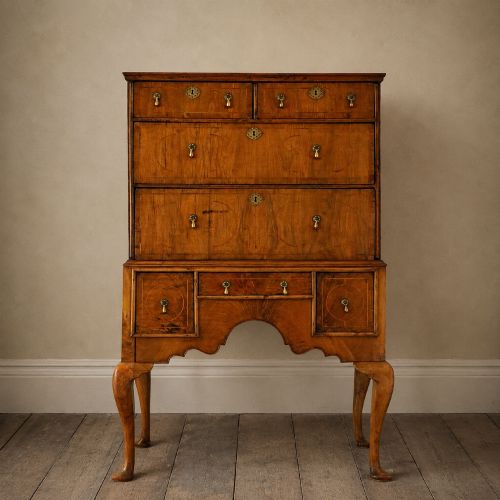
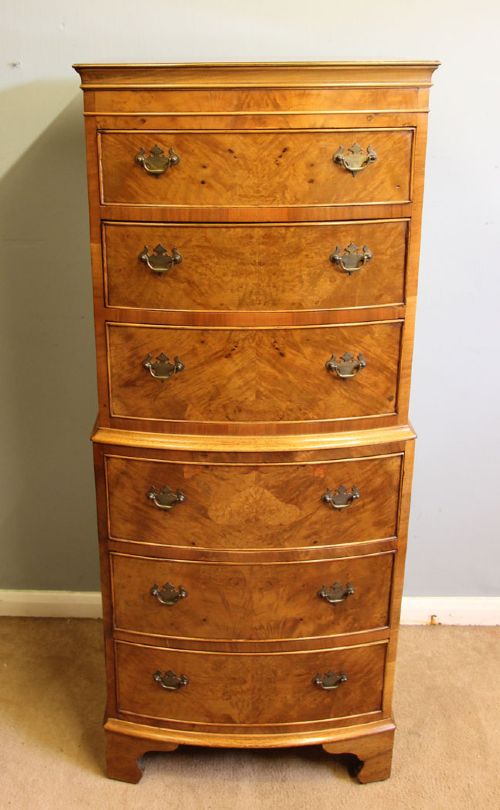
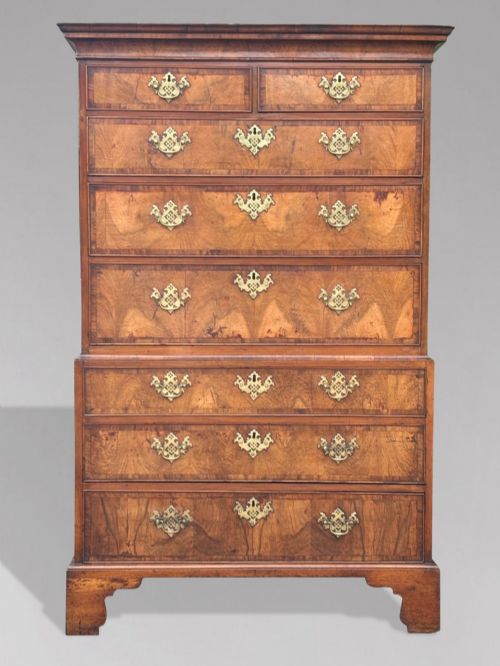
When searching for walnut highboy drawers, buyers encounter a specific lineage of tall case furniture designed to maximise storage while maintaining a slender footprint in a room. These pieces typically take the form of a chest on stand, a chest on chest, or a tallboy, stacking multiple graduated compartments vertically.
The most common examples on this page date from the eighteenth century, spanning the reigns of Queen Anne and the Georges, alongside later revivals from the twentieth century. Stylistically, they frequently manifest as Queen Anne or Georgian forms, constructed in two distinct sections that rest one atop the other.
How they were made
Cabinet makers relied primarily on walnut and burr walnut, often applied as fine veneers over secondary woods such as oak and fruitwood to create striking figured surfaces on the drawer fronts. Crossbanding in boxwood and intricate marquetry added geometric framing and decorative detail to the primary facades.
Structural integrity depended on solid timber carcases and dovetailed drawer construction, paired with brass drop handles and escutcheons that secured the operational hardware. Stands and bases incorporated turned legs or bracket feet, occasionally integrating oak drawer linings to support the substantial weight of the stacked sections.
What varies in quality
The standard of walnut highboy drawers rests heavily on the choice of timber veneer, with highly figured burr walnut and dished sunburst marquetry distinguishing superior examples from plain grain surfaces. Crispness in the execution of crossbanding and the retention of period brass hardware further elevate a piece.
Proportion and harmony between the upper and lower sections dictate aesthetic success, particularly on pieces where stands are associated rather than original. The finesse of the leg turnings and the tightness of the drawer dovetails separate workshop output intended for elite patrons from more utilitarian production.
The Walnut Highboy Drawers Glossary
- Highboy
- A tall chest of drawers raised upon a low stand or legs. This form gained popularity during the late seventeenth and early eighteenth centuries.
- Chest on chest
- A tall storage unit comprising an upper chest of drawers stacked directly upon a slightly wider lower chest. This configuration provides substantial capacity without expanding floor space.
- Burr walnut
- Timber sliced from the gnarled growths of a walnut tree, yielding complex, swirling grain patterns. Cabinet makers prized this material for decorative drawer fronts and cabinet doors.
- Crossbanding
- A narrow strip of veneer laid perpendicularly to the surrounding grain along the borders of a panel or drawer. This technique frames the primary wood to create a finished visual boundary.
- Tallboy
- A tall chest of drawers, often synonymous with a chest on chest or a single towering carcase. These pieces provide elevated vertical storage across multiple graduated drawers.
Walnut Highboy Drawers: Frequently Asked Questions
What is the difference between a highboy and a tallboy?
A highboy traditionally refers to a chest of drawers mounted on a separate tall stand with legs, while a tallboy typically describes a chest on chest structure where one cabinet sits directly on another.
Both forms serve the same purpose of maximising vertical storage space while occupying a minimal floor footprint in historic interiors.
How do I identify a Queen Anne walnut highboy?
Queen Anne examples frequently feature veneered burr walnut surfaces, cabriole legs on the lower stand, and arched or herringbone crossbanding details framing the drawers.
These pieces often date from the early eighteenth century and display softer, curved lines compared to the later geometric strictness of earlier periods.
Are walnut highboys sturdy enough for daily use?
These pieces were built from solid oak and fruitwood carcases faced with durable walnut veneers, making them robust enough for regular storage when handled with care.
The heavy stacked construction provides natural stability, though drawer runners and historical joints benefit from gentle treatment.
What does an associated stand mean on a chest?
An associated stand indicates that the lower base section was paired with the upper chest at a later date, rather than being carved alongside it in the original workshop.
Such pairings frequently occurred during centuries of historic maintenance when pieces required structural repair or adaptation.