
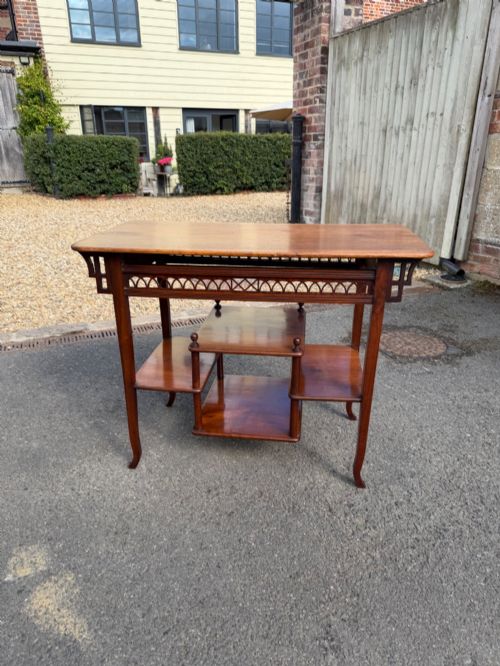
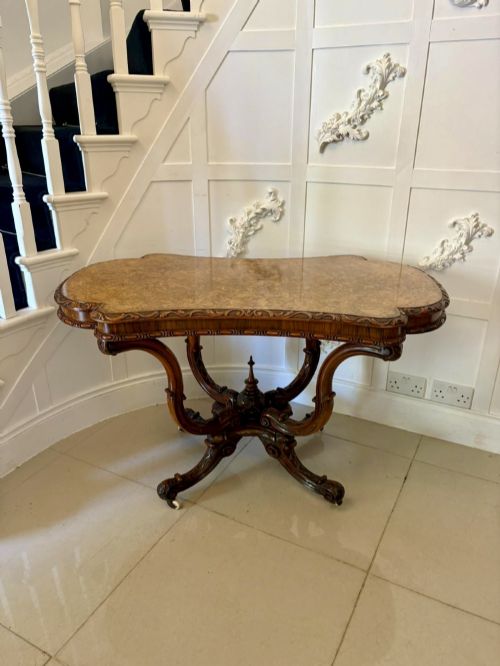
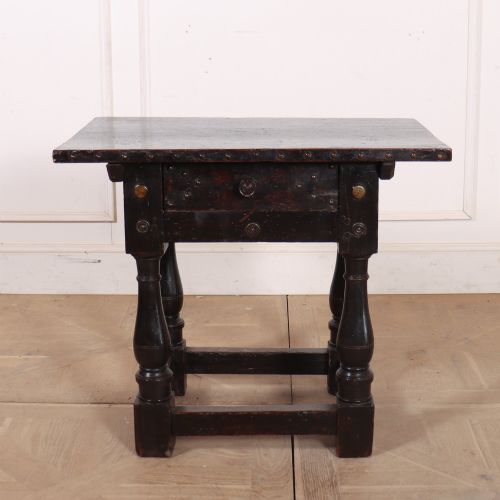
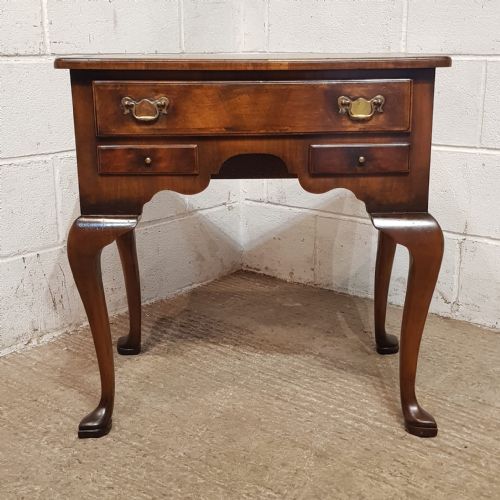
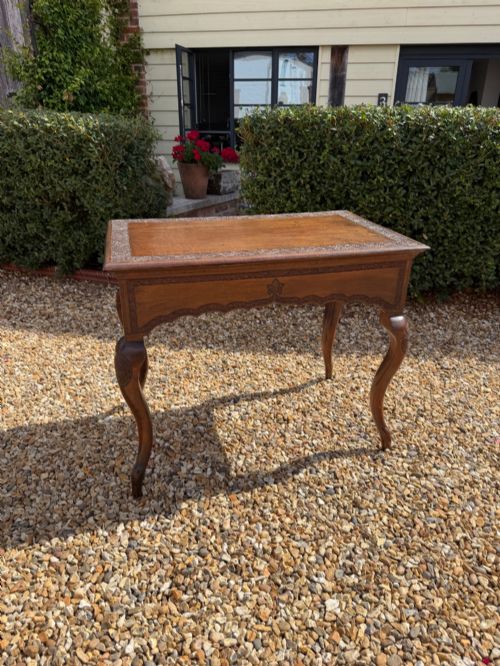
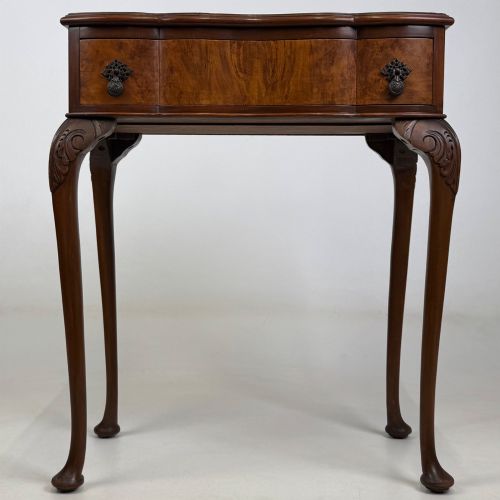
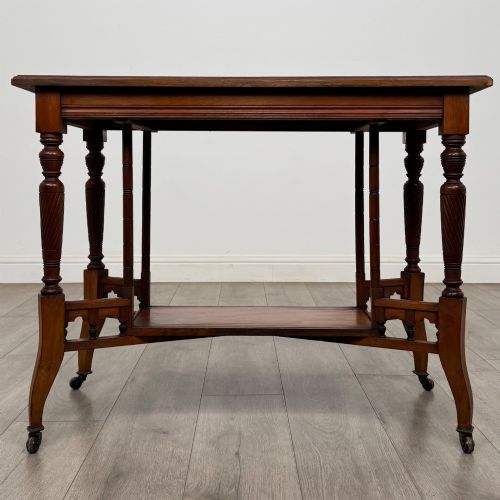
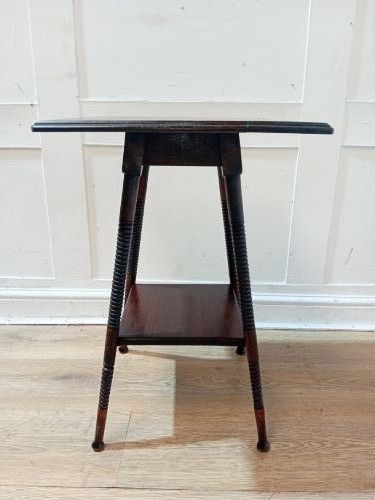




Walnut Hall Accent Table
A walnut hall accent table brings rich timber grain and compact proportion to an entrance, spanning periods from the eighteenth century to the twentieth.
Walnut Hall Accent Table
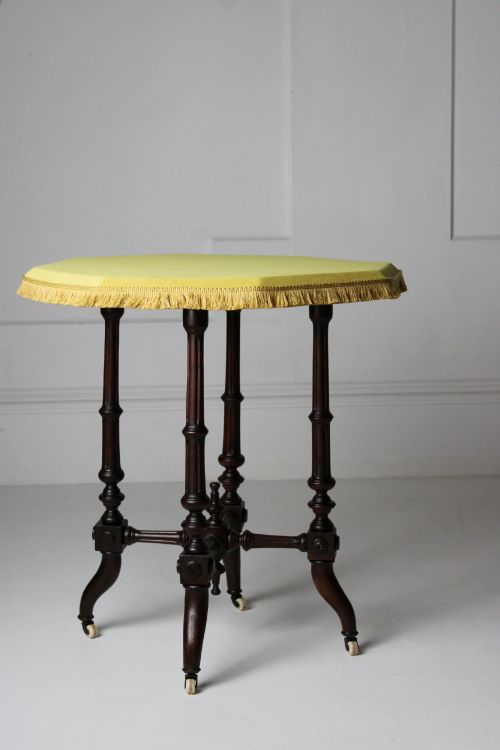
When searching for a walnut hall accent table, buyers encounter a diverse selection of forms including side tables, lowboys, console tables, and occasional tables. These pieces originate from various eras such as the Georgian and Victorian periods, alongside later twentieth century revivals.
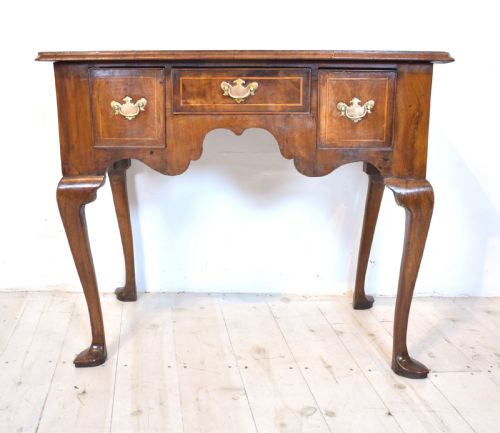
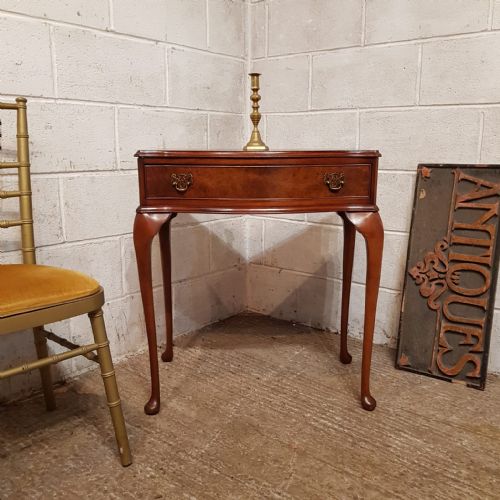
The lowboy emerges as a particularly common form within this group, offering compact proportions well suited to hallways and smaller spaces. Examples range from eighteenth century solid walnut constructions to later burr walnut interpretations.
Makers and styles span Queen Anne, Edwardian, and Arts & Crafts designs, incorporating materials like brass, ceramic, and iron alongside primary timber surfaces. Buyers find both British provincial pieces and continental examples sharing similar utilitarian roots.
Materials and construction methods
Cabinet makers utilised walnut timber, frequently selecting burr walnut veneer or figured walnut to accentuate the natural grain patterns across table tops and drawer fronts. Solid walnut also appears, particularly in earlier Georgian pieces designed for domestic utility.
Secondary framing often incorporates oak or other native hardwoods to provide structural stability beneath the decorative walnut surfaces. Marquetry and parquetry inlays demonstrate precision woodworking techniques applied during the seventeenth, eighteenth, and nineteenth centuries.
Metal elements such as brass handles and fixtures complement the timber construction, while carved details adorn legs and friezes on Victorian and revival specimens.
Assessing quality in walnut tables
The choice of timber veneer significantly influences visual appeal, with richly figured burr walnut and intricate marquetry or parquetry work representing higher tier craftsmanship. Plain solid walnut finishes offer a more restrained aesthetic compared to heavily carved Victorian or Edwardian centre and console tables.
Proportion and structural integrity distinguish provincial pieces from master cabinet work, particularly in lowboys and side tables where cabriole legs and banded edges reveal the maker's skill. The integration of secondary woods like oak within the frame indicates period-appropriate construction methods.
LIBERTY of LONDON·WILLIAM BIRCH·Shoolbred and Co
The Walnut Hall Accent Table Glossary
- Lowboy
- A small dressing or side table with drawers, typically featuring cabriole legs and dating from the eighteenth century onwards. These compact pieces serve well as accent tables in narrow hallways.
- Burr walnut
- A specialised wood veneer taken from the warted growths on walnut trees, prized for its swirling, highly figured grain patterns. Cabinet makers utilised this timber on prominent surfaces of nineteenth and twentieth century tables.
- Marquetry
- Decorative inlay work using various coloured wood veneers to create geometric or floral patterns on table tops. This technique appears on several Victorian and Georgian examples in the collection.
- Parquetry
- A geometric mosaic of wood pieces used for decorative floors and table tops, creating repeating patterns like cubes or squares. Late Victorian hall tables frequently employ this technique.
- Cabriole leg
- A furniture leg that curves out and then in, resembling the shape of an animal's leg, commonly found on Queen Anne and Georgian style tables.
Walnut Hall Accent Table: Frequently Asked Questions
What is a lowboy?
A lowboy is a small table equipped with one or more drawers, originally designed for domestic use in bedrooms or living spaces. Over time, their compact dimensions made them popular choices for hallways and entrance passages.
Most surviving examples date from the eighteenth century through to later revival periods, constructed from walnut or burr walnut veneer.
How do I date a walnut table?
Dating relies on examining the construction methods, timber selection, and stylistic details such as leg shape and edge banding. Eighteenth century pieces often feature solid walnut or simple cockbeading, while Victorian examples frequently showcase heavier carving and burr veneers.
Reference points include Queen Anne, Georgian, and Edwardian design characteristics present in the specific piece.
Where should I place an accent table?
These tables fit naturally into entrance halls, landings, or narrow corridors where floor space is limited. Their surfaces provide a convenient spot for lamps, decorative objects, or incoming post.
Pairing a small console or side table with a mirror creates a functional focal point near an entryway.
What is burr walnut?
Burr walnut is derived from a tree growth that produces highly intricate and swirling grain patterns. Cabinet makers prized this material for creating decorative table tops and drawer fronts.
Tables featuring this veneer date largely from the Victorian era and subsequent twentieth century revivals.