


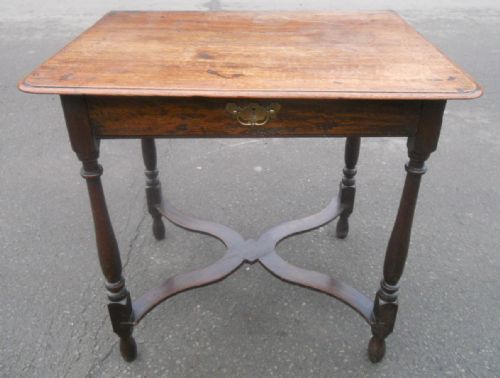

Curved Drawer Side Table
These curved drawer side table examples combine useful storage with refined lines, offering practical surfaces for lamps, books and daily necessities.
Curved Drawer Side Table
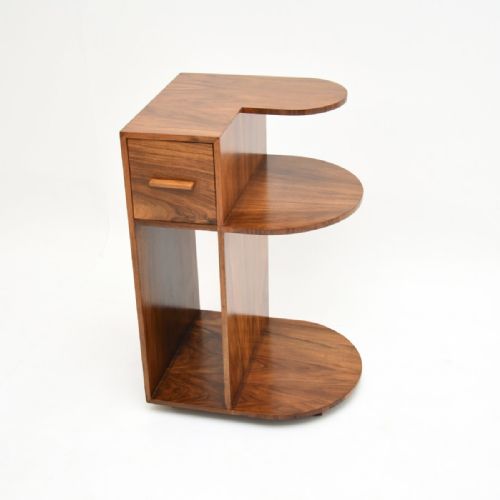
A curved drawer side table provides a compact surface paired with curved storage, taking the form of side tables, bedside tables, console tables and occasional tables. The selection ranges from Georgian oak origins through Victorian and Edwardian mahogany pieces up to Art Deco walnut designs.
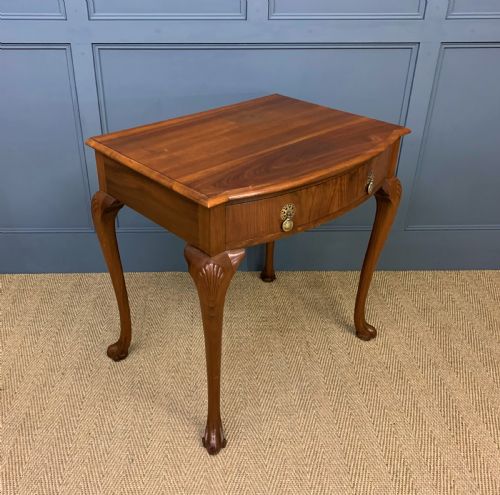
You will frequently encounter mahogany bowfront examples alongside walnut and burr walnut variations, often featuring one or two drawers. These items function equally well beside a bed, in a hallway or supporting a lamp in a reception room.
How they were made
Cabinet makers utilised solid timbers alongside veneers, applying mahogany, walnut and burr walnut over supportive carcases to achieve rich grain patterns. Curved drawer fronts required specialist shaping of the wood to follow the sweeping contours of the frame.
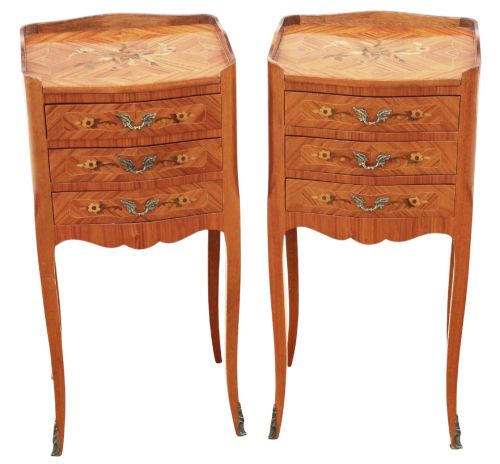
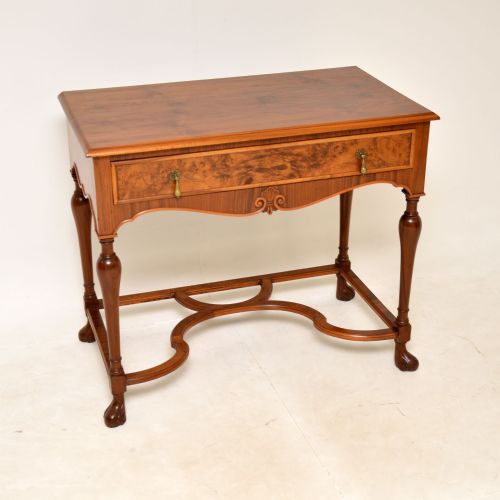
Detailing often included brass hardware such as handles and escutcheons, while specific pieces incorporate marquetry decoration or turned elements like bobbin legs. The construction methods balanced structural stability with decorative elegance across various revival styles and periods.
What varies in quality
The choice of timber grain defines much of the visual merit, with highly figured walnut and carefully matched mahogany veneers marking out finer examples. Superior pieces display seamless curves in the drawer construction and precise alignment within the surrounding frame.
Artisanal execution in secondary details, such as the quality of brass fittings and the crispness of marquetry or turned legs, separates standard utility items from more distinguished creations. The harmony of proportions across the curved silhouette remains central to a piece's overall success.
The Curved Drawer Side Table Glossary
- Bowfront
- A convex curved cabinet front that swells outward in the centre. This shape softens the profile of a room and maximises internal drawer space.
- Veneer
- A thin slice of decorative wood applied over a stable secondary timber. Figured walnut or mahogany veneers create rich surface patterns.
- Marquetry
- Inlaid wood pieces forming decorative patterns or pictures on a surface. It adds visual complexity to French bedside tables.
- Bobbin leg
- A turned furniture leg shaped to resemble a string of bobbins or spools. This decorative turning appears on certain oak examples.
- Escutcheon
- A protective plate surrounding a keyhole. Brass examples often complement the drawer hardware on these tables.
Curved Drawer Side Table: Frequently Asked Questions
Where should I place a curved drawer side table?
These tables suit smaller spaces due to their compact footprints and rounded profiles. Position them beside a bed, in an entrance hall or beside a sofa for convenient surface space.
The curved drawer fronts prevent sharp corners jutting into walkways, making them practical for tighter layouts.
How do I identify the wood type?
Examine the grain patterns and colour variations across the surface. Mahogany tends to show a reddish-brown tone with straight or ribbon grain, while walnut offers darker brown hues with complex swirling patterns.
Burr walnut displays distinctive circular cluster patterns formed from tree growths, creating highly decorative surfaces.
What periods are represented?
The selection spans from the mid-eighteenth century through the Victorian and Edwardian eras into the Art Deco period of nineteen thirty. Styles range from Georgian and Regency to Louis XV revival and Art Deco.
Earlier pieces often use solid oak or mahogany, while later twentieth-century examples frequently showcase figured walnut veneers.
How many drawers do they have?
Configurations vary from single-drawer lamp tables to two-drawer console and bedside versions. The drawers follow the curved contour of the front facade.
Storage depth depends on the overall scale and period of the specific table.