
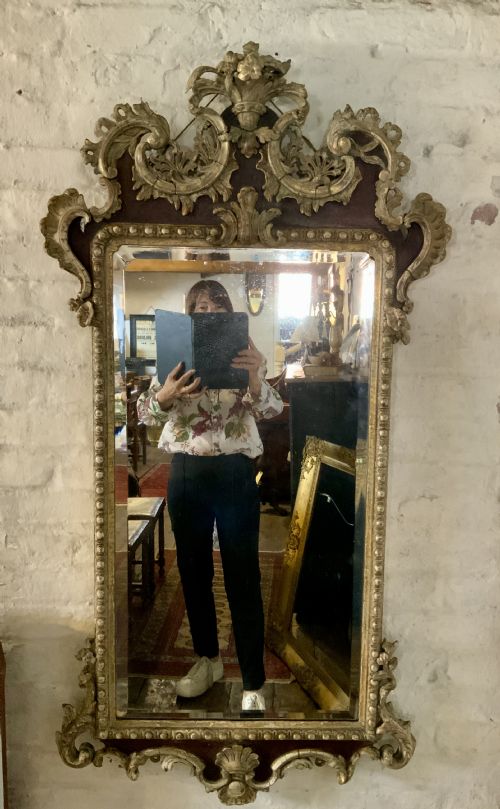


Walnut Giltwood Mirror
These walnut giltwood mirror pieces combine warm figured wood with gilded accents, offering timeless decorative presence for any room.
Walnut Giltwood Mirror
A walnut giltwood mirror brings together rich timber and bright gilding, spanning periods from the early eighteenth century through to the Victorian era. You encounter forms ranging from smaller wall mirrors and pier glasses to larger overmantel pieces.
The selection frequently includes George II examples alongside later nineteenth-century revivals. Wall mirrors and pier glasses dominate the forms, offering distinct proportions designed for specific architectural spaces.
Materials and Construction
These pieces combine walnut timber, sometimes incorporating burr walnut or figured grain, with carved giltwood detailing and mirror glass. Parcel gilt elements highlight specific carved areas against the darker tone of the walnut ground.
Craftsmen built frames using traditional timber construction, applying surface gilding to carved enrichment such as mouldings and accents. Mirror glass is set within these composite frames, utilising both antique and replacement plates.
Listings include walnut and giltwood pieces spanning the early eighteenth century through to the Victorian era.
Assessing Quality and Execution
Quality rests in the crispness of the carved detail on the gilt elements and the depth of the walnut grain. Finer examples display meticulous attention to proportion and harmonious integration of the two distinct surface finishes.
The choice of timber grain, particularly burr walnut, elevates the visual weight of the frame. Superior pieces maintain integrity in the original gilt surfaces and wood patination over centuries of use.
The Walnut Giltwood Mirror Glossary
- Parcel gilt
- Partially gilded, where gold leaf is applied to specific carved details while leaving the underlying walnut exposed. This technique creates a deliberate contrast between the warm wood and the bright metallic finish.
- Pier glass
- A tall mirror specifically designed to hang on the wall space between windows. These pieces often feature vertical proportions suited to narrow architectural spans.
- Overmantel mirror
- A wide mirror intended for placement above a fireplace mantel. Their horizontal format allows them to anchor the wall space above a hearth.
- Burr walnut
- Timber taken from the growth excrescence of a walnut tree, showing highly figured and swirling grain patterns. It provides a decorative surface texture prized in cabinet work.
- George II
- An English design period spanning the mid-eighteenth century, known for architectural symmetry and carved enrichment. Mirrors from this era often incorporate Palladian or early rococo motifs.
Walnut Giltwood Mirror: Frequently Asked Questions
Where should I hang a pier glass?
A pier glass works best on narrow wall spaces between windows or doors, where its vertical proportions reflect light into the centre of the room.
Matching the height of the mirror to the surrounding architectural joinery helps anchor it visually within the space.
How do I care for antique giltwood?
Giltwood requires gentle dusting with a soft, dry brush to protect the delicate gold leaf layer from abrasion.
Avoid using liquid cleaners or moisture near the gilded surfaces, as water lifts the preparation layers beneath the gold.
What is parcel gilding?
Parcel gilding is a decorative technique where only select portions of a carved frame receive gold leaf application.
This method highlights specific architectural details like foliage or mouldings while allowing the natural walnut grain to remain visible elsewhere.
Are overmantel mirrors heavy?
Large overmantel mirrors carry significant weight due to their timber frames and substantial glass plates.
Secure installation requires fixing directly into wall studs or using heavy-duty wall anchors designed to bear substantial loads safely.