
Walnut Folding Tea Table
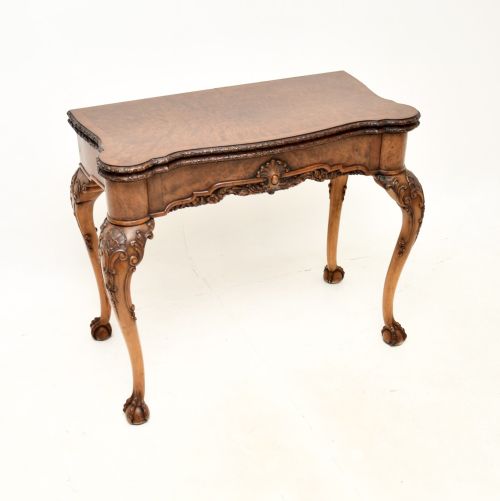
A walnut folding tea table brings rich figured timber and clever folding mechanism together, offering a versatile surface that tucks away neatly.
Walnut Folding Tea Table
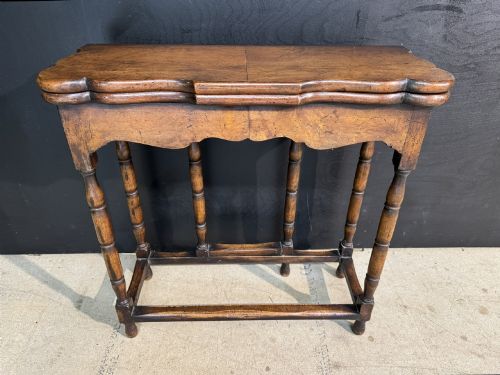
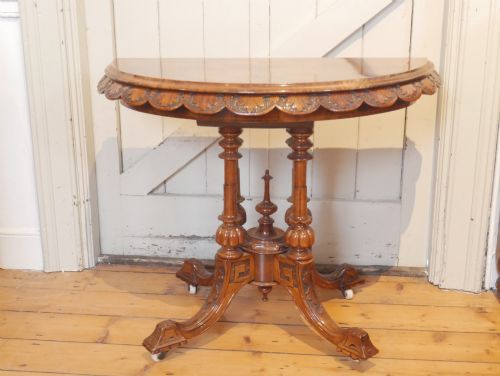
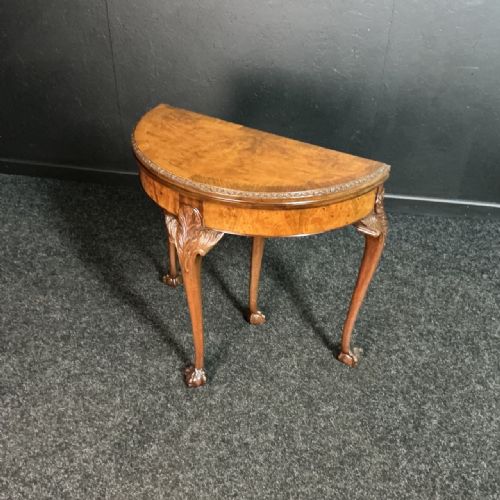
A walnut folding tea table serves domestic spaces with timber surfaces designed to expand when needed and fold flat for storage or movement. The selections span eras from the eighteenth century through the Victorian period and into the twentieth century, showing various forms of folding and pivoting tops.
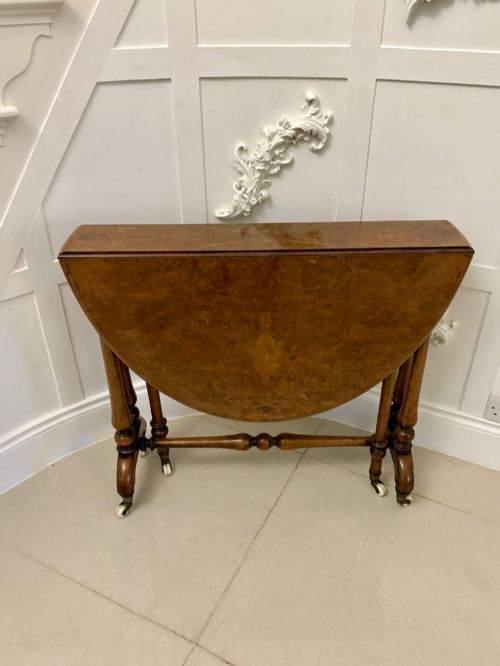
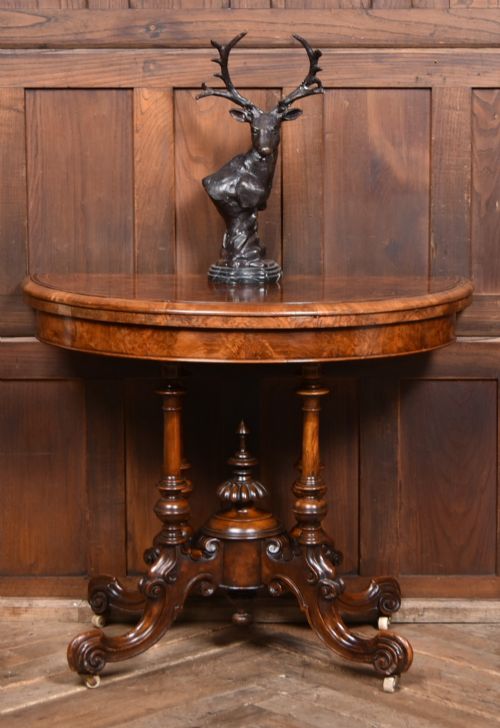
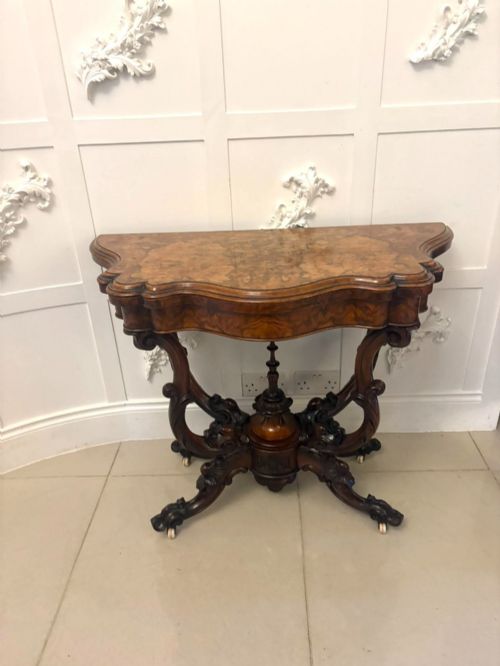
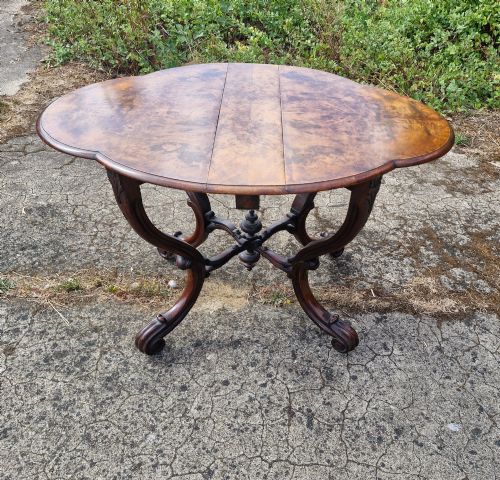
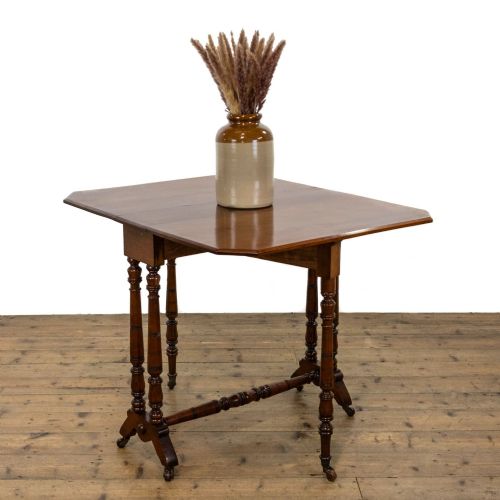
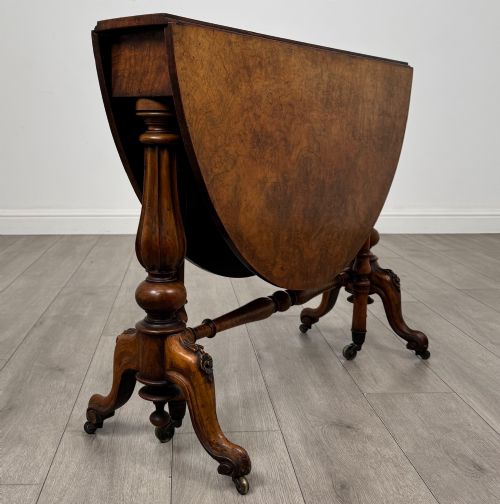
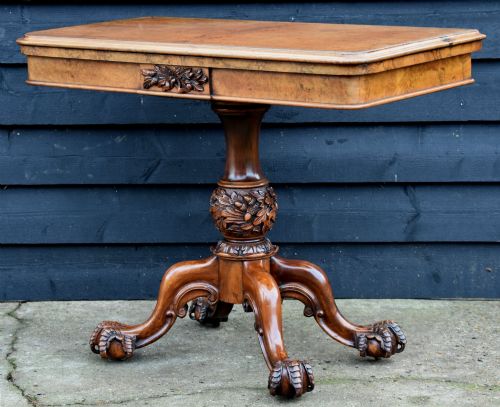
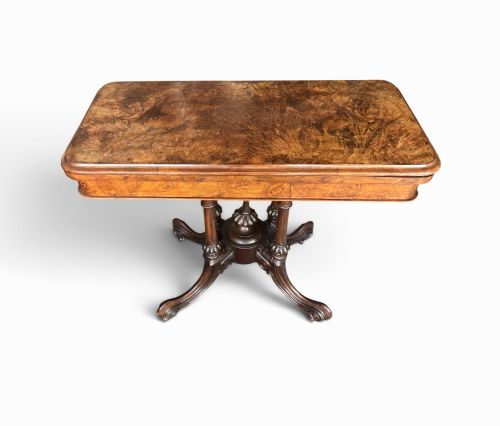
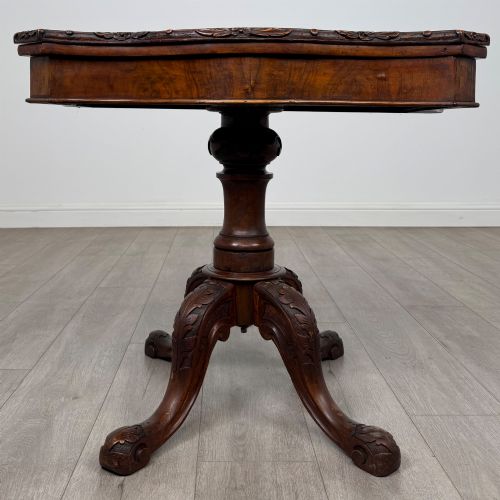
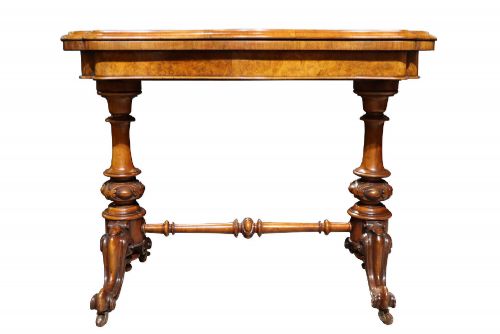
Victorian examples in burr walnut dominate the selection, often featuring fold-over tops or drop-leaf action like the Sutherland table format. Alongside these, Georgian pieces and later Queen Anne revival or Art Deco iterations provide alternative silhouettes in solid or figured walnut.
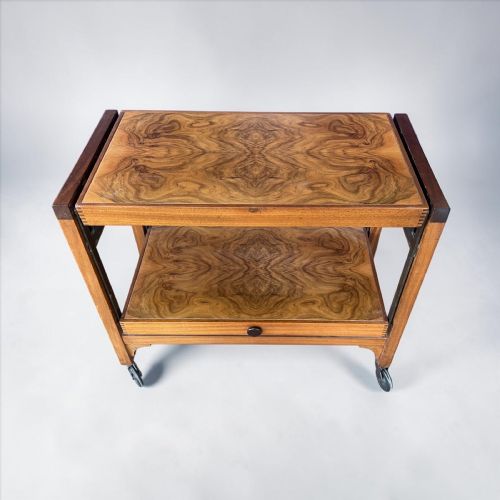
Makers and regional workshops produced these tables with card, games, and tea functions overlapping. Many pieces serve multiple purposes through rotating tops, scissor actions, or folding tray supports.
Materials and construction
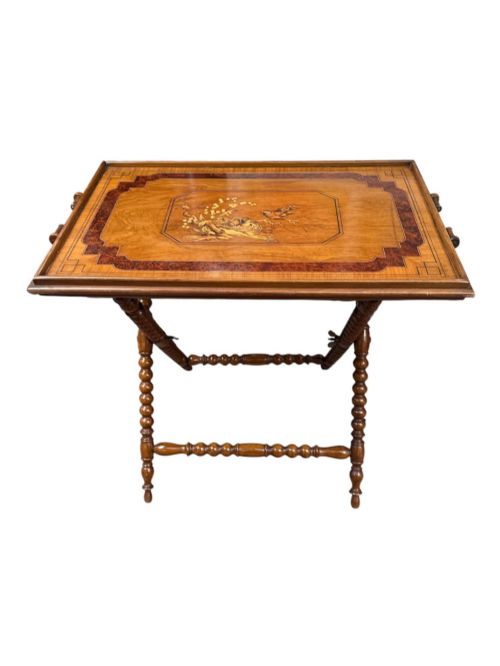
Constructed primarily from walnut and burr walnut, these tables frequently employ contrasting veneers, crossbanding, and floral marquetry. Secondary timbers support intricate mechanisms like the scissor action and pivoting fold-over hinges.
Inlay work incorporates boxwood and various decorative elements, while brass fittings and ormolu mounts secure structural joints and edges. Sorrento ware examples demonstrate specialised marquetry techniques applied to tray surfaces.
A tiny inlaid bird design perches unexpectedly on an eighteenth-century Irish American black walnut tea table.
Assessing quality
Quality rests in the selection of the burr walnut grain, the crispness of carved basket bases or supports, and the precision of the marquetry inlay. Superior execution ensures the folding and pivoting mechanisms operate smoothly without sagging.
The integration of secondary woods and the depth of the patina indicate the level of craftsmanship invested by makers such as Edwards and Roberts or Epstein and Co.
Edwards and Roberts·Epstein and Co
The Walnut Folding Tea Table Glossary
- Burr walnut
- A highly figured wood veneer taken from the wart or growth on a walnut tree. It produces swirling patterns prized for decorative table tops.
- Sutherland table
- A type of drop-leaf table with narrow leaves and folding legs that support them when raised. It stands flat against a wall when closed.
- Marquetry
- The art of applying pieces of veneer to a structure to form decorative patterns. Floral designs appear frequently across Victorian examples.
- Crossbanding
- A strip of veneer applied to the border of a table top with the grain running perpendicular to the central panel. This frames the main wood figure.
- Serpentine
- A curved line of furniture shaping that undulates outward and inward. It adds visual movement to card table edges.
Walnut Folding Tea Table: Frequently Asked Questions
How do I use a folding tea table today?
These tables adapt easily to modern rooms as side surfaces or display stands when folded. Opening the top reveals a larger area suitable for occasional dining or card games.
Their compact closed footprint allows them to fit into tighter spaces between armchairs or against walls until required.
How do I tell a Victorian table from a Georgian one?
Victorian pieces often showcase heavily figured burr walnut veneers, elaborate marquetry, and carved walnut supports. They frequently utilise mechanical fold-over or scissor actions.
Georgian examples tend to rely on solid walnut, simpler geometric lines, and understated crossbanding with minimal surface embellishment.
What is a Sutherland table?
A Sutherland table is a narrow drop-leaf table supported by pivoting gate legs. When the leaves drop down, the table occupies very little floor space.
Victorian makers adopted this form widely in burr walnut, adding marquetry and turned legs.
Are these tables sturdy enough for daily use?
The hinges and pivoting mechanisms are built to bear weight when opened for tea or games. Care should be taken with older joints and delicate marquetry surfaces.
Placing them away from direct heat sources helps preserve the walnut timber and veneer integrity over time.