


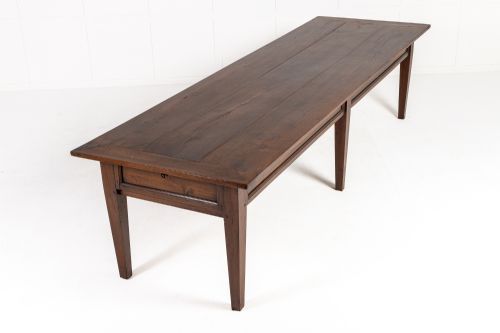


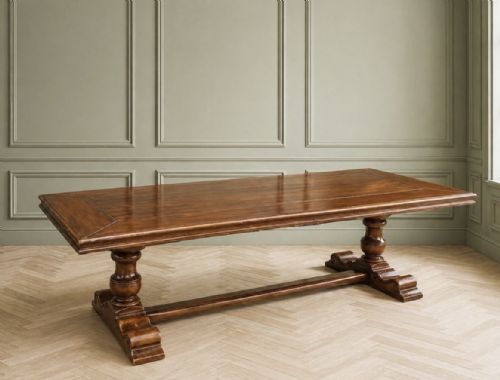
Walnut Farmhouse Table
A walnut farmhouse table brings warmth and rich grain to a room, offering generous space for daily dining and kitchen work.
Walnut Farmhouse Table
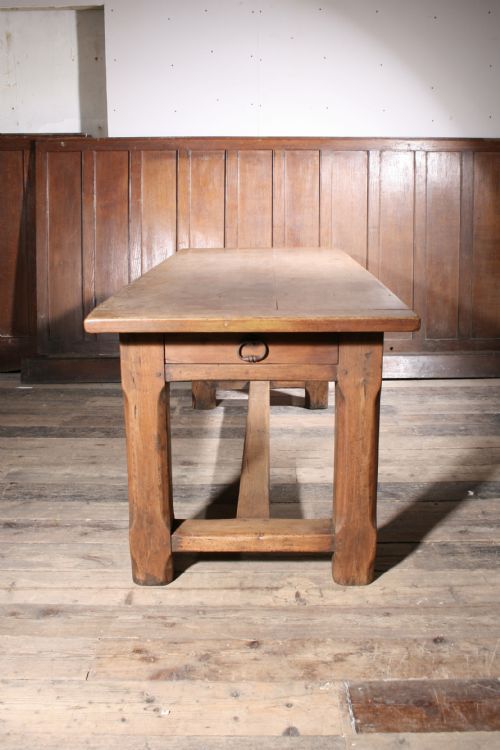
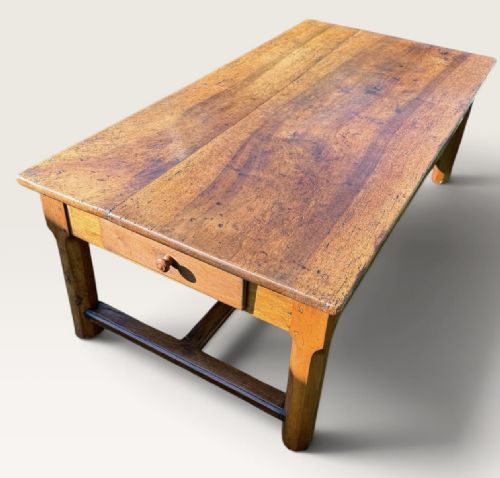
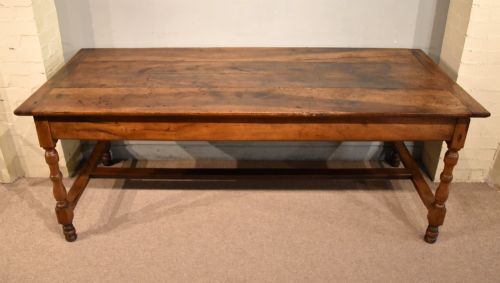
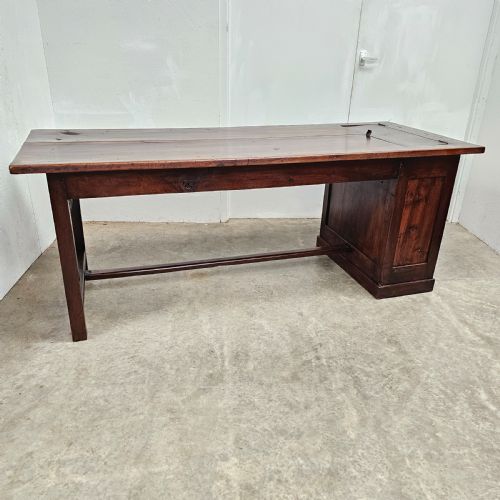
A walnut farmhouse table serves as a sturdy centrepiece, appearing in forms such as large dining surfaces, long refectory tables, and low coffee tables. These pieces emerge predominantly from French, Italian, and English traditions, spanning the eighteenth and nineteenth centuries.
Buyers encounter distinct regional variations, including rustic French country designs and formal Italian provincial models. Many pieces adapt traditional kitchen prep and bread boards into domestic dining furniture.
The materials and construction reflect utilitarian origins, often combining solid timber tops with substantial supporting stretchers.
Materials and construction
Timbers are selected for density and grain movement, utilising solid walnut alongside fruitwood or pine in secondary framing. Surfaces frequently display multi-board tops joined to withstand heavy daily use.
Underframes employ traditional joinery, incorporating H stretchers for stability on large dining and refectory formats. Brass hardware appears selectively on functional components like drawers.
Bread prep tables retain the exact scars of dough kneading and flour dust from past farmhouse kitchens.
Assessing quality in walnut tables
Quality rests in the depth of the timber grain and the integrity of the original construction rather than decorative excess. Tables retaining early timber show superior patination gained through decades of use.
Proportion and scale distinguish finer examples, where large refectory or wide dining formats maintain balanced stretcher placement and stable board alignment.
The Walnut Farmhouse Table Glossary
- Refectory table
- A long, narrow dining table traditionally used in communal dining halls and adapted for domestic kitchens. These forms rely on strong stretcher bases to support extended timber tops.
- Bread prep table
- A functional work table featuring a solid board top designed for kitchen tasks. These pieces often show signs of practical utility in the timber surface.
- H stretcher
- A horizontal timber brace connecting the legs of a table in the shape of the letter H. This component provides structural rigidity to large dining formats.
- Burr walnut
- Timber taken from the growth deformity on a walnut tree, producing swirling grain patterns. This material appears on select decorative coffee tables.
- Scrubbed top
- A wooden surface washed repeatedly to remove surface grime, leaving a pale, clean timber finish. This treatment is common on practical kitchen tables.
Walnut Farmhouse Table: Frequently Asked Questions
How do I clean a walnut table?
Wipe surfaces using a slightly damp cloth without harsh chemical detergents. Regular waxing helps preserve the moisture and natural colour of the timber.
Avoid placing hot dishes directly onto the bare wood to prevent marking the polished finish.
Can I use a coffee table for daily dining?
Lower coffee table formats suit seating areas rather than upright dining chairs. Standard dining and refectory heights provide the necessary clearance for seating.
Consider the table height and leg placement before selecting a piece for daily meals.
How do I identify eighteenth century tables?
Look for hand-planed board surfaces, pegged joinery, and timber patination developed over centuries of use. Eighteenth century examples often display wider boards and simpler structural bracing.
Compare the proportion of the top to the underframe to understand the period construction methods.