
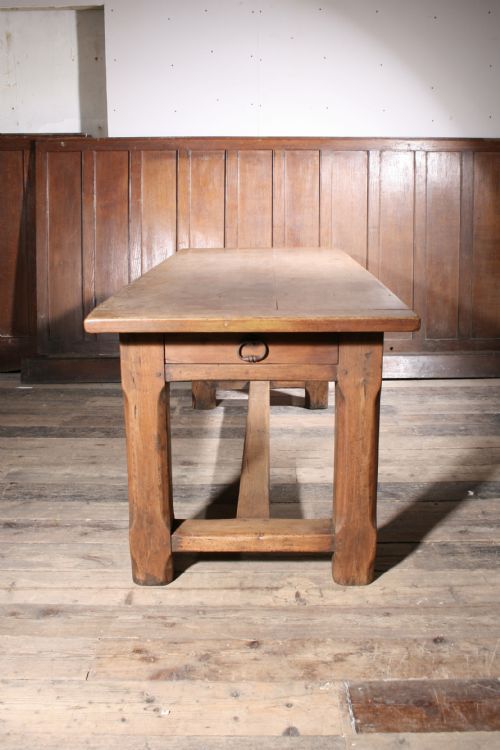
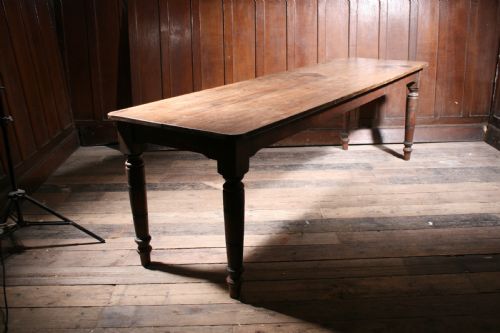
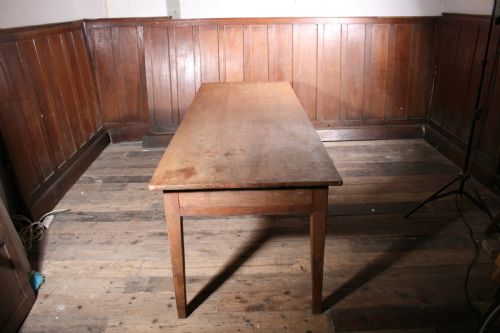
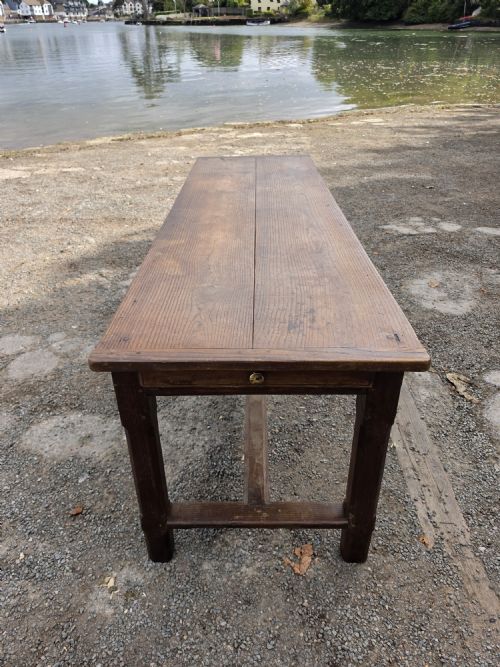
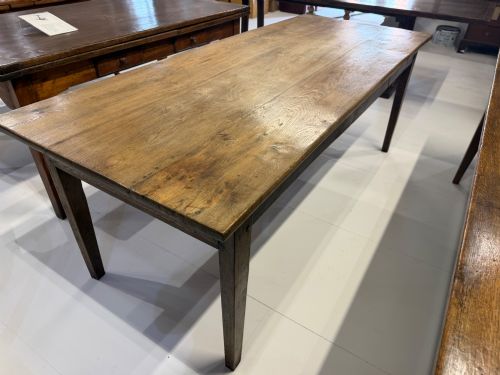
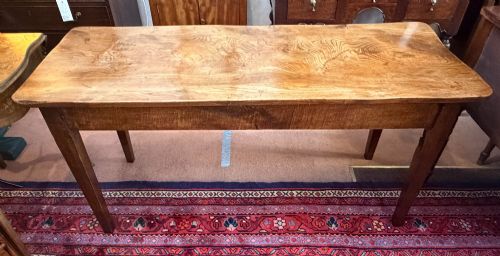
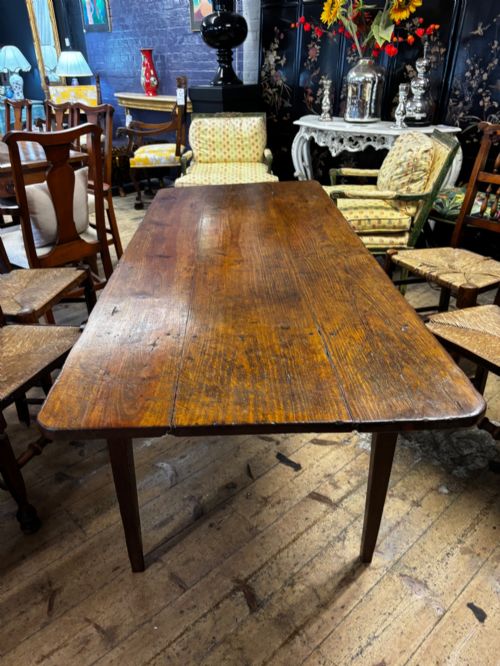
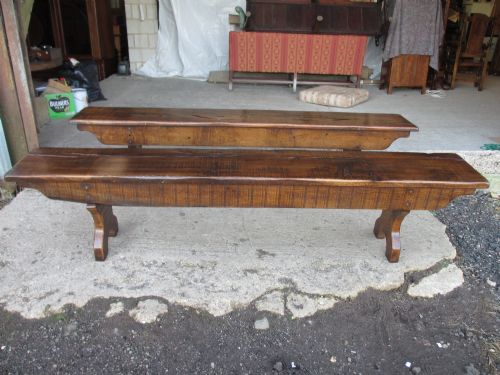
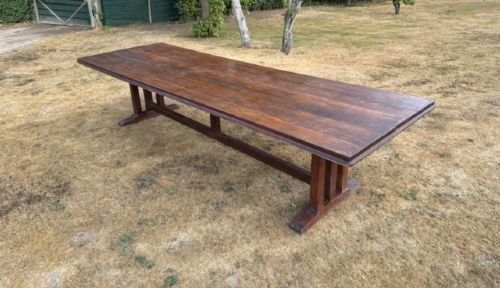
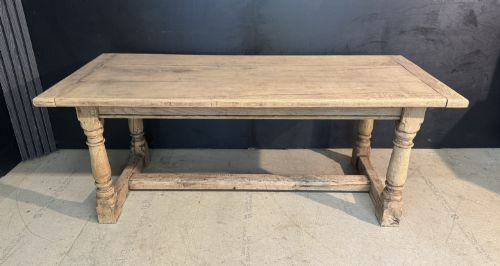
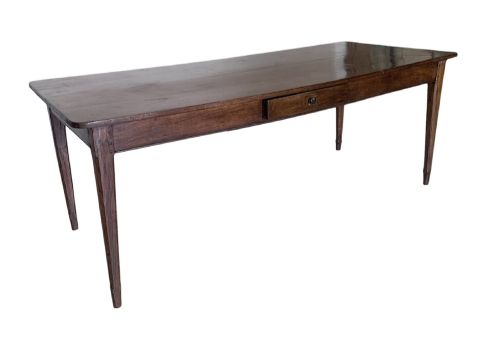
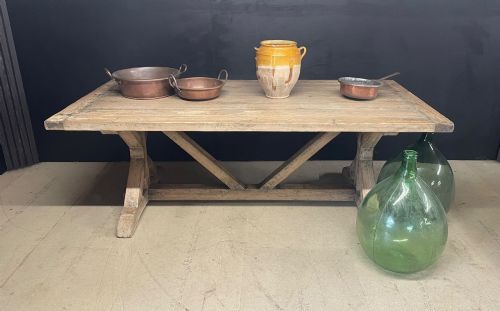
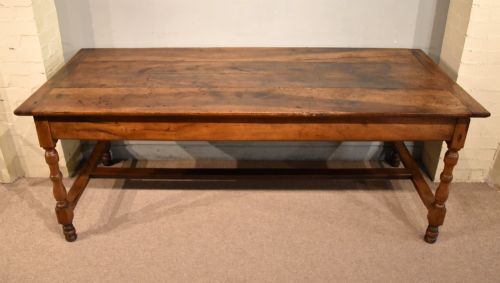
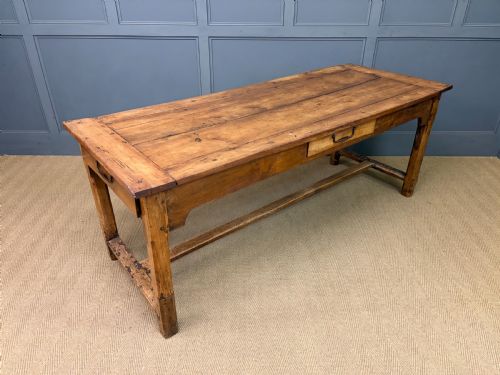
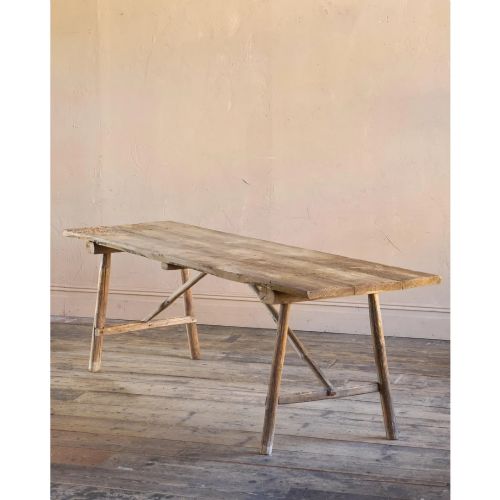
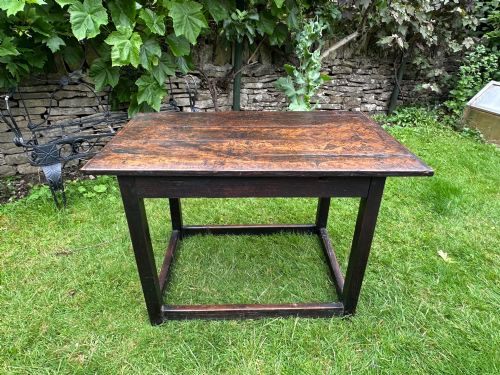
Timber Refectory Kitchen Table
These timber refectory kitchen tables bring solid utility and enduring grain to daily meals.
Timber Refectory Kitchen Table
A timber refectory kitchen table serves as a sturdy communal surface rooted in centuries of domestic use. Buyers seeking a timber refectory kitchen table encounter forms spanning the eighteenth, nineteenth, and early twentieth centuries, alongside Edwardian examples.
Most pieces on this page adopt styles such as rustic farmhouse, French provincial, and Jacobean revival. They appear as heavy dining tables, trestle tables, and kitchen tables designed for daily gathering.
Origins stretch across English and French traditions, often featuring plank tops and substantial supports. The selection ranges from primitive workshops to large formal country house dining tables.
What varies in quality
Timber selection and plank thickness dictate the primary tier of quality, with dense oak and old fruitwood commanding higher regard than lighter secondary woods. The integrity of the plank top and the stability of the trestle or leg supports determine structural longevity.
Subtle details, such as integrated drawers, bread slides, and hand-carved accents, separate utilitarian workshop output from finer dining pieces. Patina developed through decades of scrubbing and use marks the distinction between ordinary timber and characterful aged surfaces.
Several tables retain pull-out bread slides designed to hold loaves long before the invention of the modern kitchen counter.
The Timber Refectory Kitchen Table Glossary
- Refectory table
- A long narrow dining table traditionally used in monastic refectories and later adopted for domestic kitchens. These tables emphasise length and sturdy trestle or leg construction.
- Plank top
- A table surface constructed from several wide boards of timber joined side by side. This method allowed makers to utilise mature trees before the advent of sheet materials.
- Trestle ends
- Support structures at either end of a table consisting of horizontal feet and vertical uprights. They provide stability without obstructing legroom along the sides.
- Bread slide
- A pull-out wooden board integrated beneath the table top. Historically used for cooling bread or expanding workspace in the kitchen.
- Scrubbed pine
- A soft-wood surface cleaned repeatedly with water and an abrasive to remove finishes. This treatment leaves a pale, matte texture valued in country interiors.
Timber Refectory Kitchen Table: Frequently Asked Questions
How do I seat six people comfortably?
Look for tables measuring around two metres in length to allow adequate leg clearance between the legs or trestle ends. Planks with side aprons high enough to clear chair arms will ensure diners sit without restriction.
Check the placement of any drawers or stretcher rails beneath the top before arranging chairs. Tables with trestle supports often offer more flexible seating arrangements along the sides than four-legged designs.
What is the difference between oak and pine?
Oak provides a dense, heavy hardwood surface with visible grain patterns that withstands heavy kitchen use for centuries. Pine is a softer timber offering a lighter weight and often presents a scrubbed, pale aesthetic suited to rustic spaces.
Hardwood tables generally show greater resistance to deep denting during daily meals. Pine tables acquire softer dings and wear marks that accumulate a distinct pastoral character over time.
How do I clean a scrubbed pine top?
Use a damp cloth and mild soap to wipe away everyday food residue without soaking the grain. Avoid harsh chemical varnishes that seal the porous timber and alter the natural matte finish.
Allow the wood to dry completely after cleaning to prevent warping in the planks. Periodic light sanding with fine paper can remove stubborn marks while preserving the historic surface texture.
Are these tables suitable for modern kitchens?
These tables provide generous surface areas for food preparation and family dining in contemporary open-plan spaces. Their varied patinas and timber tones bridge the gap between historic craftsmanship and modern daily life.
Measure the room clearances carefully to ensure the substantial width and length of refectory styles fit your floor plan. Consider pairing antique oak or fruitwood surfaces with modern seating to create a balanced interior.