





Walnut Drawing Room Chairs
Walnut drawing room chairs are formal Victorian and Edwardian seating built for entertaining, offering warmth of timber and rich upholstery.
Walnut Drawing Room Chairs
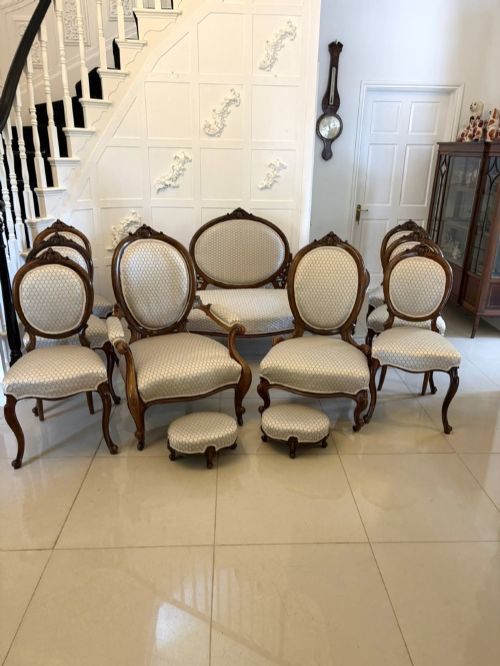
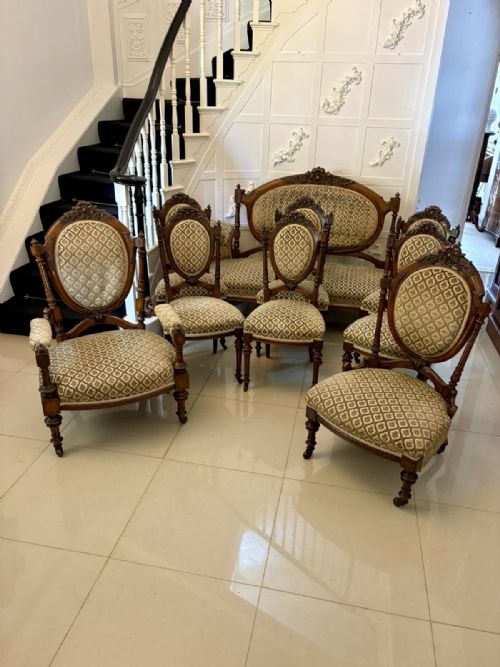
Walnut drawing room chairs form a specific group of formal reception seating designed to furnish nineteenth and early twentieth century formal spaces. These pieces encompass individual armchairs, matching pairs, and extensive suites complete with sofas and footstools.
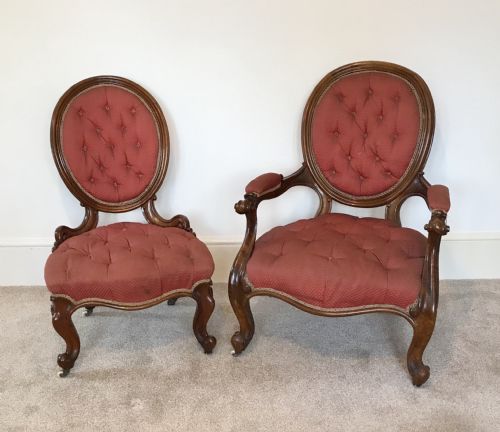
The version you are most likely to meet on this page is the Victorian carved walnut armchair, frequently exhibiting button backs, spoon backs, or cameo backs. These range from single side seats to large multi piece salon suites originating from mid nineteenth century English workshops.
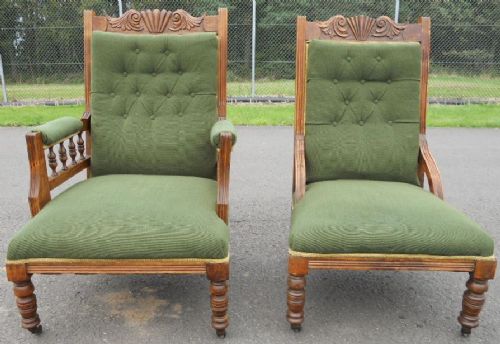
Beyond standard Victorian seating, the selection includes Edwardian interpretations and occasional French Louis XVI revival examples. Formats vary from low ladies chairs to robust gentlemen's elbow chairs intended for drawing room comfort.
How they were made
Cabinetmakers utilised solid walnut and walnut veneers to construct the structural frames of these drawing room pieces, applying hand carving to crest rails, cabriole legs, and knuckles. Timber selection prioritised rich grain figures and deep natural warmth.
Upholstery techniques combined traditional stuffing methods with textile coverings such as velvet, fabric, and patterned textiles. Brass hardware and ceramic castors frequently appear on legs to facilitate movement across carpeted drawing rooms.
Listings feature walnut timber, brass fittings, ceramic castors, and various textile upholsteries across Victorian, Edwardian, and French Provincial styles.
What varies in quality
Carving depth and precision separate standard production seating from exhibition quality pieces, where crisp floral motifs and serpentine frames demonstrate superior joinery. The ambition of the silhouette, from simple side chairs to elaborate spoonback armchairs, dictates the level of artisan investment.
The integrity of the walnut timber grain and the scale of matching suites also establish hierarchy, as assembled sets differ substantially from cohesive multi piece suites created together by makers like Hindley and Sons.
Hindley and Sons
The Walnut Drawing Room Chairs Glossary
- Spoonback
- A padded chair back shaped in the concave profile of a spoon, designed to fit the human spine.
- Button back
- An upholstery style where depressions are formed by sewing deep buttons through the padding at regular intervals.
- Salon suite
- A matched set of drawing room seating consisting of sofas, armchairs, and side chairs intended for unified interior decoration.
- Cameo back
- An oval upholstered chair back resembling a carved cameo portrait framed in exposed walnut timber.
- Cabriole leg
- A furniture leg that curves outward and then tapers inward, finishing in a scroll or plain foot.
Walnut Drawing Room Chairs: Frequently Asked Questions
What is a drawing room chair?
A drawing room chair is a piece of formal Victorian or Edwardian seating designed for receiving guests rather than heavy everyday lounging.
These pieces prioritise decorative carved walnut frames and refined upholstery over oversized proportions.
How do I spot Victorian walnut chairs?
Victorian walnut chairs display dark, rich timber tones combined with characteristic revival styles like spoon backs, cameo backs, or button upholstery.
They often feature hand carved foliate motifs and rest on cabriole legs fitted with ceramic castors.
Were these chairs sold in matched sets?
Many drawing room chairs were produced as part of larger salon suites that included matching armchairs, side chairs, and settees.
Individual chairs also exist, often split into complementary ladies and gentleman's versions featuring varied back heights.
How do I live with antique walnut seating?
Live with these chairs by placing them in low traffic areas away from direct sunlight and strong heat sources to protect the walnut timber and fabric.
Regular dusting with a dry cloth keeps the polished wood grain stable and clean.
What is the difference between Edwardian and Victorian chairs?
Edwardian walnut chairs typically date around nineteen hundred, showing lighter proportions and subtle stylistic refinements compared to earlier nineteenth century models.
Victorian examples from the eighteen fifties tend to feature heavier carved walnut frames and deeper buttoned upholstery.