
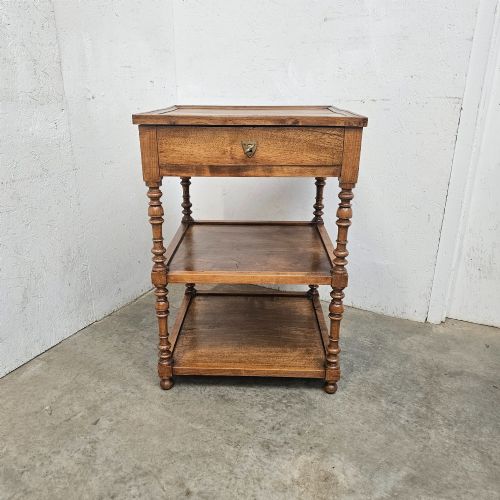
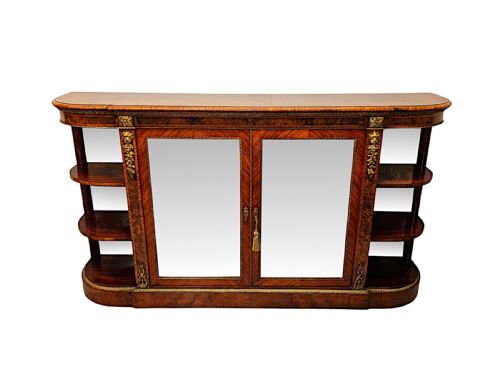
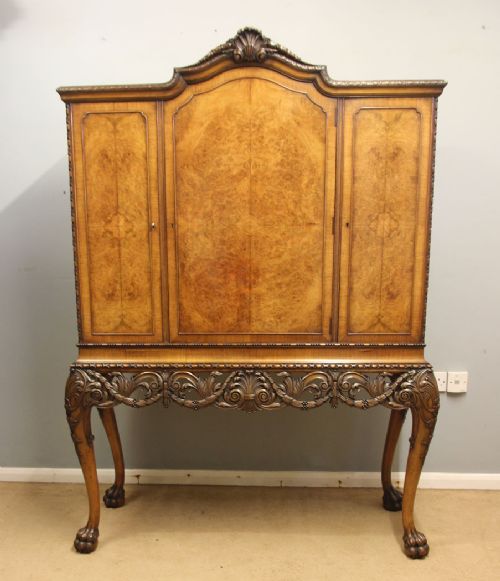
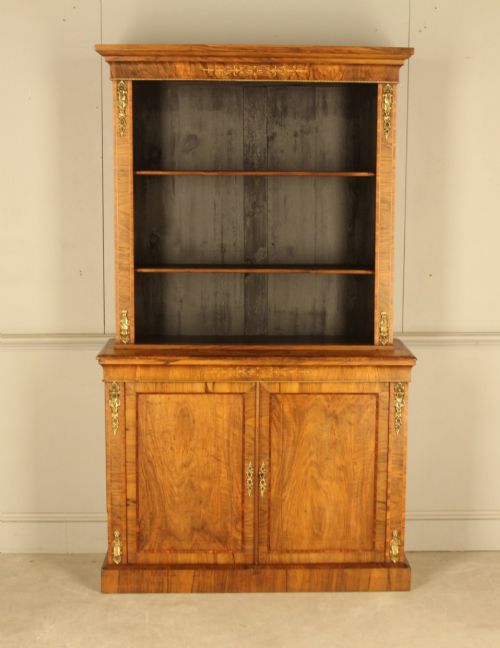
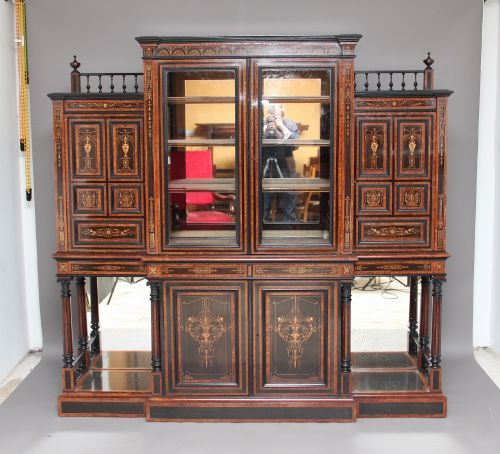
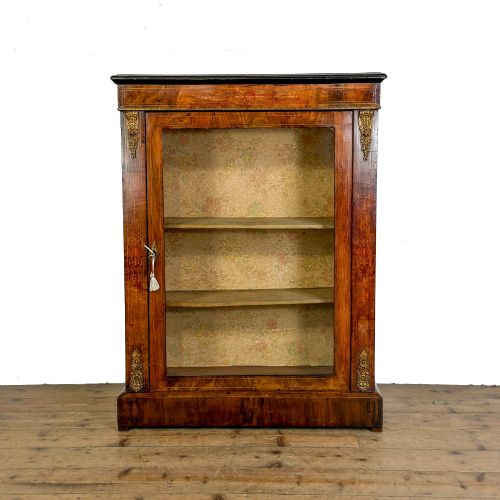
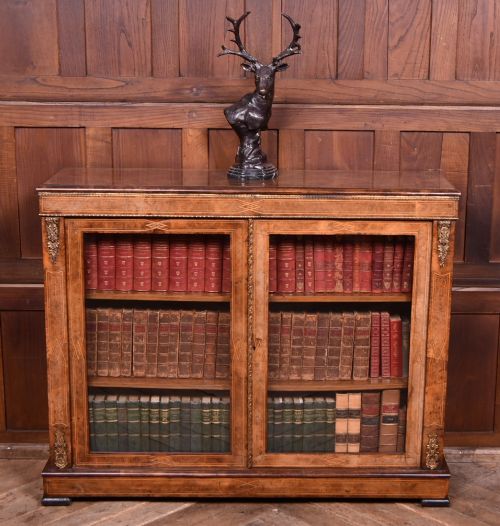
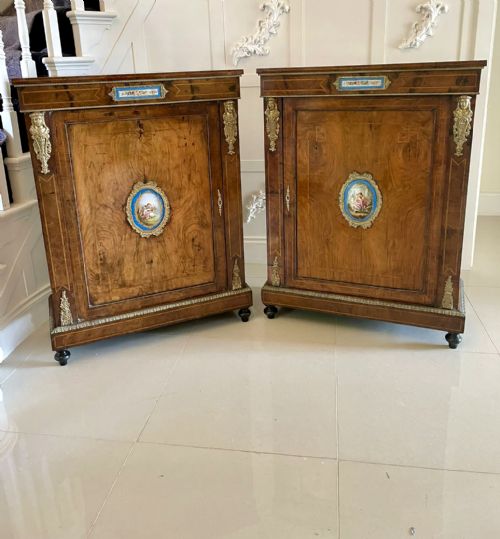
Walnut Display Side Cabinet
A walnut display side cabinet brings together polished timber and glass to hold treasured objects in a room.
Walnut Display Side Cabinet
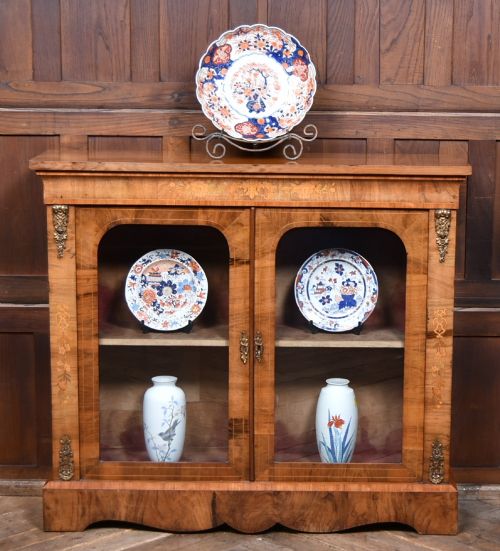
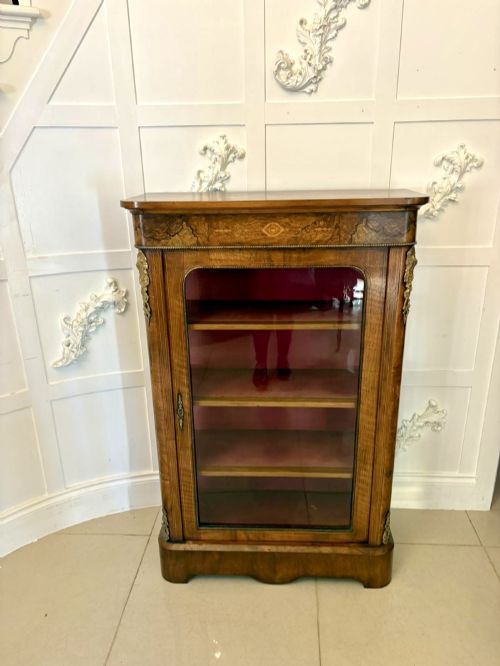
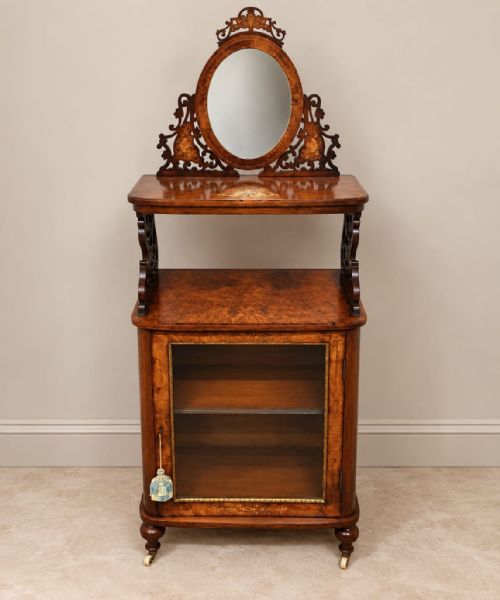
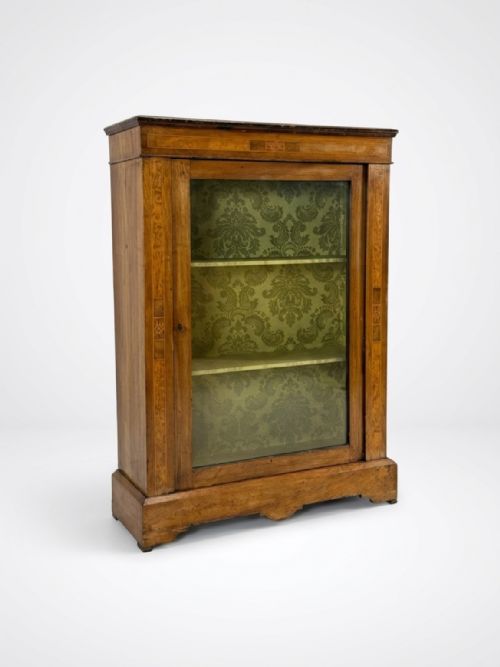
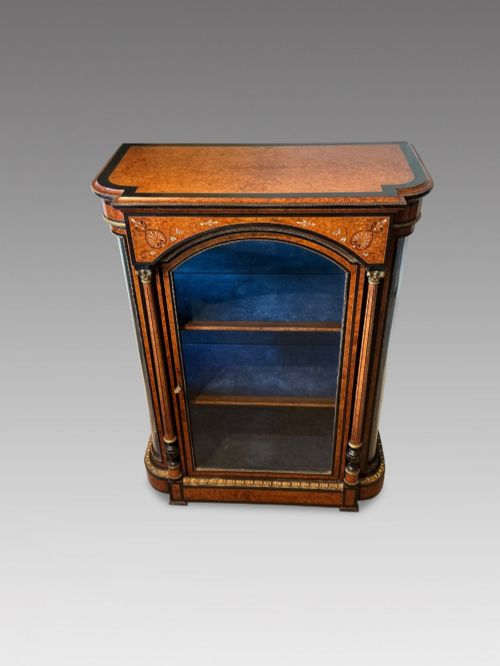
A walnut display side cabinet is a storage piece designed to exhibit porcelain, books, and curiosities behind glazed doors or panels. These items combine timber architecture with display space, often standing against a drawing room or dining room wall.
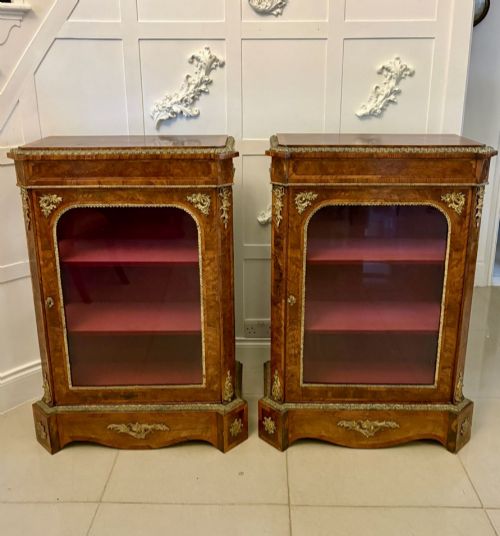
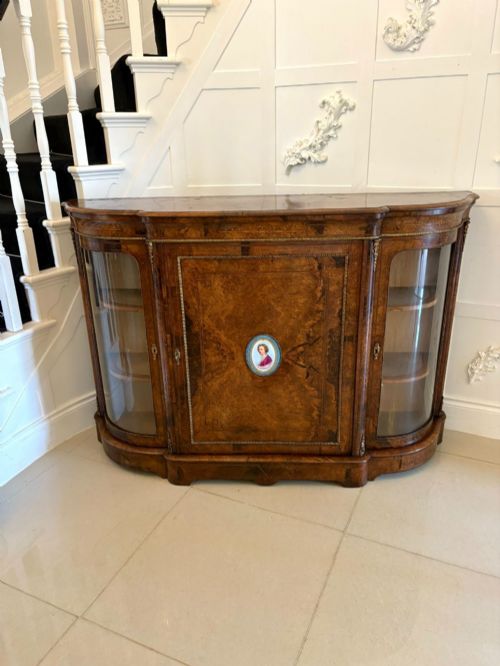
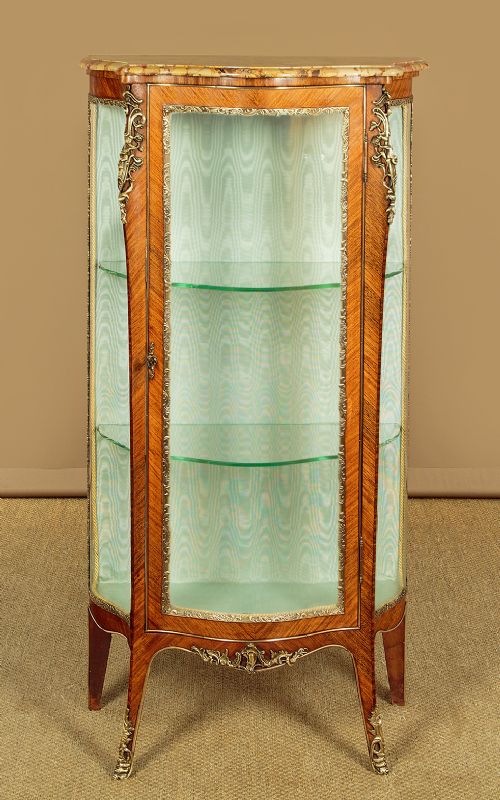
The selections available range from Victorian pier cabinets and credenzas to later Art Deco pieces and French styles. Victorian examples frequently utilise burr walnut and marquetry, while twentieth-century editions offer simpler forms and different veneers.
How they were made
Cabinetmakers built these pieces using solid timber frames overlaid with figured walnut and burr walnut veneers to create rich grain patterns across the front. Boxwood and satinwood inlay added linear contrast, while marquetry introduced floral and geometric motifs.
Metal and glass components completed the construction, with ormolu or gilt bronze mounts framing doors and corners. Glazed panels allowed light inside, and velvet linings often covered the interior shelves where items sat.
Materials recorded on this site include burr walnut, ormolu, porcelain plaques, boxwood inlay, and velvet linings.
What varies in quality
The standard of timber selection and veneer matching defines the visual impact of each cabinet, with symmetrical burr patterns marking superior work. Finer examples display meticulous marquetry and crisp inlay rather than painted or stencilled decoration.
Hardware and mount quality also set pieces apart, as cast ormolu and heavy brass fittings require skilled chiselling after casting. The integration of glass panels and the precision of door joinery separate standard production items from master cabinet work.
Gillows·Lamb of Manchester·Leemings of Halifax
The Walnut Display Side Cabinet Glossary
- Pier cabinet
- A narrow cabinet designed to fit the wall space between windows. These pieces often feature glass doors and ormolu mounts.
- Credenza
- A low sideboard or cabinet, frequently fitted with cupboards and glazed display sections. Victorian iterations often incorporate intricate marquetry.
- Burr walnut
- Timber taken from the growth excrescences of a walnut tree, yielding swirling grain patterns. It was highly prized for decorative veneer panels.
- Ormolu
- Gilt bronze mounts applied to furniture for decorative effect. The technique involves coating bronze with a mercury and gold amalgam.
- Marquetry
- Inlaid patterns of wood veneer forming pictures or ornamental designs on a cabinet surface. It requires precise cutting of various timber types.
Walnut Display Side Cabinet: Frequently Asked Questions
What is a walnut display side cabinet?
A walnut display side cabinet is a functional furniture piece constructed from walnut timber designed to hold and exhibit decorative objects. These cabinets typically feature glass panels or doors to keep contents visible while protecting them from dust.
Most examples date from the Victorian period through to the early twentieth century. They serve as focal points in traditional rooms, combining enclosed storage with open display capacity.
How do I date a walnut cabinet?
Dating a walnut cabinet involves examining the overall style, construction methods, and decorative motifs used by the maker. Victorian pieces from the mid to late nineteenth century often display heavy marquetry, ormolu mounts, and burr walnut veneers.
Later pieces from the 1920s and 1930s tend to lean towards Art Deco or simpler revival styles with cleaner lines. Hardware, interior linings, and lock mechanisms also provide clues to the exact manufacturing era.
How do I care for burr walnut?
Burr walnut requires gentle cleaning with a soft, dry cloth to remove dust without scratching the polished surface. Avoiding abrasive polishes and chemical sprays preserves the integrity of the vintage finish and veneer.
Maintaining a stable room temperature and humidity level prevents the timber and veneer from cracking or warping over time. Occasional application of appropriate wax maintains the lustre of the wood.