

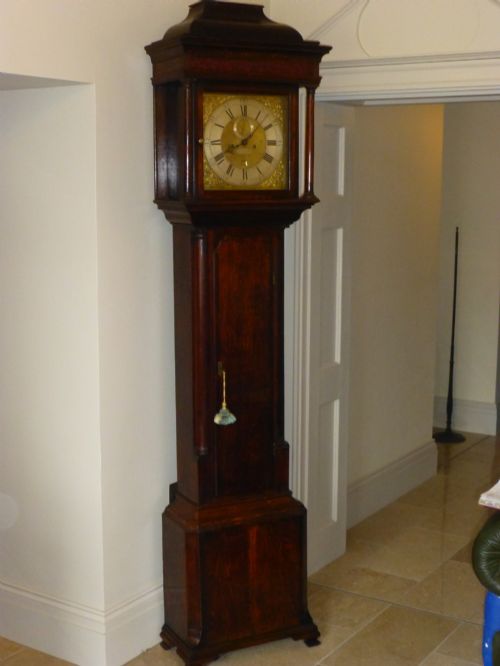
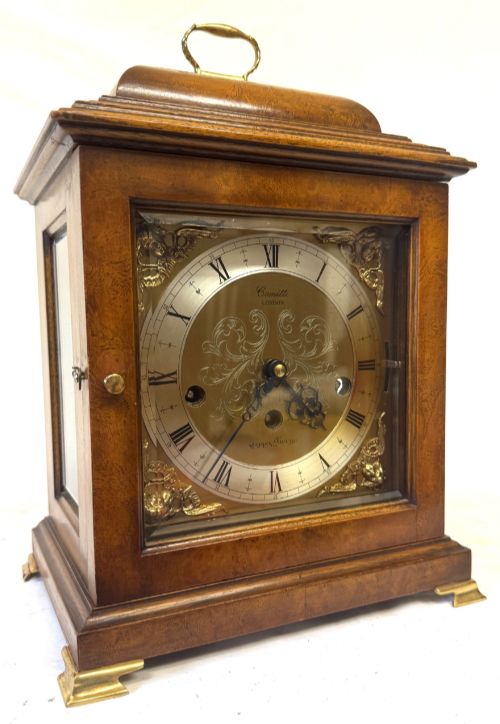
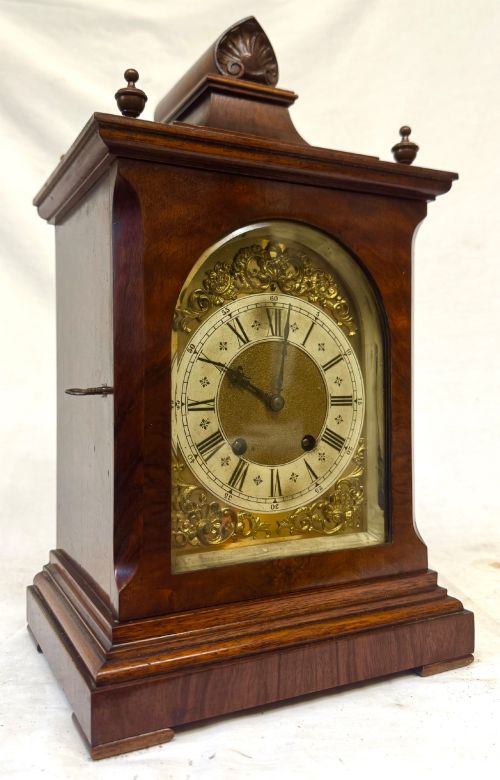
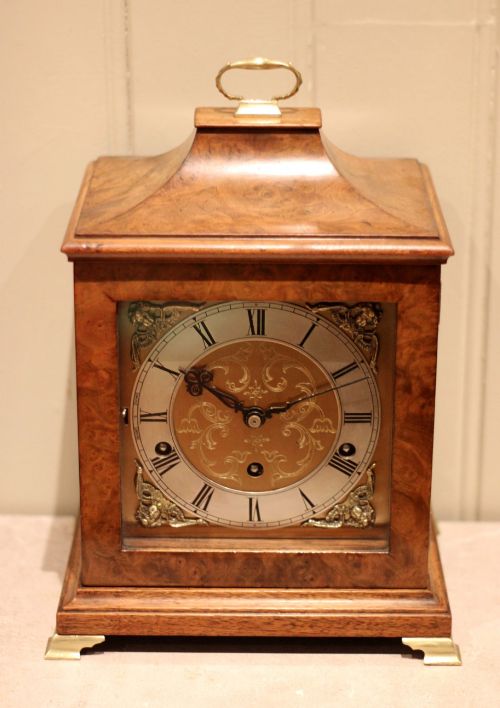


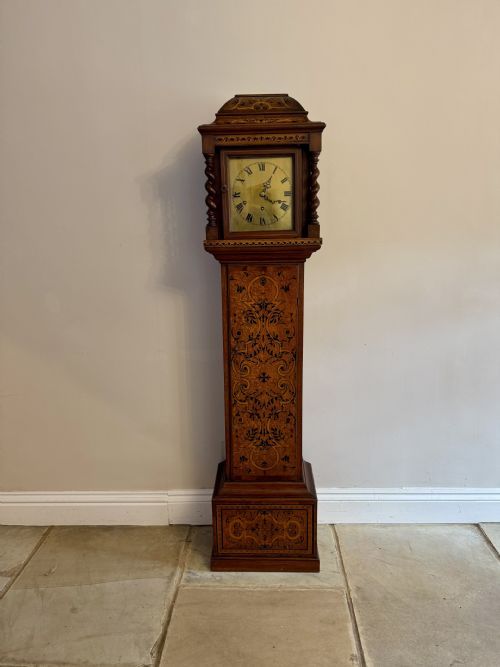
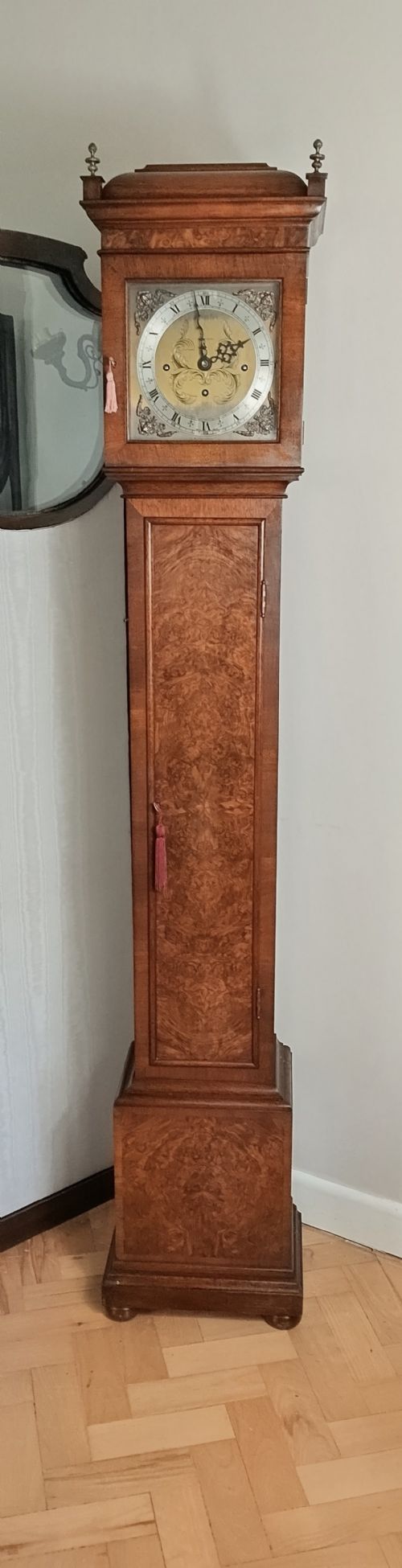
Walnut Dial Clock
A walnut dial clock brings warmth and precise mechanical movement to a room through figured wood and clear metal faces.
Walnut Dial Clock
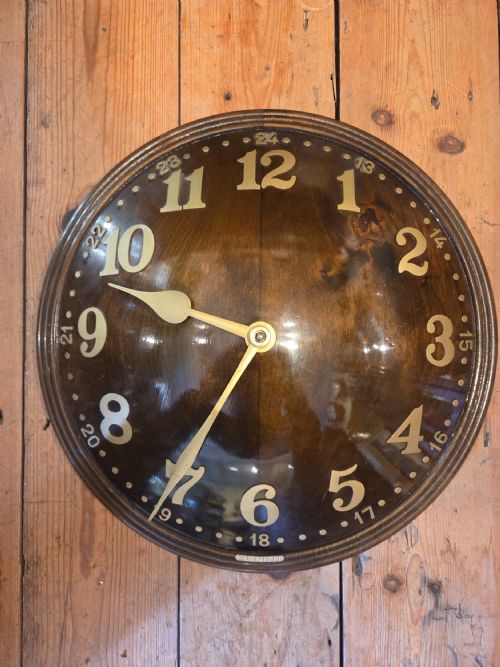
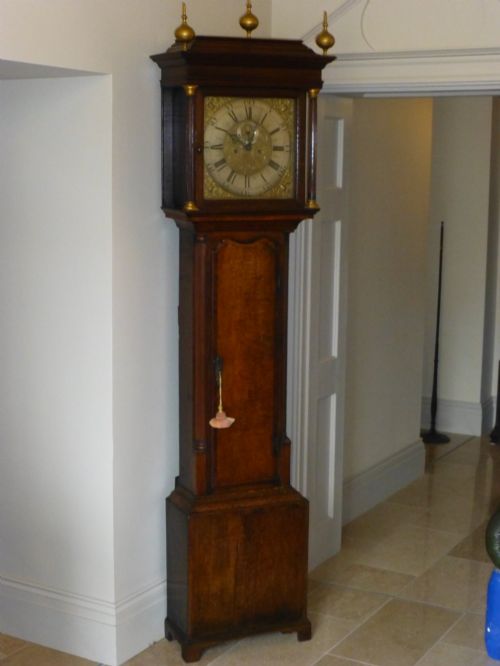
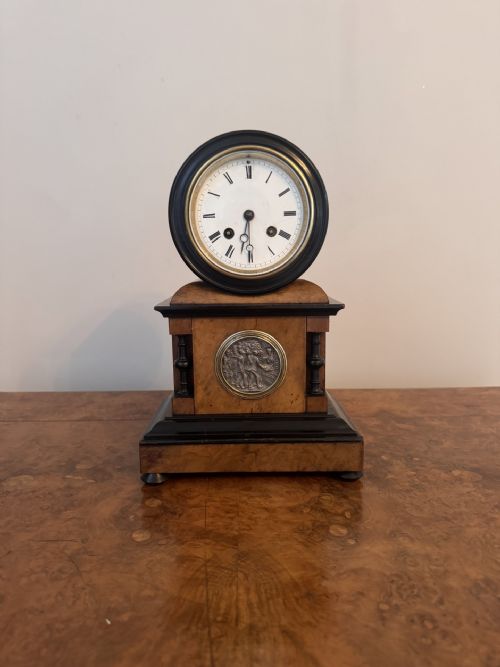
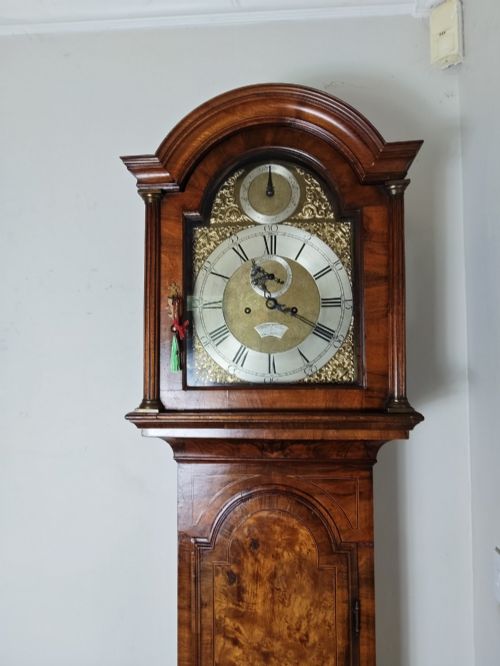
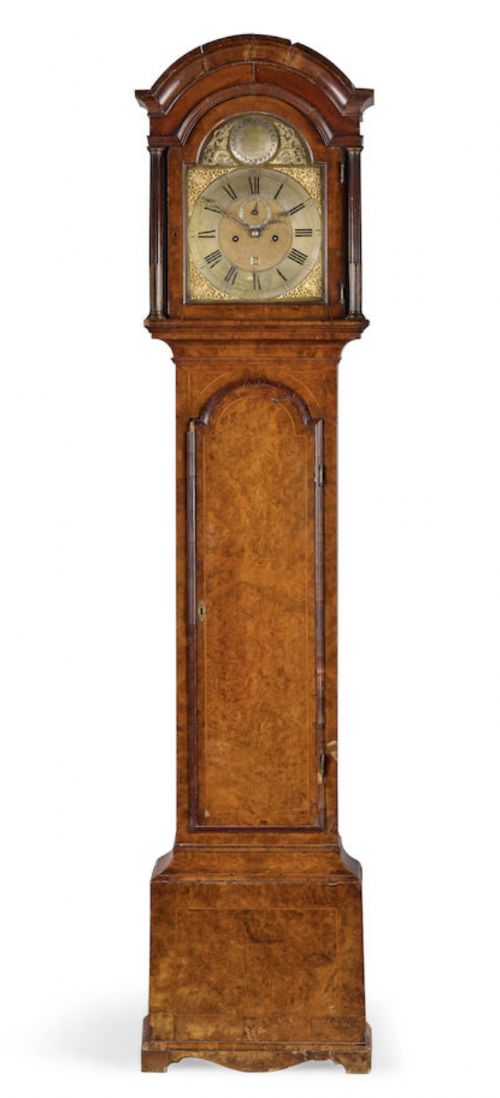
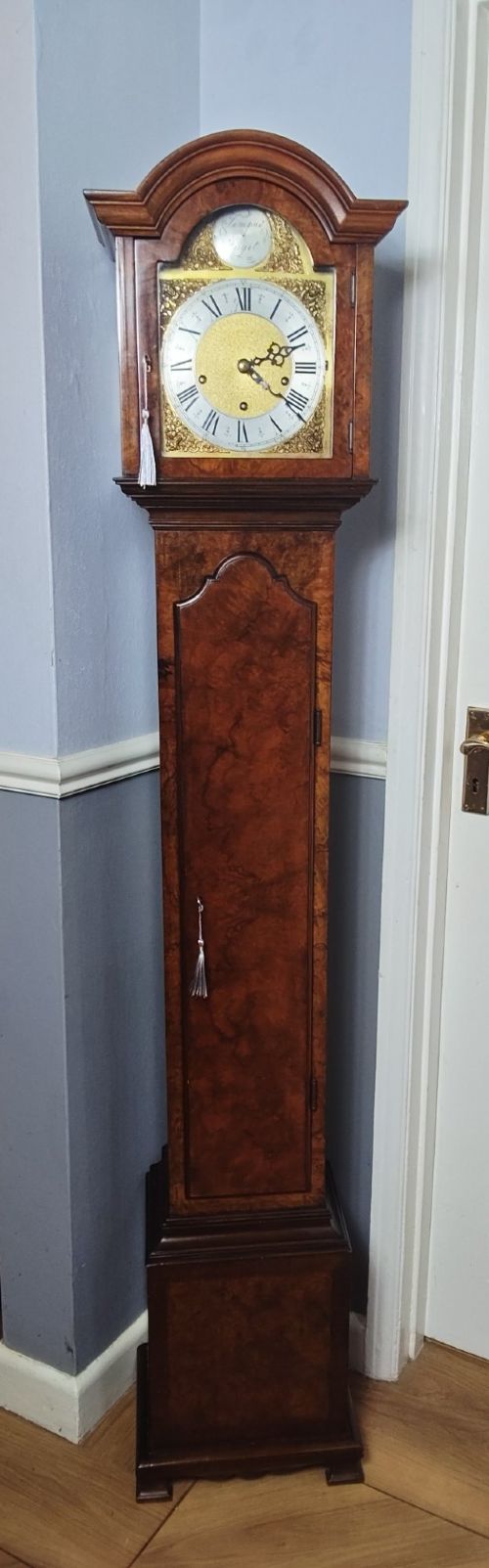
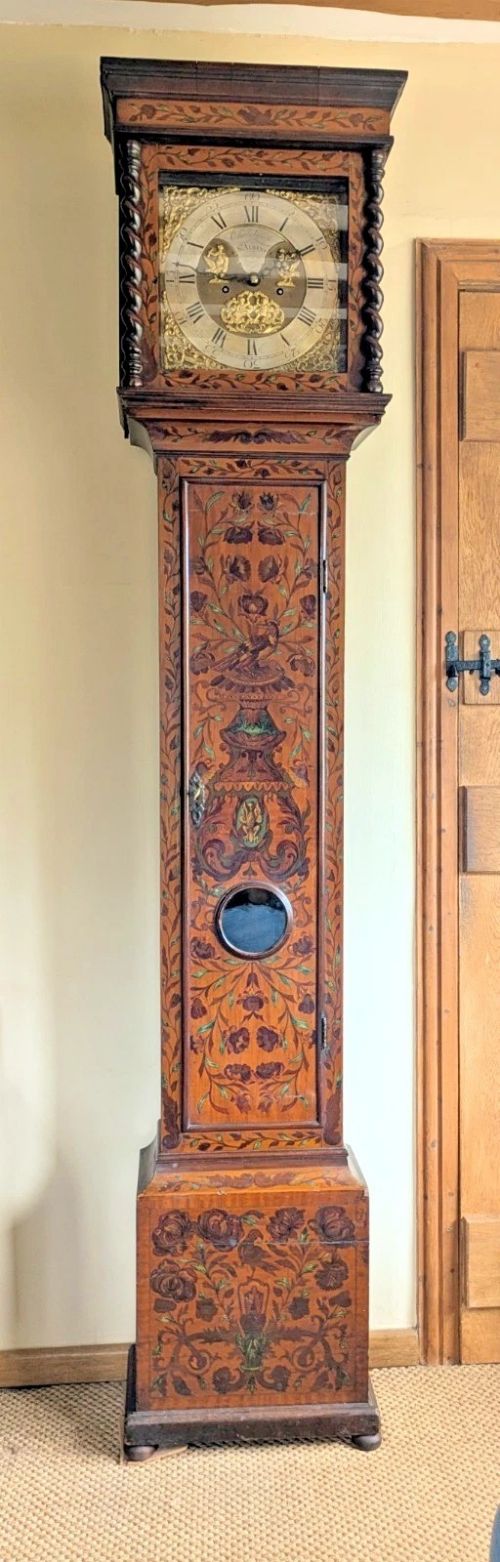
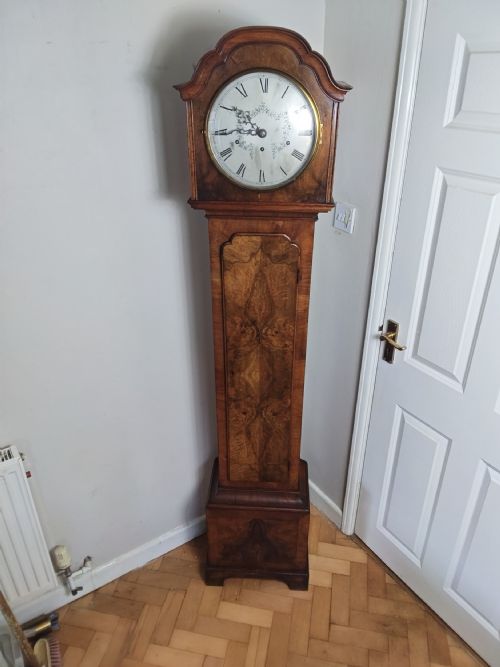
A walnut dial clock spans several centuries of domestic timekeeping, appearing as wall-mounted round faces, bracket pieces, and tall floor-standing longcase designs. The pieces on this page range from early examples originating in the seventeenth century to later twentieth-century iterations.
Buyers encounter various formats including compact mantel clocks, drop dial wall pieces, and tall grandfathers or smaller grandmother clocks. Wood selection is prominent, with plain timber alongside decorative burr veneers.
Origins stretch across English workshops to continental makers, utilising regional movements from simple timepieces to complex quarter-chiming mechanisms.
Materials and construction
Makers constructed these clocks using solid timber carcassing overlaid with figured walnut veneers, frequently incorporating oak or mahogany for structural framing. Brass forms the dials, bezels, and intricate movement plates, while glass protects the face and pendulum swing.
Dials combine brass chapter rings, enamel numerals, and painted metal surfaces, often paired with ebonised wood details or decorative marquetry inlay. Cabinets rely on traditional joinery to house heavy spring-driven or weight-driven mechanisms safely.
Walnut Dial Clock Retail Price Guide 2026
Typical asking prices for walnut dial clock among the pieces listed under this phrase on Sellingantiques today, from the lower quarter to the upper quarter. They describe what is for sale here now, not the wider market.
Assessing quality and execution
Quality rests on the depth of the timber figuring and the precision of the cabinet work, particularly in how veneers match across the door and plinth. Early marquetry and crisp quarter-veneering distinguish superior casework from plainer later production.
The sophistication of the internal movement separates standard timepieces from musical or multi-train chiming versions signed by established makers. Original dial integration and well-preserved brass engraving also elevate the standing of a piece.
Comitti Of London·Richard Corless of Stockport·Smith of Chester·Mappin & Webb·Charles Louch St. Albans·Windmills and Wightman·ELLIOTT·Henry Massy·Thomas Vernon·Langley Bradley·Nathaniel Pyne·Edin Burgis of London·Girod·Henry Deykin·Edward Upjohn·Edward East
The Walnut Dial Clock Glossary
- Dial clock
- A clock featuring a prominent circular face, typically designed for wall mounting in public or domestic spaces.
- Grandmother clock
- A slender, scaled-down version of the traditional longcase clock, popular during the twentieth century.
- Bracket clock
- A portable table or mantel clock originally designed to sit upon a dedicated wall bracket.
- Marquetry
- Decorative veneer work forming intricate patterns using various woods and contrasting materials.
- Chapter ring
- The metal ring on a clock face bearing the hour numerals.
Walnut Dial Clock: Frequently Asked Questions
How do I wind my clock?
Most mechanical clocks utilise a key inserted into winding holes on the dial to tension the internal springs or lift the driving weights.
Care must be taken not to overwind the movement, stopping as soon as resistance is felt against the key.
Where should I place a longcase clock?
Tall clocks require a stable, dry interior wall away from direct sunlight, central heating vents, and heavy vibrations from doors.
Securing the tall case to the wall prevents accidental tipping while ensuring the pendulum swings evenly.
Why does the clock lose time?
Environmental shifts in temperature and humidity cause wood and metal components to expand or contract, altering the rate.
Adjustment is typically made via a small nut on the pendulum rod to raise or lower the bob until accurate timekeeping resumes.
How do I identify the period?
Dating relies on cabinet proportions, veneer styles, signature engraving formats, and the technical evolution of the internal movement.
Early seventeenth and eighteenth-century examples feature distinct hand-cut brass work and simpler striking trains compared to later mass-produced variants.