







Walnut Corner Display Shelf
These walnut corner display shelf pieces bring Victorian tiering and burr timber into unused angles of a room.
Walnut Corner Display Shelf
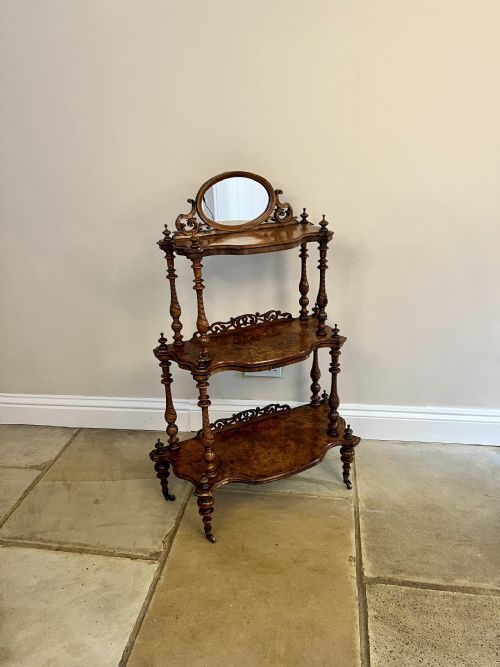
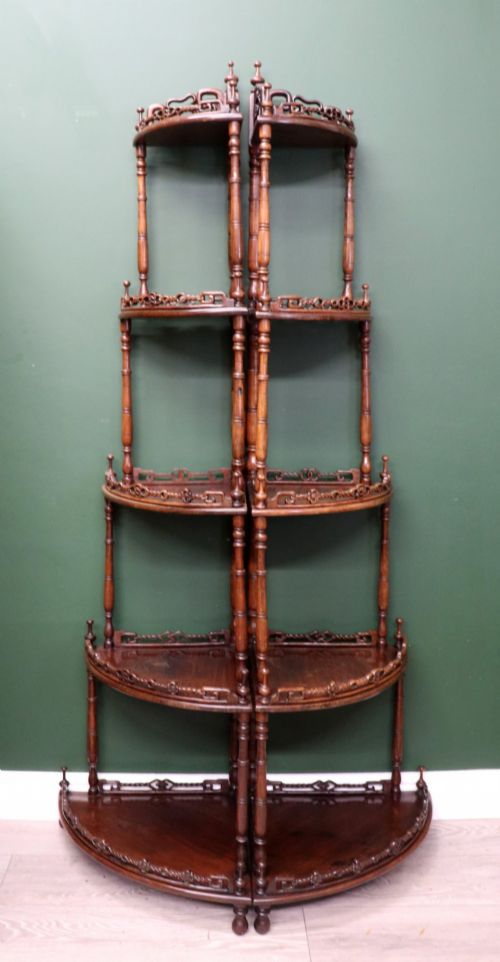
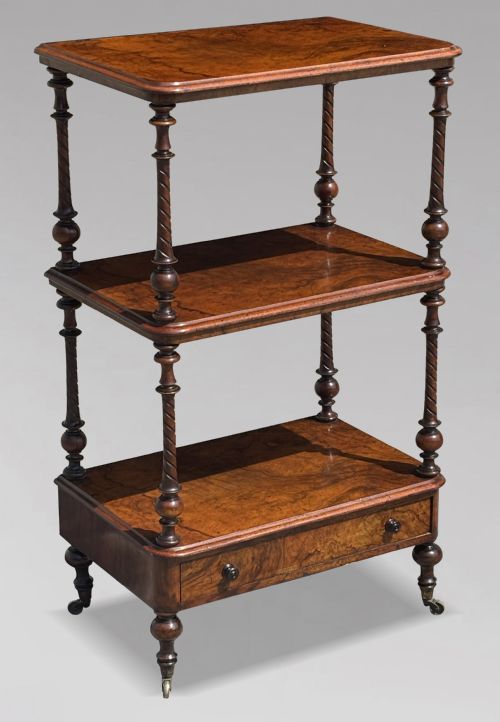
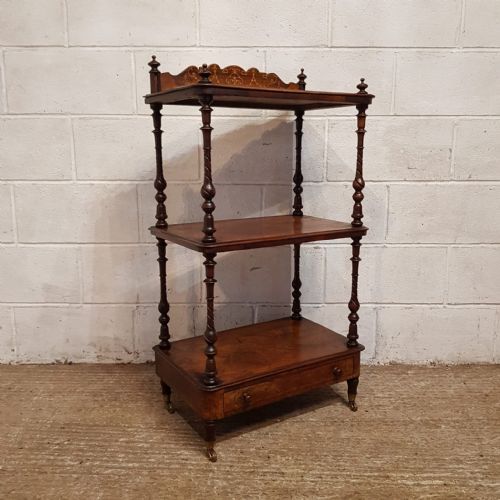
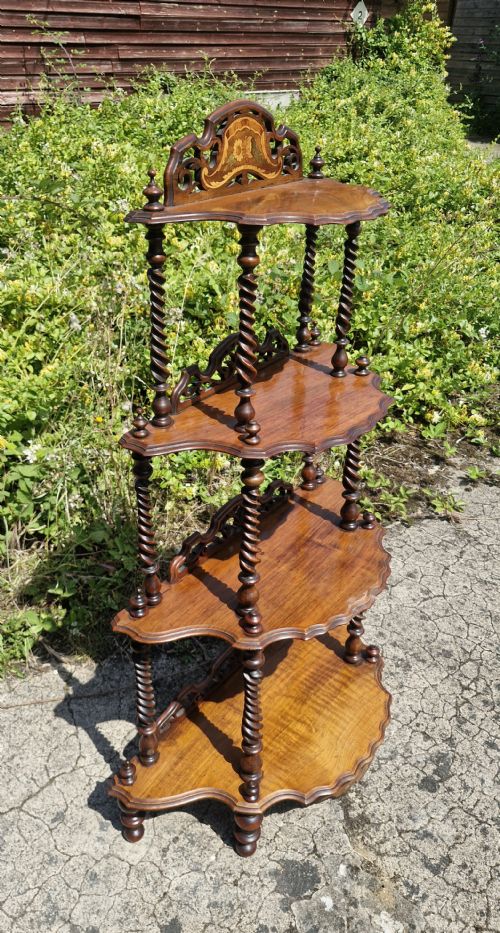
A walnut corner display shelf typically takes the form of a Victorian whatnot or multi-tiered corner stand. These pieces utilise dead space in a room, rising in tiers supported by turned columns or barley twists to hold decorative objects.
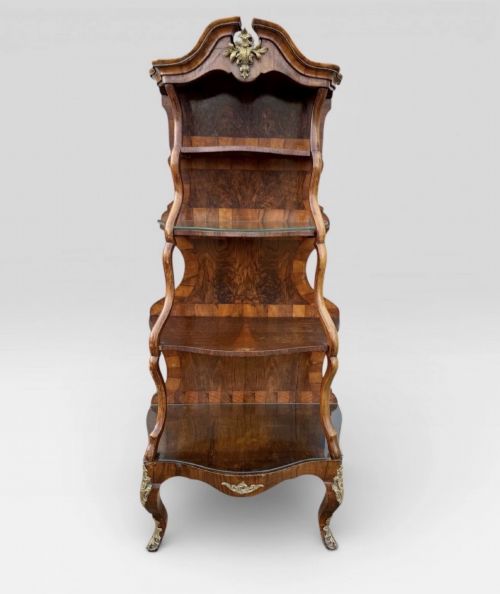
The selections here lean heavily toward nineteenth-century examples, spanning multi-tier stands, demi-lune consoles, and corner cabinets. Walnut and burr walnut dominate the forms, frequently enriched with boxwood and marquetry inlay.
Makers and designers of the period, including Liberty & Co. with their Anglo-Moorish items, expanded the vocabulary of these stands beyond standard shelving into exotic display furniture. Buyers will find both freestanding corner units and wall-mounted versions across the inventory.
How they were made
Cabinet makers relied primarily on solid walnut and decorative burr walnut veneers applied to secondary woods such as mahogany. The distinctive grain patterns of burr timber provided rich surface texture on top shelves and cabinet doors.
Inlay work added linear contrast, using boxwood and marquetry techniques to form floral or geometric motifs across the tiers. Structural elements frequently incorporated turned wood supports, hollow barley twist columns, and gilt metal mounts.
Glass panels appeared on glazed cabinet doors and enclosed display sections, while brass fixtures secured hardware and hinges. Joinery combined traditional housing joints for the shelves with turned pillars fastened through each tier.
Walnut Corner Display Shelf Retail Price Guide 2026
Typical asking prices for walnut corner display shelf among the pieces listed under this phrase on Sellingantiques today, from the lower quarter to the upper quarter. They describe what is for sale here now, not the wider market.
Materials documented across the inventory include marquetry inlay, boxwood stringing, and glazed glass panels.
What varies in quality
The calibre of the burr walnut veneer dictates much of the visual weight and desirability of a piece. Finer examples display symmetrical, highly figured grain patterns that catch the light across multiple tiers.
Intricacy of inlay and carving separates standard production items from exhibition pieces. Sharply executed boxwood stringing, marquetry panels, and hollow barley twist turnings denote superior workshop execution.
Structural integrity of the tiered platforms determines daily utility. Pieces retaining rigid column supports and stable corner joints without sagging tiers represent the higher tier of surviving examples.
Liberty & Co.
The Walnut Corner Display Shelf Glossary
- Whatnot
- An open set of shelves for displaying ornaments, popular throughout the Victorian period. These pieces usually feature three to six tiers supported on slender uprights.
- Burr Walnut
- A prized wood harvested from the abnormal growth knots of walnut trees. The resulting timber yields swirling, complex grain patterns used for decorative veneer.
- Marquetry
- The art of applying small pieces of veneer to a structure to form decorative patterns. Craftsmen utilised various exotic and domestic woods to create contrasting pictorial designs.
- Demi-Lune
- A half-moon or semicircular shape found on console tables and cabinet fronts. This profile allows furniture to sit flush against a wall while projecting into the room.
- Barley Twist
- A spiral turning resembling a barley sugar stick used for vertical column supports. This decorative woodworking technique gained immense popularity during the nineteenth century.
Walnut Corner Display Shelf: Frequently Asked Questions
What is a walnut corner display shelf used for?
These tiered stands served historically to exhibit small ornaments, ceramics, and decorative objects in principal rooms of the house. Their angled footprint allowed them to occupy neglected corners without obstructing movement.
Today, they continue to function as display furniture in hallways, drawing rooms, and studies. The stepped platforms accommodate collections of glassware, porcelain, and small sculptures.
How do I identify a Victorian walnut whatnot?
Victorian examples typically feature rich walnut or burr walnut timber combined with multiple open tiers held by turned columns. Many incorporate marquetry or boxwood stringing along the shelf edges and friezes.
Dates generally range from the mid to late nineteenth century, reflecting the height of revivalist cabinet making. Look for traditional joinery methods and patination consistent with age.
Are these shelves sturdy enough for heavy books?
Most étagères and whatnots were designed specifically for light decorative objects rather than heavy libraries. The slender turned supports and tiered construction prioritise elegance over weight-bearing capacity.
Placing modest ceramics or small volumes is generally safe, but substantial book collections will stress the joints. Lighter decorative displays ensure the long-term stability of the tiers.
What distinguishes Edwardian models from Victorian ones?
Edwardian iterations tend to show lighter construction and more restrained inlaid decoration compared to heavily carved Victorian predecessors. Cabinet makers in this later period often streamlined the silhouettes while retaining traditional walnut materials.
Turnings became less bulky, and overall proportions shifted to suit more compact drawing rooms. Both periods share a reliance on quality timber and meticulous veneer work.