




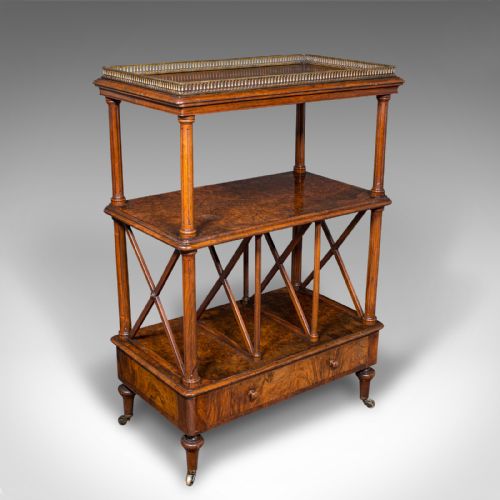

Victorian Whatnot Cabinet
A victorian whatnot cabinet is an open-shelved display piece that brings tiered timber storage and elegance into a room.
Victorian Whatnot Cabinet
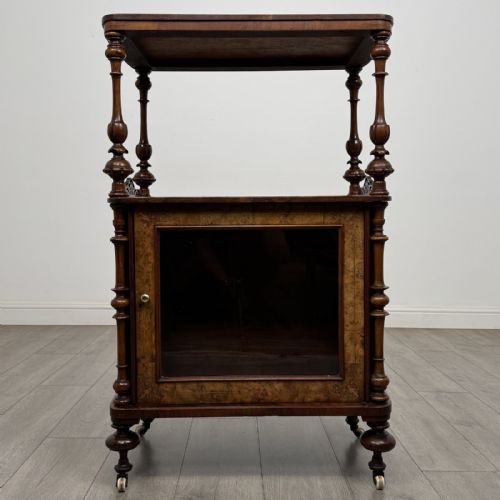
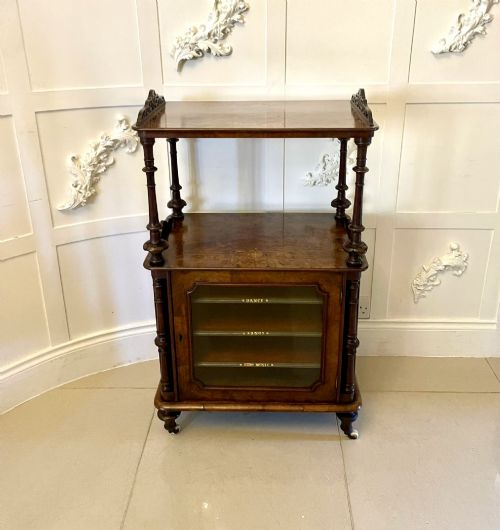
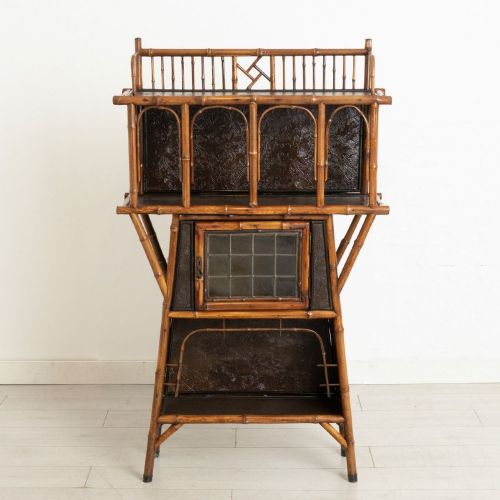
A victorian whatnot cabinet combines open tier shelving with enclosed cupboard bases, music compartments, or glass doors, appearing across nineteenth-century styles including Gothic Revival, Aesthetic Movement, and Regency influences.
Makers constructed these tiered display stands in forms such as corner units, wall-mounted hanging shelves, sideboards, and freestanding multitiered display stands.
Materials and construction
Cabinet makers utilised dense hardwoods such as mahogany, rosewood, walnut, and burr walnut, applying elaborate marquetry inlay and ebony stringing to enrich the surfaces.
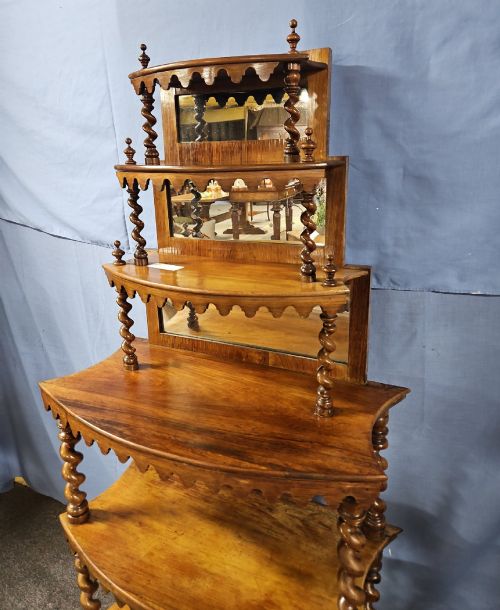
Structural elements incorporated turned and hollow barley twist columns, brass supports, ceramic castors, and mirrored glass panels.
Joinery combined traditional cabinet-making techniques with specialised additions like built-in cellarettes, drawer compartments, and drop-down work tops.
Victorian Whatnot Cabinet Retail Price Guide 2026
Typical asking prices for victorian whatnot cabinet among the pieces listed under this phrase on Sellingantiques today, from the lower quarter to the upper quarter. They describe what is for sale here now, not the wider market.
One coal purdonium survives configured in solid walnut with Puginesque styling, proving that even fuel storage received elaborate Victorian architectural treatment.
What distinguishes the work
The refinement of the timber selection creates a clear division, where highly figured burr walnut and richly grained rosewood elevate the presence of a piece far above plain stock.
Execution of decorative detail separates standard production from superior output, visible in precise marquetry inlay, intricate brass mounts, and well-turned barley twist supports.
Complexity of form defines the upper tier, distinguishing straightforward multi-tiered shelves from multi-functional combinations incorporating music cabinets, cupboards, and mirrors.
Leonard Wyburd for Liberty and Co
The Victorian Whatnot Cabinet Glossary
- Whatnot
- A piece of furniture consisting of a set of open shelves for displaying ornaments or books. These tiered stands date predominantly from the nineteenth century.
- Canterbury
- A low stand with partitions for holding music sheets, books, or portfolios, often combined with a whatnot top. They frequently feature drawers and ornate turned legs.
- Marquetry
- Decorative veneer work in which pieces of fine wood, ivory, or shell are inserted into a veneer background to form geometric or floral patterns. This technique ornamented fine nineteenth-century cabinet doors and tabletops.
- Chiffonier
- A low sideboard or cabinet, sometimes combined with a whatnot superstructure on the upper tier. They served as versatile storage and display surfaces in Victorian reception rooms.
- Barley twist
- A turned wooden column resembling a twisted rope, utilised as support posts on shelves and display stands. This decorative turning adds architectural depth to nineteenth-century case pieces.
Victorian Whatnot Cabinet: Frequently Asked Questions
What is a Victorian whatnot cabinet used for?
These tiered pieces were designed to hold and display ornaments, porcelain, and books in nineteenth-century reception rooms and parlours.
Many examples also incorporated specialised storage, such as music compartments, drawers, or enclosed cupboard bases for household items.
How do I identify a Victorian whatnot?
Look for stacked open shelves supported by turned wooden columns, barley twist pillars, or brass rods.
Materials typically include rich nineteenth-century hardwoods like walnut, mahogany, and rosewood, often paired with inlaid marquetry or mirrored backs.
Where should I place a corner whatnot?
Corner whatnot cabinets fit neatly into unused room angles to maximise display space without obstructing movement.
They function well in living rooms, hallways, or studies to showcase small collectibles and decorative objects.
What is the difference between a whatnot and a Canterbury?
A standard whatnot consists primarily of open display shelves for ornaments and decorative items.
A Canterbury includes partitioned sections specifically built for storing music sheets or books, frequently topped with a small stand or drawer.