

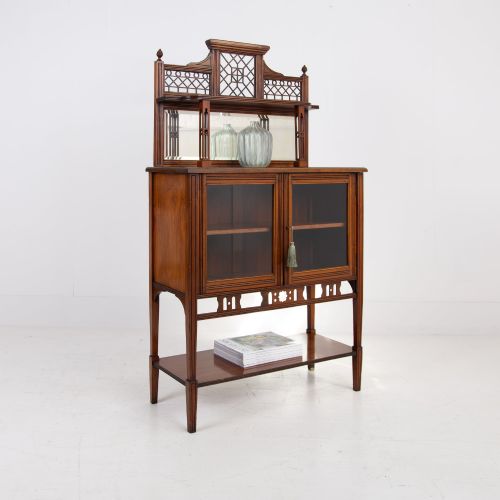
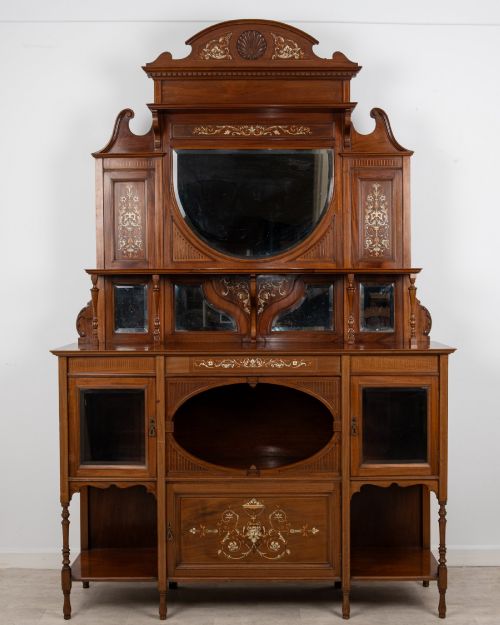
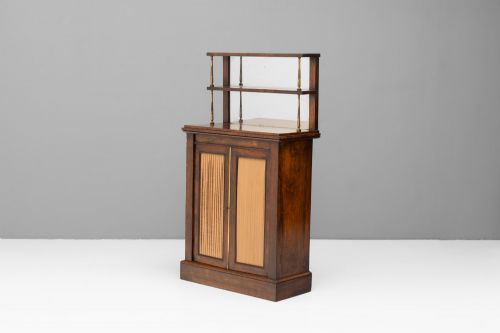
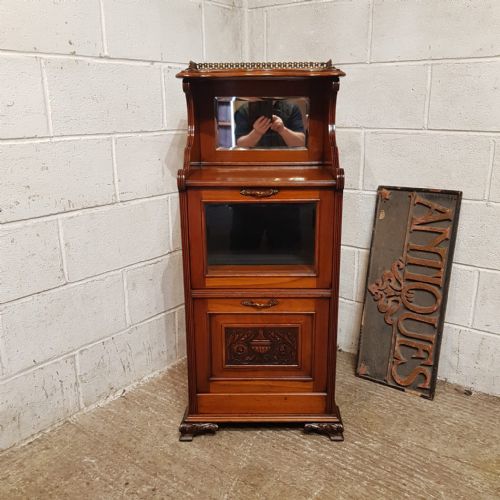



Mirrored Display Chiffonier
A mirrored display chiffonier combines lower storage cupboards with upper mirrored shelving, originating across the nineteenth and early twentieth centuries in various woods.
Mirrored Display Chiffonier
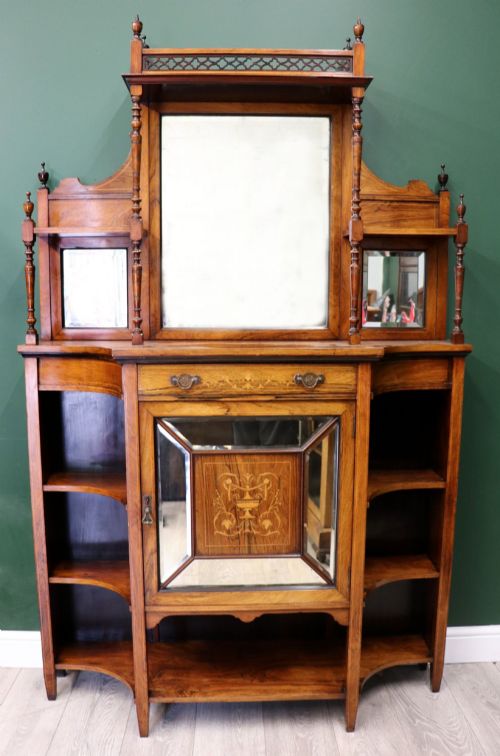
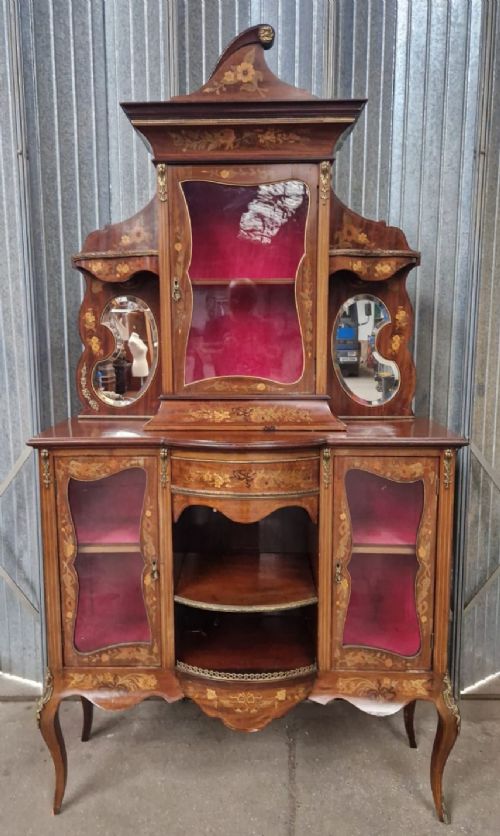
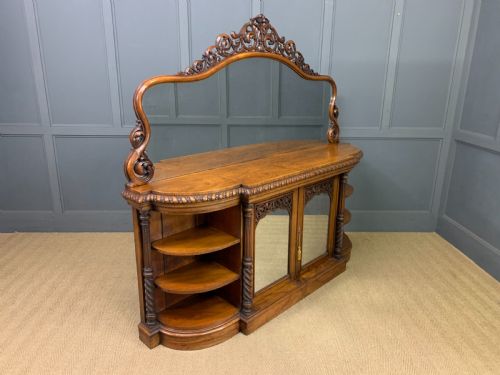
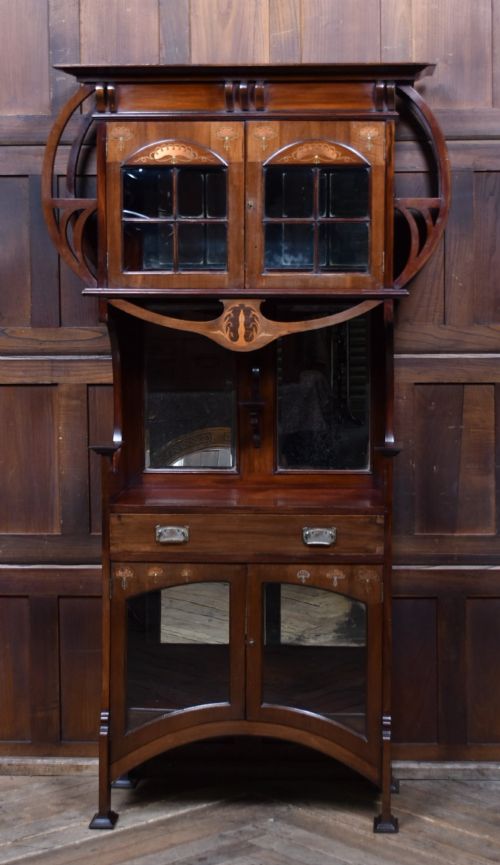
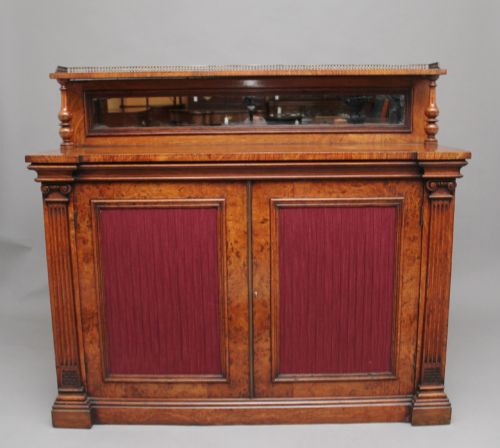
When you search for a mirrored display chiffonier, you are looking at nineteenth and early twentieth-century hybrid furniture pieces that merge sideboard storage with display shelving and glass plates. The pieces on this page span Victorian, Edwardian, Regency, and William IV periods, crossing over into Aesthetic Movement and Art Nouveau styles.
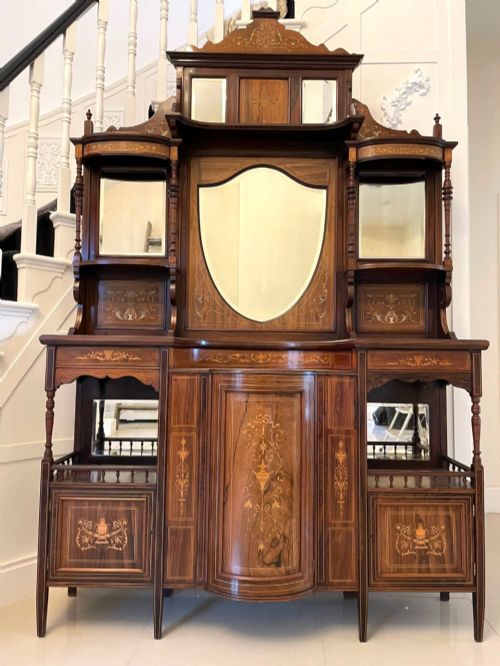
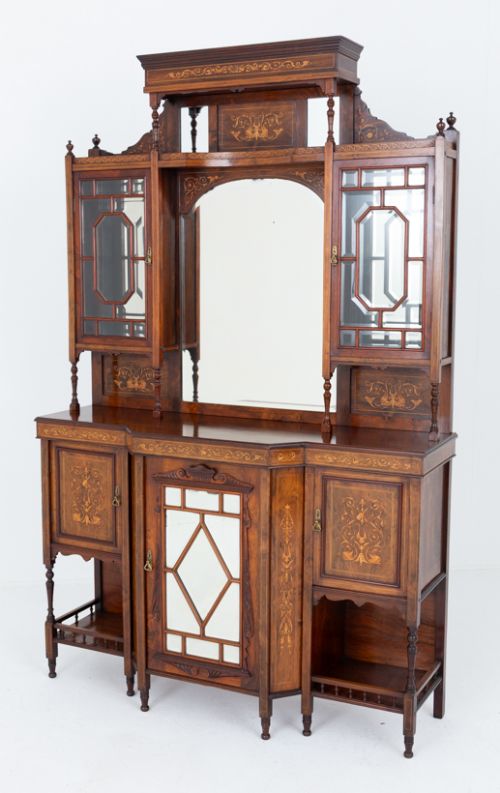
The most common form you will meet on this page is the Victorian rosewood or burr walnut side cabinet featuring an integrated mirror-back and cupboards. These examples range from modest parlour cabinets to large London-quality mirror-back chiffoniers and credenzas.
Makers utilised these dual-purpose items for both practical storage and the artful arrangement of ornaments. The inclusion of glass and mirror elements distinguishes them from standard sideboards, creating a sense of depth and light within a room.
How they were made
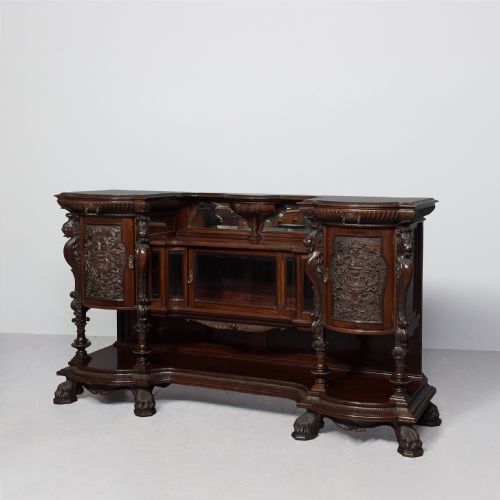
Cabinetmakers constructed these pieces primarily using solid timbers and decorative veneers of rosewood, mahogany, burr walnut, and pollard oak, sometimes applying ebonised finishes to mimic ebony. Marquetry and delicate brass inlay frequently decorated the surfaces, reflecting prevailing tastes across the nineteenth century.
Glass panels were set into doors for display cabinets, whilst mercury or silvered mirror plates were fitted into the upper wooden frameworks of mirror-back sideboards and chiffoniers. Gilt highlights, carved mahogany details, and marble tops further marked the construction methods of the period.
Mirrored Display Chiffonier Retail Price Guide 2026
Typical asking prices for mirrored display chiffonier among the pieces listed under this phrase on Sellingantiques today, from the lower quarter to the upper quarter. They describe what is for sale here now, not the wider market.
Listings feature pieces from the Victorian, Edwardian, and Regency periods, constructed in rosewood, mahogany, burr walnut, and ebonised wood.
What varies in quality
The standard of timber selection and veneer matching defines the upper tier of these pieces, where burr walnut, figured mahogany, and rich rosewood display complex grain patterns. Finer examples exhibit meticulous marquetry inlay and careful brass work rather than painted imitation.
Proportion and execution separate exhibition-quality items from standard production. Superior cabinets demonstrate skilled carving on mahogany or ebonised wood, well-fitted glass, and integrated mirror-backs that harmonize with the lower cupboard structure.
Garnett & Sons
The Mirrored Display Chiffonier Glossary
- Chiffonier
- A low sideboard or cabinet, traditionally featuring enclosed lower cupboards beneath a drawer or upper tier. In later nineteenth-century examples, this form often incorporated mirror-backs and display shelving.
- Credenza
- A sideboard or cabinet designed without legs, sitting directly on the floor. Victorian and nineteenth-century versions often featured curved glass doors and extensive marquetry.
- Marquetry
- The art of applying pieces of veneer to a structure to form decorative patterns and pictures. Makers utilised contrasting timbers to create floral or geometric designs on cabinet doors.
- Ebonised
- Wood finished with a dark stain or black paint to imitate ebony. This technique was popular during the Victorian era and featured prominently in Aesthetic Movement furniture.
- Aesthetic Movement
- A late nineteenth-century design style emphasising art for art's sake, often characterised by ebonised surfaces, gilt highlights, and Japanese-inspired motifs.
Mirrored Display Chiffonier: Frequently Asked Questions
What is a mirrored display chiffonier?
A mirrored display chiffonier is a nineteenth or early twentieth-century hybrid furniture piece combining enclosed lower storage cupboards with upper mirrored panels and display shelving.
These items evolved from traditional sideboards to serve both practical storage functions and decorative display purposes within period homes.
How do I date a chiffonier cabinet?
Dating relies on examining the prevailing styles, secondary timbers, and construction techniques visible in the piece. Victorian, Edwardian, and Regency examples each display characteristic wood selections, such as rosewood or burr walnut.
Specific design movements like the Aesthetic Movement or Art Nouveau also provide clear chronological markers for production eras.
Where were these cabinets used?
These cabinets were principally placed in nineteenth-century formal reception rooms, parlours, and dining spaces. The lower cupboards stored tableware or household goods.
The upper mirror-backs and shelves held decorative ceramics, glassware, and ornaments while reflecting light around the room.
How do I care for antique wood?
Preserving antique rosewood, mahogany, and walnut requires maintaining stable room temperatures away from direct sunlight and excessive moisture. Routine dusting with a soft, dry cloth protects the polished surfaces and delicate veneers.
Avoid using modern silicone-based polishes, opting instead for traditional beeswax formulations recommended for antique furniture.