

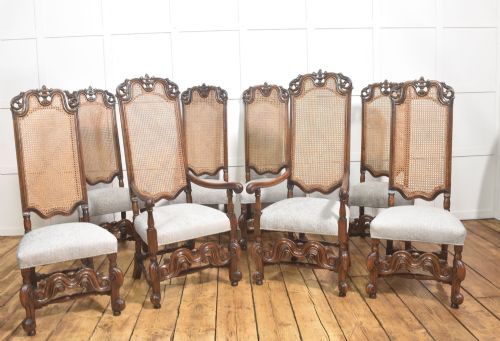
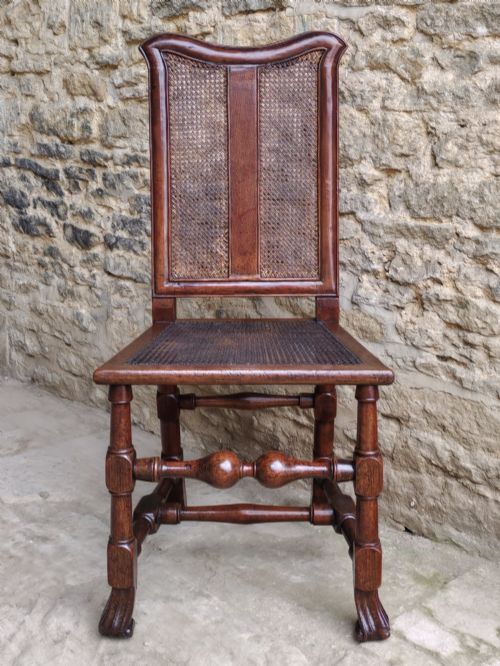


Walnut Cane Side Chair
A walnut cane side chair brings timeless texture and structural lightness into a room, offering enduring seating crafted in rich timber and woven panels.
Walnut Cane Side Chair
When searching for a walnut cane side chair, you encounter examples spanning multiple centuries, from late seventeenth-century originals to revival pieces produced in nineteen-ten. These seats combine sturdy frames with woven panels in the backrest and sometimes the seat.
The variations on this page include sets of dining chairs, pairs, and individual salon or bedroom pieces. Stylistic influences range from William and Mary and Carolean designs to Louis XV and Victorian revivals.
How they were made
Cabinetmakers utilised dense walnut for the structural frames, often shaping the timber with elaborate carving. Some pieces incorporate bone inlay alongside the woodwork to create striking surface contrast.
Canework was woven by hand into open frames to provide a resilient and flexible surface. Artisans also integrated upholstery fabric, leather, tapestry, and giltwood details into specific period variations.
Walnut Cane Side Chair Retail Price Guide 2026
Typical asking prices for walnut cane side chair among the pieces listed under this phrase on Sellingantiques today, from the lower quarter to the upper quarter. They describe what is for sale here now, not the wider market.
Listings feature walnut frames paired with cane, bone inlay, leather, and tapestry fabric across periods spanning the late seventeenth century to nineteen-twenty.
What varies in quality
Quality rests upon the crispness of the timber carving and the tightness of the woven cane panels. Earlier seventeenth and eighteenth-century examples exhibit distinct hand-tooling marks that differentiate them from later revival iterations.
The integrity of the structural joinery and the preservation of original timber patination dictate the desirability of each piece. Supplementary materials like bone inlay or tapestry fabric introduce further tiers of craftsmanship.
Waring & Gillow
The Walnut Cane Side Chair Glossary
- Cane
- Plant material woven into open patterns for chair seats and backs. It offers lightweight flexibility and breathability.
- Giltwood
- Timber treated with gold leaf or gilt preparation. This finish adds bright decorative accentuation to the frame.
- Bone inlay
- Sections of animal bone inserted into carved recesses within the wood. It creates pale, contrasting decorative motifs.
Walnut Cane Side Chair: Frequently Asked Questions
Are these chairs comfortable for daily use?
The woven cane provides a surprisingly springy and supportive surface that adapts well to sitting. Many people use them around a dining table or as accent seating in a study.
Adding a small squab cushion can increase comfort during longer periods of sitting while keeping the woven back visible.
How do I date a walnut cane chair?
Dating relies on examining the turning of the legs, the joinery methods, and the style of the carving. Seventeenth and eighteenth-century pieces show hand-cut joinery, whereas revival pieces from nineteen-ten often employ more uniform machine-assisted techniques.
Comparing the patina of the walnut and the tightness of the frame construction also helps clarify the period of origin.
Can damaged cane be repaired?
Skilled artisans can re-weave damaged cane panels by hand using traditional techniques and matching natural materials. This restoration work preserves the structural integrity and appearance of the antique.
Professional re-caning ensures the tension matches the original specification of the chair.
How should I care for the walnut frame?
Keep the timber away from direct heat sources and strong sunlight to prevent the walnut from drying out or splitting. Dust the carved surfaces regularly with a soft, dry cloth.
Applying a traditional beeswax polish occasionally helps nourish the wood and maintain its deep natural sheen.