

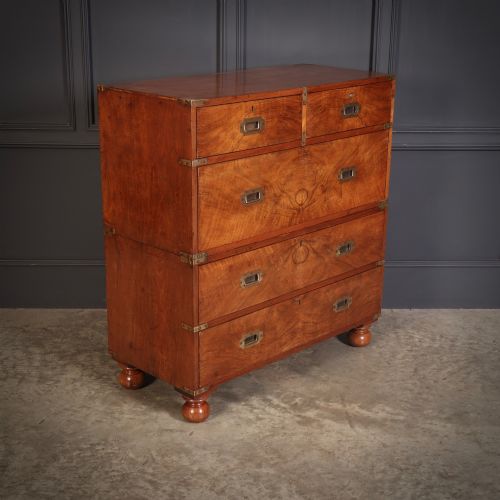


Walnut Campaign Furniture
Walnut campaign furniture brings portable elegance to camp and home alike, offering officers and travellers sturdy craftsmanship with rich timber grain.
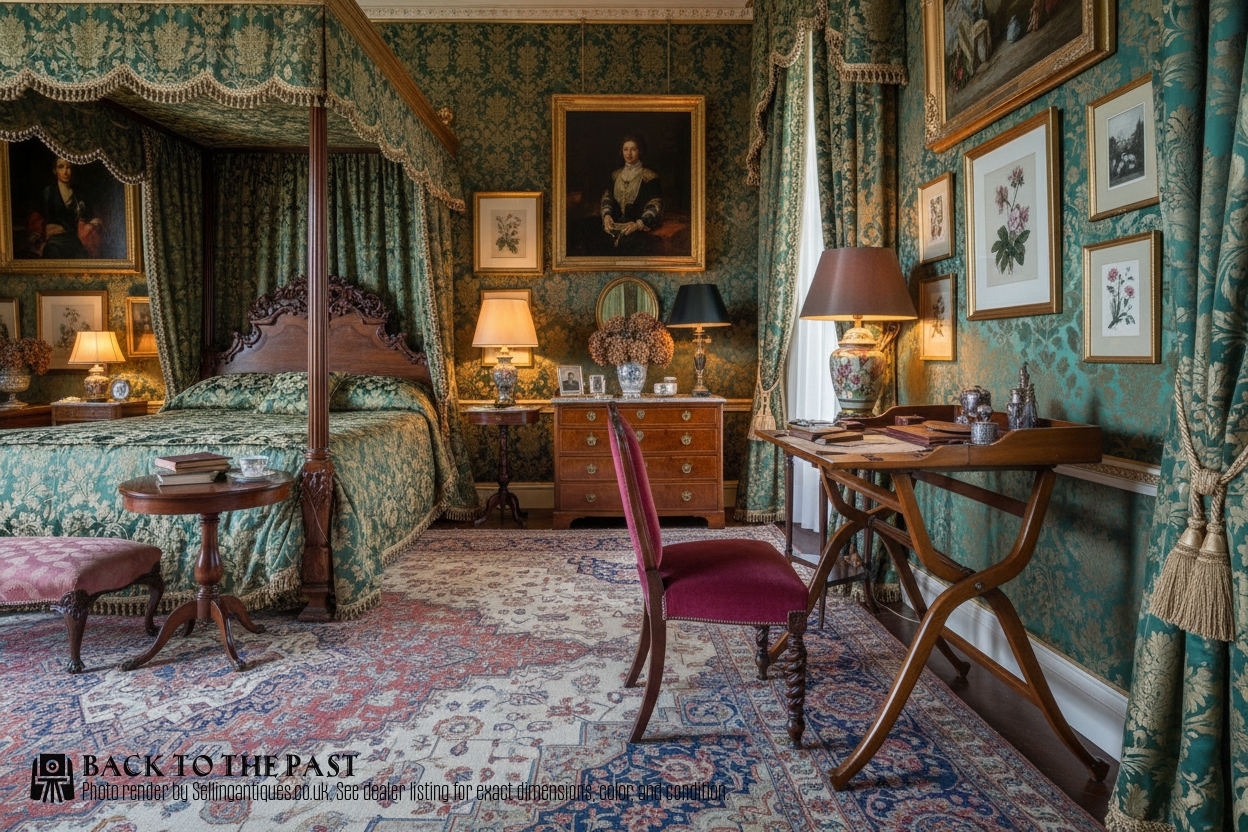
Walnut Campaign Furniture
Walnut campaign furniture comprises portable desks, chests of drawers, washstands, cabinets and chairs built for travel during the Georgian, Victorian and early twentieth-century periods. These pieces often arrive in two-part sections for easy carriage on military campaigns or distant journeys.
Buyers browsing walnut campaign furniture most commonly encounter nineteenth-century chests of drawers and Wellington chests alongside brass-bound lockers, folding chairs and travelling desks. Examples range from mid-century military pieces to later Victorian interpretations and Dutch travelling cabinets.
Makers designed these items to withstand rigorous movement while retaining refined domestic aesthetics through the use of figured walnut, burr walnut and fruitwood marquetry. The resulting forms balance military utility with the polished decorum of a fixed home.
How they were made
Cabinet makers constructed walnut campaign furniture using solid walnut, burr walnut and oak carcases, reinforced with brass corners, straps and flush-fitting handles to protect the timber during transit. Iron components and bone button decorations appear on specific folding chairs and desks.
Workshops utilised sectional designs such as two-part chests of drawers and folding chair frames to ensure rapid dismantling and assembly. Detailed carving, fruitwood marquetry and fluting ornamented surfaces on chairs and cabinets intended for officers.
Walnut Campaign Furniture Retail Price Guide 2026
Typical asking prices for walnut campaign furniture among the pieces listed under this phrase on Sellingantiques today, from the lower quarter to the upper quarter. They describe what is for sale here now, not the wider market.
Listings span the Georgian and Victorian periods into the twentieth century, featuring walnut, burr walnut, brass, oak and fruitwood marquetry.
What varies in quality
The sophistication of the timber figure defines much of the distinction across pieces, with highly figured burr walnut commanding greater visual presence than plain surfaces. The crispness of carved details, such as pierced crest rails and fluting, further separates standard production from finer work.
The integration of brass mounts and hardware distinguishes superior execution, particularly where inset handles and corner brackets sit flush against the walnut surface. The structural integrity of folding mechanisms and sectional joints determines how well a piece survives repeated assembly.
The Walnut Campaign Furniture Glossary
- Campaign furniture
- Portable furnishings designed for military officers and travellers, characterised by sectional construction and protective brass hardware. These pieces dismantled easily for transport on ships or wagons.
- Wellington chest
- A tall, narrow chest of drawers secured by a hinged vertical locking bar on one side. This bar fastens with a key to lock all drawers simultaneously.
- Burr walnut
- Timber sliced from walnut tree growths, prized for swirling, knotty grain patterns. It provides a highly decorative surface on drawer fronts and cabinet doors.
- Marquetry
- Inlaid patterns of various woods applied to a furniture surface to form pictures or geometric designs. Dutch examples frequently employ this technique on travelling cabinets.
- Flush mount
- Hardware such as handles or rings recessed into the wood so the exterior remains flat. This prevents snagging during transit.
Walnut Campaign Furniture: Frequently Asked Questions
What defines walnut campaign furniture?
Walnut campaign furniture consists of portable wooden items built for travel, featuring durable timbers like walnut and protective brass mounts.
These pieces typically include chests of drawers, desks and folding chairs designed to be dismantled or folded for transport.
How do two-part chests work?
Two-part chests of drawers divide horizontally into upper and lower sections for easier loading and carriage on journeys.
Metal brackets and flush side handles secure the sections together when assembled in camp or quarters.
Were these pieces used in battle?
Officers and officials used campaign furniture during military campaigns, colonial postings and extended travel to maintain comfortable living quarters.
The portable design suited tents, temporary barracks and ships where permanent furniture was impractical.
How do I care for burr walnut?
Burr walnut surfaces require gentle cleaning with a soft, dry cloth and protection from direct sunlight and extreme humidity.
Applying occasional appropriate wax preserves the polished finish and highlights the complex grain patterns.
How do I date a piece?
Dating relies on observing construction methods, timber choices, brass hardware styles and overall period characteristics from the Georgian and Victorian eras.
Makers' marks, secondary woods like oak, and specific mechanisms help narrow the timeframe of manufacture.