




Victorian Travel Desk
These pieces for a victorian travel desk span brass-bound writing boxes, campaign chests and portable timepieces built for movement.
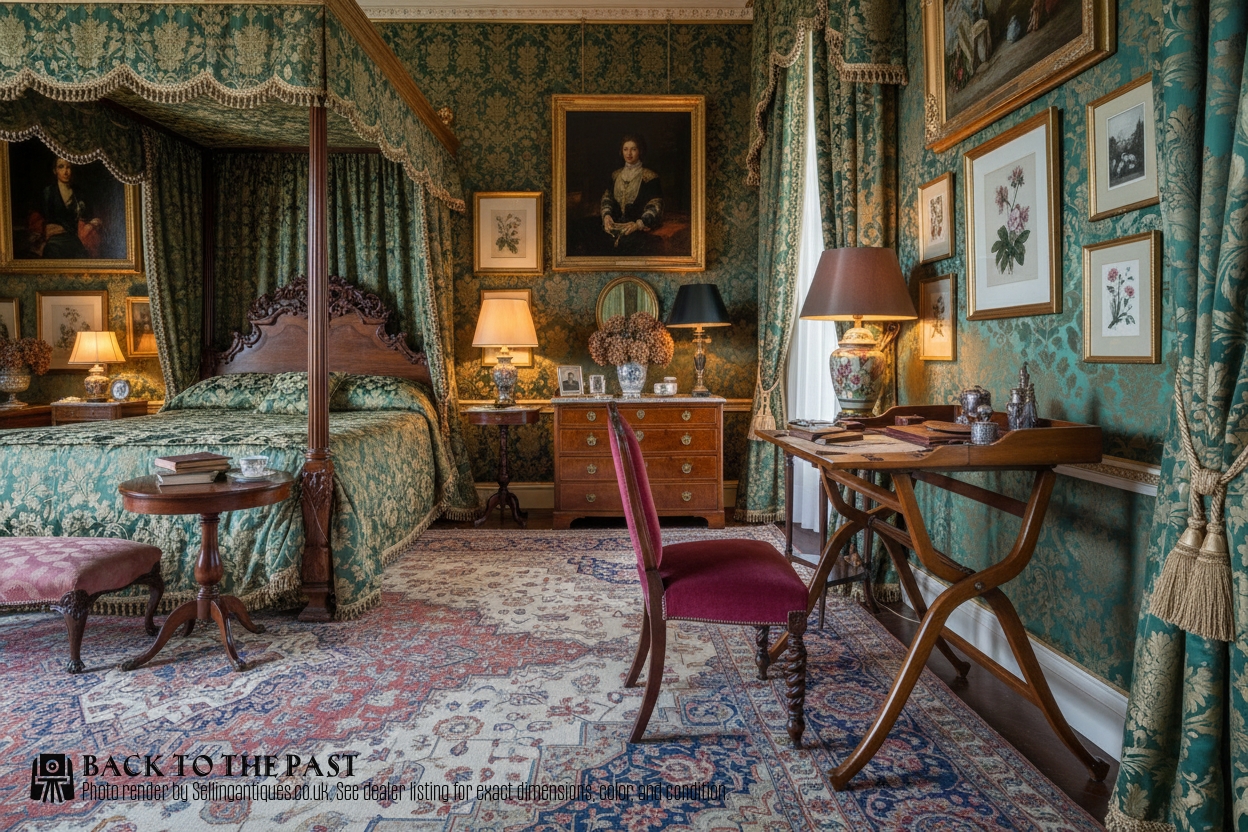
Victorian Travel Desk
When you search for a victorian travel desk, you encounter portable writing furniture, campaign chests and travel timepieces designed for portability and function. The selection encompasses mahogany and tiger oak writing slopes alongside brass carriage clocks and leather-bound writing boxes.
Most examples originate from the nineteenth century, bridging the Victorian and Edwardian eras. Portable desks take the form of folding slopes and compartmented boxes, while accompanying travel clocks feature heavy brass cases and glass panels.
How they were made
Cabinet makers utilised dense hardwoods including mahogany, walnut and tiger oak to withstand transit, reinforcing corners and edges with brass banding and flush handles. Interiors required precise joinery to house inkwells, pens and stationery securely during travel.
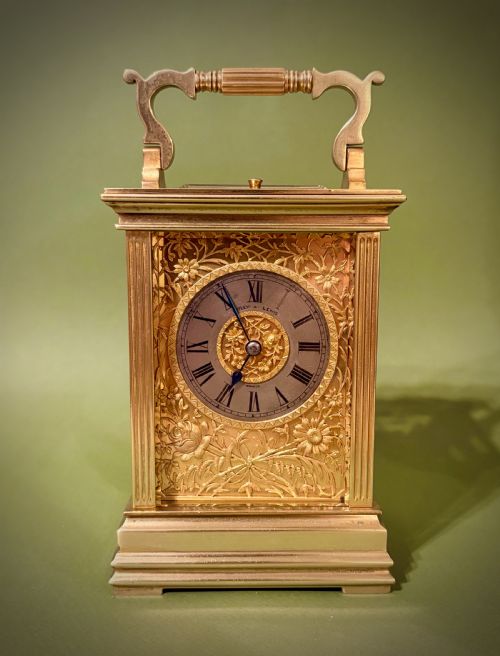
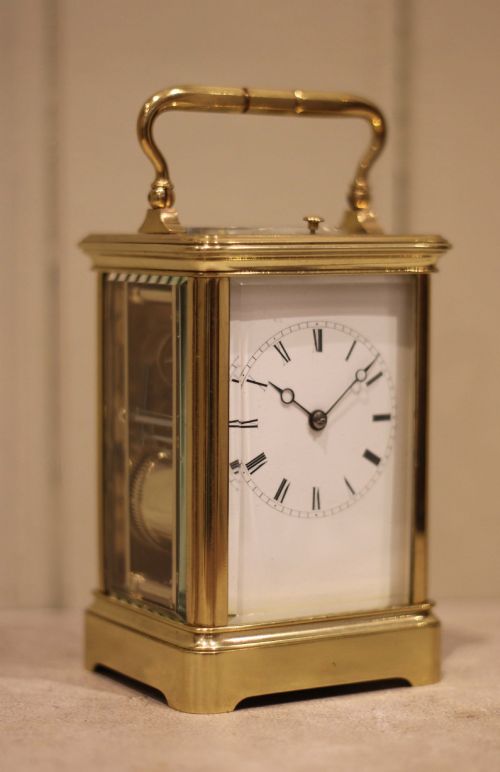
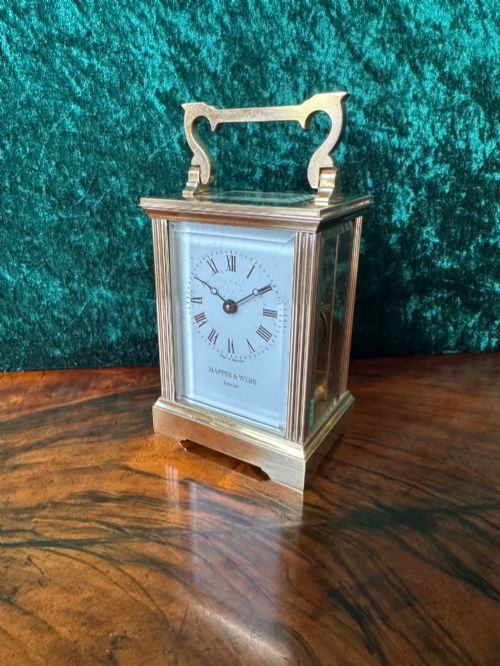
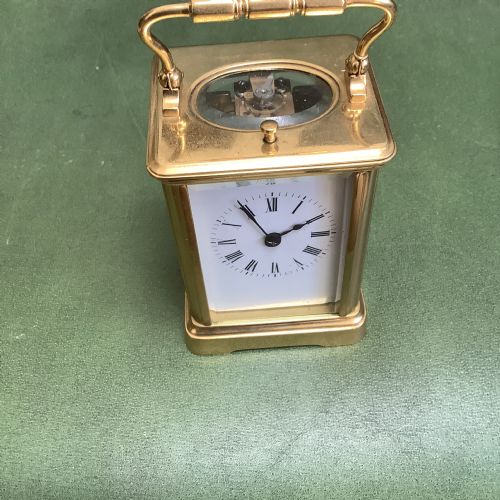
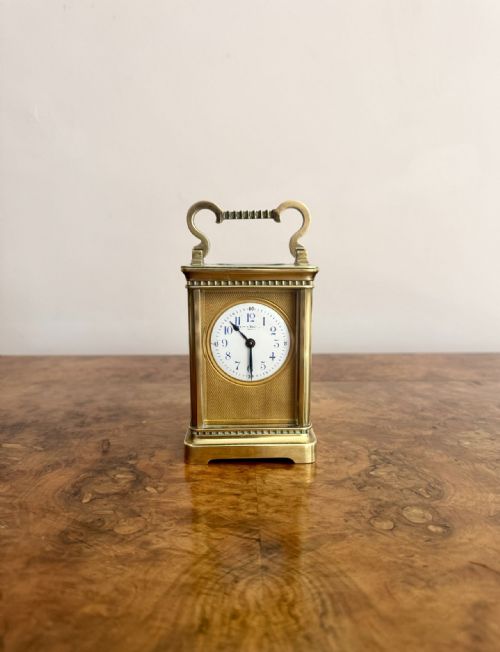
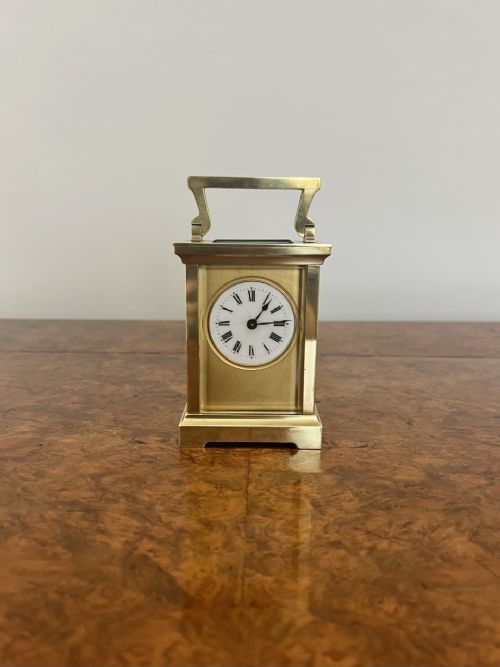
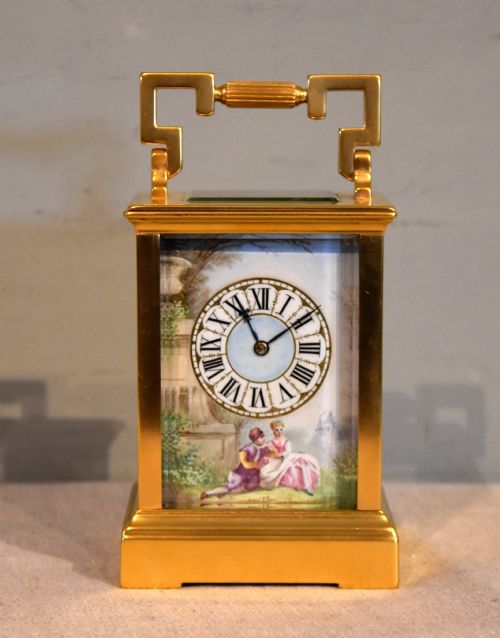
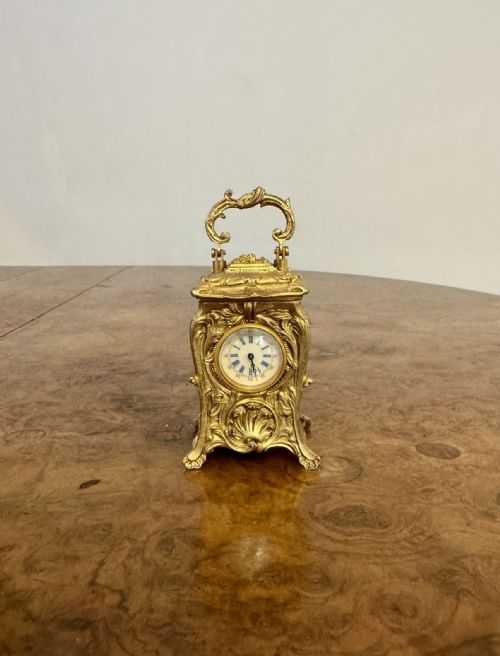
Timepieces combine heavy brass, gilt bronze and glass panels, housing mechanical movements driven by springs and escapements. Enamel dials, porcelain plaques and finely engraved cases demonstrate the precision of French and British workshops.
Listings combine mahogany and tiger oak campaign writing slopes with brass-cased French carriage clocks spanning the Victorian and Edwardian periods.
What varies in quality
Distinction across the range lies in the crispness of brass engraving, the integrity of the wood grain and the completeness of original fitted interiors. Finer examples retain working locks, original leather skivers and matching travel cases.
Horological pieces separate by the complexity of the movement, such as repeating strikes and alarm mechanisms, coupled with the weight and gilding of the brass case. Makers of note distinguish standard production items from exhibition-grade commissions.
Henri Jacot·Mappin and Web·Pickford of London·Drocourt Paris·Antoine Redier of Paris·Duverdrey and Bloquel·Jane Brownett Alexander Jones
The Victorian Travel Desk Glossary
- Campaign chest
- A modular chest of drawers built in two or more sections with recessed brass handles for military transit.
- Carriage clock
- A portable spring-driven timepiece developed for travel, housed in a brass and glass case with a folding handle.
- Writing slope
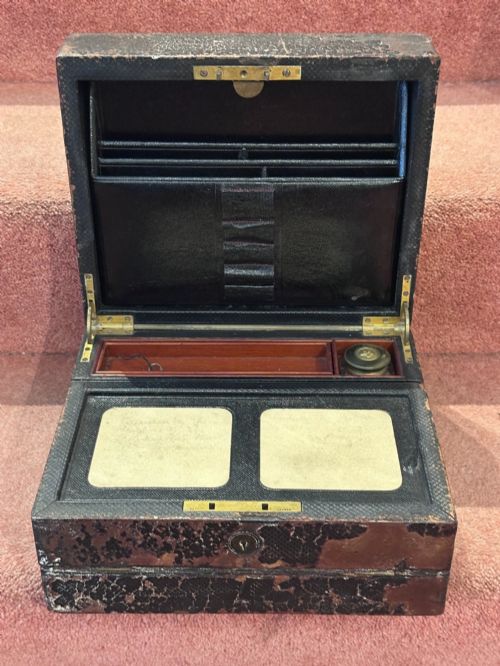
- A portable desk with an inclined writing surface that opens to reveal compartments for stationery, ink and nibs.
- Gorge case
- A stepped brass carriage clock case style popular in the nineteenth century.
- Repeating movement
- A clock mechanism that strikes the hours and quarters upon demand when a lever or cord is pressed.
Victorian Travel Desk: Frequently Asked Questions
What is a campaign desk?
A campaign desk is portable furniture constructed in sections for military officers and travellers on the move. These pieces utilise sturdy timbers and flush brass fittings to withstand frequent packing and transport.
Such desks often fold or separate into manageable parts, featuring secret compartments and secured drawers to keep writing materials intact during journeys.
How do travel clocks differ from mantel clocks?
Travel clocks are built for movement, featuring robust brass frames, protective glass panels and integrated carrying handles. Their mechanical movements are designed to maintain accurate time despite the vibrations of transit.
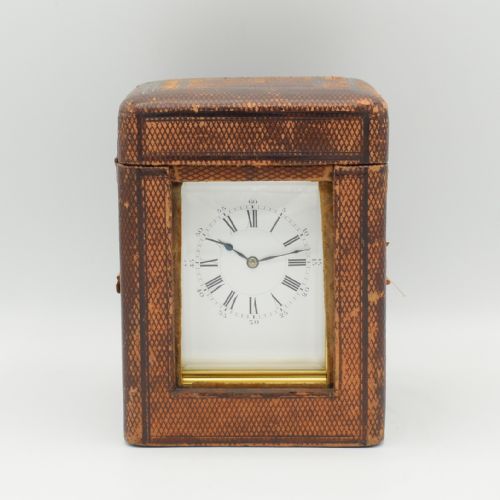
Unlike stationary mantel clocks, these pieces frequently include fitted leather travel cases and specialised escapements suited to portable use.
What timbers were used for travel desks?
Cabinet makers relied on dense, durable hardwoods capable of resisting warping and knocks during travel. Mahogany, walnut and tiger oak appear frequently in these portable writing slopes and chests.
These woods were often selected for their striking grain patterns as well as their structural resilience when fitted with brass reinforcement.
How do you date a carriage clock?
Dating involves examining the style of the brass case, the complexity of the movement and any maker signatures or registration marks. Gorge cases and fully engraved gilt brass often point to the mid to late nineteenth century.
Later Victorian and Edwardian examples show subtle shifts in escapement design and dial decoration, while accompanying original cases provide further contextual clues.