



Walnut Cabriole Leg Settee
A walnut cabriole leg settee brings together shaped timber frames and sweeping supports, offering a seat designed for formal drawing rooms.
Walnut Cabriole Leg Settee
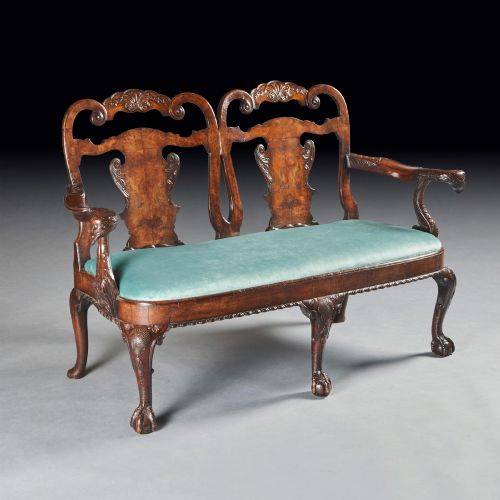
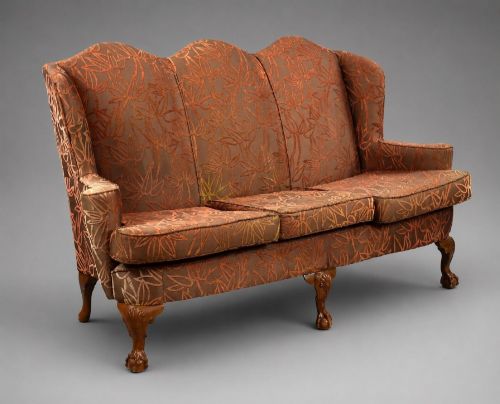
A walnut cabriole leg settee is an upholstered seat supported by double-curved legs that typically end in pad, claw and ball, or scroll feet. These pieces range from eighteenth-century origins to nineteenth-century revivals and early twentieth-century interpretations.
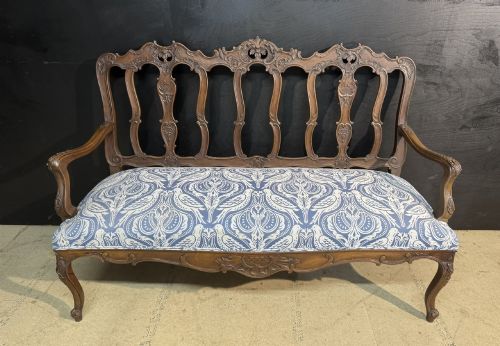
The selections on this page span several stylistic revivals, notably Queen Anne and Rococo Revival, alongside French Louis XV and Italian regional variants. Buyers encounter formats from intimate two-seater couches to larger three-seater sofas and multi-piece drawing room suites.
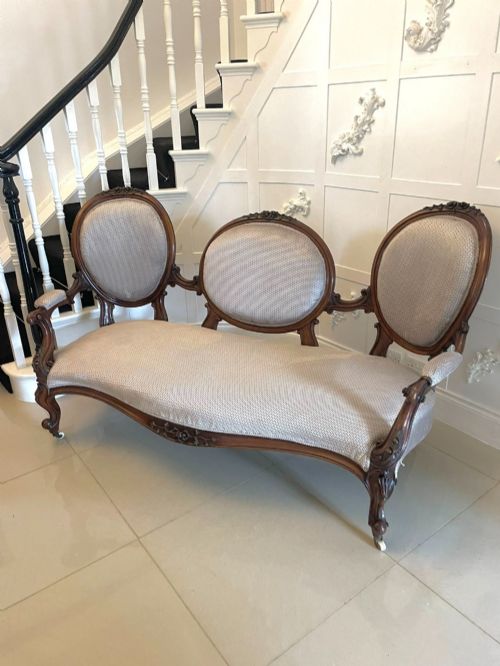
Forms include twin chair back settees, caned French canapés, cameo back frames, and bergere models. The timber framework is consistently walnut, often paired with exposed carved details and various textile coverings.
What Varies in Quality
The distinction between ordinary and exceptional examples rests upon the crispness of the wood carving and the proportions of the frame. Skilled makers achieved a fluid transition from the knee of the cabriole leg down to the foot, whereas lesser pieces display stiff or blocky contours.
The choice and execution of the upholstery materials also differentiate the range. High-grade examples utilise period-appropriate textiles like heavy damask or precise hand-weaving for caned panels, complementing the architectural integrity of the walnut structure.
Upholstery materials recorded in the inventory include velvet, damask fabric, linen, and cane panels set into walnut frames.
The Walnut Cabriole Leg Settee Glossary
- Cabriole leg
- A furniture leg that curves out at the knee and tapers inward to the ankle, mimicking an animal's limb. This form became dominant during the early eighteenth century and returned during later revival periods.
- Canapé
- A decorative French-style sofa featuring an exposed wooden frame and upholstered back and seat. These pieces often exhibit elaborate carving along the top rail.
- Cameo back
- An oval-shaped upholstered backrest framed by carved wood, popular during the Victorian era. It draws inspiration from carved stone profiles.
- Bergere
- An enclosed upholstered armchair or sofa with wooden frames and typically cane-webbed sides and back. Cushions are loose and placed over a webbed base.
- Twin chair back
- A settee backrest designed to mimic the appearance of two distinct side chairs joined together. This layout frequently appears in eighteenth-century designs and later copies.
Walnut Cabriole Leg Settee: Frequently Asked Questions
How do I identify the period?
Distinguishing between an eighteenth-century original and a nineteenth or twentieth-century revival requires examining tool marks, timber shrinkage, and construction methods. Joinery techniques and the style of the carving often provide clear indicators of the date.
Revival pieces from the Victorian and Edwardian eras frequently adopt earlier Queen Anne or Louis XV motifs but betray their later origin through machine-sawn timber elements and standardised hardware.
Were these settees used in bedrooms?
Most of these settees served primarily in formal drawing rooms, parlours, and reception spaces where hosts entertained guests. Their decorative carved frames and fine upholstery suited public areas of the home.
Smaller variants and window seats occasionally furnished dressing rooms or large hallways, but the larger three-seater configurations remained anchored to main living spaces.
How do I care for the walnut frame?
Maintenance involves keeping the timber away from direct heat sources and sudden humidity changes to prevent the walnut from splitting or warping. Dusting with a soft, dry cloth preserves the finish without abrasive buildup.
Avoid using silicone-based polishes, which can penetrate porous historical finishes and attract dust. Periodic application of a traditional wax helps maintain the lustre of the exposed wood.
Can I replace the upholstery?
Upholstery can be updated or restored using traditional methods that respect the internal build of the settee. Maintaining appropriate padding materials ensures the fabric sits correctly against the wooden framework.
Selecting textiles that align with the historical period of the frame helps retain the aesthetic balance of the piece, whether utilising plain linen or patterned damask.