


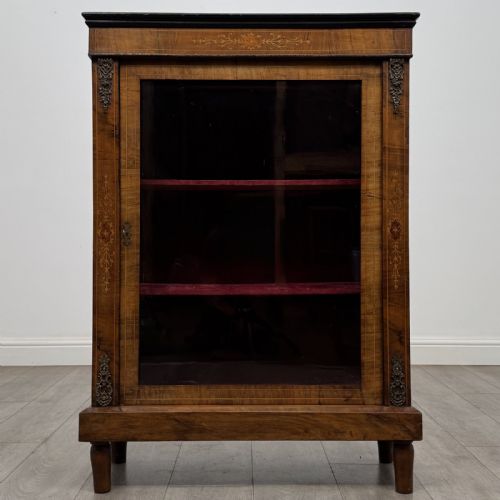
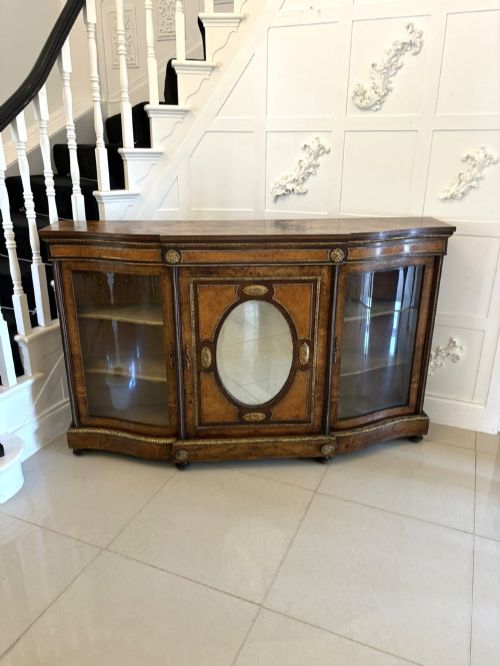
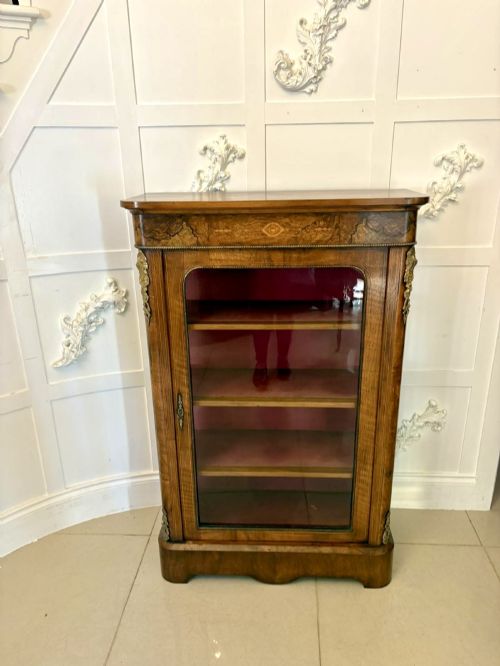
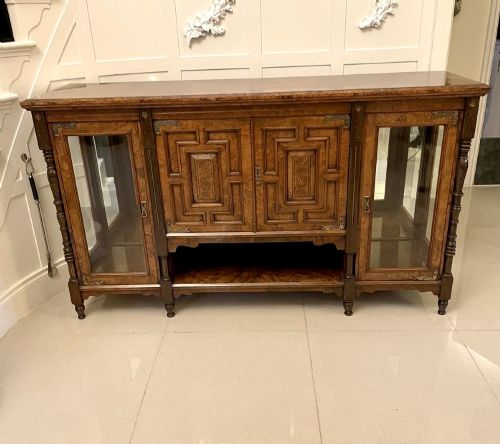
Walnut Cabinet with Glass Doors
These walnut cabinet with glass doors selections offer handsome timber and glazed display for your collection, built to last generations.
Walnut Cabinet with Glass Doors
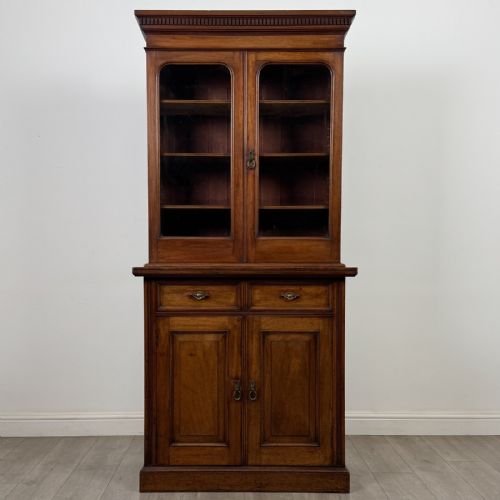
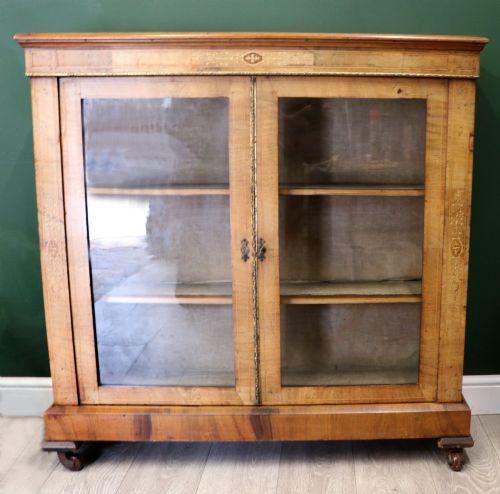
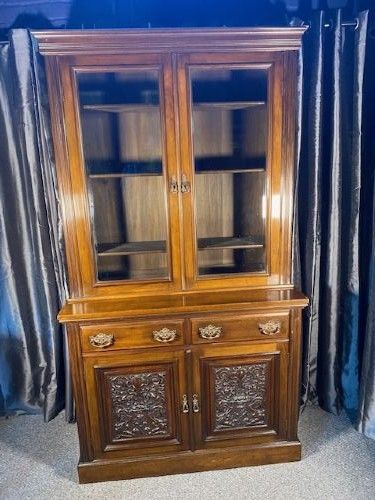
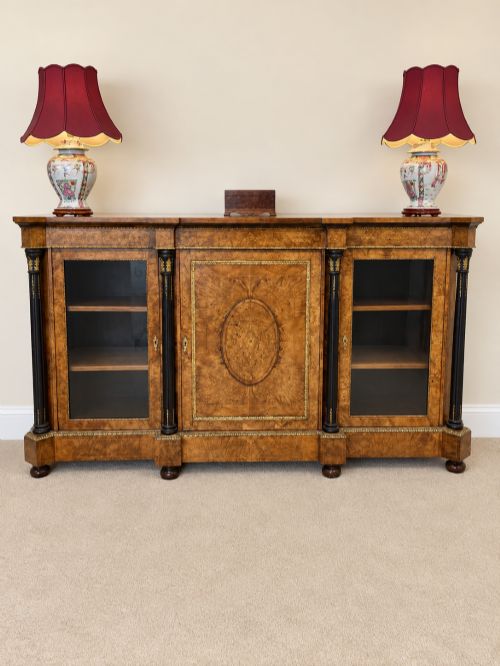
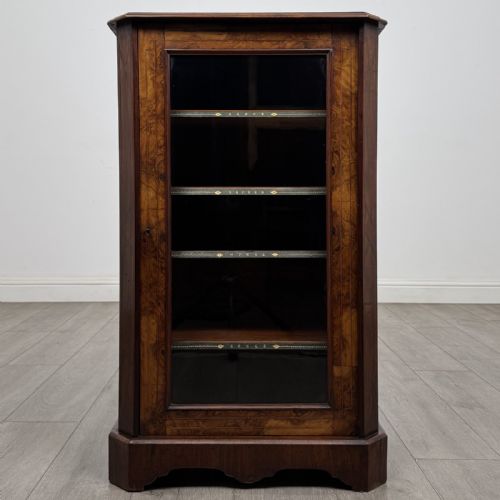
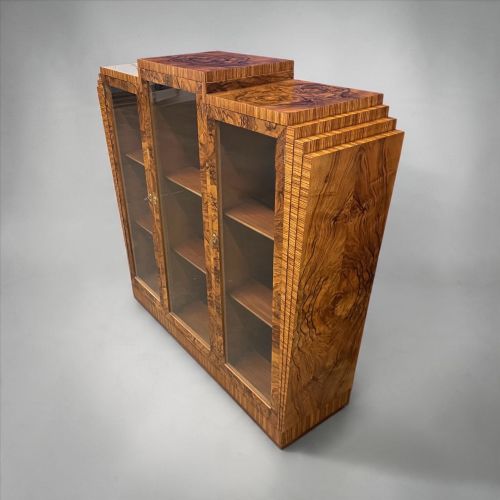
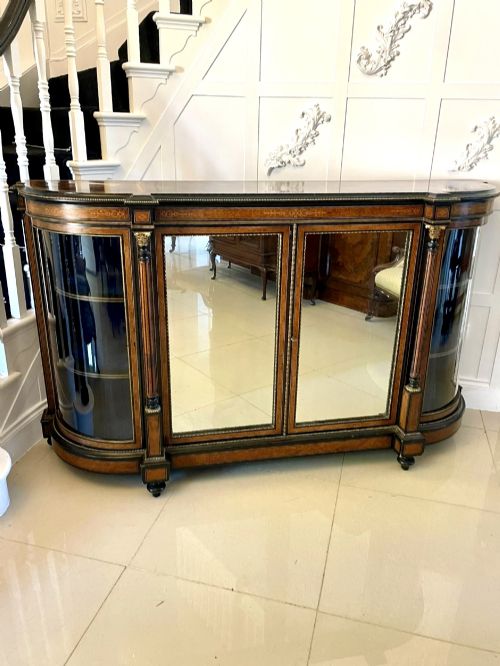
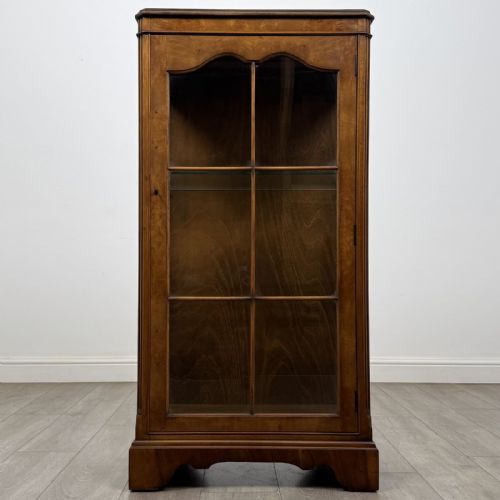
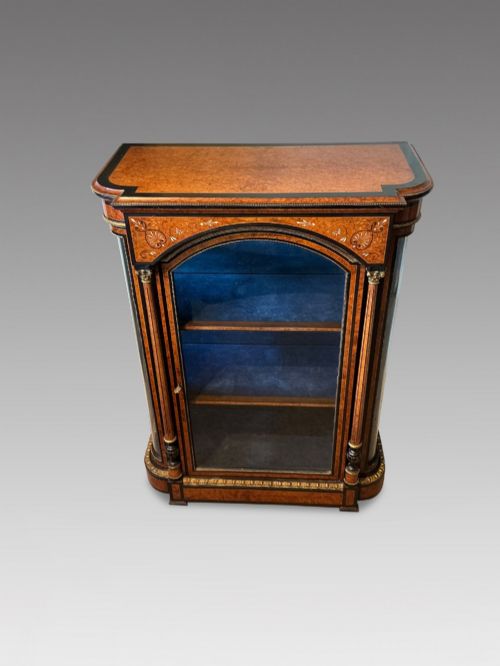
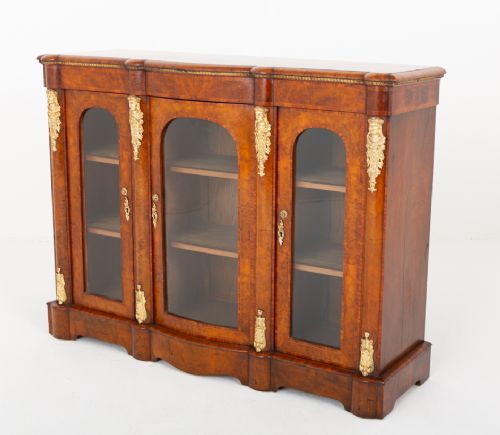
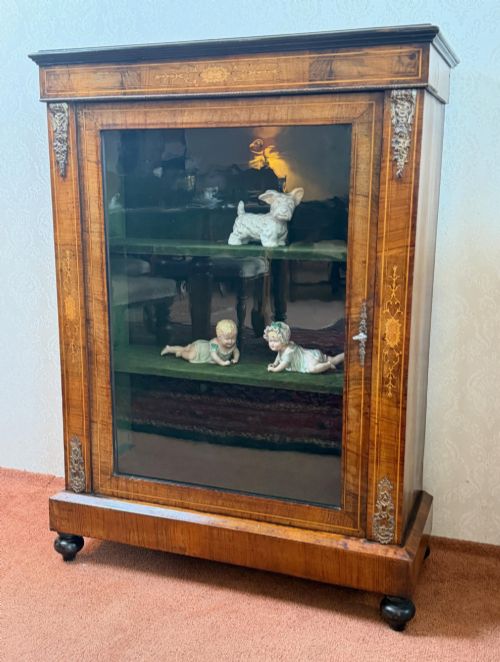
When you search for a walnut cabinet with glass doors, you encounter refined Victorian furniture designed to protect and display treasured possessions. The examples on this page span the mid to late nineteenth century, taking forms such as pier cabinets, bookcases, and credenzas.
Most pieces date from around eighteen sixty and showcase the rich figuring of walnut timber. These items served as focal points in Victorian drawing rooms, combining glazed display space with enclosed storage.
How they were made
Cabinet makers utilised solid wood and figured veneers, often selecting burr walnut for its complex, swirling grain patterns. Timber construction was frequently enhanced with lighter banding such as boxwood and tulipwood.
Metal mounts in brass and ormolu add decorative contrast to the dark wood surfaces. Glazing protects the interior while velvet linings occasionally provide a soft backdrop for displayed objects.
Walnut Cabinet with Glass Doors Retail Price Guide 2026
Typical asking prices for walnut cabinet with glass doors among the pieces listed under this phrase on Sellingantiques today, from the lower quarter to the upper quarter. They describe what is for sale here now, not the wider market.
Listings on this page feature Victorian and nineteenth century pieces, primarily utilising walnut, burr walnut, glass, and brass.
What varies in quality
Quality rests primarily in the choice of veneer and the crispness of decorative detailing. Pieces featuring figured burr walnut and intricate boxwood marquetry sit comfortably above plain timber examples.
The refinement of cast ormolu mounts and the precision of brass fitments distinguish finer workshop output from standard production.
Druce And Co
The Walnut Cabinet with Glass Doors Glossary
- Pier cabinet
- A low glazed cabinet designed to stand against the wall space between windows. These narrow pieces maximised display area in Victorian reception rooms.
- Credenza
- A sideboard or cabinet featuring central cupboards flanked by curved glass doors. They often incorporate mirrored backs and elaborate ormolu mounts.
- Marquetry
- Inlaid patterns of contrasting wood veneers applied to furniture surfaces. Craftsmen utilised boxwood and ebony to create geometric or floral motifs.
- Ormolu
- Gilt bronze mounts used for decorative enrichment on nineteenth century furniture. The technique creates a rich gold appearance that complements dark walnut.
Walnut Cabinet with Glass Doors: Frequently Asked Questions
What is a pier cabinet?
A pier cabinet is a narrow display piece designed to fit the wall space between windows in a Victorian room. They typically feature a single glass door enclosing shelves for porcelain or curiosities.
These cabinets often include decorative marquetry or ormolu mounts, serving both a functional storage purpose and an aesthetic role in formal entertaining spaces.
How do I care for burr walnut?
Burr walnut veneer requires stable room temperatures away from direct sunlight to prevent the timber from drying out or fading. Gentle dusting with a dry cloth maintains the finish.
Applying a traditional beeswax polish occasionally helps nourish the wood and preserves the depth of the grain patterns without building up heavy residues.
Where were credenzas placed?
Credenzas traditionally stood against the main dining room or drawing room wall to hold silverware and display decorative items. Their long, low proportions suited grand Victorian interiors.
Many examples include mirrored backs that reflected candlelight and brightened rooms during evening gatherings.
How do I identify Victorian walnut?
Victorian walnut furniture often displays rich, dark brown tones with intricate grain variations, particularly in figured or burr selections. Cabinet makers frequently combined these veneers with contrasting woods like tulipwood.
Examining the construction methods and hardware, such as brass locks and ormolu mounts, helps confirm the nineteenth century date of manufacture.