




Walnut Buffet Cupboard
A walnut buffet cupboard brings substantial storage and rich timber grain to a dining room, combining the utility of a sideboard with enclosed shelving.
Walnut Buffet Cupboard
A walnut buffet cupboard serves as a substantial storage piece for dining rooms and principal living spaces, combining a serving surface with enclosed lower storage. Buyers searching this phrase encounter substantial furniture designed for formal display and heavy domestic use.
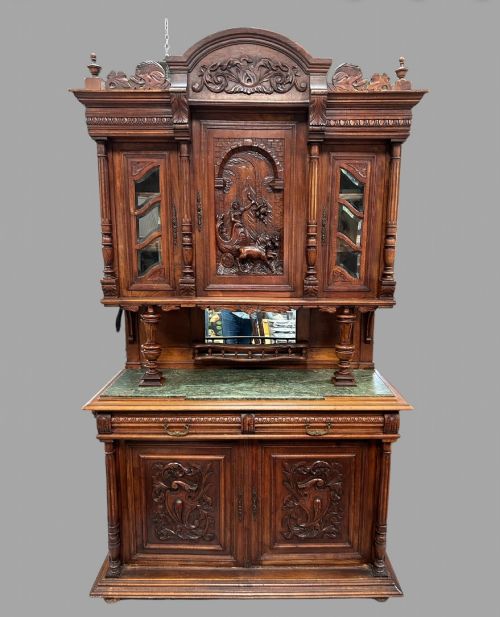
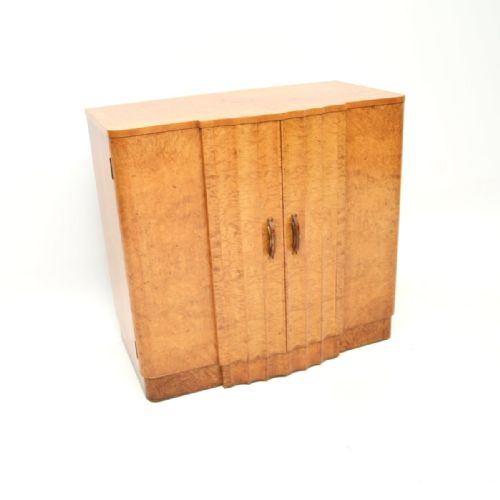
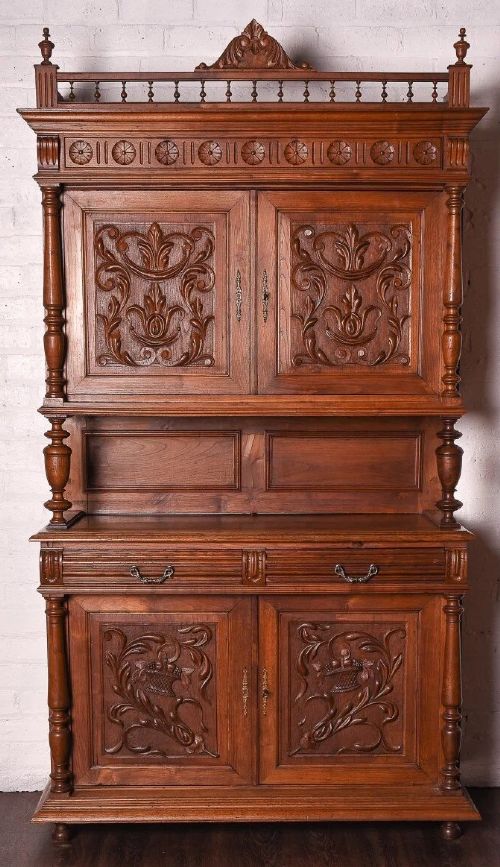
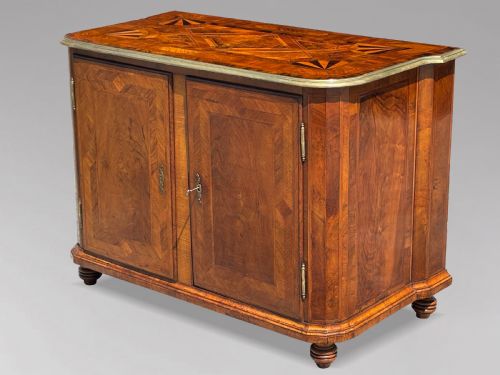
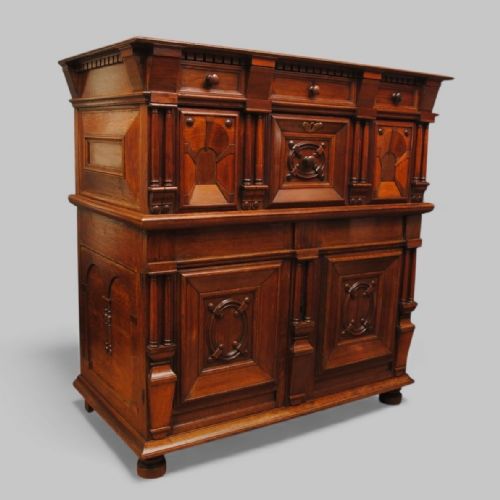
The selections span from seventeenth-century continental European pieces to twentieth-century Art Deco interpretations. French provincial buffets and Italian Renaissance Revival credenzas appear frequently alongside Victorian sideboards and twentieth-century burr walnut cabinets.
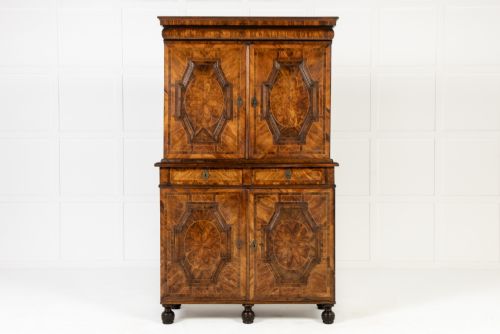
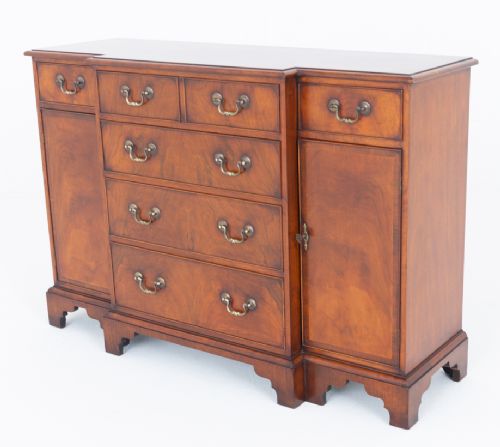
Formations range from single-body cupboards to two-part dressers and breakfront sideboards. Regional variations include Maltese and Spanish workshops alongside dominant French and Italian cabinet-making traditions.
How they were made
Makers utilised solid walnut and decorative veneers over secondary woods, often enhancing surfaces with burl or burr walnut figure. Carved ornamentation, geometric mouldings, and marquetry define the exterior enrichment across periods.
Structural integrity relied on traditional joinery, incorporating panelled doors and sturdy internal framing. Marble inserts appear on later nineteenth and twentieth-century tops, providing a durable surface for serving.
Metal elements such as brass handles, iron hardware, and occasional mother-of-pearl inlay punctuate the timber surfaces. French polishing and wax finishes protect the wood while accentuating the deep natural tones of the grain.
The inventory spans seventeenth-century Baroque works to Art Deco burr walnut cabinets from the nineteen-thirties.
What varies in quality
The depth and execution of carved detail distinguish standard utility pieces from master-carved works. Crispness in foliage, figures, and architectural moulding reflects the skill invested by the original workshop.
Timber selection dictates visual impact, where matched burr walnut veneers and well-figured solid boards elevate a piece. The integration of secondary woods and the stability of large panel construction reveal the underlying standard of manufacture.
Harry and Lou Epstein·The Bowman Brothers·Gabriel Viardot
The Walnut Buffet Cupboard Glossary
- Buffet de Corps
- A large two-part cupboard or sideboard used in formal dining rooms for storing and displaying silver and porcelain.
- Burr Walnut
- Timber taken from a tree growth or knot, yielding complex, swirling grain patterns highly valued for veneering.
- Breakfront
- A cabinet design where the central section projects forward from the flanking outer sections.
- Marquetry
- Decorative patterns formed by fitting together thin veneers of wood, ivory, or mother-of-pearl onto a structural surface.
Walnut Buffet Cupboard: Frequently Asked Questions
Where should I place a walnut buffet cupboard?
These large cabinets suit dining rooms or spacious hallways where their storage capacity and decorative presence can be appreciated. Ensure adequate clearance for doors to swing open fully.
Keep them away from direct heat sources and strong sunlight to protect the walnut timber and any veneered surfaces from drying out or fading over time.
How do I care for marble-topped sideboards?
Wipe marble surfaces regularly with a soft, damp cloth and neutral soap, avoiding acidic cleaning agents that can etch the stone. Wax can be applied periodically to the walnut body.
Use coasters and placemats to protect against moisture rings and staining, preserving the polished finish of both the stone and the wood.
How can I tell an eighteenth-century piece apart from later revivals?
Examine the construction methods inside drawers and at the back of the cabinet, where hand-cut dovetails and pegged joints indicate earlier periods. Wood shrinkage and tool marks provide further clues.
Revival pieces made in the nineteenth or twentieth century often employ machine-sawn timber or cleaner internal uniformity, even when mimicking earlier Baroque or Renaissance styles.