

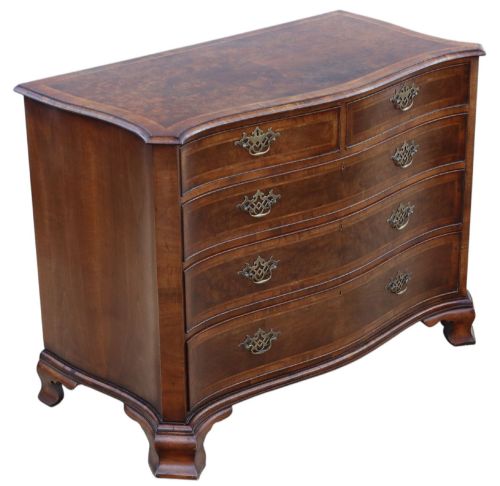
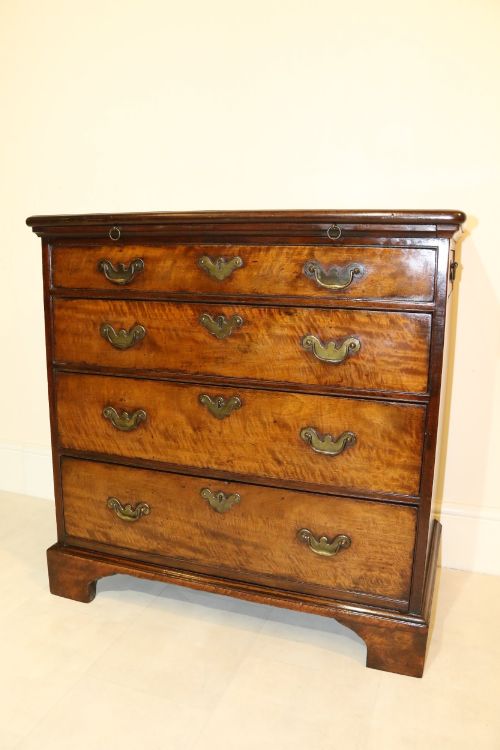
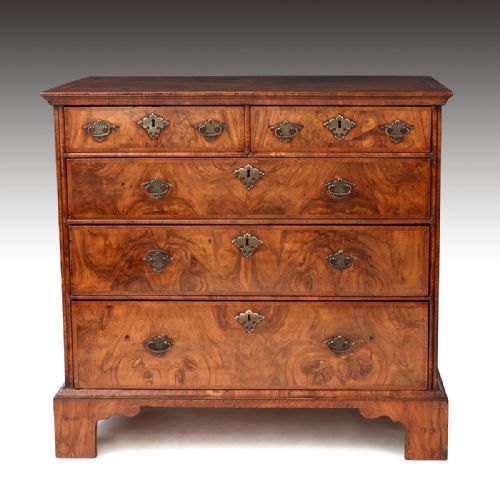
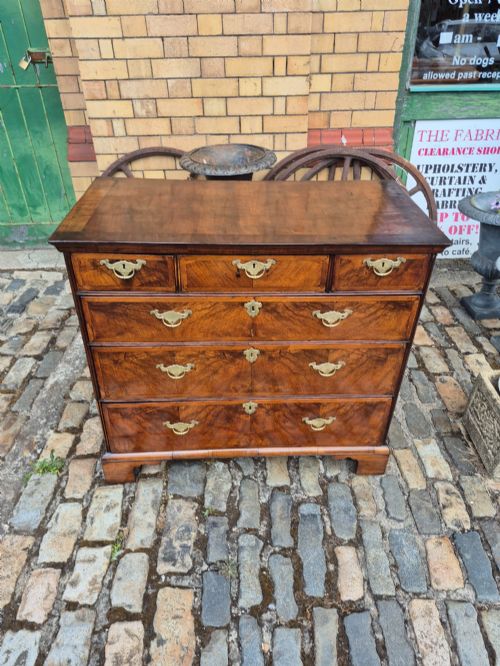
Walnut Bracket Foot
Walnut bracket foot furniture brings warmth and proportion to a room, offering practical storage through timeless chest and desk forms.
Walnut Bracket Foot
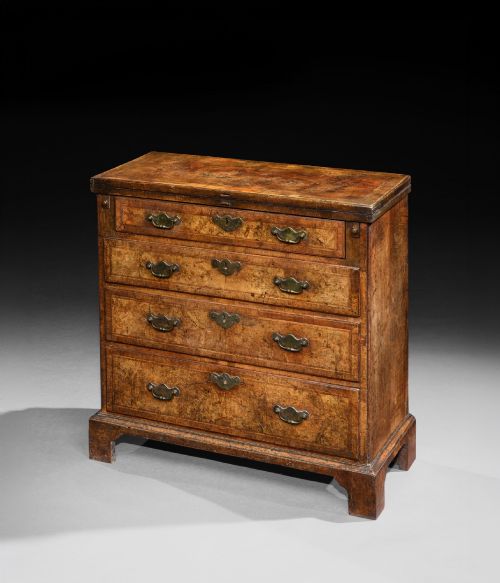
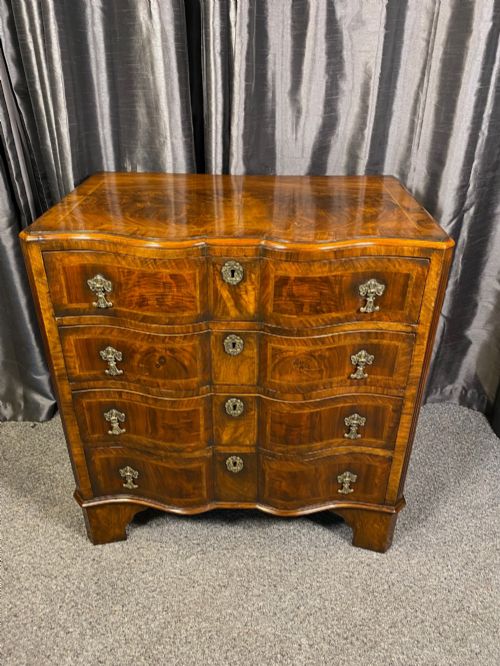
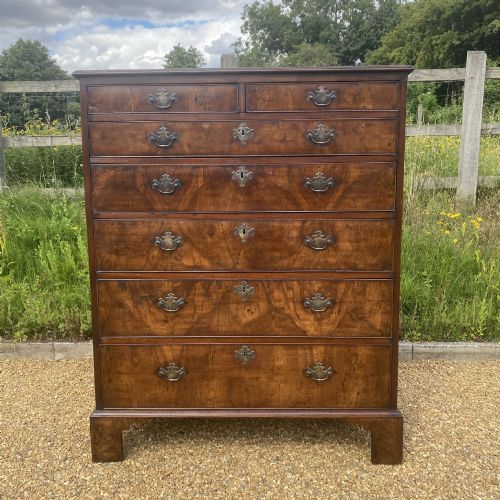
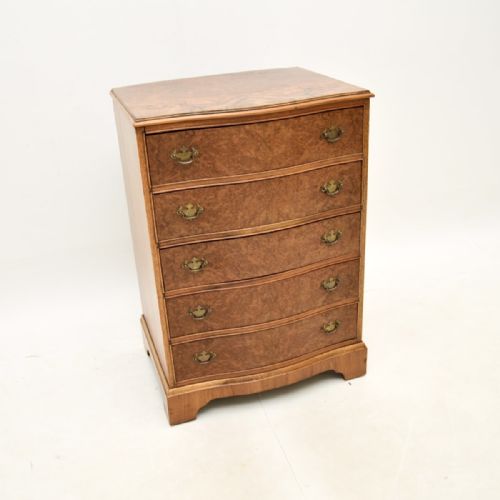
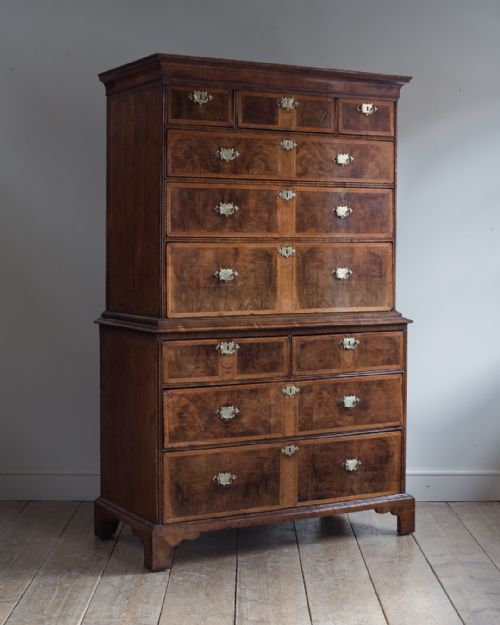
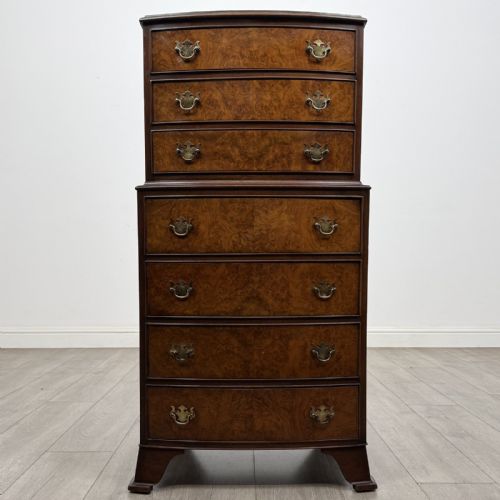
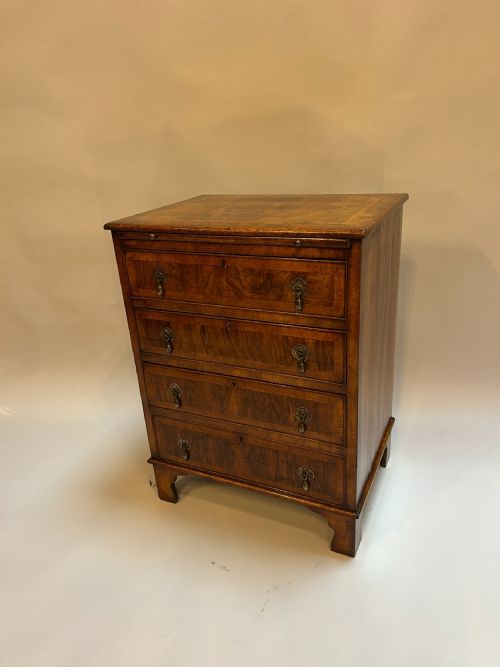
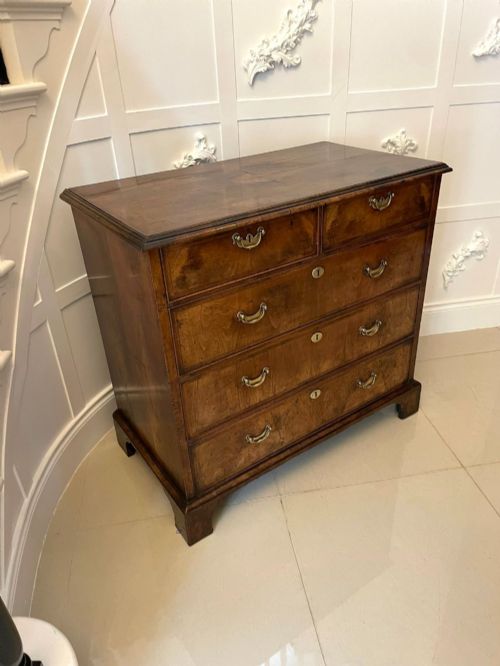
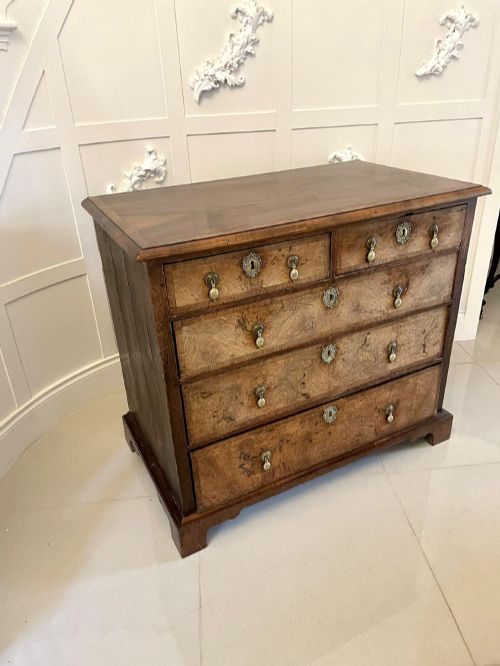
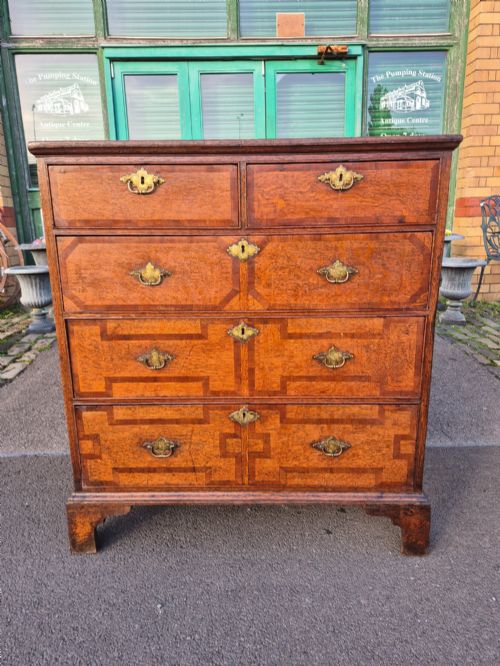
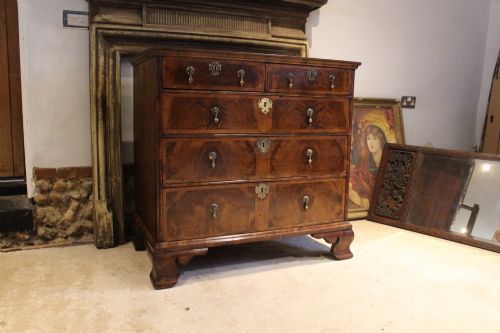
When you search for walnut bracket foot, you find case furniture raised slightly from the floor on small, architectural wooden supports known as bracket feet. The pieces on this page span several centuries, with a strong representation of 18th Century and Georgian forms alongside later revivals.
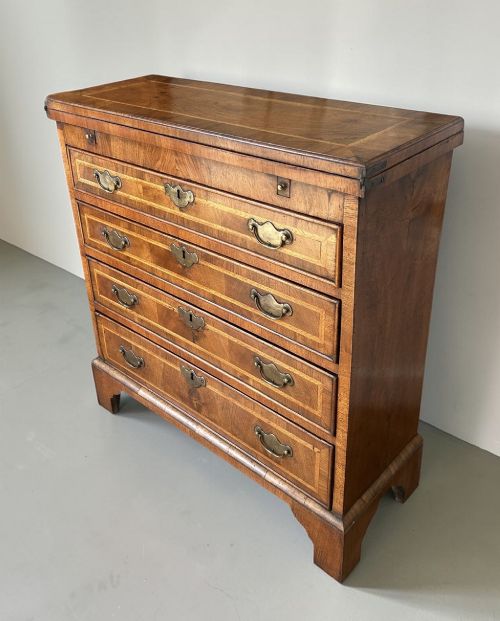
The dominant forms you meet here are chests of drawers, bachelors chests, kneehole desks, and bureau cabinets. These items originate from periods including the William & Mary, Queen Anne, George I, and George II eras, alongside Edwardian and later 20th century interpretations.
Buyers look for these items to anchor a room with rich timber surfaces and classic proportions. The bracket foot elevates the heavier body above the floor, lightening the overall silhouette while providing stable support.
How they were made
Cabinet makers utilised solid timbers alongside finely figured veneers applied to carcases constructed from secondary woods such as oak and pine. Burr walnut and fiddleback walnut veneers provide complex grain patterns across drawer fronts and top surfaces, while crossbanding frames these figured sections.
Construction relies on traditional joinery methods suited to cabinet work, pairing dovetailed drawer boxes with sturdy internal carcases. Metal hardware, predominantly brass handles and escutcheons, provides functional contrast to the dark timber tones.
Walnut Bracket Foot Retail Price Guide 2026
Typical asking prices for walnut bracket foot among the pieces listed under this phrase on Sellingantiques today, from the lower quarter to the upper quarter. They describe what is for sale here now, not the wider market.
Miniature apprentice pieces appear alongside full-sized bachelors chests, proving that great cabinet work sometimes comes in miniature packages.
What varies in quality
The division between ordinary and exceptional examples rests upon the selection of timber and the crispness of the cabinet work. Pieces featuring intensely figured burr walnut or fiddleback patterns command attention through visual depth, whereas plain timber surfaces offer a more subdued presence.
Proportion and the handling of secondary details define the upper tier of these pieces. The integration of the bracket feet with the base moulding, the precision of the crossbanding, and the retention of original brass hardware all separate standard furniture from superior examples.
The Walnut Bracket Foot Glossary
- Bracket foot
- A simple, corner-mitred foot shaped like a bracket that supports case furniture. It lifts the piece cleanly off the floor.
- Burr walnut
- Timber taken from a growth or wart on a walnut tree, yielding highly decorative and swirling grain patterns. Cabinet makers prized this for veneering prominent surfaces.
- Crossbanding
- A narrow strip of veneer laid around the border of a larger panel with the grain running at right angles. This technique frames the primary wood.
- Kneehole desk
- A compact writing desk featuring a central recess for the user's knees, flanked by banks of small drawers. These often stand on bracket feet.
- Tallboy
- A tall chest of drawers made in two sections, placing a smaller chest atop a larger base. They maximise vertical storage space.
Walnut Bracket Foot: Frequently Asked Questions
What is a walnut bracket foot chest?
A walnut bracket foot chest is a set of drawers constructed primarily from walnut timber and raised on corner bracket feet. These pieces range from compact proportions to larger tallboy forms.
They serve as practical storage items while introducing rich grain patterns and historical design to an interior space.
How do I date a walnut chest?
Dating relies on examining the construction methods, timber choices, and overall style of the piece. Earlier examples from the 18th century often feature oak drawer linings and hand-cut dovetails.
Later revival pieces from the Edwardian period or the 19th century may display different secondary woods and machine-finished elements within the carcase.
Where should I place these pieces?
These items suit various rooms, from living spaces to hallways and bedrooms, where they provide functional surface area and drawer storage. Their warm timber tones pair well with both traditional and contemporary surroundings.
Keep them away from direct heat sources and strong sunlight to protect the walnut veneer from drying out or fading over time.
What is burr walnut veneer?
Burr walnut veneer consists of thin slices of wood cut from distorted growths on walnut trees. This wood displays intricate, swirling patterns that makers used to decorate drawer fronts and tabletops.
Applying veneer required great skill from the cabinet maker to ensure the delicate wood adhered smoothly to the primary carcase.