


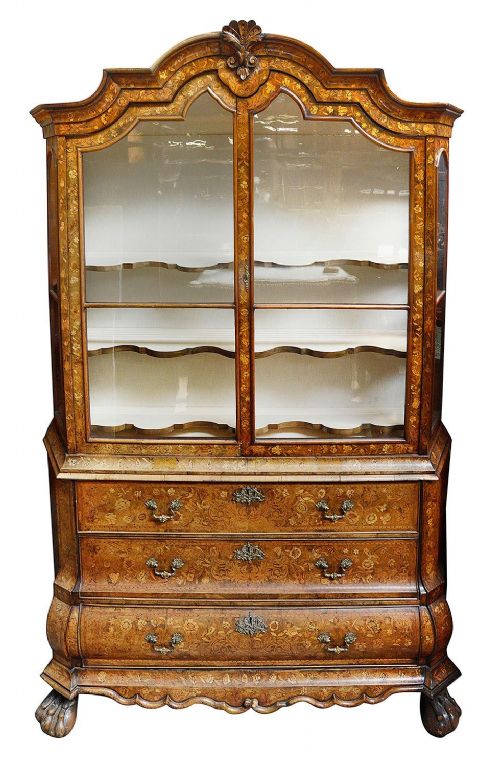


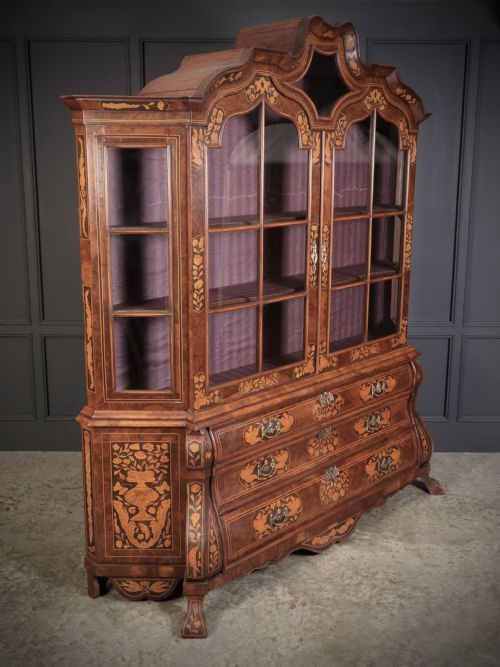


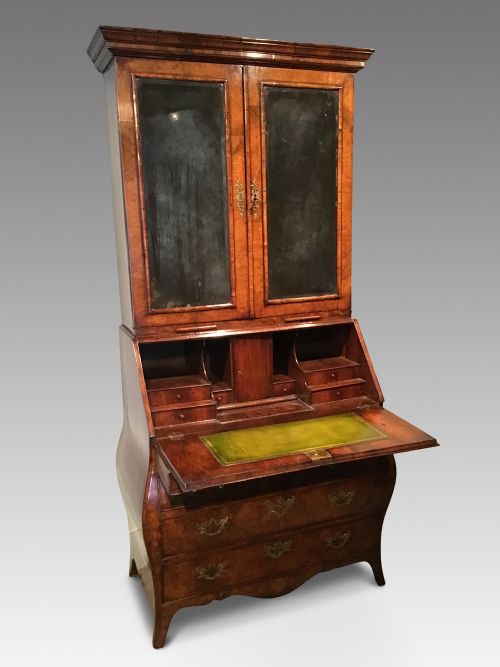
Walnut Bombe Bureau Bookcase
A walnut bombe bureau bookcase brings dramatic continental flair and exceptional storage to a room through its swelling profile and rich timber figuring.
Walnut Bombe Bureau Bookcase
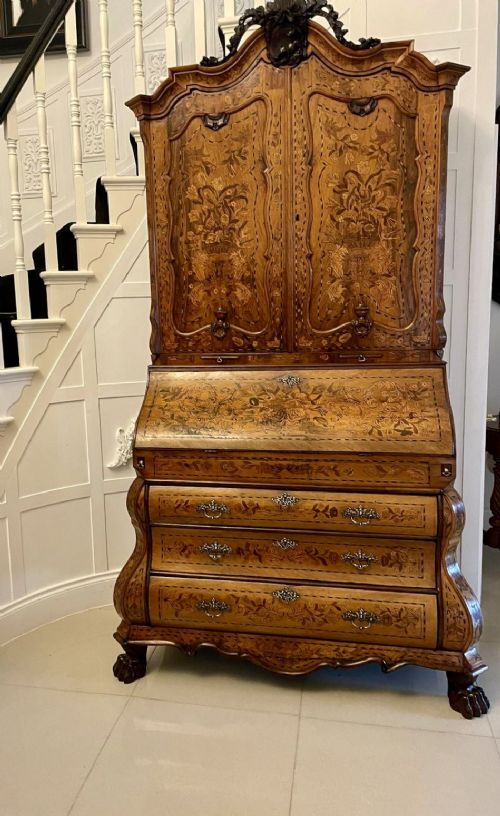
A walnut bombe bureau bookcase combines a sloping fall-front desk with a glazed upper bookcase and a swelling, outward-curving lower chest. These substantial furniture pieces serve as both working desks and display storage for books or collections.
The versions encountered on this page span the eighteenth century, the Georgian period, and later revival dates up to nineteen-twenty. They frequently originate from Dutch workshops, showcasing distinct regional cabinetry traditions.
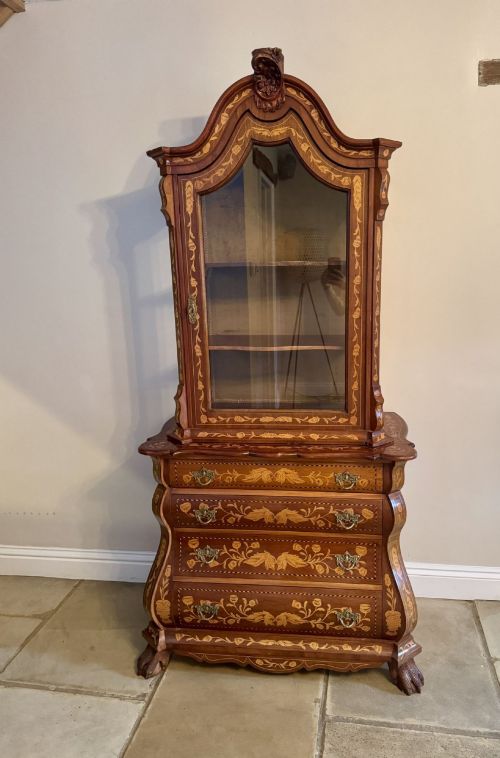
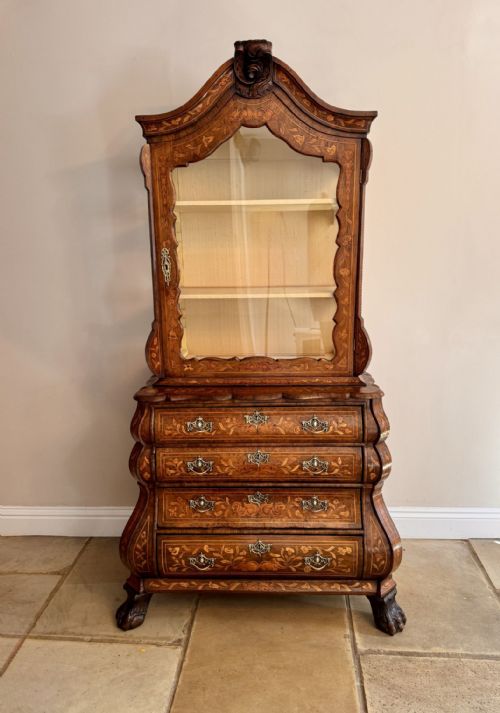
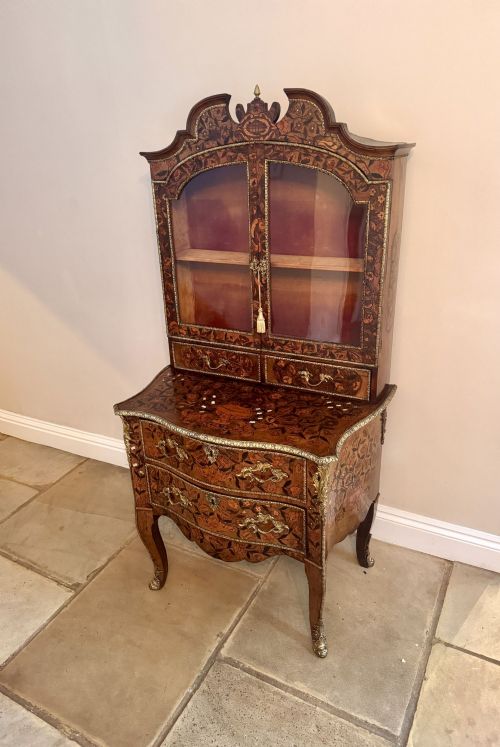
Forms range from bureau bookcases with fitted interior compartments to tall display cabinets and vitrines featuring marquetry inlay. Walnut and burr walnut dominate the construction, providing distinctive grain patterns across the curved surfaces.
How they were made
Cabinetmakers constructed these pieces using solid pine or oak carcases overlaid with decorative veneers of walnut and burr walnut. The swelling bombe profile required skilled shaping of the drawer fronts and side panels to achieve the characteristic curved silhouette.
Fruitwood marquetry and inlay work adorn many examples, creating intricate floral and pictorial designs across the walnut surfaces. Brass hardware, including drop handles and escutcheons, complements the dark timber tones while glazed doors protect the upper shelving sections.
Walnut Bombe Bureau Bookcase Retail Price Guide 2026
Typical asking prices for walnut bombe bureau bookcase among the pieces listed under this phrase on Sellingantiques today, from the lower quarter to the upper quarter. They describe what is for sale here now, not the wider market.
Listings feature eighteenth-century Dutch Baroque and Rococo styles alongside later revival pieces incorporating fruitwood marquetry and burr walnut veneers.
What varies in quality
The precision and complexity of the fruitwood marquetry largely distinguish superior examples from simpler work, with finer inlay displaying greater detail and depth. The choice of burr walnut veneer also influences visual appeal, as tightly patterned timber creates a more striking finish across the curved bombe drawers.
Construction methods such as dovetailing in the drawer boxes and the overall integration of the upper bookcase section reveal the maker's hand. Well-preserved original surfaces and crisp carving on the feet or pediments elevate an individual piece within its period.
The Walnut Bombe Bureau Bookcase Glossary
- Bombe
- A swelling, outward-curving contour found on the lower drawers and sides of case furniture. This curvilinear form requires advanced woodworking skill to execute properly.
- Marquetry
- Decorative veneer work forming pictorial or geometric patterns using various coloured woods. Fruitwood slips are typically cut and fitted into a contrasting walnut background.
- Burr walnut
- Wood taken from a tree growth that produces swirling, highly decorative grain patterns. Cabinetmakers prize this timber for its rich visual texture on prominent surfaces.
- Vitrine
- A glass-fronted cabinet designed for displaying porcelain, curiosities, or books. These upper sections often feature architectural glazing bars.
- Escutcheon
- A decorative brass plate surrounding a keyhole. It protects the surrounding wood from wear and adds a metallic accent to the drawer fronts.
Walnut Bombe Bureau Bookcase: Frequently Asked Questions
Where should I place a bombe bureau bookcase?
These large statement pieces require adequate wall space and clearance for the drop-down desk flap. Placing them in a study, drawing room, or hallway allows the curved profile and glazed upper section to function as a focal point.
Because they combine a desk with display shelving, they offer practical utility alongside their strong visual presence. Ensure the room has stable humidity levels to protect the delicate walnut veneers and marquetry inlay.
How do I tell an eighteenth-century piece apart from a later revival?
Examining the secondary timbers, such as the oak or pine used in internal drawer linings, helps indicate the period of construction. Eighteenth-century examples display hand-cut joinery and timber movement consistent with age.
Revival pieces from later periods often show uniform machining marks and cleaner, less oxidised interior surfaces. Comparing the style of the marquetry and the mounting hardware also aids in dating the cabinet.
How do I care for walnut veneer and marquetry?
Maintain a consistent room temperature away from direct sunlight and heat sources to prevent the walnut veneer from drying or cracking. Regular dusting with a soft, dry cloth protects the polished surface without introducing moisture.
Apply a traditional wax polish sparingly only when the timber appears dull, buffing gently with a clean cloth. Avoid using modern silicone sprays or harsh chemical cleaners that can damage the antique finish.